
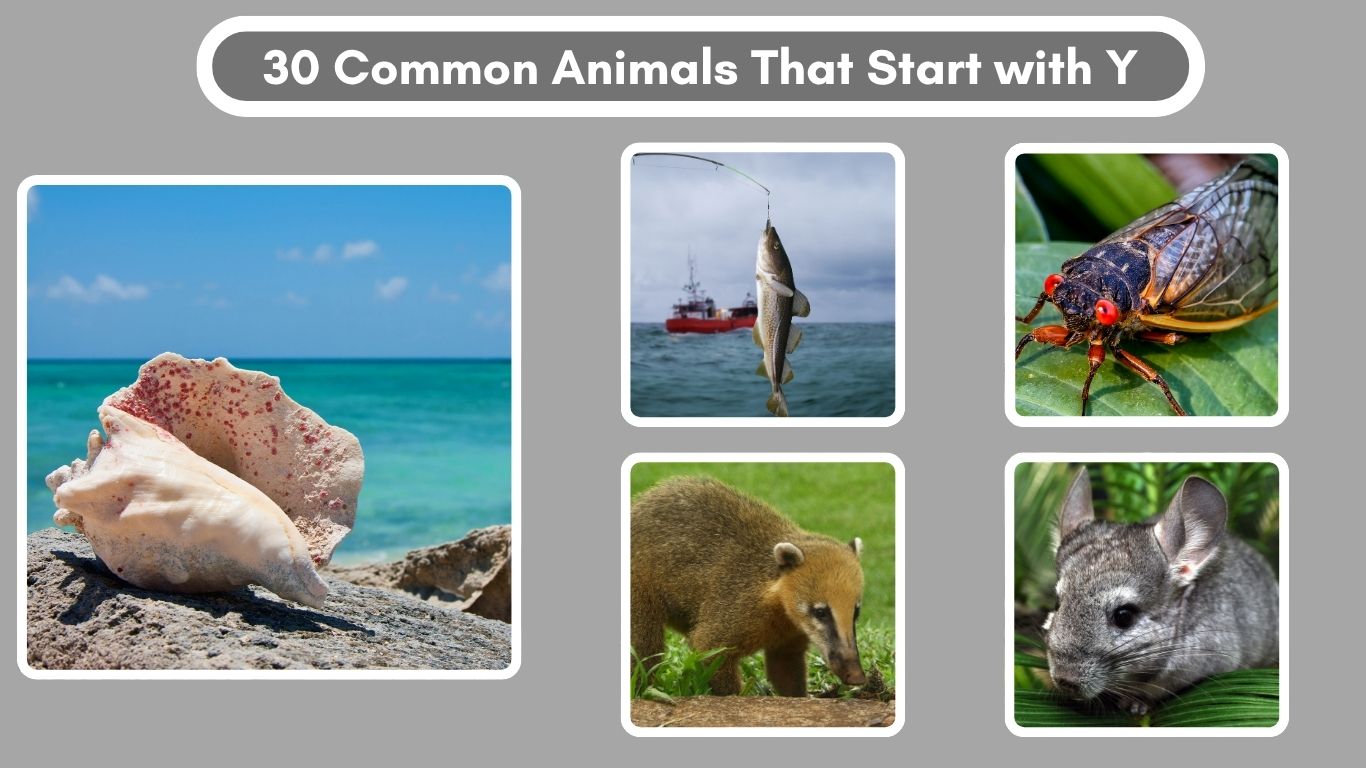
The letter C kicks off the names of some of the most diverse and fascinating animals on Earth—from cuddly pets and powerful predators to underwater creatures and exotic birds. These animals live across a variety of environments including forests, deserts, oceans, and even our homes. Whether it’s the speed of a cheetah, the intelligence of a chimpanzee, or the stealth of a crocodile, animals that start with “C” showcase a broad range of behaviors, appearances, and ecological roles.
In this list, you’ll discover 30 animals that start with the letter C, including mammals, reptiles, birds, fish, and insects. Each one plays a unique part in the natural world and highlights the incredible diversity of life that begins with this single letter.
1. Cat
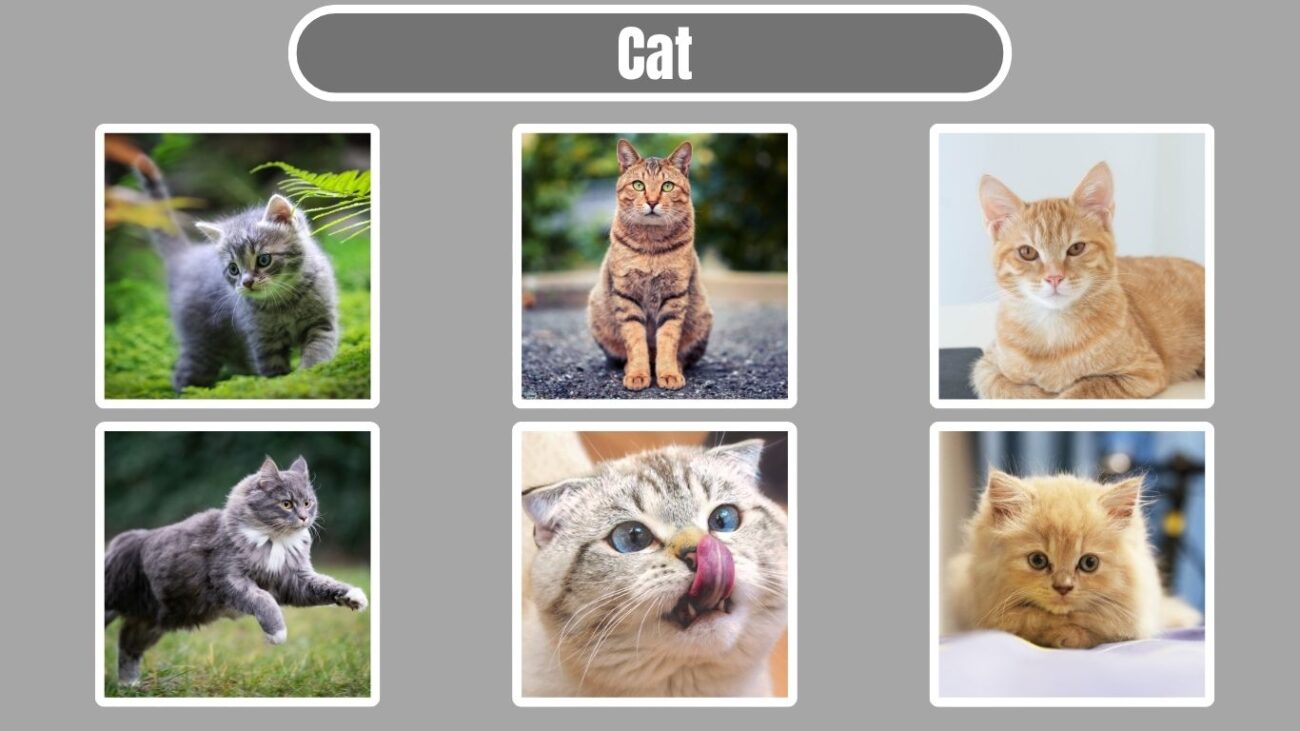
Cats are small, carnivorous mammals that have been domesticated for thousands of years. They typically weigh between 5 to 20 pounds (2.3–9 kg) and come in a wide range of breeds, coat colors, and patterns. Known for their agility, sharp claws, and keen senses, cats are both independent and affectionate companions.
They live comfortably in homes around the world but are also found as feral or stray animals. Cats are natural hunters, feeding on small animals like mice, birds, and insects, though most domestic cats eat commercial cat food.
Cats communicate through meows, purring, and body language, and they’re among the most popular pets globally.
2. Cow
Cows are large, herbivorous mammals domesticated for thousands of years for their milk, meat, and labor. An adult cow typically weighs between 1,000 to 1,800 pounds (450–800 kg) and has a bulky body, cloven hooves, and a four-chambered stomach for digesting tough plant material.
They are social animals that live in herds and graze in grasslands or on farms. Cows feed on grasses, hay, silage, and grains, and they play a vital role in agriculture around the world.
Cows are also culturally significant in many regions, especially in countries like India, where they are considered sacred.
3. Cheetah
Cheetahs are the fastest land animals, capable of sprinting up to 60–70 mph (97–113 km/h) in short bursts. They have slender, muscular bodies with distinctive black spots on golden-yellow fur, and a black “tear line” from eyes to mouth that reduces glare while hunting.
Native to Africa and parts of Iran, cheetahs prefer open grasslands and savannas. They hunt during the day, using speed and stealth to chase down prey like antelope and hares.
Unlike most big cats, cheetahs cannot roar. They are vulnerable due to habitat loss, genetic bottlenecks, and conflicts with humans.
4. Camel
Camels are large, desert-adapted mammals known for their humps, which store fat as energy for long journeys without food or water. There are two main species: the one-humped dromedary and the two-humped Bactrian camel.
Camels are found in North Africa, the Middle East, and Central Asia, where they serve as pack animals and provide milk, meat, and wool. They can travel for days across arid environments thanks to their ability to conserve water and tolerate high body temperatures.
With long legs, thick eyelashes, and tough feet, camels are perfectly adapted to life in extreme desert climates.
5. Crocodile
Crocodiles are large, semi-aquatic reptiles found in tropical regions across Africa, Asia, the Americas, and Australia. They can grow up to 23 feet (7 meters) long, with armored bodies, powerful jaws, and long tails for swimming.
Crocodiles live in rivers, lakes, wetlands, and estuaries. They are carnivorous and ambush predators, feeding on fish, birds, mammals, and even other reptiles.
Despite their prehistoric appearance, crocodiles are highly intelligent with complex social behaviors and strong maternal instincts. They play a crucial role in maintaining the health of wetland ecosystems.
6. Chimpanzee
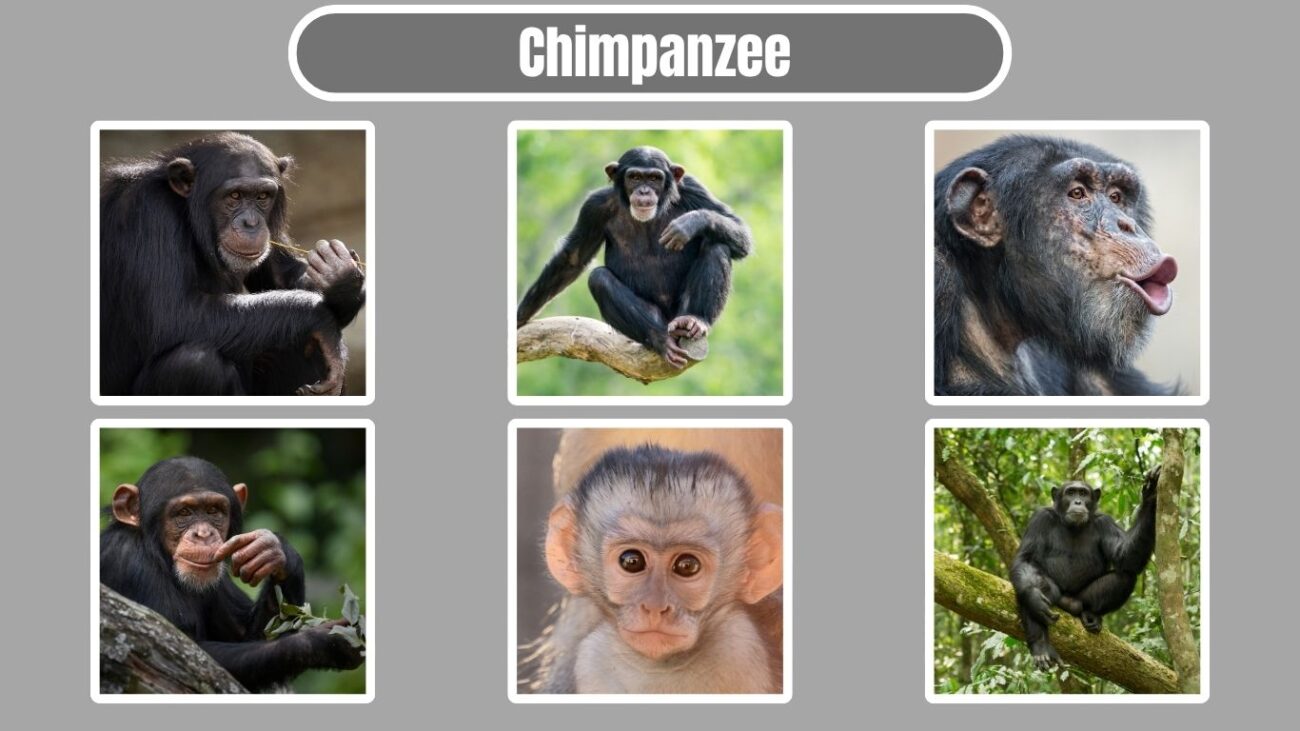
Chimpanzees are highly intelligent primates native to the forests and savannas of Central and West Africa. They grow up to 5.5 feet (1.7 meters) tall when standing upright and weigh between 70 to 130 pounds (32–60 kg). They have black or dark brown fur and expressive, human-like faces.
Chimps live in complex social groups and use tools for gathering food, such as sticks to extract termites or stones to crack nuts. Their diet is mostly fruit, but they also eat leaves, seeds, insects, and occasionally meat.
As our closest living relatives, chimpanzees share about 98% of human DNA and are capable of problem-solving, emotion, and communication through gestures and vocalizations.
7. Capybara
Capybaras are the world’s largest rodents, native to South America. They can grow up to 4.5 feet (1.3 meters) long and weigh around 100 pounds (45 kg). With barrel-shaped bodies, short legs, and webbed feet, they are excellent swimmers and often found near rivers, swamps, and lakes.
These social animals live in groups and are highly vocal, using purrs, whistles, and clicks to communicate. Their diet consists of grasses, aquatic plants, and fruits.
Capybaras are gentle and non-aggressive, often seen resting in groups or soaking in water. Despite their large size, they are closely related to guinea pigs.
8. Cougar
Cougars, also known as mountain lions, pumas, or panthers, are large, solitary wild cats native to the Americas. Adult males can weigh up to 200 pounds (90 kg) and measure about 8 feet (2.4 meters) from nose to tail. They have tawny coats, muscular bodies, and long tails.
Cougars live in diverse habitats—from forests and deserts to mountains—and are powerful predators. They hunt deer, elk, and smaller animals, using stealth and strength to ambush their prey.
Although widespread, they are elusive and rarely seen. Cougars play a vital role in maintaining ecological balance by regulating herbivore populations.
9. Coyote
Coyotes are adaptable canines found across North and Central America. They resemble small wolves, weighing 20–50 pounds (9–23 kg), with a grayish-brown coat, pointed ears, and a bushy tail.
Coyotes inhabit forests, grasslands, deserts, and even urban areas. They are omnivores, feeding on rabbits, rodents, birds, fruits, and carrion. They often hunt alone or in pairs but can also form packs.
Highly intelligent and resourceful, coyotes are known for their howls and yips, which they use to communicate. They thrive in human-altered environments and are key players in pest control.
10. Cobra
Cobras are venomous snakes known for their dramatic hood display when threatened. Found in Africa and Asia, they vary in size, with some species like the King Cobra reaching up to 18 feet (5.5 meters)—the longest venomous snake in the world.
They live in forests, grasslands, wetlands, and even near villages. Cobras feed on rodents, birds, eggs, and other snakes. Their venom contains neurotoxins that can paralyze or kill prey quickly.
When disturbed, cobras lift the front of their body, spread their hood, and may hiss or strike. While dangerous, they are generally shy and avoid human contact unless provoked.
11. Crane
Cranes are tall, elegant birds found on every continent except South America and Antarctica. They stand between 3 to 5 feet (0.9–1.5 meters) tall and are known for their long legs, necks, and graceful movements. Their plumage varies by species, often featuring gray, white, or brown feathers, sometimes with red or black markings.
Cranes inhabit wetlands, marshes, and grasslands. They are omnivorous, feeding on plants, seeds, insects, small animals, and aquatic creatures.
These birds are famous for their elaborate mating dances and strong pair bonds. Many crane species are migratory, and several are threatened or endangered due to habitat loss.
12. Caribou
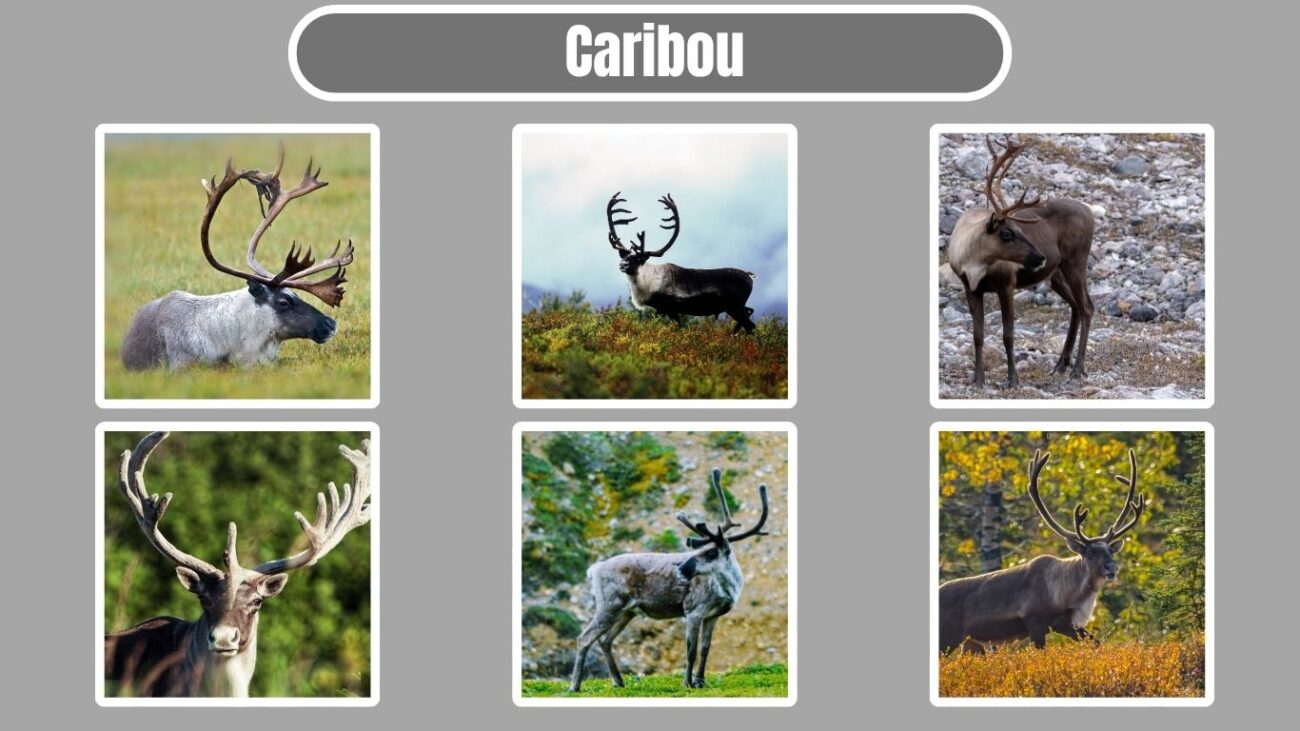
Caribou, also known as reindeer in Eurasia, are large deer native to Arctic and subarctic regions of North America and Europe. Males can weigh up to 400 pounds (180 kg) and grow impressive antlers—both sexes have them, which is rare among deer.
They live in tundras, boreal forests, and mountainous areas, often migrating hundreds of miles between summer and winter habitats. Their diet includes lichens, grasses, mosses, and shrubs.
Caribou are vital to indigenous cultures and ecosystems. Their wide, hooved feet help them walk on snow and dig for food. They’re social animals, traveling in large herds during migration.
13. Cricket
Crickets are small, jumping insects known for their chirping sounds, which males produce by rubbing their wings together to attract mates. They typically range from 0.5 to 2 inches (1.2–5 cm) in length and are usually brown or black.
Crickets are found in fields, forests, and even inside homes. They are omnivorous, feeding on plants, fungi, insects, and decaying matter.
They are active at night and serve as food for many predators. In some cultures, crickets are considered symbols of good luck and are even kept as pets.
14. Caiman
Caimans are semi-aquatic reptiles closely related to alligators and crocodiles. They are native to Central and South America and typically range from 4 to 8 feet (1.2–2.4 meters) in length, depending on the species.
Caimans inhabit rivers, swamps, and marshes. They feed on fish, amphibians, birds, and small mammals, using their strong jaws and stealth to ambush prey.
Though smaller than most crocodiles, caimans are equally formidable predators. They are important apex species in their environments, helping to control prey populations and maintain aquatic ecosystem balance.
15. Clownfish
Clownfish are small, brightly colored marine fish famous for their orange bodies with white bands edged in black. They grow up to 4 inches (10 cm) and are found in the warm shallow waters of the Indo-Pacific, including coral reefs and lagoons.
Clownfish live symbiotically with sea anemones, gaining protection from predators while providing the anemone with food scraps. They are omnivores, feeding on algae, plankton, and tiny invertebrates.
Clownfish are known for their social hierarchy and unique reproductive behavior—if the dominant female dies, the largest male changes sex to take her place. They became widely recognized after the movie Finding Nemo.
16. Coral
Corals are tiny marine invertebrates that live in colonies and build large, hard skeletons made of calcium carbonate—forming coral reefs over time. Each coral organism, called a polyp, measures only a few millimeters but together they create structures visible from space.
Found in warm, shallow ocean waters, particularly in tropical regions, corals thrive in clear, sunlit areas. They get nutrients from both plankton and a symbiotic relationship with algae (zooxanthellae) that live within their tissues.
Coral reefs support thousands of marine species, making them one of the most biodiverse ecosystems on Earth. However, they are increasingly threatened by pollution, climate change, and ocean acidification.
17. Cassowary
Cassowaries are large, flightless birds native to the tropical forests of New Guinea, northern Australia, and nearby islands. They can grow up to 6.6 feet (2 meters) tall and weigh over 130 pounds (60 kg), making them the second-heaviest bird in the world.
They have black feathers, bright blue necks, and a bony helmet-like casque on their heads. Their powerful legs end in sharp claws, including a dagger-like toe capable of inflicting serious injury.
Cassowaries are shy but potentially dangerous if threatened. They are frugivores, playing a crucial role in seed dispersal in rainforests. Due to habitat loss and human conflict, some species are considered endangered.
18. Canary

Canaries are small songbirds native to the Canary Islands, Azores, and Madeira. They are well known for their cheerful songs and vibrant plumage, typically yellow, though selective breeding has produced various color forms.
Canaries are about 4.7 inches (12 cm) long and are commonly kept as pets around the world. They thrive in aviaries or cages with proper care, singing most frequently in the early morning.
In the past, canaries were used in coal mines to detect toxic gases like carbon monoxide. Today, they are appreciated for their beauty, soft vocals, and relatively low maintenance requirements.
19. Cockatoo
Cockatoos are intelligent, social parrots native to Australia, Indonesia, and nearby islands. They are recognized by their curved beaks and dramatic, expressive head crests. Sizes range from 12 to 24 inches (30–60 cm), and they come in various colors—often white, pink, or black with bright accents.
Cockatoos live in forests, woodlands, and savannas and feed on seeds, nuts, fruits, and insects. They form strong bonds with mates and flock members.
Highly vocal and affectionate, cockatoos are popular in aviculture but require lots of attention and stimulation. In the wild, they are important seed dispersers and ecosystem participants.
20. Centipede
Centipedes are long, segmented arthropods with one pair of legs per body segment—usually totaling 30 to over 300 legs. They range from 1 inch (2.5 cm) to over 12 inches (30 cm) depending on the species and are commonly found in damp environments under rocks, logs, or leaf litter.
Centipedes are carnivorous, hunting insects, spiders, and other small animals using venomous claws (forcipules) located near their heads.
They are fast, nocturnal predators and play an important role in controlling insect populations. While their bite can be painful to humans, most centipede species are not dangerous.
21. Cuttlefish
Cuttlefish are highly intelligent marine animals related to squids and octopuses. They have broad, flat bodies, large eyes, and eight arms plus two longer tentacles used for catching prey. Most species grow between 6 to 20 inches (15–50 cm) in length.
Found in shallow coastal waters across Europe, Asia, and Australia, cuttlefish are masters of camouflage—able to change color, texture, and even shape to blend into their surroundings. They feed on fish, crabs, and shrimp.
They also have an internal shell called a cuttlebone, which helps control buoyancy. Cuttlefish are known for complex behaviors, problem-solving, and elaborate mating displays.
22. Cuscus
The Cuscus is a tree-dwelling marsupial native to the rainforests of New Guinea and northern Australia. It has a round body, thick fur (white, brown, or spotted), a prehensile tail for grasping branches, and large, forward-facing eyes adapted for night vision.
Cuscuses are nocturnal and slow-moving, feeding on leaves, fruits, and flowers. They live alone or in pairs, nesting in tree hollows or thick foliage during the day.
They are closely related to possums and play a key role in forest ecology by spreading seeds. Though elusive, cuscuses face threats from habitat destruction and hunting.
23. Civet
Civets are small, nocturnal mammals found in Africa and Asia, especially in tropical forests and grasslands. They resemble a mix between a cat and a mongoose, with slender bodies, pointed snouts, and ringed tails. Most civets grow between 16 to 30 inches (40–75 cm) long.
They are omnivorous and feed on fruits, insects, small animals, and eggs. Civets are solitary and secretive, using scent glands to mark territory.
One species, the Asian palm civet, is controversially known for producing kopi luwak—coffee made from beans that pass through its digestive system. Many civet species are threatened by habitat loss and hunting.
24. Catfish
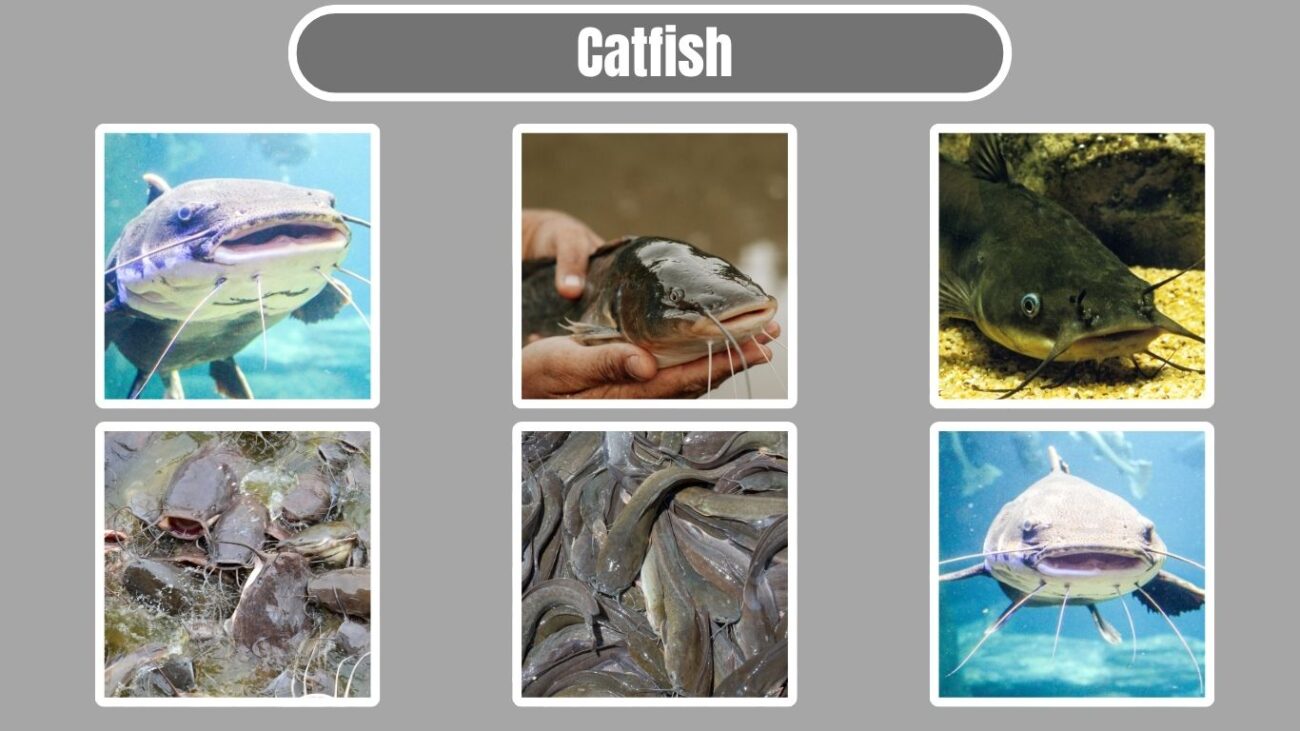
Catfish are a diverse group of freshwater and marine fish named for their prominent whisker-like barbels around the mouth. They range in size from a few inches to over 9 feet (2.7 meters), such as the giant Mekong catfish.
Found on every continent except Antarctica, catfish inhabit rivers, lakes, swamps, and coastal waters. They are bottom-dwellers, feeding on algae, insects, crustaceans, and even small fish.
Catfish are important both ecologically and economically, being a popular target in commercial and recreational fishing. Some species can produce mild electric shocks or sharp spines for defense.
25. Conch
Conchs are marine snails with large, spiral shells and long eyestalks. They are commonly found in warm, shallow waters of the Caribbean, Gulf of Mexico, and Indo-Pacific. The Queen Conch is one of the best-known species, with a beautiful pink interior shell.
Conchs feed on algae and detritus found on sandy or seagrass-covered sea floors. They move slowly using a muscular foot and can withdraw entirely into their thick shells for protection.
They are harvested for both their meat and decorative shells, leading to population declines in some areas. Conchs play a key role in keeping seafloor ecosystems clean and balanced.
26. Codfish
Codfish, commonly known as cod, are cold-water marine fish found in the North Atlantic Ocean. They typically grow between 2 to 5 feet (60–150 cm) and can weigh over 100 pounds (45 kg), though most are much smaller when caught.
Cod have a streamlined body with a distinctive chin barbel and are usually greenish-brown with lighter bellies. They live near the ocean floor and feed on smaller fish, crustaceans, and worms.
Valued for their mild, flaky white meat, cod are a staple in seafood diets and commercial fishing. However, overfishing has severely impacted wild populations in some regions.
27. Coati
Coatis, also called coatimundis, are raccoon-like mammals native to Central and South America. They have long, flexible snouts, ringed tails, and sharp claws. Adults measure about 16–28 inches (40–70 cm) in length, not including the tail.
These animals live in forests and woodlands and are highly social—females and young form bands, while adult males are solitary. Coatis are omnivores, feeding on fruit, insects, small vertebrates, and eggs.
They are active during the day and are excellent climbers and foragers. Their curious nature and adaptability make them a common sight in national parks and rural areas.
28. Cormorant
Cormorants are aquatic birds found across the world in coastal regions, rivers, and lakes. They have long necks, dark plumage, webbed feet, and sharp, hooked beaks. Most species grow between 2 to 3 feet (60–90 cm) tall and are expert swimmers.
Cormorants dive deep underwater to catch fish, using their powerful legs and streamlined bodies. Unlike most waterbirds, their feathers are not fully waterproof, so they often perch with wings spread to dry.
They are intelligent hunters and have even been trained in parts of Asia for traditional fishing. Cormorants nest in colonies and are known for their gregarious, noisy behavior.
29. Cicada
Cicadas are flying insects known for their loud, buzzing calls made by males to attract mates. They have stout bodies, bulging eyes, and transparent wings. Adult cicadas range from 1 to 2 inches (2.5–5 cm) long.
Found worldwide in temperate to tropical regions, cicadas spend most of their lives underground as nymphs, feeding on plant roots. Some species, like periodical cicadas, emerge in massive groups every 13 or 17 years.
Though noisy, cicadas are harmless to humans and play an important role in aerating soil and serving as food for birds and mammals.
30. Chinchilla
Chinchillas are small, nocturnal rodents native to the Andes Mountains in South America. They are best known for their incredibly dense, soft fur—the softest of any land mammal. Adult chinchillas measure around 10–14 inches (25–35 cm) long, with bushy tails.
They live in rocky, arid habitats and are agile climbers. Chinchillas are herbivores, feeding on grasses, seeds, and plant materials. They avoid water baths and instead clean their fur using dust.
Once heavily hunted for their pelts, chinchillas are now bred as pets and for fur farms. Wild populations remain threatened, but conservation efforts continue to protect them.