
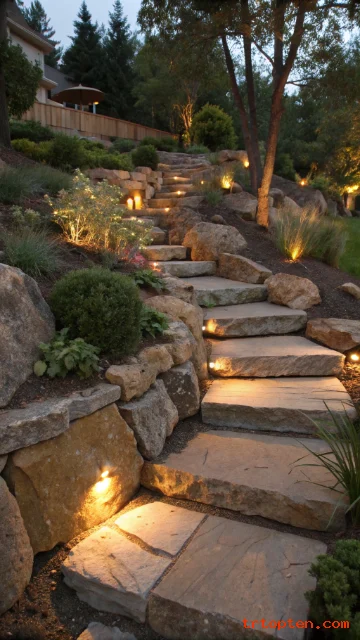
Natural rock retaining wall ideas can solve slope problems and make outdoor spaces look polished. A well-planned wall also helps manage runoff and creates flat areas for planting and seating.
Use the ideas to guide your layout, stone choice, and finish details without overthinking the process.
Dry-Stack Fieldstone Retaining Wall
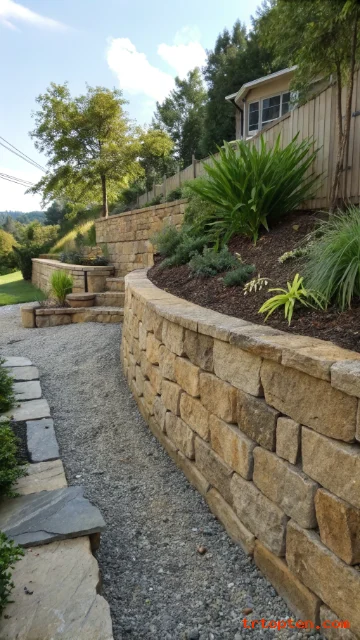
A dry-stack fieldstone wall uses irregular stones without mortar for a classic look. The gaps help water move through the wall so pressure stays lower.
Choose stones with flatter faces for a tighter stack and better stability. Set larger stones at the base so the wall stays grounded.
Add a gravel trench and compacted base to reduce settling over time. Keep the wall slightly leaning into the slope to resist movement.
Layered Limestone Block Wall With Natural Edges
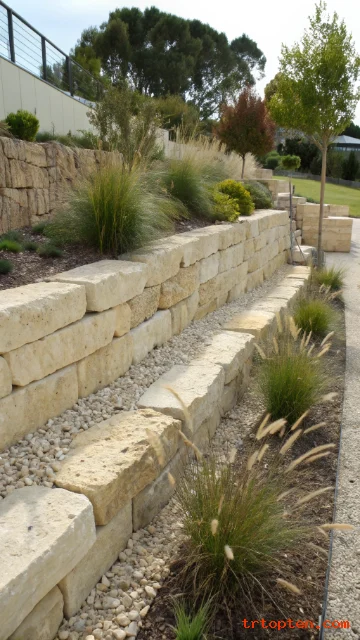
Limestone layers create clean lines while still looking organic. The natural edges keep the wall from feeling too formal.
Pick consistent thickness pieces so the courses stay level. Use longer stones to tie sections together and reduce weak spots.
Pair the wall with drought-tolerant grasses for a soft contrast. Add a simple stone cap for a finished edge that feels tidy.
Boulder Retaining Wall With a Rustic Slope Finish
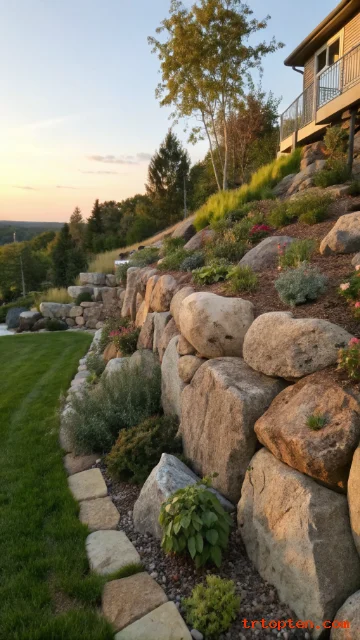
Large boulders create a bold wall with minimal cutting and shaping. The mass of the stone gives the wall natural strength.
Place the biggest boulders at the base and step back each row. Fit smaller rocks into gaps to lock the boulders in place.
Use groundcovers on the slope above for a rugged mountain look. Add low landscape lighting to highlight the stone shapes at night.
Granite Retaining Wall With Mixed Stone Sizes
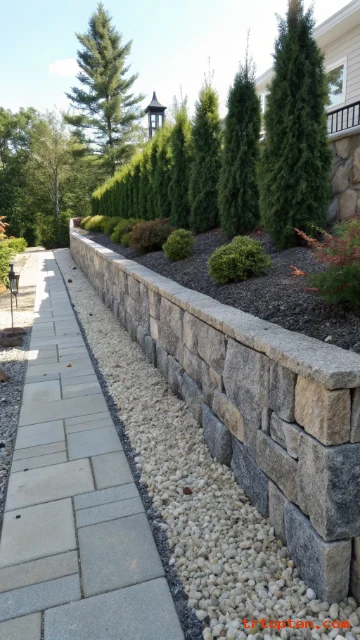
Granite brings durability and a crisp natural sparkle. Mixed sizes create a wall that looks like it has always been there.
Combine medium stones for the main courses and smaller stones for tight joints. Keep each layer stable by overlapping vertical seams.
Add a gravel strip at the base to keep mud off the rock face. Plant evergreen shrubs near the ends to frame the wall.
Sandstone Retaining Wall With Warm Desert Tones
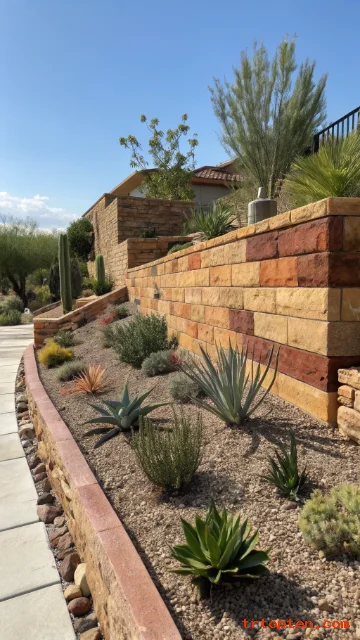
Sandstone adds warmth and works well in sunny landscapes. The color can make a small yard feel brighter and bigger.
Choose thicker stones for the bottom course and flatter stones for the top. Keep the face aligned so the wall looks intentional.
Pair with succulents and native plants for a cohesive palette. Use a natural stone cap to protect the upper edge from chipping.
Curved River Rock Retaining Wall for Soft Lines
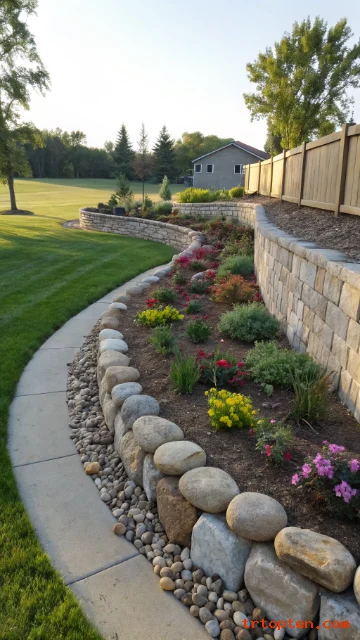
A curved wall guides the eye and feels more natural than straight runs. River rock shapes also soften the look of a slope.
Set a clear curve with a garden hose line before you dig. Use larger stones on the outside of the curve to hold the form.
Add a planting bed behind the curve for color and texture. A thin gravel drainage layer keeps water from building up.
Terraced Rock Retaining Walls for Multi-Level Planting
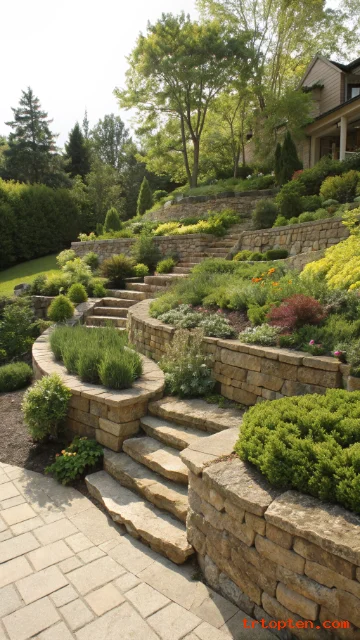
Terraces turn a steep slope into usable garden levels. They also reduce soil movement during heavy rain.
Build each wall lower rather than making one tall wall. Step the terraces back and connect them with stone steps or a path.
Use each level for a different planting theme like herbs, flowers, and shrubs. Add mulch and drip irrigation to keep maintenance simple.
Rock Wall With Integrated Stone Steps
Steps built into the wall make slopes easier to use. They also create a strong focal point in the landscape.
Use wide, flat stones for treads so the steps feel safe. Anchor each step into compacted base material to prevent shifting.
Add small lights along the step edges for nighttime visibility. Frame the steps with low plants to soften the hardscape.
Gabion Rock Retaining Wall With Natural Stone Fill
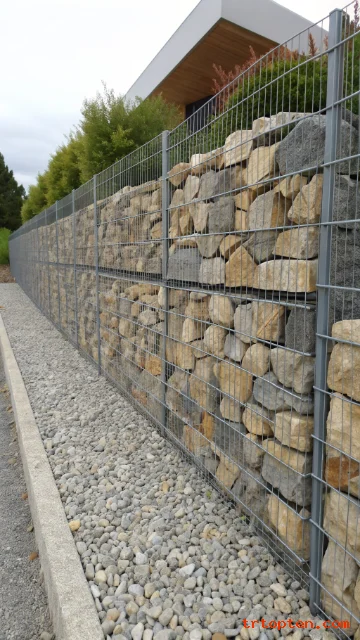
Gabion walls use wire cages filled with stone for a modern rustic look. They drain well and fit many yard styles.
Fill the visible faces with attractive rocks and use cheaper rock in the center. Keep the cages level and tightly fastened.
Blend the base with gravel and native plants for a natural finish. Add a wood or stone top piece for a polished edge.
Stacked Slate Retaining Wall for a Sleek Texture
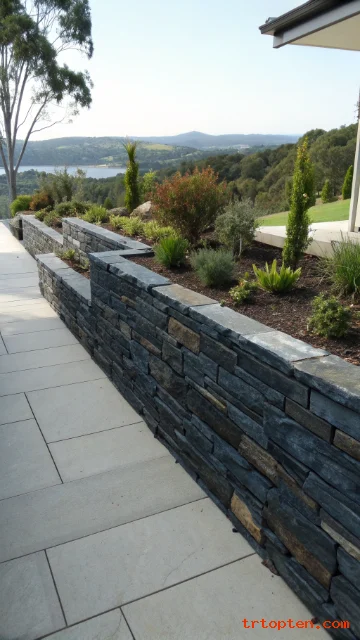
Slate creates thin horizontal lines and rich texture. It works well beside patios and modern gardens.
Choose slate pieces with consistent thickness to avoid wobble. Keep the wall slightly battered back into the soil for strength.
Pair with dark mulch and simple plants for a clean look. Add a slate cap for a sharp, finished top.
Mixed Stone Mosaic Retaining Wall
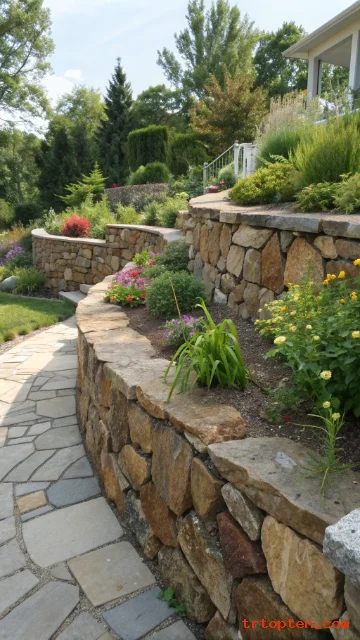
A mixed stone mosaic wall turns a retaining wall into art. The variety adds depth and character without extra decor.
Use a repeating pattern of sizes so the face still looks organized. Place flatter stones on the front face to create a cleaner plane.
Choose one color tone to keep the mix cohesive. Add climbing plants nearby for a soft, cottage-garden finish.
Rock Retaining Wall With a Built-In Planter Strip
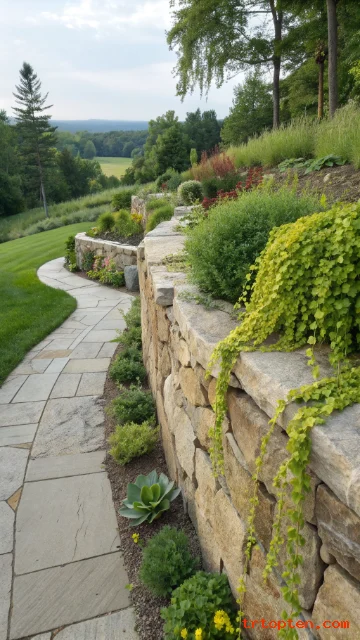
A planter strip on top makes the wall feel alive. Plants also help blend stone into the yard.
Create a planting pocket with landscape fabric and good soil. Use small stones behind the face for drainage.
Plant trailing flowers or low shrubs to spill gently over the edge. Keep irrigation simple with a drip line along the top.
Retaining Wall With Capstones for a Finished Edge
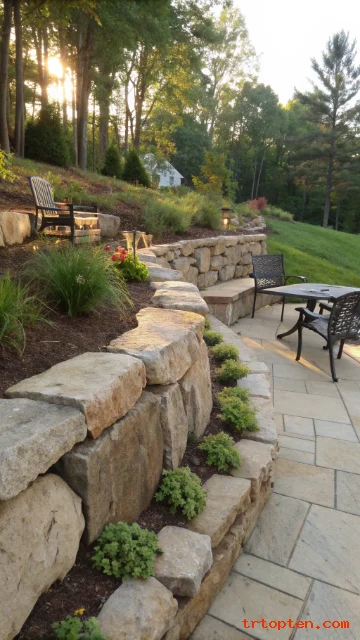
Capstones protect the top course and give a clean outline. They also make the wall more comfortable to sit on.
Use large flat stones for the cap and keep overhang small. Set the caps level so the wall looks professional.
Match cap color to the main stone for a unified look. Add seating cushions or nearby benches to make the area usable.
Low Rock Border Wall for Gentle Slopes
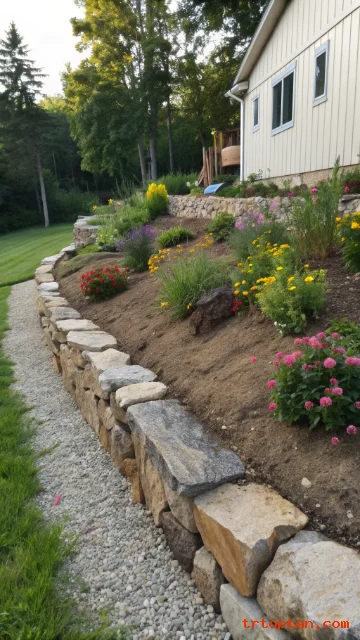
A low wall can hold soil in a small grade change. It adds structure without making the yard feel boxed in.
Use medium stones and keep height under knee level for stability. Create a shallow trench and compact the base for a solid start.
Plant perennials behind it to hide the backfill line. Edge the front with gravel for a clean transition to lawn.
Rock Wall With Drainage Gravel Reveal
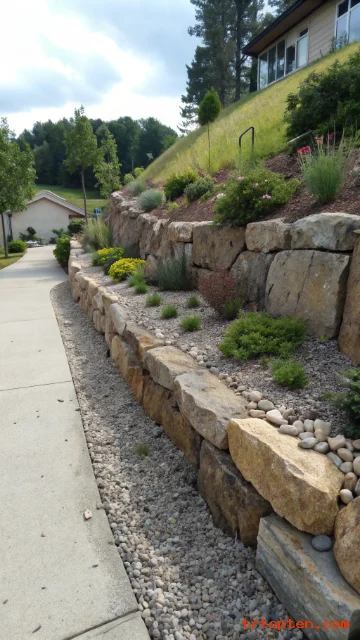
A visible gravel strip at the base looks neat and supports drainage. It also keeps soil from staining the stones.
Use crushed stone and a simple edging line to hold it in place. Slope the gravel slightly away from the wall for runoff control.
Pair with larger stones so the wall face stays bold. Add a few accent boulders nearby for a natural grouping.
Rustic Stone Wall With Creeping Groundcover
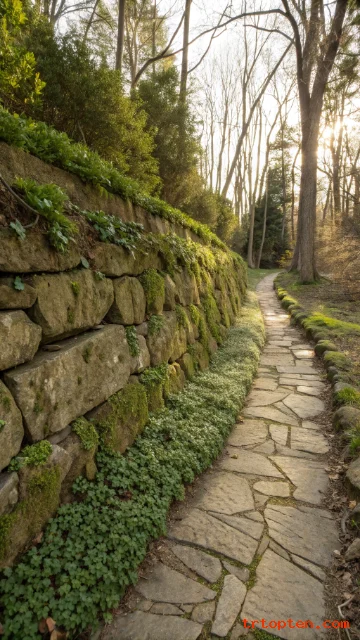
Groundcover softens hard edges and fills visual gaps. It also helps reduce splash and erosion around the wall.
Choose hardy plants like creeping thyme or sedum. Plant them in pockets and along the top so they spread naturally.
Keep the wall face mostly visible so the stone still leads the design. Add a stone path nearby to complete the rustic look.
Retaining Wall With a Natural Water Runoff Channel
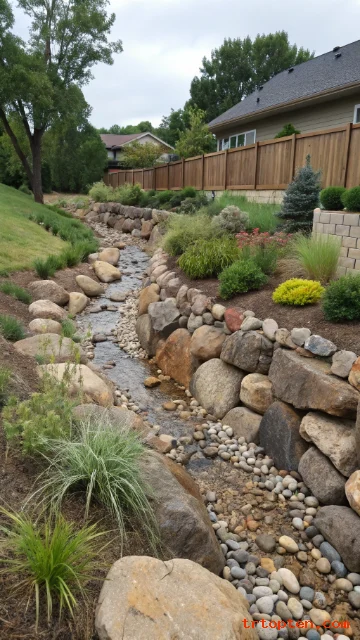
A runoff channel guides water safely around the wall. It reduces washouts and protects the base.
Use rounded rocks to form a dry creek beside or through the wall line. Set landscape fabric under the rocks to stop weeds and sinking.
Blend the creek into the yard with native plants at the edges. Add a few larger stones as natural “drops” for style.
Mountain-Style Rock Wall With Random Face Stones
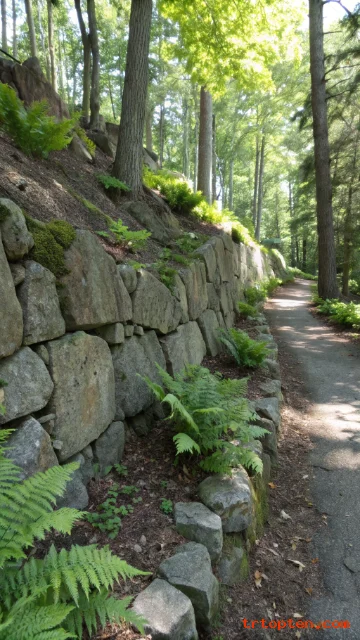
A random face wall looks rugged and authentic. It fits cabins, woodland yards, and naturalistic gardens.
Use stones with varied faces and keep joints tight with small chocks. Set each stone firmly so it does not rock under pressure.
Add ferns and shade plants for a forest feel. Use subtle lighting to highlight the texture at night.
Split-Face Stone Retaining Wall With Natural Blend
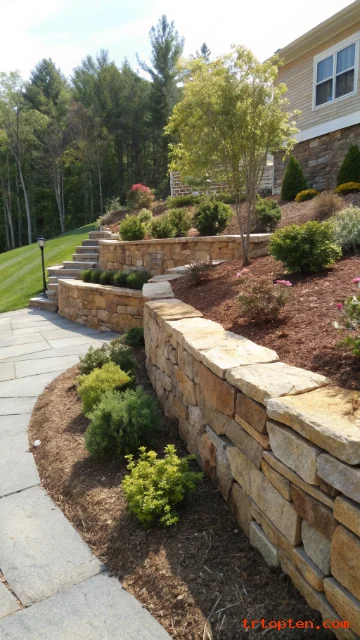
Split-face stone has texture but still stacks neatly. It gives a strong structure that looks natural from a distance.
Pick a blend of tones that match your home exterior. Use long stones at intervals to lock courses together.
Cap the wall with flat stone for a clean top line. Add mulch beds and shrubs to keep the look balanced.
Retaining Wall With Corner Boulders for Strength
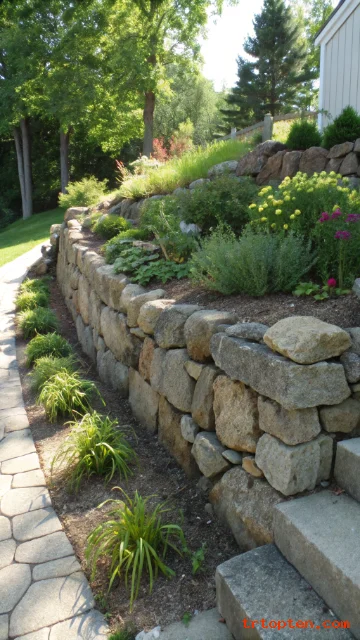
Corner boulders act like anchors and look intentional. They also help the wall resist spreading at edges.
Place heavy stones at corners and ends before filling the middle. Align the face so the corners look squared and solid.
Use smaller stones to knit the joints around the corners. Add taller plants behind the corners for a layered look.
Rock Retaining Wall That Doubles as Seating
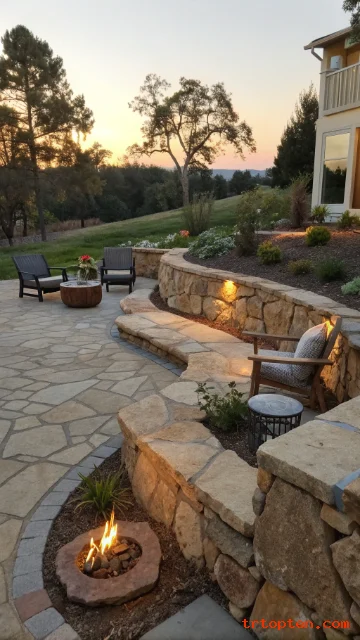
A seat-height wall adds function without extra furniture. It makes patios and fire pit areas feel complete.
Keep height around typical bench height and use smooth capstones. Ensure the base is compacted and the face stones are stable.
Add a gravel patio or paver area in front for clean footing. Place cushions or a simple wood bench nearby for comfort.
Retaining Wall With Stone Steps and Landing Pads
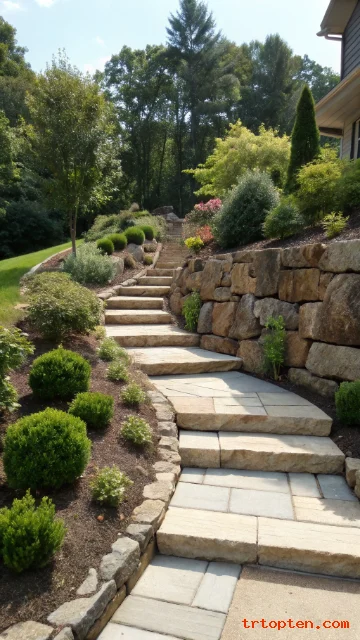
Landings make long stair runs feel safer and easier. They also create spots for planters or decor.
Use large flat stones for landings and match the step material. Keep each riser height consistent for better walking comfort.
Add a simple handrail if the slope is steep. Plant low shrubs near landings to frame each stop.
Retaining Wall With Mixed Boulders and Cobblestones
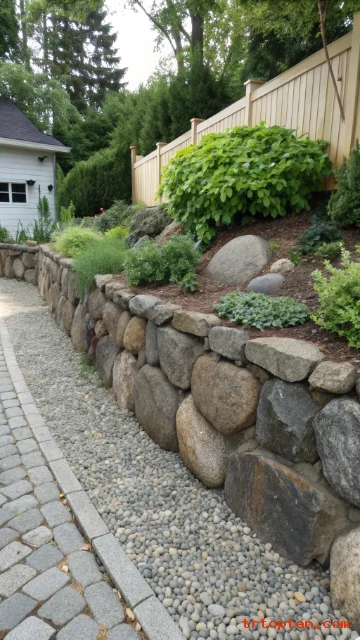
Boulders provide structure and cobblestones fill the gaps. This mix creates a natural, tight finish.
Set boulders first and pack cobbles between them like wedges. Keep face alignment consistent so the wall does not look messy.
Add a planting bed above for a soft top edge. Use gravel at the base for drainage and a clean border.
Natural Rock Wall Along a Driveway Edge
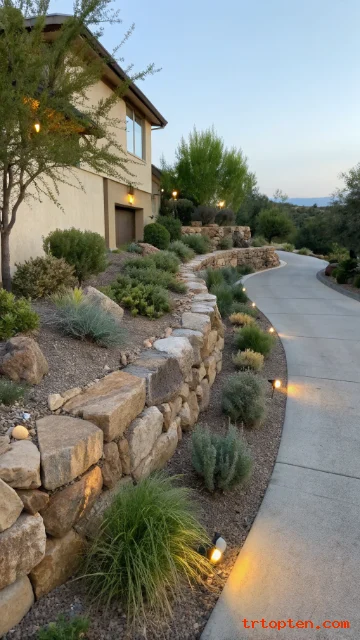
A driveway edge wall controls soil and adds curb appeal. It also protects landscaping from car tires and runoff.
Use durable stones and keep the wall height modest for safety. Add a drainage layer behind the wall to avoid water pressure.
Plant tough shrubs and grasses that can handle heat from pavement. Add driveway lighting to make the line clear at night.
Retaining Wall With Built-In Stone Niches
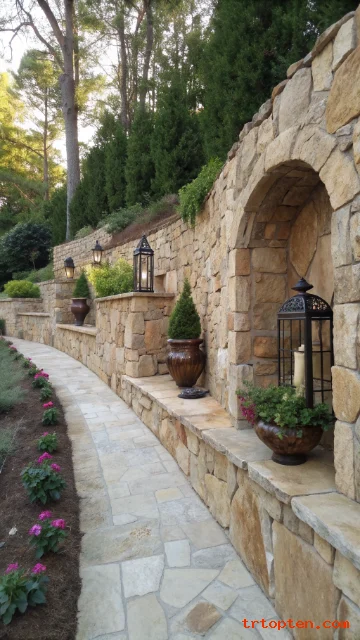
Stone niches add personality and break up long runs. They create small spaces for pots, lanterns, or garden art.
Plan niche size before stacking and support the opening with larger stones. Keep niche depth shallow so the wall stays strong.
Place niches at eye level for best impact. Add a few matching planters to keep the look consistent.
Two-Tone Rock Retaining Wall With Natural Contrast
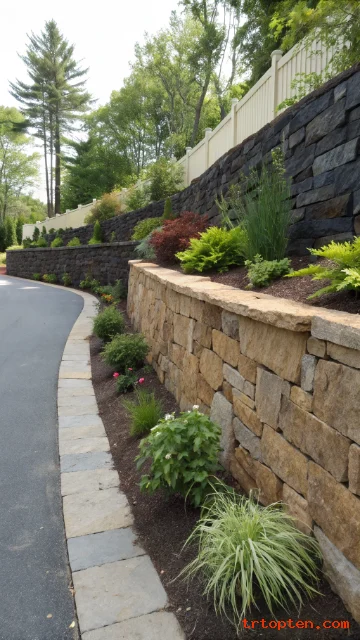
Two-tone stone adds definition without paint or stain. The contrast can highlight the wall shape and curve.
Use one tone for the base and a lighter tone for upper courses. Blend a transition band so the change looks natural.
Match plants to the tones for a cohesive palette. Add a simple capstone that ties both colors together.
Retaining Wall With Stone Spillways for Heavy Rain Areas
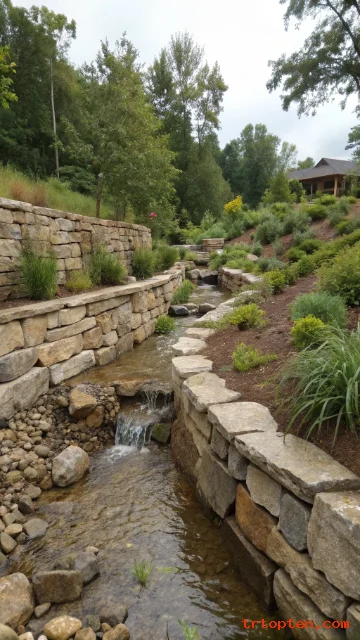
Spillways let water pass through specific points safely. They help prevent blowouts and erosion on wet sites.
Create a few stone-lined openings that guide water to a rock bed. Use larger stones around spillways to resist shifting.
Connect spillways to a dry creek or gravel channel. Plant moisture-tolerant plants near the runoff path for a natural finish.
Retaining Wall With Stepped-Back Courses
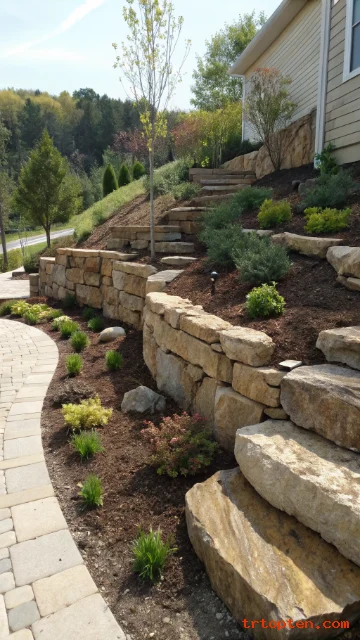
A stepped-back wall creates a strong profile and a natural slope feel. The setback helps resist soil pressure.
Start with a wide base course and step each row back slightly. Use long stones to tie sections together as you rise.
Plant low shrubs on the stepped ledges for extra softness. Add mulch to reduce splash and weed growth behind the wall.
Retaining Wall Around a Raised Garden Bed
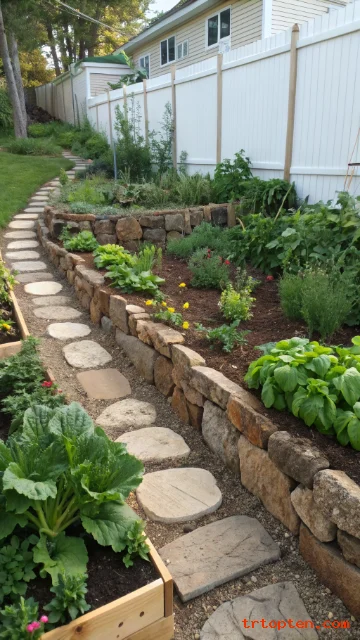
A rock retaining wall can form a raised bed with strong edges. It improves drainage and makes planting easier on your back.
Keep the wall low and wide for stability. Fill the bed with quality soil and add compost for better growth.
Use the same stone style across the yard to unify the design. Add a simple stepping-stone path for easy access.
Natural Rock Retaining Wall With a Pathway Cut-In
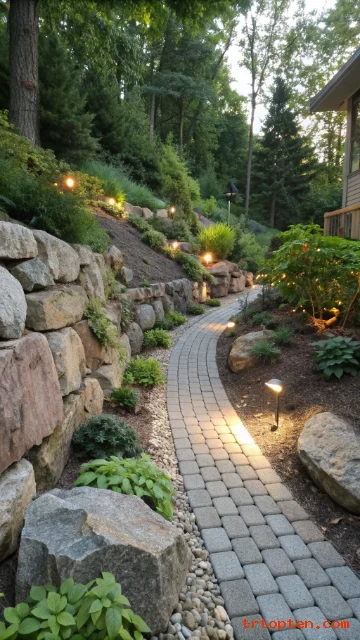
A cut-in pathway makes slopes feel welcoming and usable. It also creates a clear route through the yard.
Carve a path line first and build the wall on both sides as needed. Use compacted gravel or pavers for stable walking.
Add small boulders as path markers for a natural look. Plant along the edges to frame the walkway and soften the stone.
What is the best stone for a natural rock retaining wall?
Granite, limestone, and sandstone are popular because they handle weather well. Fieldstone and local rock also work if the base and drainage are done right.
Do natural rock retaining walls need drainage?
Yes, drainage reduces water pressure behind the wall. Gravel backfill and a drain pipe can help keep the wall stable.
How tall can a natural rock retaining wall be without engineering?
Rules vary by location and height. Many areas require design help or permits once walls reach certain heights.
Is dry-stack better than mortared stone for retaining walls?
Dry-stack drains well and looks natural. Mortar can add rigidity, but it still needs drainage and a solid base.
What base do you need for a rock retaining wall?
A compacted gravel base is common for stability. The base should be level and wide enough to support the bottom stones.
How do you stop a rock retaining wall from leaning?
Use a slight backward lean into the slope and solid base prep. Add proper drainage and overlap stone joints for strength.
Can you build a retaining wall with round river rocks?
Round rocks can shift if they are not locked in well. Use larger stable stones and fill gaps with smaller rock to wedge them tight.
How do you blend a retaining wall into landscaping?
Use plants along the top and base to soften edges. Match stone color to nearby hardscape and use repeated textures.
How much maintenance do natural rock retaining walls need?
They usually need low maintenance after installation. Check drainage areas, remove weeds from joints, and reset loose stones if needed.
Conclusion
Natural rock retaining wall ideas help you control erosion, shape your yard, and create planting space with real character.
Pick a style that fits your home, build a strong base, and manage drainage so the wall stays steady for years.