
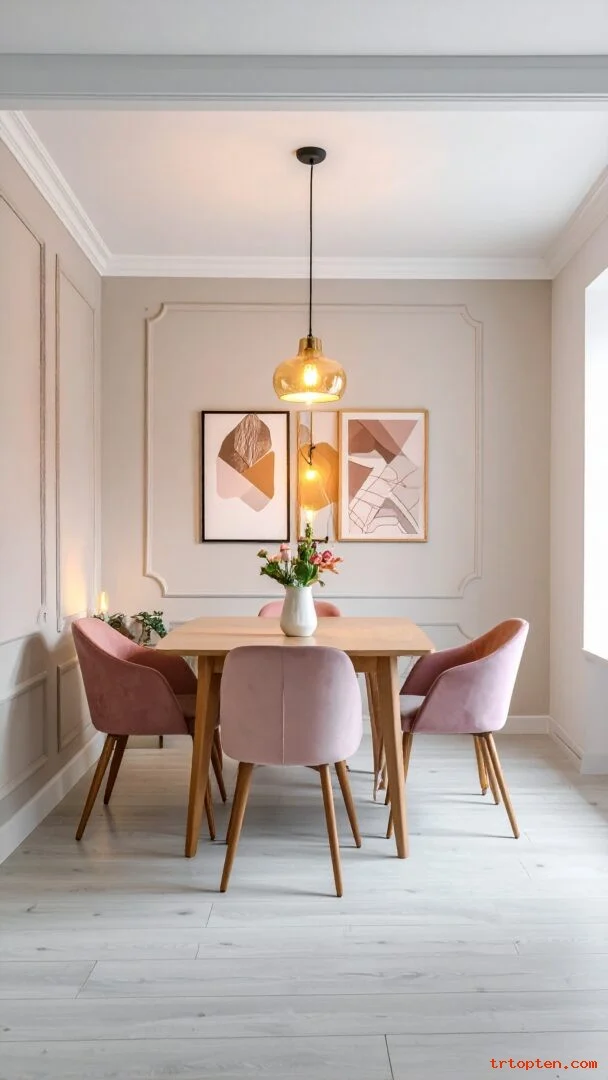
Small dining rooms can feel cozy, stylish, and easy to use with a few smart moves. The right layout, lighting, and color choices can make the space look larger and work better every day. These small dining room decorating ideas will help you create a dining spot that looks polished and feels comfortable.
Pick a Round Dining Table
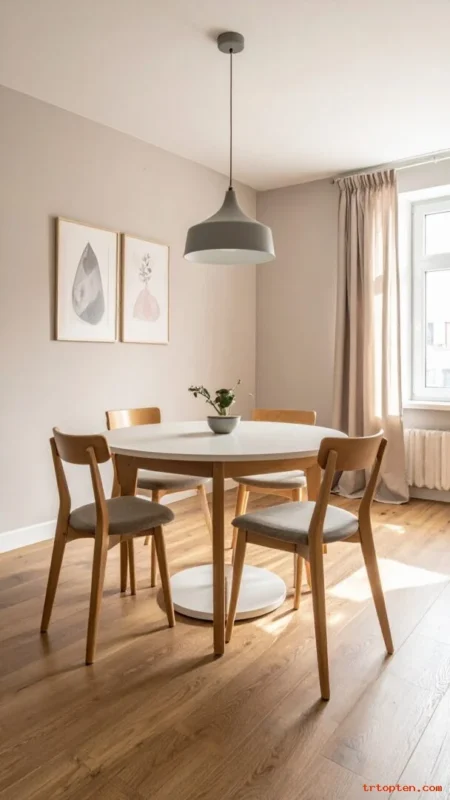
A round table helps people move around a tight space with fewer sharp corners. It also keeps conversation flowing because everyone faces the center. This shape often fits better in small dining rooms than long rectangles.
Choose a pedestal base to free up legroom and reduce visual clutter. Keep the tabletop size realistic so chairs can slide in smoothly. Add a simple centerpiece so the surface stays functional. Use a table with a light wood or glass top to keep the room airy. Keep chair backs slim so the set looks lighter. Place the table under a centered light for a balanced look.
Use an Extendable Table for Flexibility
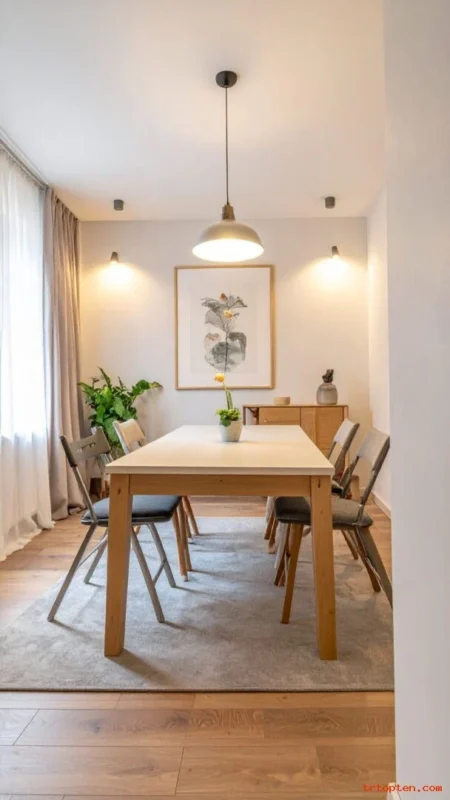
An extendable table saves space on normal days and expands for guests. It supports daily meals and special dinners without needing extra furniture. This is one of the most practical small dining room decorating ideas.
Pick a table with a smooth leaf system so setup feels easy. Store the leaf inside the table if possible to avoid closet clutter. Pair it with stackable or slim chairs for extra room.
Keep the table finish consistent with other wood tones in the room. Use a simple runner to style it without hiding the design. Add a small tray for salt, pepper, and napkins.
Swap Bulky Chairs for Slim Seating
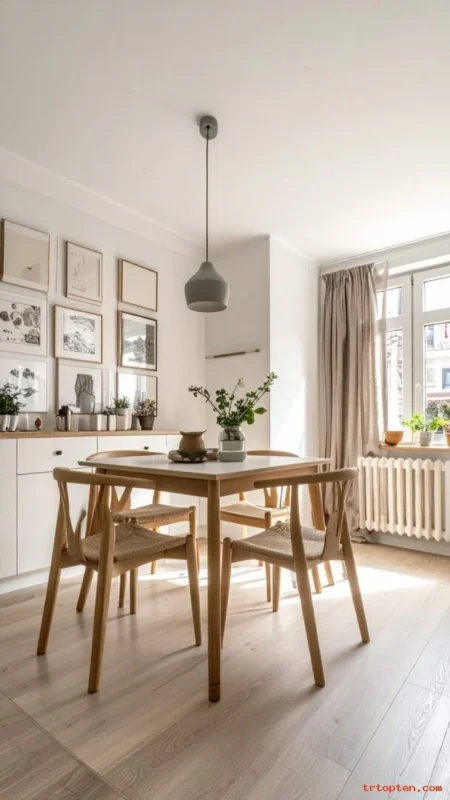
Heavy chairs can make a small dining room feel crowded fast. Slim chairs keep the floor visible and help the room look bigger. They also make it easier to slide in and out.
Choose armless chairs with thin frames and open backs. Keep chair colors close to the wall color for a calm look. Add soft seat cushions for comfort without bulk.
Mix two end chairs with a simple bench on one side if space is tight. Keep chair legs the same color for a tidy feel. Avoid oversized slipcovers that add volume.
Add a Dining Bench on One Side
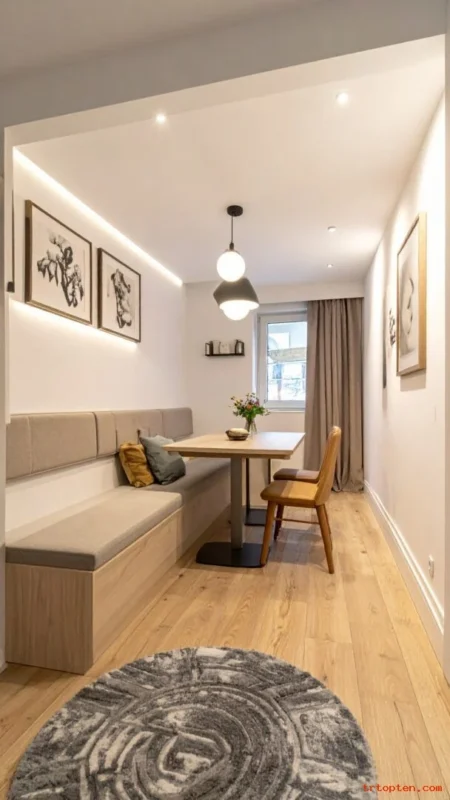
A bench can tuck fully under the table and save walking space. It also seats more people when needed. This is a smart solution for narrow rooms and wall-side layouts.
Pick a bench with a back if you want extra comfort. Choose a backless bench if you need the cleanest look. Add a thin cushion in a durable fabric for daily use.
Keep the bench length slightly shorter than the table for easy movement. Use matching chairs on the other side for balance. Add a small basket under the bench for linens if space allows.
Hang a Mirror to Double the Light
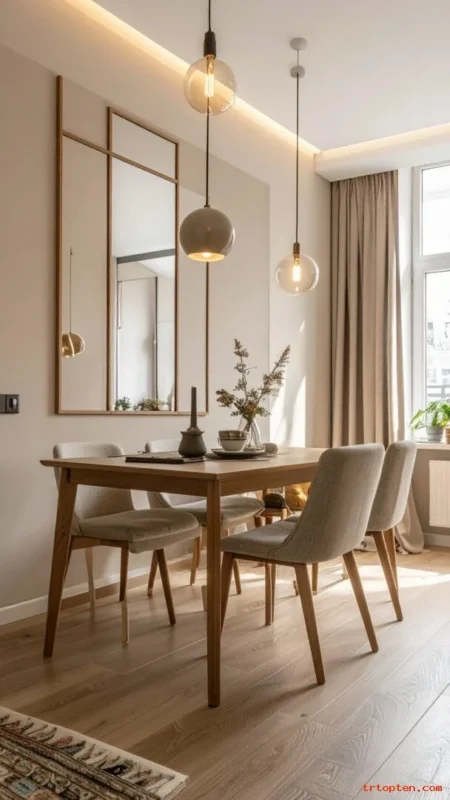
A mirror reflects light and makes the room feel deeper. It can visually widen a small dining area in seconds. Mirrors also add style without taking floor space.
Place the mirror across from a window to bounce natural light. Choose a thin frame to keep the look clean. Hang it at eye level so it feels intentional.
Use a round mirror to soften sharp corners in tight layouts. Keep the wall around it simple so it stands out. Add a small sconce near it for evening glow.
Choose a Light Wall Color
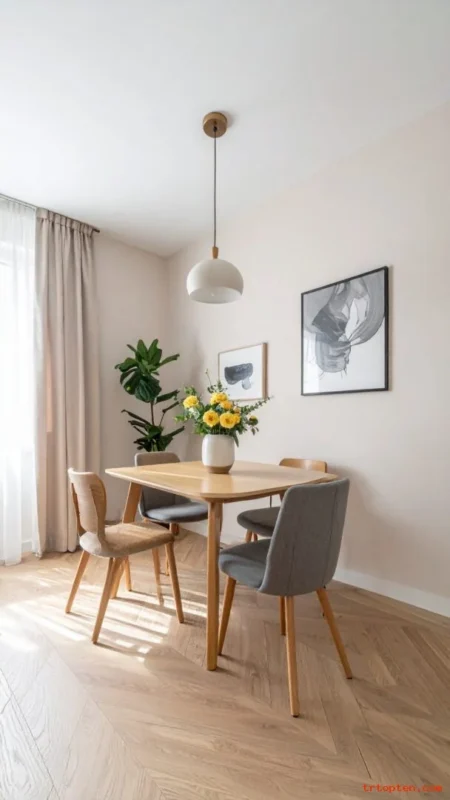
Light paint colors help a small dining room look open and calm. Soft whites, warm creams, and pale greiges work well for most homes. A bright backdrop also helps decor and art stand out.
Pick a finish that is easy to wipe clean near food. Use the same color on trim for a seamless look. Keep contrast low to reduce visual breaks.
Add warmth with wood tones, woven textures, or brass accents. Use a single accent color in small pieces like napkins or art. Keep patterns simple so the room stays relaxed.
Paint One Accent Wall for Depth
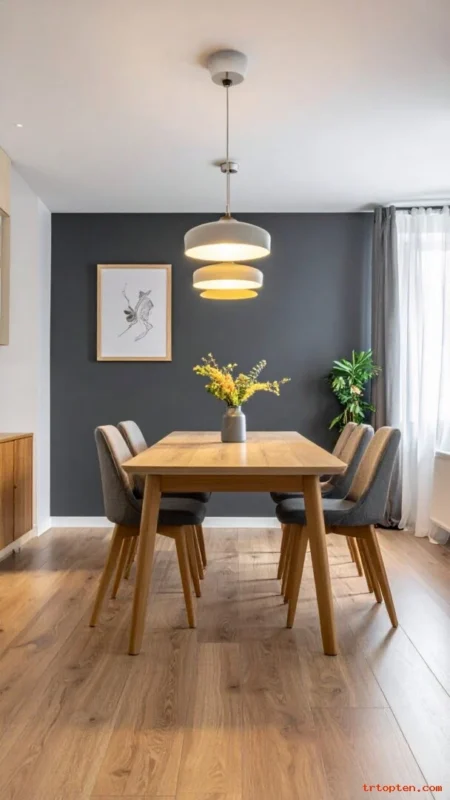
An accent wall can add depth without making the room feel smaller. It gives the eye a clear focal point. This works well behind a sideboard or dining table.
Use a deeper shade like forest green, navy, or charcoal. Keep the other walls light so the space stays open. Choose matte paint for a soft, modern look.
Add art or a mirror to finish the accent wall. Keep frames consistent for a tidy effect. Use warm lighting so dark colors feel inviting.
Install a Pendant Light to Define the Zone
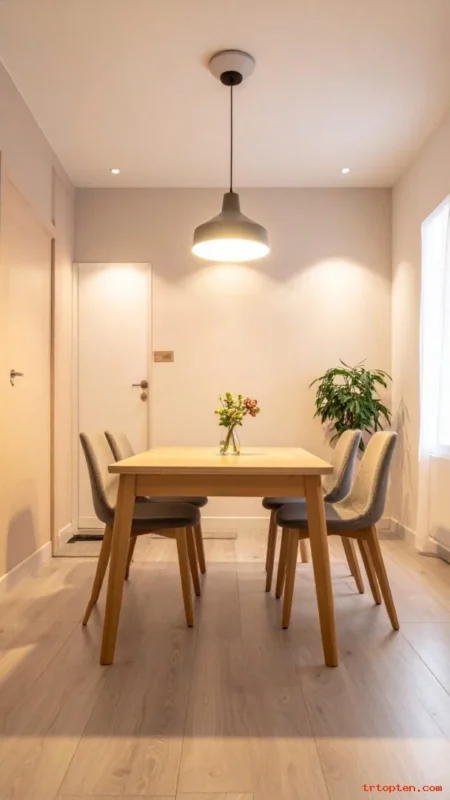
A pendant light anchors the dining area and makes it feel intentional. It draws the eye up and creates a cozy mood. Lighting is one of the fastest upgrades for small spaces.
Choose a pendant that fits the table size, not the room size. Hang it low enough to feel intimate but high enough for clear sight lines. Use a dimmer to control brightness.
Pick a shade that directs light downward for meals. Use warm bulbs for a welcoming tone. Keep the ceiling simple so the fixture looks crisp.
Use Wall Sconces to Save Surface Space
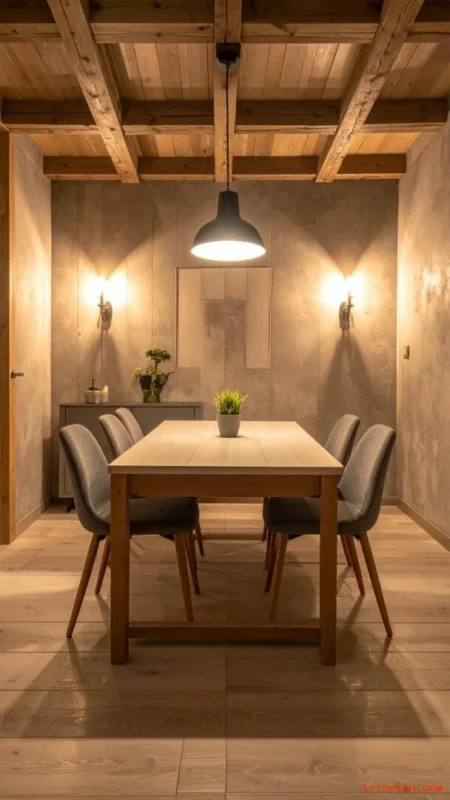
Sconces add light without taking up table or sideboard room. They create a layered lighting look that feels high-end. This helps small dining rooms feel more comfortable at night.
Place sconces on the wall near the table or above a sideboard. Choose plug-in sconces if you want an easy install. Keep shades small so they do not overwhelm the wall.
Match metal finishes with other hardware in the room. Use warm bulbs to reduce glare. Keep cords tidy with covers for a clean look.
Add a Narrow Sideboard for Storage
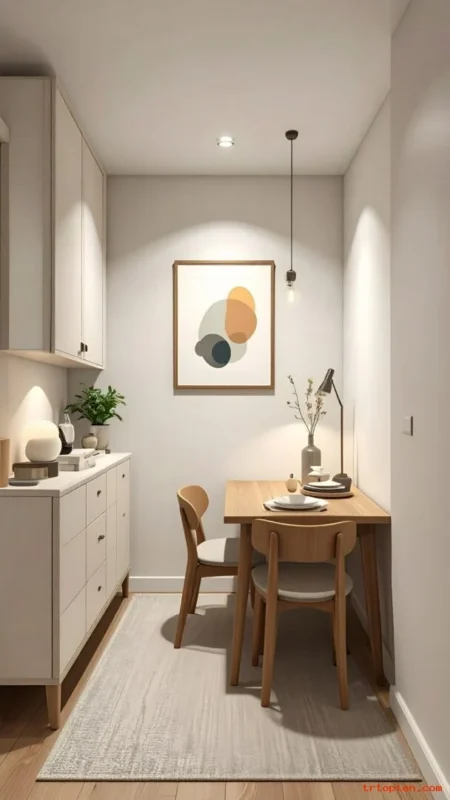
A narrow sideboard adds storage without eating up the room. It holds dishes, linens, and serving items close to the table. It also gives you a styling surface for decor.
Choose a piece that is shallow but long. Keep the top clear with a tray and a small lamp. Store bulky items inside to reduce visual clutter. Hang art above it to create a finished wall. Add a small plant for life and color. Use baskets inside if the doors are open shelves.
Try Floating Shelves Instead of a Cabinet
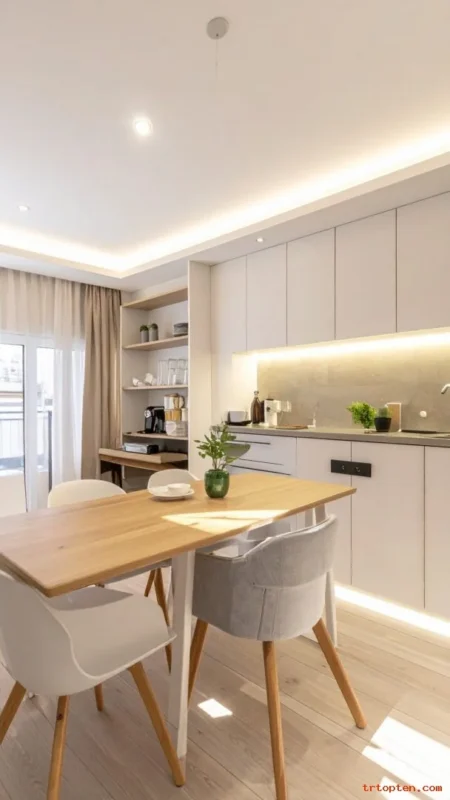
Floating shelves give storage without a heavy look. They keep the room feeling open because you can see the wall. This is a great option for very small dining rooms.
Install two to three shelves and keep spacing even. Store a mix of plates, glasses, and a few decor pieces. Keep colors consistent for a calm display. Use matching jars or baskets to hide small items. Avoid overcrowding the shelves with too many objects. Leave some empty space so the shelves breathe.
Add a Bar Cart as a Mini Serving Station
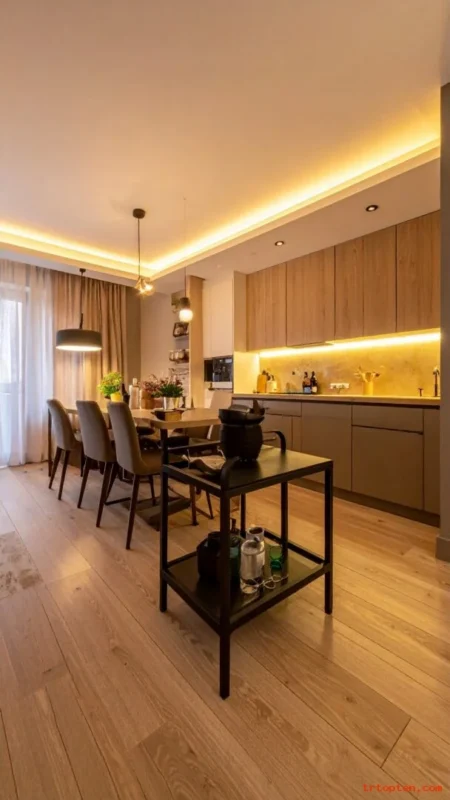
A bar cart adds function and style in a small footprint. You can roll it away when you need more space. It works as a coffee station, drink station, or dessert cart.
Choose a cart with two tiers and a slim frame. Keep the top tray simple with a few bottles or mugs. Use the lower shelf for extra napkins and plates. Match the cart metal to your light fixture or frames. Add a small plant or candle for warmth. Keep wheels locked during meals for safety.
Use a Rug to Anchor the Dining Set
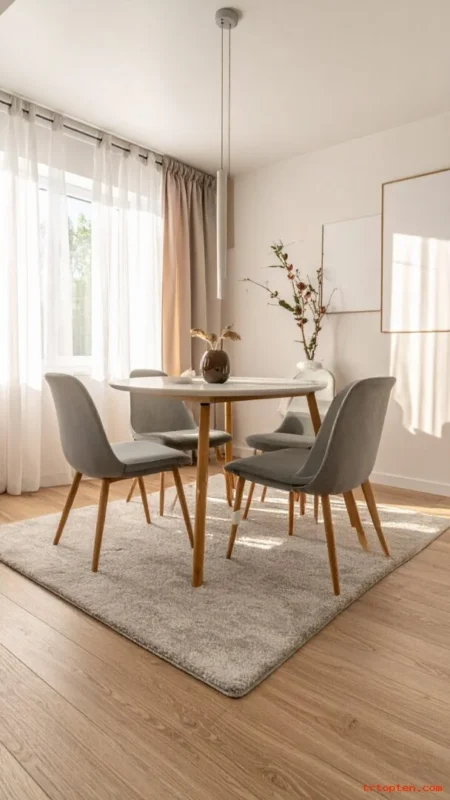
A rug helps define the dining space and adds softness. It also protects floors and reduces echo in small rooms. The right size rug makes the layout look intentional.
Pick a rug that allows chairs to slide without catching. Choose a low-pile weave for easy cleaning. Keep the pattern small or subtle for a calm look. Use a rug pad to stop slipping. Match rug tones to the walls and table for unity. Choose stain-friendly materials for everyday life.
Hang Art to Pull the Eye Up
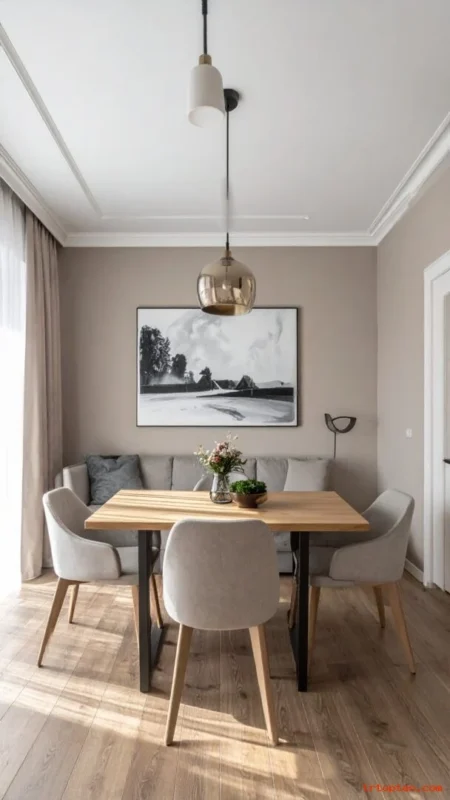
Wall art adds personality and makes the room feel taller. It also creates a focal point without using floor space. This is a simple win for small dining room decorating ideas.
Choose one large piece for a clean look. Use a gallery wall if you want more color and energy. Keep frames consistent to reduce clutter. Hang art slightly higher than you think to lift the eye line. Use soft, simple colors if your room is busy. Add a picture light for a polished finish.
Use a Statement Wallpaper on One Wall
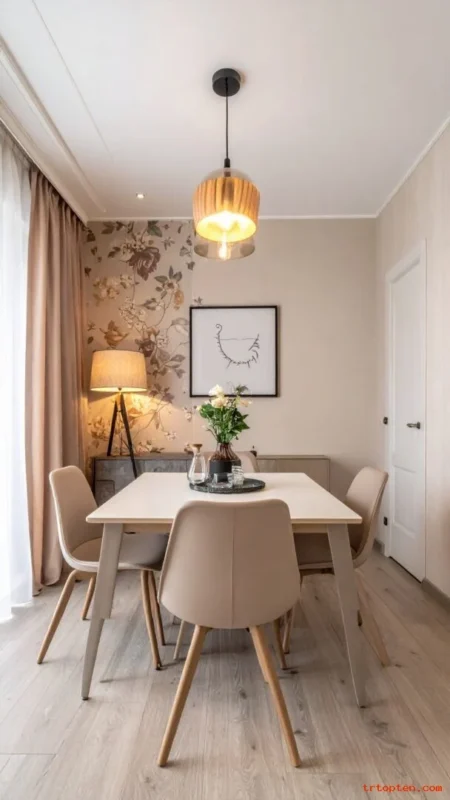
Wallpaper adds interest while keeping furniture minimal. A single wallpaper wall can make a small dining room feel designed. It also adds texture and pattern without extra objects.
Choose a small-scale print so it does not overwhelm the room. Keep the remaining walls plain and light. Use removable wallpaper if you rent. Pair the wallpaper with simple chairs and a clean table shape. Pull one color from the wallpaper for napkins or a vase. Keep the tabletop decor minimal to avoid visual noise.
Pick Glass or Acrylic Pieces for an Airy Look
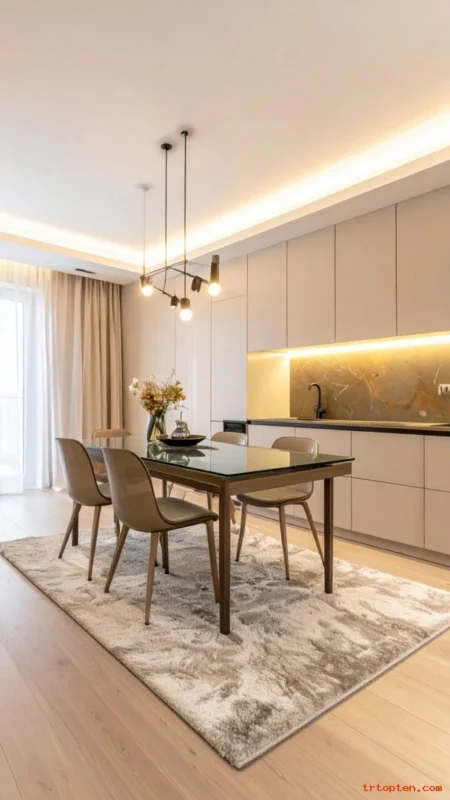
Transparent furniture makes the room feel lighter. You see more of the floor and walls, so the space looks bigger. This trick works well for small dining rooms.
Try acrylic chairs or a glass-topped table. Keep the base simple so it does not look busy. Pair clear pieces with warm textures like linen and wood. Clean glass surfaces often so the look stays crisp. Use a soft rug to balance hard materials. Add warm lighting to keep the space inviting.
Choose Built-In Banquette Seating
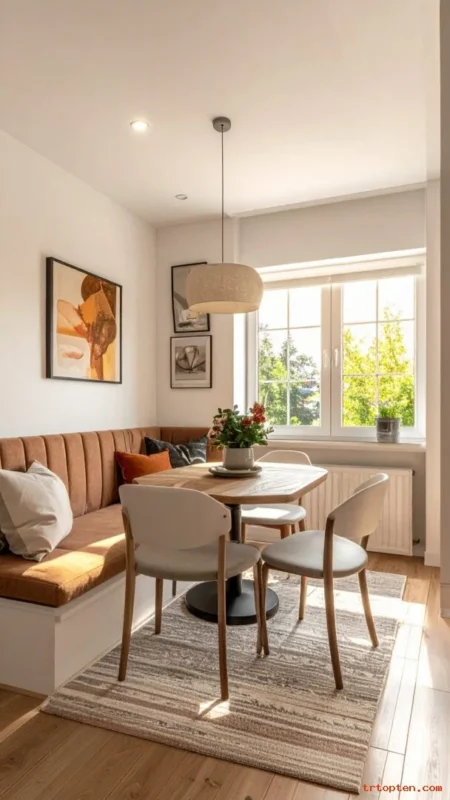
A banquette uses corners efficiently and adds cozy seating. It can turn a small dining area into a breakfast nook. This layout often frees up floor space.
Build a simple bench along two walls if possible. Add storage drawers under the seat for extra function. Use washable cushions for easy maintenance. Pair the banquette with slim chairs on the open side. Keep the table round or oval for smoother movement. Add wall art above the banquette to finish the look.
Use Corner Seating to Maximize Every Inch
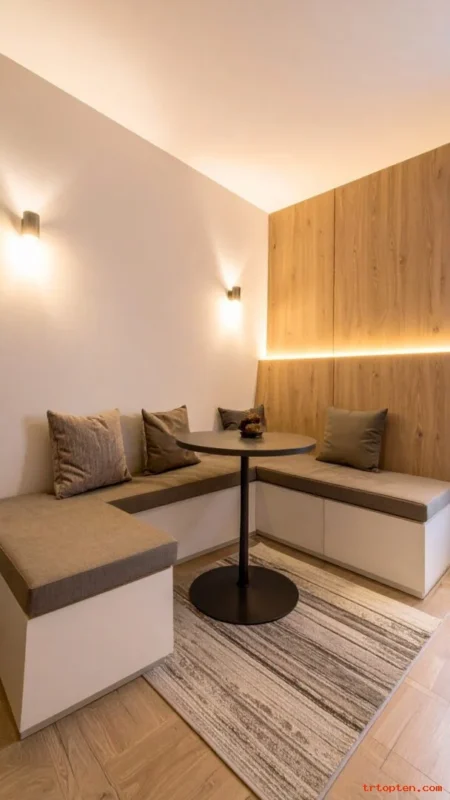
Corners are often wasted in small rooms. Corner seating makes that space useful and comfortable. It also creates a natural dining zone.
Place an L-shaped bench or two chairs angled into the corner. Add a small round table to keep the flow easy. Use a corner shelf for a plant or candle. Keep fabrics light so the corner feels open. Add a wall sconce above the corner for soft light. Use a small rug to anchor the nook.
Keep the Centerpiece Low and Simple
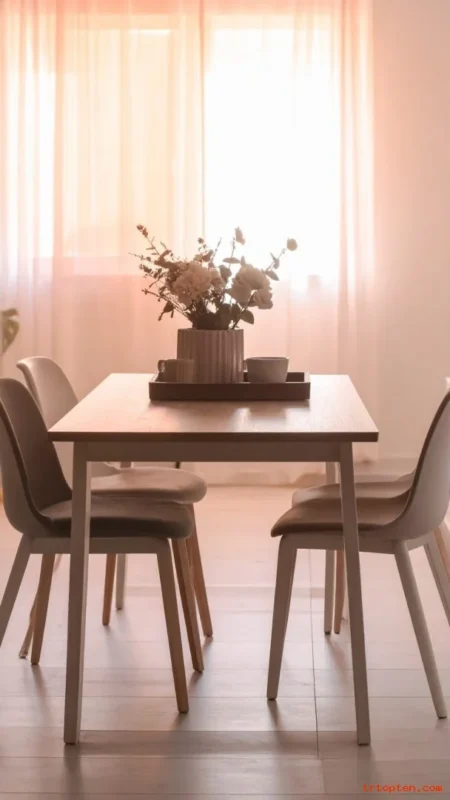
Tall decor can make a small dining room feel crowded. A low centerpiece keeps the sight lines open. It also makes everyday meals easier.
Use a shallow bowl, a small vase, or a tray with candles. Keep the colors neutral so the table looks calm. Use one focal piece, not many small items. Swap the centerpiece by season to keep the room fresh. Choose items that are easy to move for serving. Keep the tabletop mostly clear for function.
Add a Slim Console Table Behind Chairs
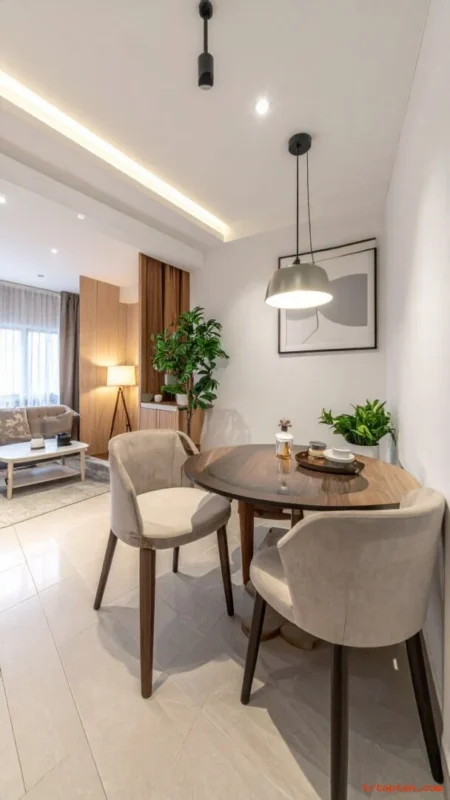
A slim console can sit behind dining chairs in tight layouts. It adds storage and a styling surface without blocking the table. This works well in open-plan spaces.
Choose a narrow console with shallow depth. Use it for a lamp, a plant, and a tray for keys or mail. Keep the top tidy so the room stays calm. Match the console height to chair backs for a clean line. Use baskets under it for extra storage. Keep cords hidden for a neat look.
Use Curtains That Go High and Wide
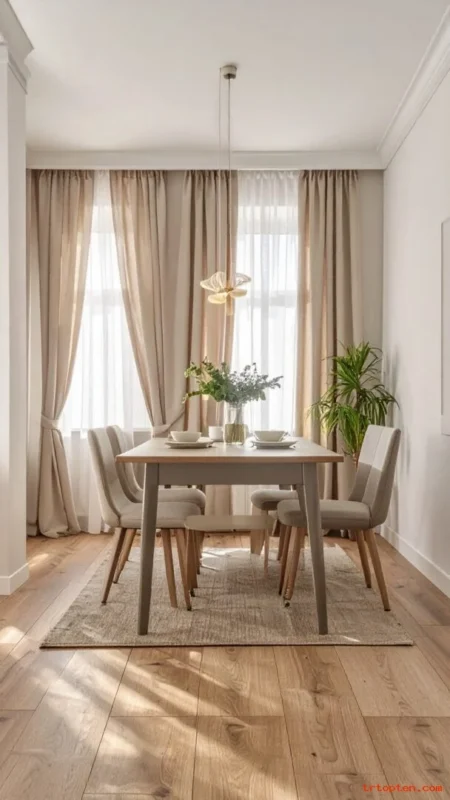
Curtains can make a window look bigger and the room taller. This trick adds softness and boosts the cozy feel. It also helps small dining rooms feel finished.
Hang the rod close to the ceiling. Extend it beyond the window frame on both sides. Choose light fabric so the room stays bright. Use a simple solid color or a subtle texture. Keep curtain panels long so they just skim the floor. Tie them back to maximize daylight.
Choose Multi-Use Lighting for Day and Night
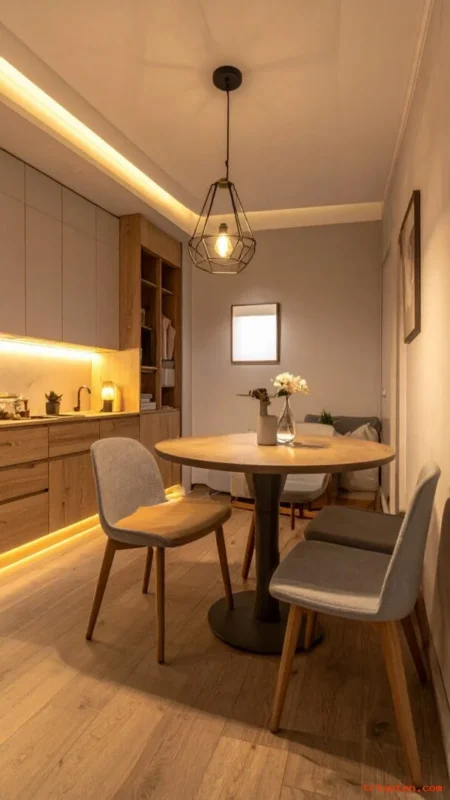
A small dining room needs flexible light. You want bright light for cleaning and softer light for meals. Layered lighting makes the room feel more inviting.
Use a pendant plus a small lamp on a sideboard. Add dimmable bulbs for easy mood shifts. Use warm color temperature for comfort. Keep switches easy to reach for daily use. Choose matching bulb tones across all lights. Avoid harsh glare by using shaded fixtures.
Add a Small Plant for Fresh Energy
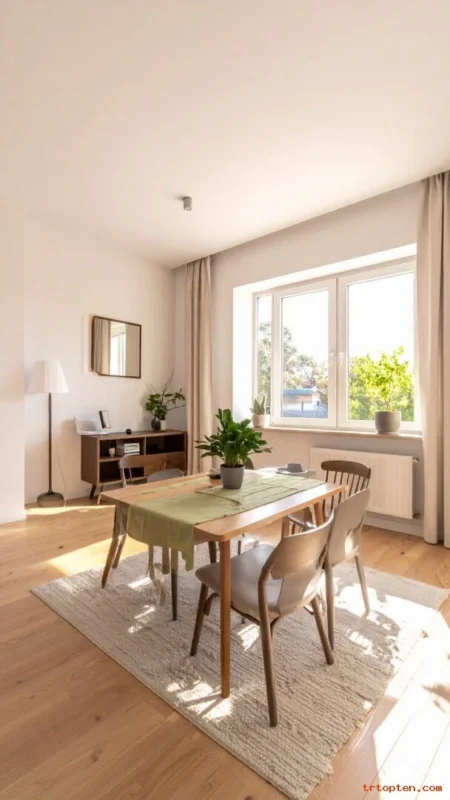
Plants add life and color without taking much space. They soften hard edges and make the room feel welcoming. Even one plant can upgrade the look.
Choose a plant that fits the light level in your room. Use a simple pot in a neutral tone. Place it on a shelf, sideboard, or windowsill. Keep plant size modest so it does not block movement. Water on a schedule so it stays healthy. Use a small vase of greenery as a backup option.
Use Vertical Storage on an Empty Wall
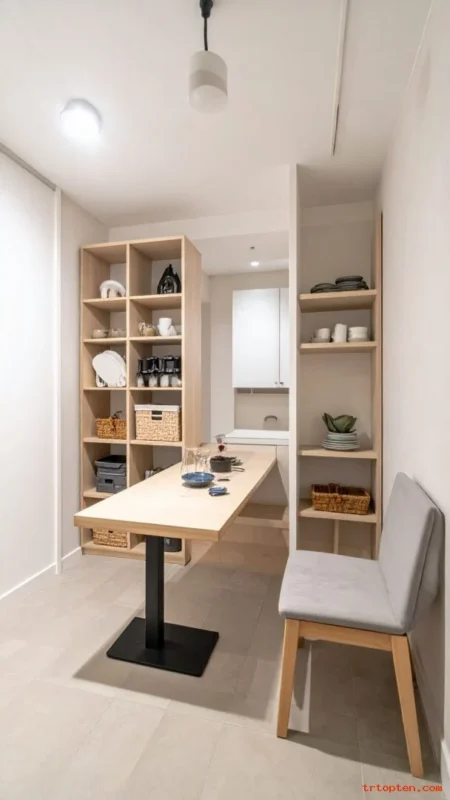
Vertical storage keeps the floor open. It lets you store dishes and decor in a slim footprint. This helps small dining rooms feel organized.
Try a tall narrow cabinet or a ladder shelf. Keep the bottom section for heavier items. Use the upper shelves for lighter decor. Keep shelf styling simple and spaced out. Use baskets to hide small items. Match the storage color to the wall for a seamless look.
Use a Fold-Down Wall Table
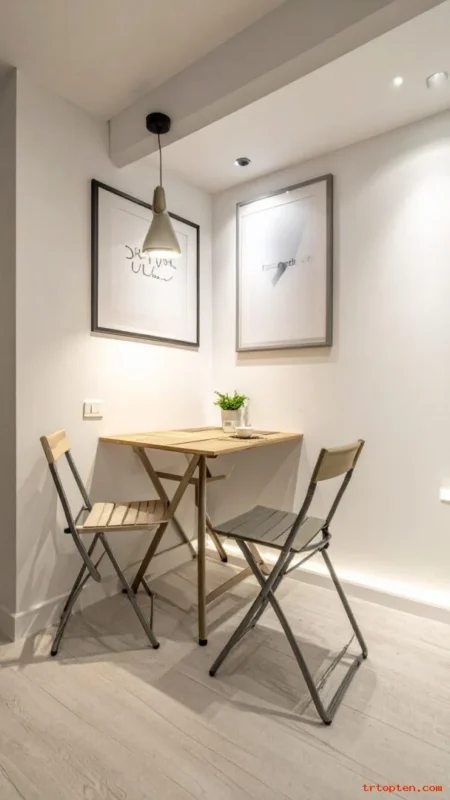
A fold-down table is perfect for very tight spaces. It gives you a dining surface when you need it and disappears when you do not. This idea works well in apartments.
Mount it at standard table height for comfort. Pair it with folding chairs that store flat. Add a small wall hook rack to keep chairs nearby. Choose a finish that matches your flooring or trim. Keep the wall above it simple with one piece of art. Use a small pendant or sconce to light the spot.
Create a Cozy Breakfast Nook with Cushions
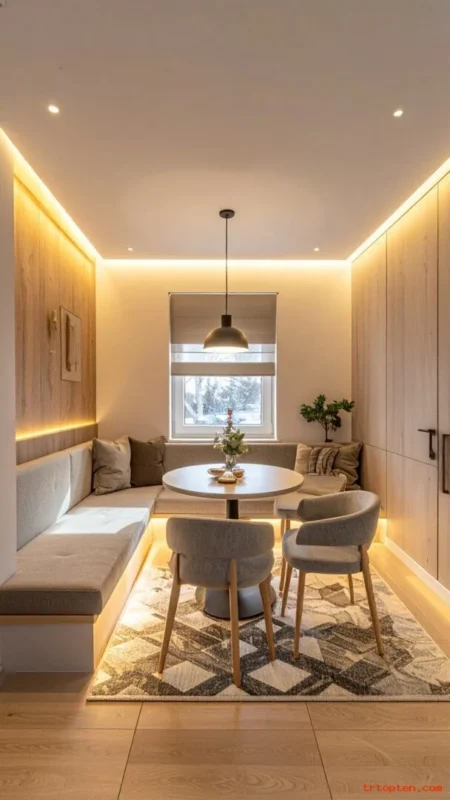
Cushions make a small dining nook feel warm and inviting. They also add color and texture without changing the layout. This is a fast update with big impact.
Use seat cushions and a few back pillows on a bench. Choose washable covers for easy care. Keep patterns small and colors consistent. Add a small round table to keep movement easy. Place a sconce or pendant above the nook for a cozy glow. Keep the wall decor simple and bright.
Keep a Consistent Color Palette
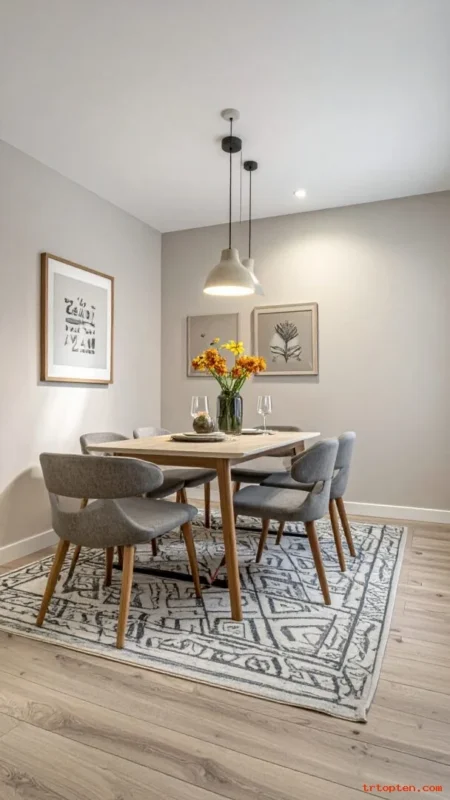
Too many colors can make a small dining room feel busy. A consistent palette helps the room look calm and larger. It also makes styling easier.
Pick one main neutral and one accent color. Repeat those tones in the rug, art, and linens. Keep wood tones in the same warm or cool family. Use black or brass as a small contrast detail. Keep patterns limited to one or two areas. Let texture do the work for depth.
Add Texture with Natural Materials
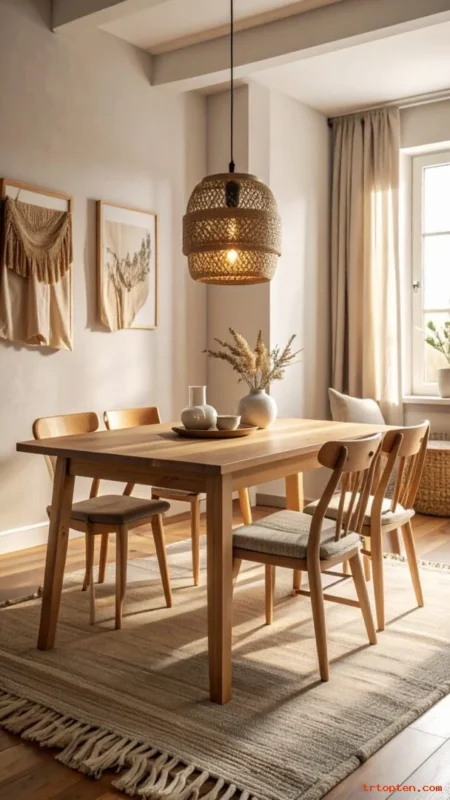
Texture makes a small room feel rich without adding clutter. Natural materials like rattan, linen, and wood bring warmth. They also fit many decor styles.
Use a woven light shade or woven chargers on the table. Add linen napkins and a simple runner. Choose a wood table or wood accents for balance.
Keep textures in a similar tone range. Use one statement texture and a few supporting ones. Avoid too many rough textures in one spot.
Try Open-Back Chairs for Visual Space
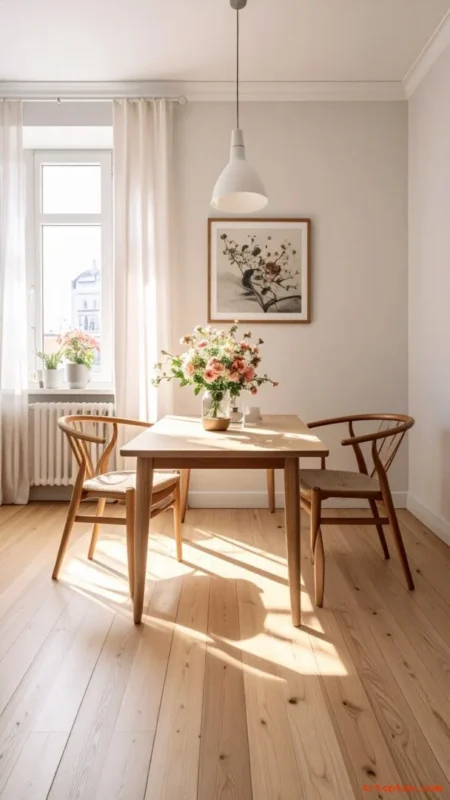
Open-back chairs show more wall and floor. This makes the room feel less crowded. They also add a modern touch without heavy lines.
Choose chairs with simple slats or a curved open back. Keep chair frames slim for a light look. Use seat cushions if you want more comfort. Match chair color to the table or walls for harmony. Keep the table base simple to avoid visual overload. Use a small rug to anchor the set.
Add a Small Shelf Ledge for Art and Plates
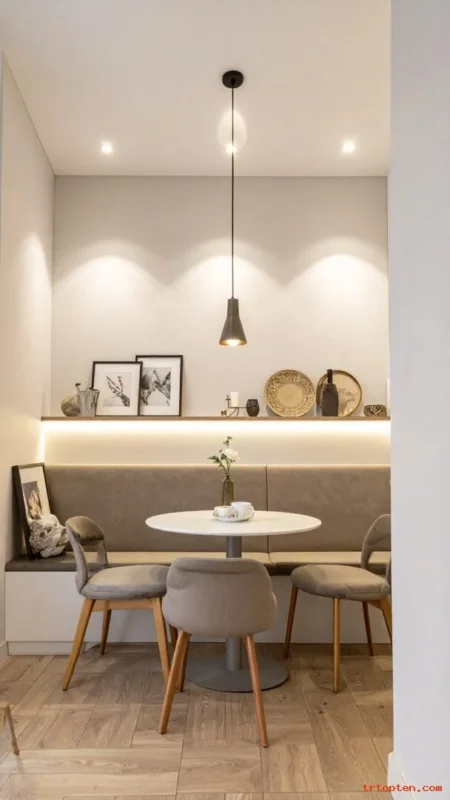
A picture ledge gives you flexible decor in a small space. You can lean frames and swap them without nails. It also works for pretty plates and small objects.
Install one long ledge on a blank wall. Keep items layered but not crowded. Use a limited color range for a clean look. Mix one tall frame with two smaller pieces. Add one small plant or candle for warmth. Keep the ledge height above chair backs to avoid bumps.
FAQ
What is the best table shape for a small dining room?
A round table often works best because it saves walking space. A pedestal base helps with legroom. A small square table can also fit well in tight corners.
How do I make a small dining room look bigger?
Use light wall colors and add a mirror to reflect light. Choose slim furniture and keep the floor visible. Use consistent colors to reduce visual clutter.
Should I use a rug in a small dining room?
Yes, a rug can define the dining zone and add comfort. Choose a low-pile rug that is easy to clean. Make sure chairs can slide on and off the rug smoothly.
What lighting works best over a small dining table?
A pendant light centered over the table works well. Use warm bulbs and a dimmer for flexible mood. Wall sconces can add light without using surface space.
How can I add storage in a small dining room?
Use a narrow sideboard, floating shelves, or vertical storage. Choose pieces with shallow depth. Keep storage closed if you want a cleaner look.
What decor should I avoid in a small dining room?
Avoid bulky chairs, tall centerpieces, and too many small objects. Skip heavy dark curtains that block light. Avoid too many colors and loud patterns at once.
Can I use wallpaper in a small dining room?
Yes, use wallpaper on one wall to add style without crowding the room. Choose a small print for a calmer look. Keep the rest of the room simple and light.
How do I fit seating for more people in a small dining room?
Use a bench on one side or built-in banquette seating. Choose stackable or folding chairs for guests. Use an extendable table for special occasions.
What colors feel cozy in a small dining room?
Warm whites, soft beige, and light greige feel cozy and bright. Sage, terracotta, and muted blue add gentle color. Keep the palette simple for the best effect.
Conclusion
These 26 small dining room decorating ideas can help you improve layout, comfort, and style without crowding the space.
Focus on smart furniture choices, better lighting, and simple color planning so the room feels open and welcoming. Keep your decor intentional, and your small dining room will feel like a favorite place to gather.