
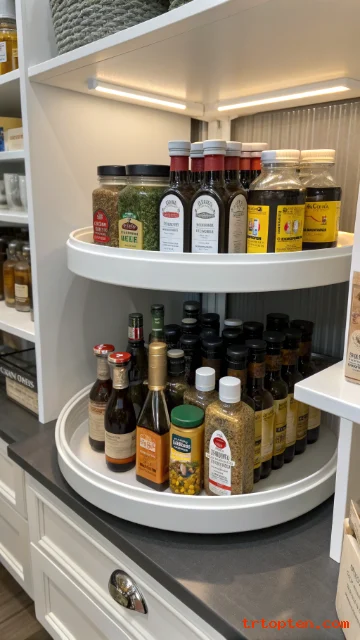
Small walk in pantry ideas can turn a cramped corner into the most useful spot in your kitchen.
With smart shelves, clear zones, and a few space tricks, you can store more and find items faster. This list shares practical pantry upgrades that look good and work hard in real homes.
Floor-to-Ceiling Shelving for Maximum Storage
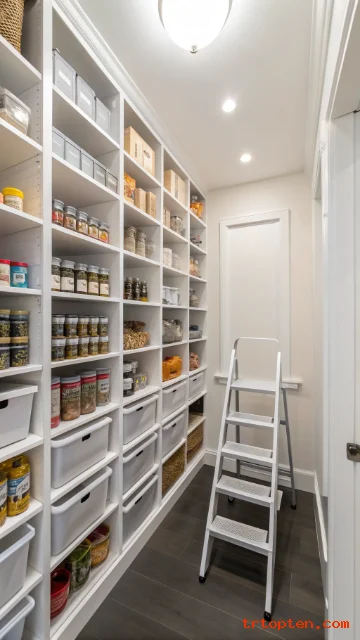
Tall shelves use the full wall height so you do not waste space near the ceiling. This layout keeps bulk items and backup supplies up high, then daily items at eye level. It also makes a small walk in pantry feel more organized and calm.
Use adjustable shelf pins so you can change heights as your needs shift. Store tall bottles, cereal bins, and small appliances without awkward stacking. Add a small step stool that tucks in a corner for safe reach.
U-Shaped Shelves to Wrap the Room
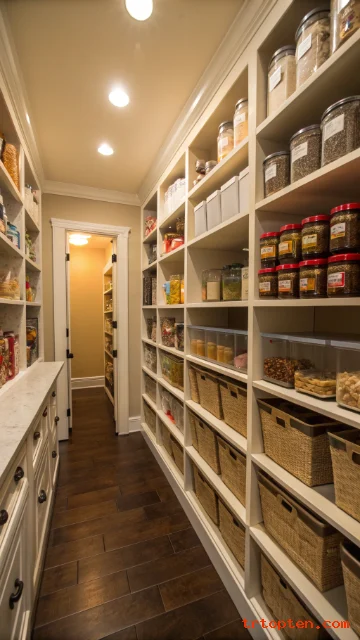
A U-shape wraps shelves around three sides to create a lot of storage in a small footprint. It keeps your staples close and stops empty wall gaps. It also gives you a natural path to sort items by category.
Place deeper shelves on the back wall for large bins and appliances. Use slimmer shelves on side walls to avoid bumping shoulders in a tight pantry. Keep the center floor clear so you can turn easily.
L-Shaped Layout for Narrow Pantries
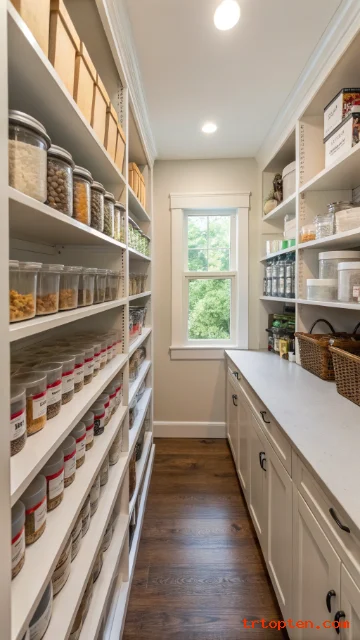
An L-shaped layout works well when your pantry is more like a short hallway. It gives you two strong storage walls without feeling boxed in. It also leaves space for a hook rail or small cart.
Put your most used items on the longer wall for quick grab access. Use the shorter wall for baking supplies, oils, or lunch items. Add one open section at chest height for a “drop zone” shelf.
Door-to-Door Shallow Shelving to Stop Wasted Space
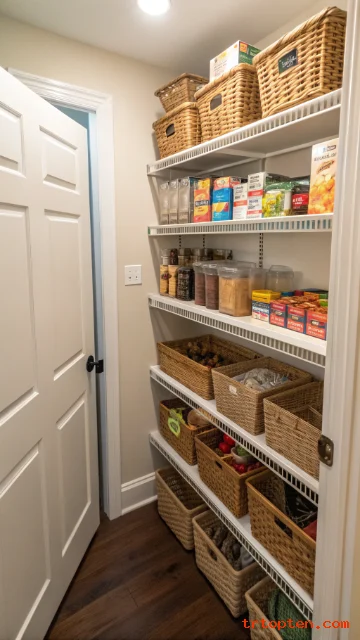
Shallow shelves keep items visible and reduce the risk of forgotten food. This is ideal for small walk in pantry ideas because it prevents deep piles. It also makes restocking faster because you can see gaps right away.
Use 10–12 inch shelf depth for most pantry goods. Place heavier items like flour and rice on lower shelves for safety. Store snacks and packets in baskets so they do not fall forward.
Clear Canisters for a Clean and Easy Look
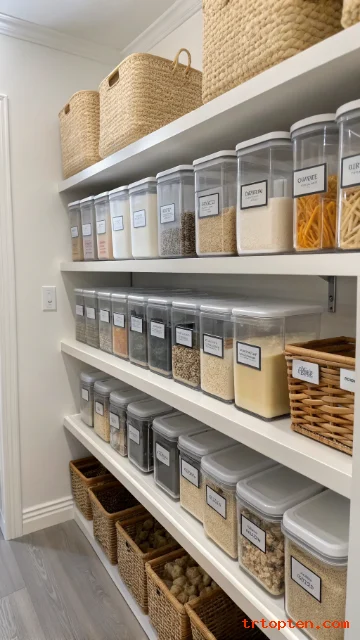
Clear canisters turn messy packaging into a tidy, uniform view. They also help you spot low levels fast and reduce waste. This simple change makes a small pantry feel like a boutique space.
Choose square or stackable containers to save shelf space. Add simple labels for flour, sugar, oats, pasta, and snacks. Keep a small scoop inside each bin for quick use.
Pull-Out Drawers for Deep Shelves
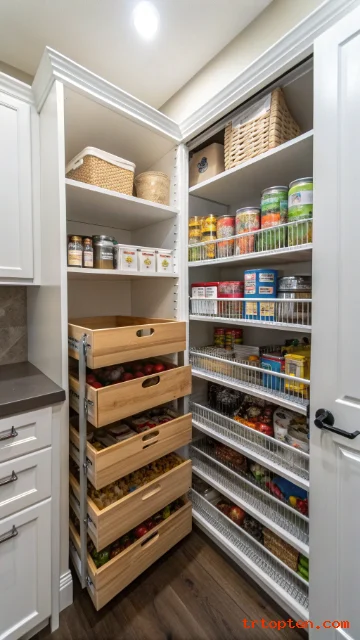
Pull-out drawers bring items forward so you do not lose them in the back. They work especially well for canned goods and snacks. This helps a small pantry function like a smart cabinet system.
Use sturdy slides rated for heavier loads. Group drawers by purpose, like breakfast, snacks, and baking. Keep labels on the drawer front so everyone follows the system.
Slide-Out Bins for Potatoes and Onions
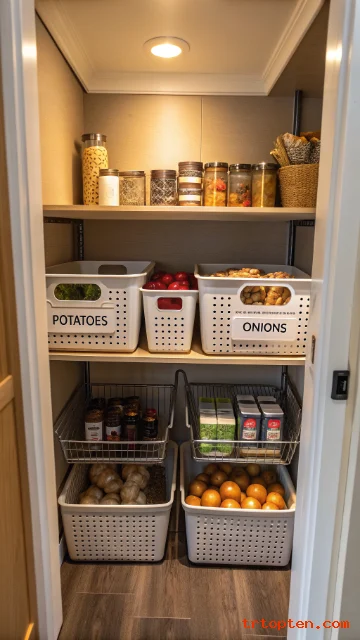
Ventilated bins keep produce fresh and off the floor. They also keep the pantry from looking cluttered. Slide-out bins make it easy to grab a few items without digging.
Choose wire baskets or ventilated wood crates. Keep potatoes away from onions to slow spoilage. Store these bins low for easier lifting and safer handling.
Slim Rolling Cart for Extra Zones
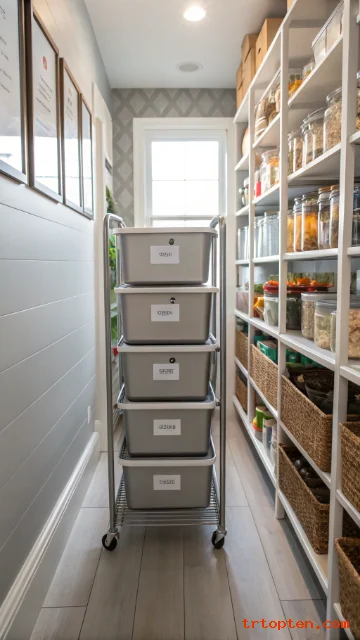
A slim cart adds storage without changing your shelves. You can use it for drinks, snacks, or pantry overflow. It also moves out of the way when you need space.
Pick a cart that fits your walkway without blocking the door. Use bins on each level to stop items from tipping. Park it beside the shortest wall for the best fit.
Turntable Trays for Corners and Bottles
Turntables make hard corners usable and keep bottles from toppling. A quick spin helps you find sauces fast. This is one of the easiest small walk in pantry ideas to set up in minutes.
Use turntables for oils, vinegar, and condiments. Add a low rim so items stay in place. Keep one tray for baking extracts and small jars.
Tiered Risers for Cans and Jars
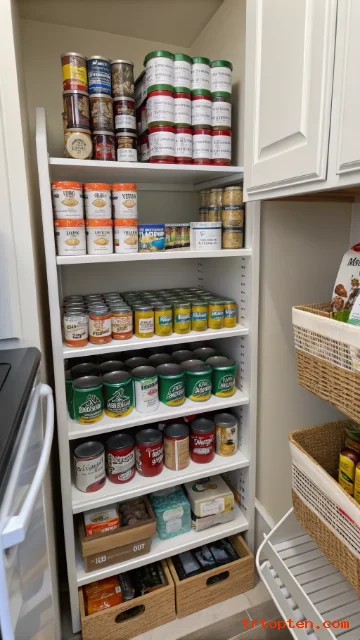
Tiered risers lift rows so labels stay visible. This reduces duplicates because you can see what you already have. It also keeps the shelf looking neat and “flat.”
Place risers on one shelf just for cans and jars. Group by type like beans, tomatoes, soups, and fruit. Keep heavier cans on the lowest tier for stability.
Wall-Mounted Spice Racks to Free Shelf Space
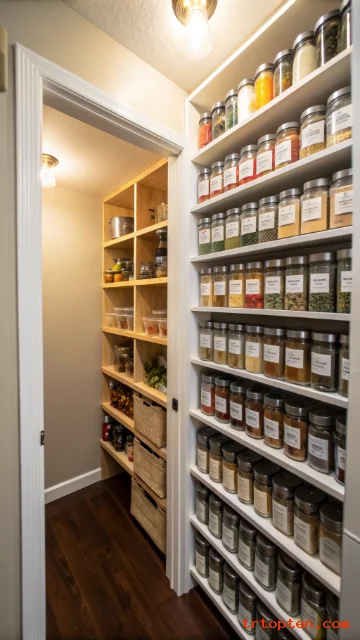
Spice racks on the wall save valuable shelf depth. They also keep spices in one place so you stop buying repeats. A tight pantry benefits when small items have fixed homes.
Install narrow racks on a side wall or the back of the door wall. Arrange spices by use, like everyday cooking vs baking. Use matching jars for a clean visual line.
Back-of-Door Storage for Small Packages
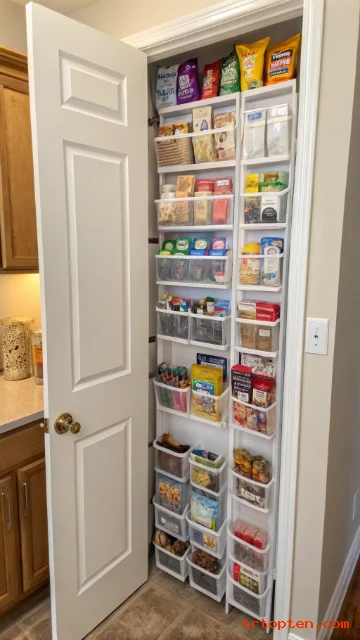
The back of the pantry door is prime storage for light items. It works well for packets, wraps, and snacks. It also keeps shelves open for larger foods.
Use clear pocket organizers or slim door racks. Store tortillas, chips, and snack bars where you can grab them fast. Keep heavier items off the door to protect hinges.
A Dedicated Baking Station Shelf
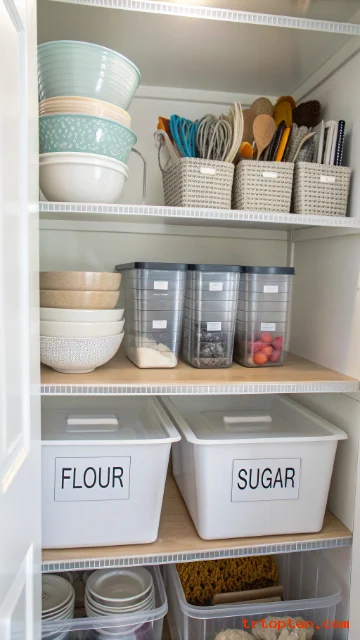
A baking shelf keeps flour, sugar, and tools together. This saves time and cuts mess because you stop hunting for items. It also keeps your pantry system simple and predictable.
Store mixing bowls and measuring cups on one shelf. Place flour and sugar in sealed bins to reduce spills. Keep parchment, liners, and sprinkles in small labeled boxes.
Snack Zone at Kid Height
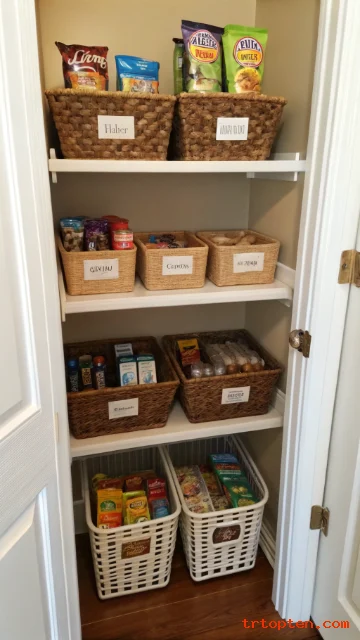
A snack zone reduces chaos in the kitchen. It also helps kids pick items without pulling down everything else. This simple zone makes your pantry feel larger because traffic flows better.
Use two low shelves with baskets and labels. Keep healthier snacks in front for easy choice. Store treats higher so you control access without drama.
Breakfast Shelf for Busy Mornings
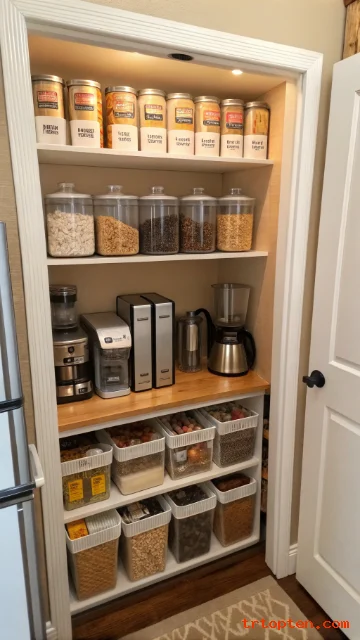
A breakfast shelf keeps mornings smooth. It puts cereal, oatmeal, spreads, and coffee items in one spot. This makes your small walk in pantry feel like a mini café.
Use clear bins for granola bars and oatmeal packs. Store coffee pods, filters, and sweeteners in a tray. Place bowls or mugs on a nearby shelf if space allows.
Appliance Shelf to Clear the Counter
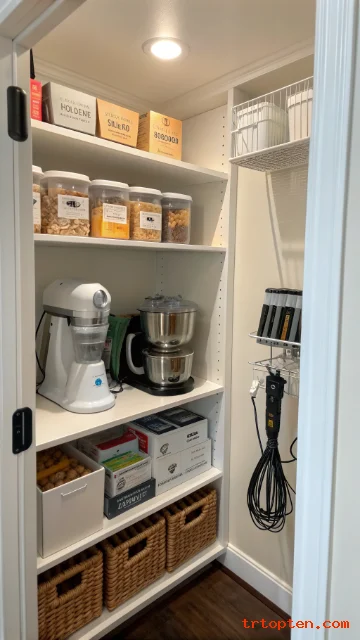
A pantry appliance shelf frees your kitchen counters fast. It also keeps cords and parts in one place. This helps small kitchens feel more open.
Place heavier appliances like mixers on waist-height shelves. Store attachments in labeled boxes right beside the appliance. Leave a few inches above for safe lifting.
Use Matching Baskets for Loose Items
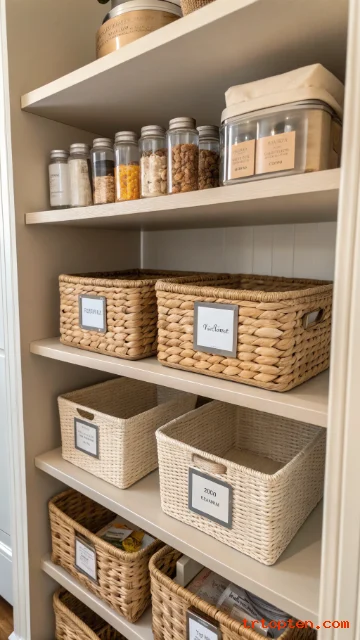
Baskets hide visual clutter and keep categories together. They also make it easy to pull a whole group at once. This works great for chips, packets, and small snack bags.
Choose baskets that fit the shelf depth without wasted space. Label each basket with clear simple words like “Snacks” or “Pasta.” Keep the basket style consistent for a calm look.
Label Everything for Fast Reset
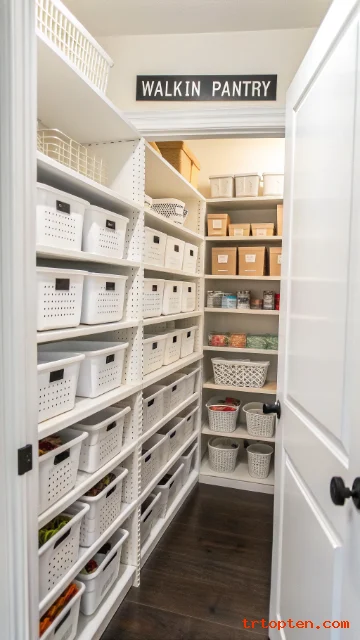
Labels help everyone keep order without asking questions. They also reduce the time you spend cleaning up. A labeled pantry stays tidy longer, even in a small space.
Use large easy-to-read labels on bins and shelves. Keep label words short like “Rice,” “Cans,” and “Baking.” Place labels at the front edge so they stay visible.
Add a Small Counter Shelf for Sorting
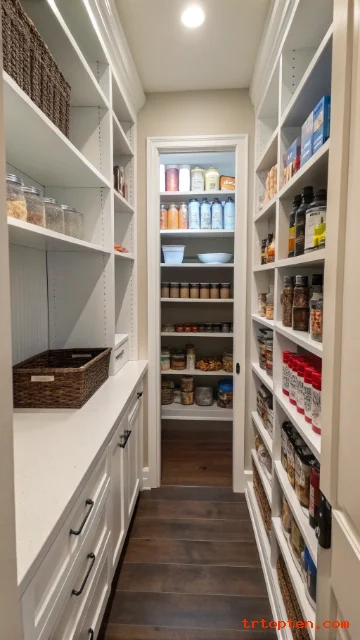
A small counter shelf gives you a place to set items while you search. It also works as a staging spot for grocery restocking. This prevents items from landing on the floor.
Install a narrow floating shelf at waist height. Keep it clear except for a small tray or notepad. Use it to sort items into zones quickly.
Use LED Strip Lighting for Better Visibility
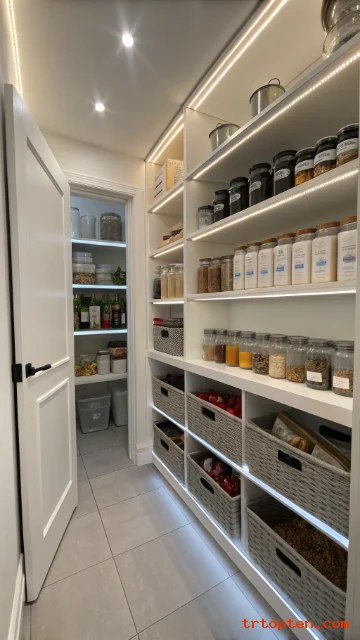
Good lighting makes a small pantry feel larger. It also helps you read labels and avoid buying duplicates. LED strips are simple and look polished.
Place LED strips under shelves for even light. Choose a soft white tone that matches your kitchen. Hide cords and use a clean switch location near the door.
Keep a “Backstock” Shelf for Duplicates
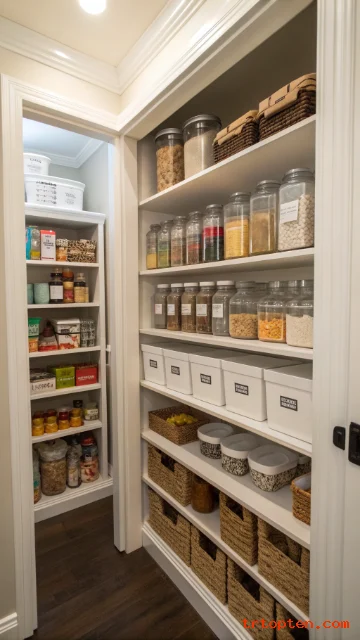
A backstock shelf stops duplicates from spreading everywhere. It creates a single spot for extra pasta, cans, and paper goods. This keeps daily shelves clean and easy to scan.
Place backstock on the top shelf or back wall. Keep only unopened items in this zone for clarity. Restock forward shelves from this area weekly.
Use Narrow Bins for Packets and Pouches
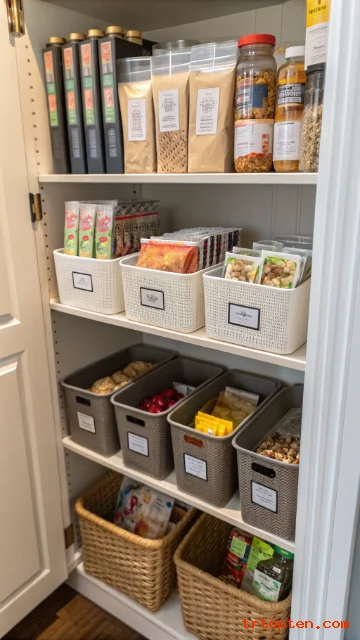
Packets slide around and make shelves messy fast. Narrow bins keep them upright and easy to sort. This pantry idea is small but powerful.
Use one bin for soup mixes and one for sauce packets. Add dividers if the bin gets crowded. Keep bins on a mid-level shelf for easy reach.
Install a Peg Rail for Tools and Bags
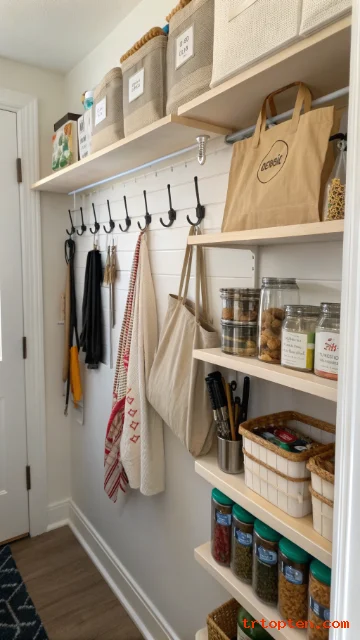
A peg rail uses vertical wall space without taking shelf depth. It holds reusable bags, small tools, and light accessories. This keeps the floor clear and reduces clutter.
Mount the rail on a side wall near the door. Hang measuring cups, a small basket, and reusable totes. Keep hooks spaced so items do not tangle.
Add a Wine or Beverage Nook
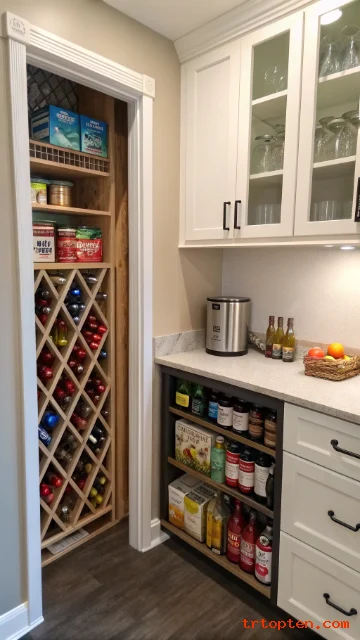
A beverage nook keeps heavy bottles out of main traffic areas. It also makes entertaining easier. A small pantry can still hold drinks if you plan the zone.
Use a low shelf or small rack for bottles. Store cans in a crate or bin so they do not roll. Keep glass items higher and stable.
Use Corner Shelves to Smooth Movement
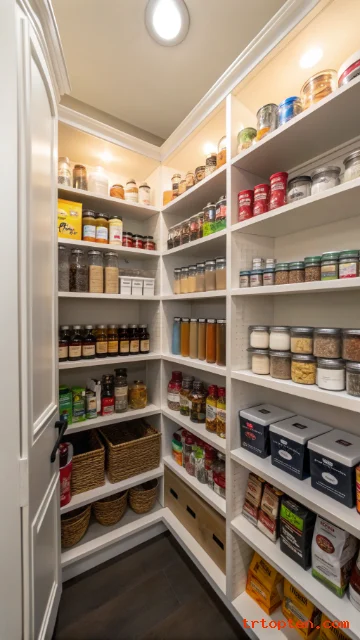
Corner shelves reduce sharp edges in tight rooms. They also make corner items easier to reach. This can make a narrow pantry feel less cramped.
Install rounded or angled corner shelves. Keep lighter items like snacks and spices on these shelves. Avoid very heavy loads in corners if brackets are small.
Create a Weekly Meal Shelf
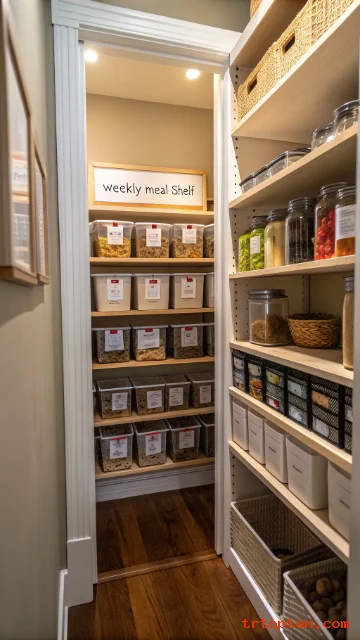
A weekly meal shelf keeps dinner planning simple. You can group ingredients for 3–5 meals in one zone. This reduces stress and saves time on busy days.
Use bins labeled by day or meal name. Add a small list card on each bin for missing items. Put this shelf at eye level for daily use.
Keep a Small Inventory Board Inside the Pantry
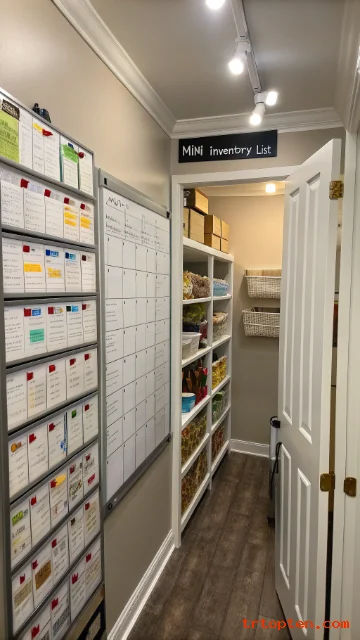
An inventory board helps you remember what you have and what you need. It reduces waste and cuts last-minute store runs. This works even in a tiny pantry.
Use a small whiteboard or chalkboard on the wall. Track low items like rice, cereal, and snacks. Update it during restocking so it stays accurate.
How do I make a small walk in pantry feel bigger?
Use bright lighting, clear containers, and consistent labels to reduce visual clutter. Keep the floor open and use vertical shelves to draw the eye upward.
What shelf depth works best in a small pantry?
Shallow shelves around 10–12 inches keep items visible and prevent lost food. Deep shelves work best only when you add pull-out drawers.
How can I organize a pantry with very little space?
Create zones like snacks, baking, breakfast, and backstock. Use bins to group small items so you can pull one category at a time.
Are clear containers worth it for pantry storage?
Yes, they show food levels quickly and make shelves look cleaner. They also reduce open bags that spill and attract pests.
What is the easiest pantry upgrade with a big impact?
Add labels and use matching bins or baskets. This makes your system easier to follow and faster to maintain.
How do I store appliances in a small walk in pantry?
Use a sturdy waist-height shelf for heavy appliances. Store attachments in labeled boxes right next to each appliance.
How do I stop food from getting forgotten in the back?
Use pull-out drawers, turntables, and tiered risers. These tools bring items forward and keep labels visible.
What should I avoid in a tiny walk in pantry?
Avoid overstuffing shelves and mixing categories. Avoid dark corners by adding better lighting and keeping the floor clear.
Can I add a cart inside a small pantry?
Yes, a slim rolling cart can add flexible storage. Make sure it does not block the door or reduce the walkway too much.
Conclusion
The best small walk in pantry ideas use simple rules: clear zones, visible storage, and smart use of height.
Start with labels and shallow shelf organization, then add pull-out drawers or turntables if you need more reach. With these 27 ideas, your pantry can feel bigger, cleaner, and easier to use every day.