
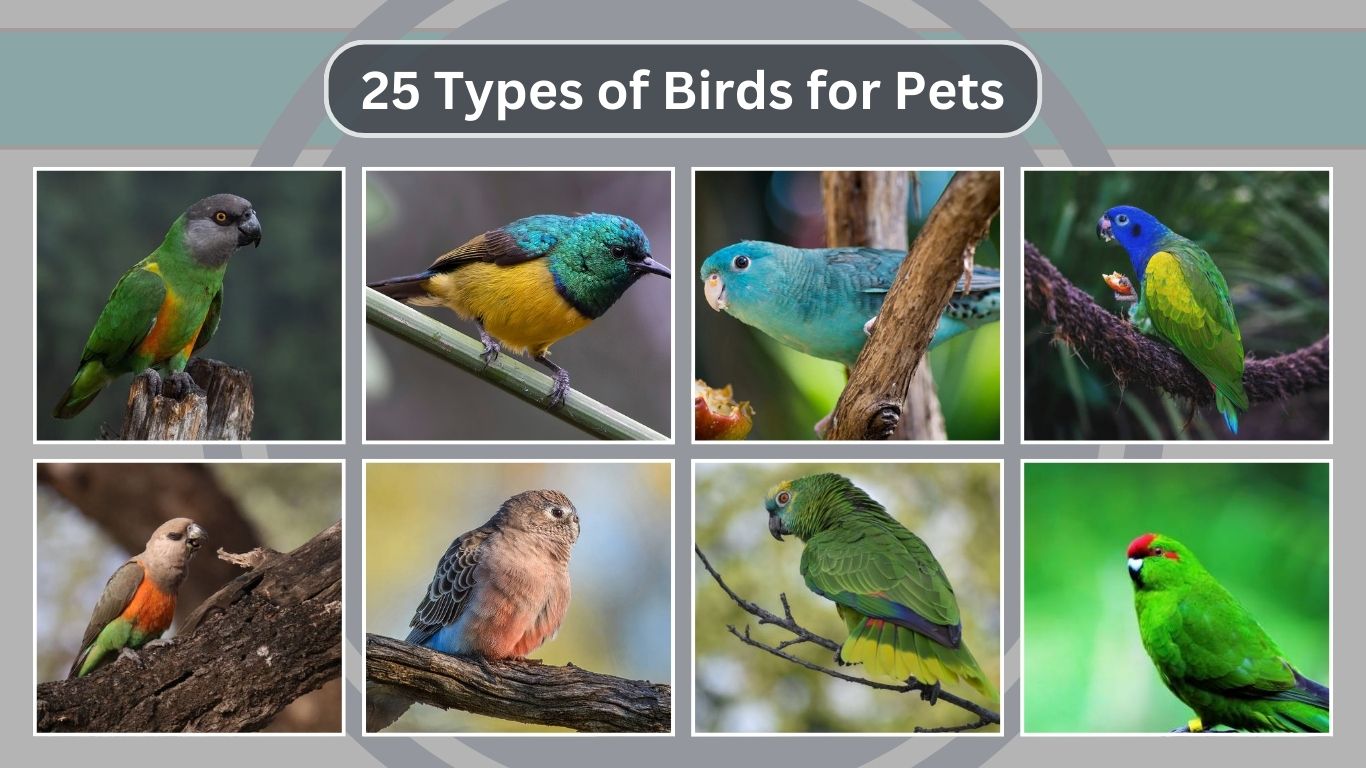
Birds make wonderful pets with their vibrant colors, cheerful songs, and unique personalities. From small finches and canaries to larger, intelligent parrots, each bird species offers something special for owners. Whether you’re looking for a low-maintenance companion or a playful, talkative friend, there’s a bird to suit every lifestyle. This guide explores 25 popular pet birds, highlighting their beauty, behavior, and why they’re cherished companions worldwide.
1. Budgerigar (Budgie)
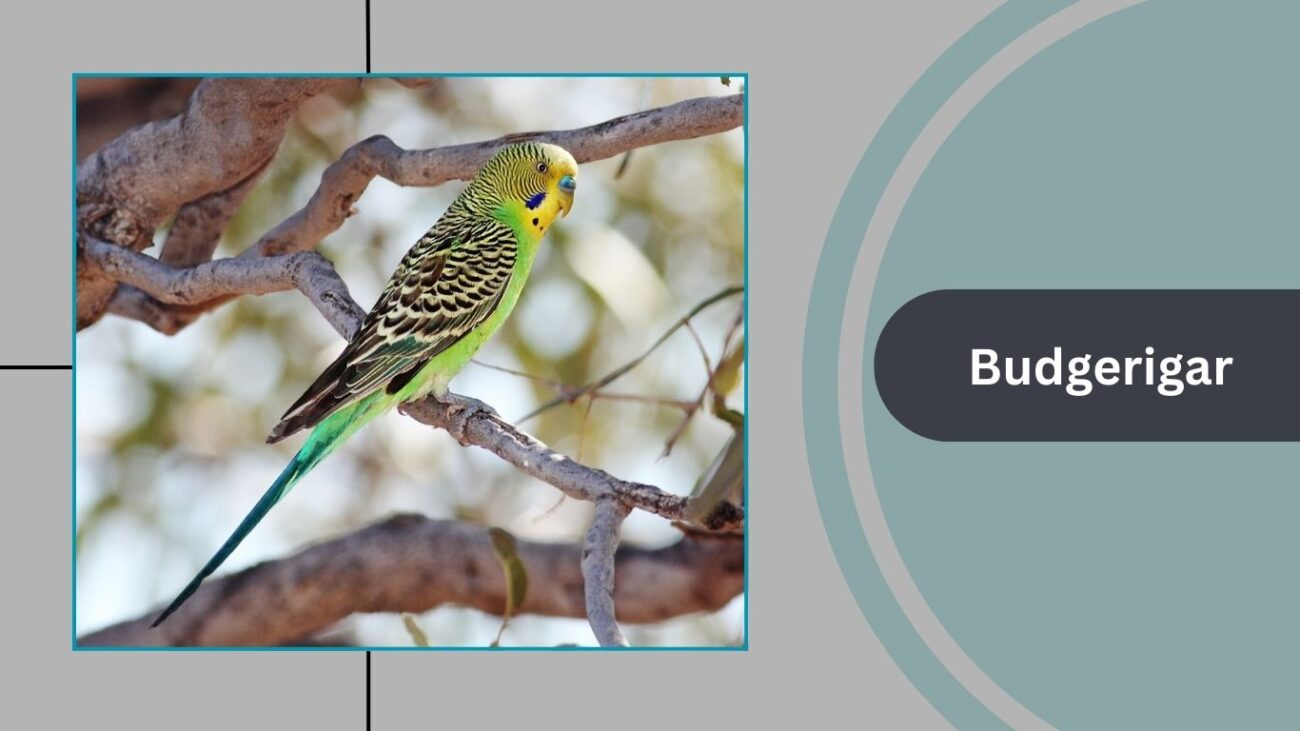
The Budgerigar, or Budgie, is among the most popular pet birds worldwide. Native to Australia, these small parrots are admired for their intelligence, bright plumage, and cheerful personality. With proper care, they can live 7–12 years, making them long-lasting companions. Their ability to mimic words and interact with owners makes them a favorite choice for bird enthusiasts and beginners alike.
Identification
- Small size, around 6–7 inches (15–18 cm) long
- Slim build with long, tapering tail feathers
- Wild type is green and yellow, but mutations include blue, white, violet, and albino
- Black barring on wings and back (especially in wild-type Budgies)
- Males usually have a blue cere, while females display brown, tan, or beige
Habitat
In the wild, Budgies live in large flocks across Australia’s grasslands, scrub, and savannas, traveling constantly to find water and food. As pets, they need a spacious cage with toys, perches, and climbing opportunities, along with daily free-flight sessions in a safe room to stay healthy and active.
Diet
Their diet should be balanced with seeds or pellets as the base, supplemented by fresh vegetables like spinach, kale, and broccoli. Fruits such as apples or berries can be given occasionally as treats. A cuttlebone or mineral block helps maintain calcium levels and beak health.
Behavior
Budgies are playful, curious, and social. They bond well with humans and often enjoy perching on fingers or shoulders. These birds love mental stimulation—interacting with toys, mirrors, or learning tricks. They are also vocal, producing a range of chirps, whistles, and sometimes imitating human speech. Regular interaction keeps them happy and prevents loneliness.
2. Cockatiel
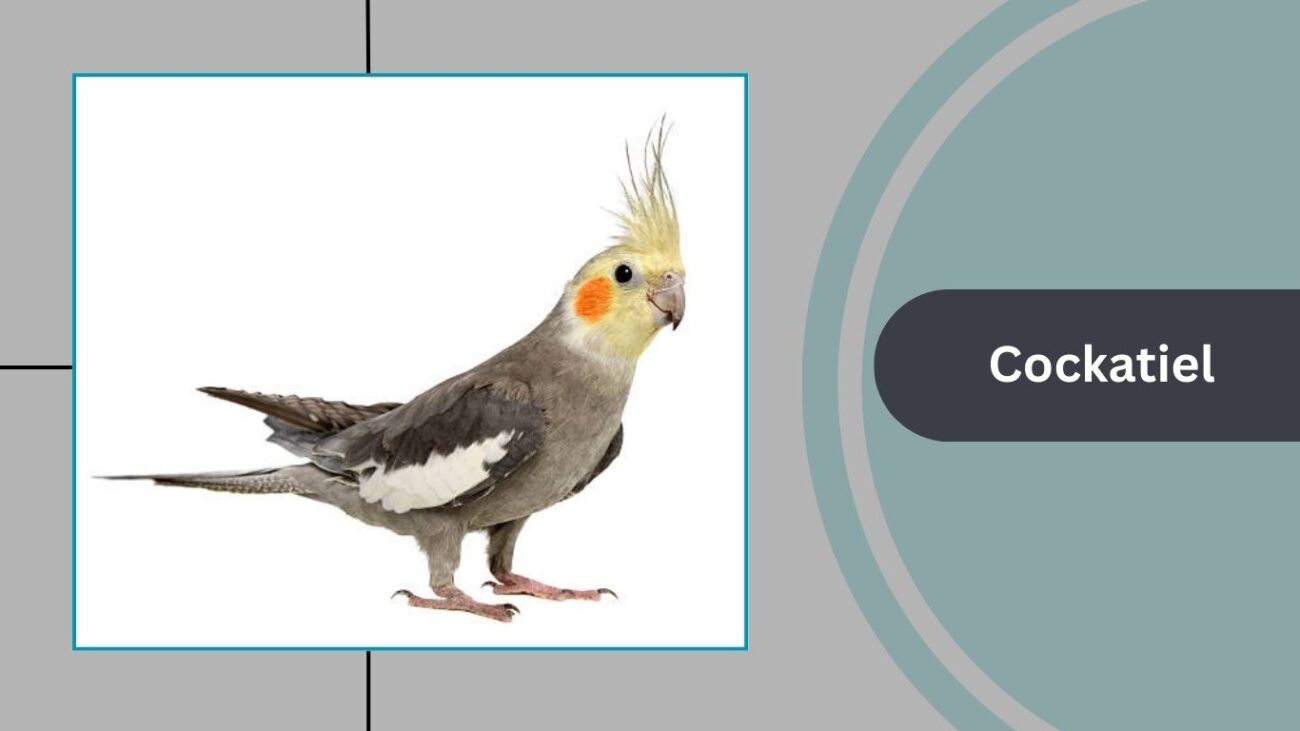
The Cockatiel is a small parrot native to Australia and is the second most popular pet bird after the Budgerigar. Known for their distinctive crest and charming whistles, Cockatiels are affectionate, easy to tame, and adapt well to family life. With proper care, they can live 15–20 years, making them a long-term companion for bird lovers.
Identification
- Medium size, about 12–13 inches (30–33 cm) long
- Prominent feather crest that moves with mood and emotion
- Wild type is gray with white wing patches and a yellow face with orange cheek patches
- Many color mutations exist, including lutino (yellow), pied, cinnamon, and pearl
- Long, pointed tail feathers, often half their body length
Habitat
In the wild, Cockatiels inhabit open plains, scrublands, and dry forests of Australia, usually in flocks. As pets, they require a large cage with space to fly, toys for stimulation, and perches of different textures and sizes. Daily interaction and out-of-cage exercise are essential for their wellbeing.
Diet
Their diet should include high-quality pellets or seed mixes, fresh leafy greens, vegetables like carrots and broccoli, and occasional fruits. Millet sprays can be offered as treats but should be given in moderation. Clean water should always be available.
Behavior
Cockatiels are gentle, affectionate, and social birds. They enjoy human interaction, whistling tunes, and sometimes mimicking simple words. Unlike larger parrots, they are generally quiet but may call out for attention. They form strong bonds with their owners and can display playful and cuddly behavior when well-socialized.
3. African Grey Parrot
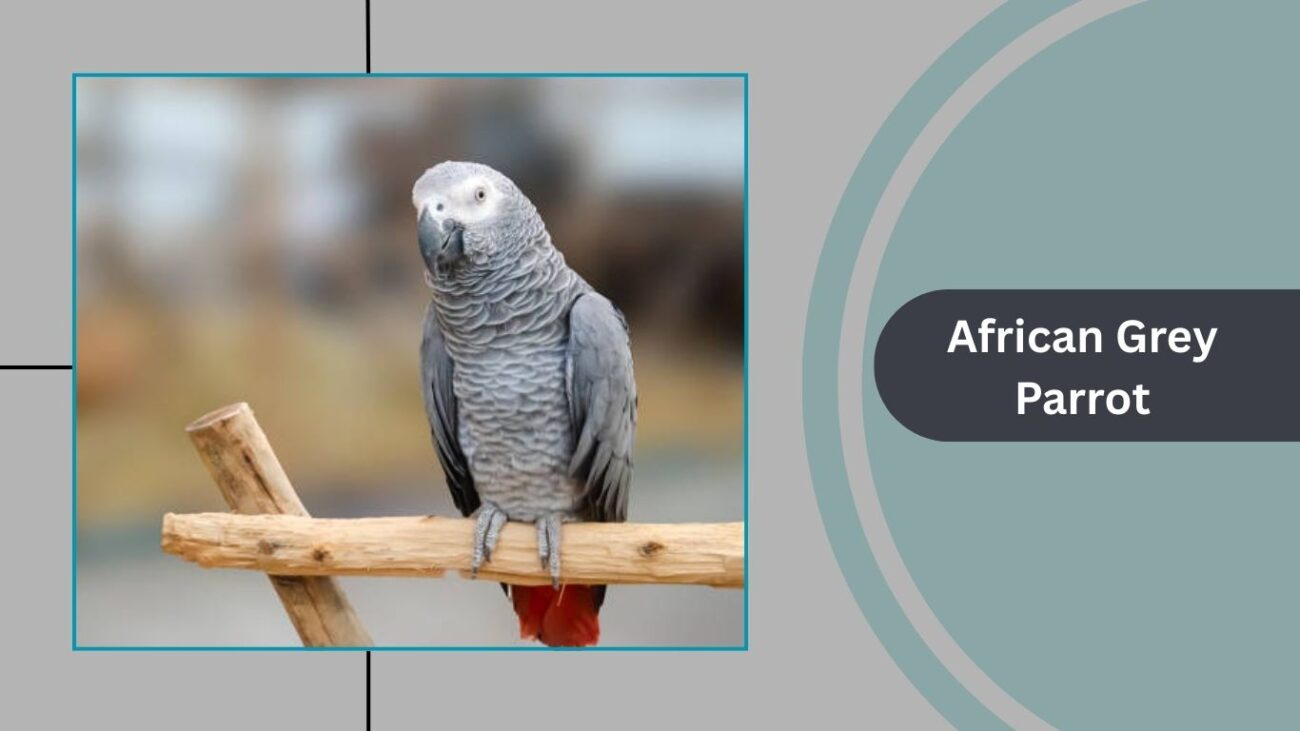
The African Grey Parrot is widely regarded as one of the most intelligent bird species in the world. Native to the rainforests of Central and West Africa, they are admired for their exceptional ability to mimic human speech and understand sounds. With proper care, African Greys can live 40–60 years, making them lifelong companions for dedicated owners.
Identification
- Medium to large size, about 12–14 inches (30–36 cm) long
- Plumage is primarily gray with a lighter, scalloped pattern on the chest
- Bright red tail feathers (in the Congo subspecies) or maroon tail (in the Timneh subspecies)
- Strong, hooked black beak and pale yellow eyes in adults
- Intelligent expression and alert posture
Habitat
In the wild, African Grey Parrots inhabit dense rainforests, mangroves, and savannas. They are flock birds and often roost in large groups. As pets, they need a spacious aviary-style cage, plenty of toys for mental stimulation, and time outside the cage for exercise.
Diet
Their diet should include high-quality pellets, supplemented with seeds, nuts (like almonds and walnuts), fresh vegetables such as carrots, spinach, and peppers, and fruits like bananas, apples, and papaya. A varied diet is critical for their health and longevity.
Behavior
African Grey Parrots are highly intelligent, sensitive, and social. They require daily mental stimulation, training, and interaction to prevent boredom, which can lead to feather plucking. They form strong bonds with their owners and often mimic voices, alarms, or environmental sounds with astonishing accuracy. They are best suited for experienced bird keepers due to their emotional needs.
4. Lovebird
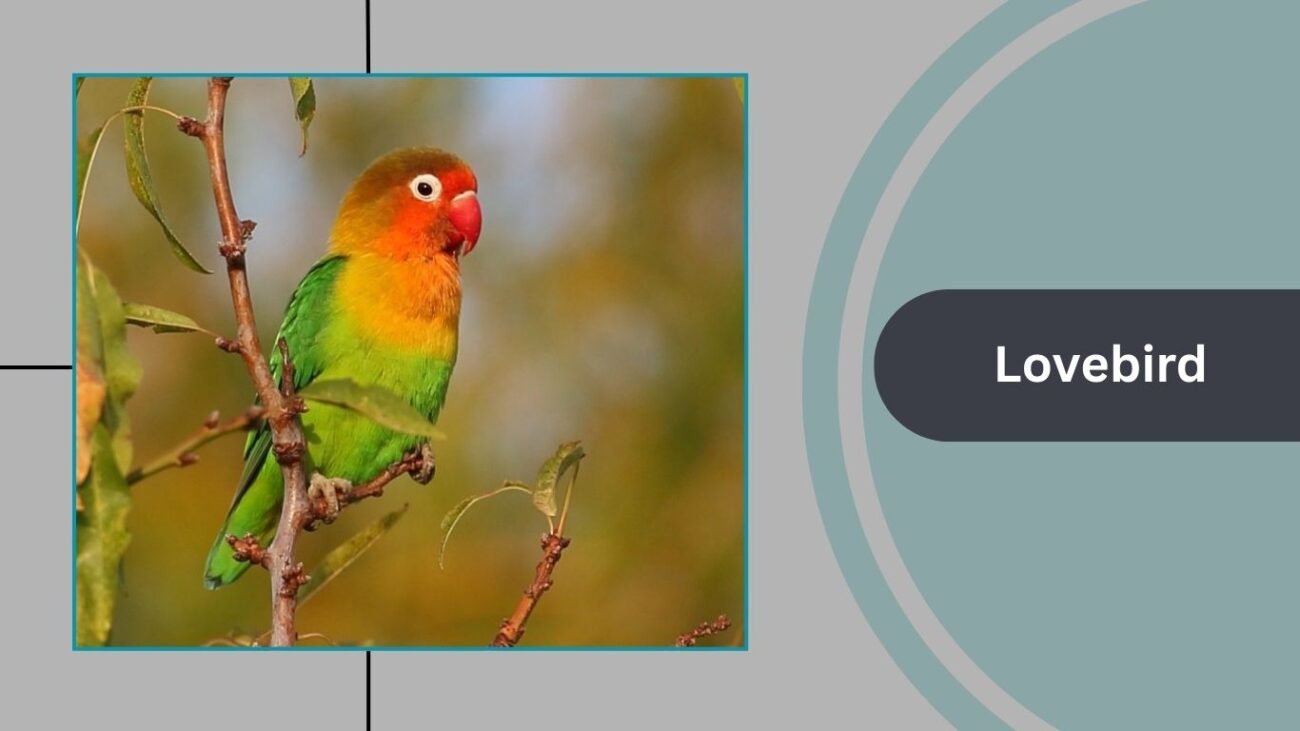
Lovebirds are small, colorful parrots known for their affectionate nature and strong pair bonds. Native to Africa, they are popular pets because of their bright plumage, playful personalities, and lively chirping. With good care, Lovebirds can live 10–15 years, bringing energy and companionship to their owners.
Identification
- Small size, about 5–7 inches (13–17 cm) long
- Stocky build with a short, blunt tail
- Plumage varies by species, often in vibrant greens, yellows, oranges, and blues
- Distinct white eye-ring around the eyes in many species
- Strong, hooked beak, often a reddish or orange shade
Habitat
In the wild, Lovebirds are found in African savannas, forests, and grasslands, living in flocks. As pets, they require a roomy cage with toys, perches, and materials for chewing. They are active birds that benefit from daily flight time in a safe, enclosed space.
Diet
A healthy diet for Lovebirds includes a mix of seeds, pellets, and fresh produce. They enjoy leafy greens, corn, carrots, peas, apples, and berries. Cuttlebone or mineral blocks are important for calcium intake and beak maintenance.
Behavior
Lovebirds are playful, energetic, and affectionate. They are highly social and thrive when kept in pairs, though single Lovebirds can bond deeply with their owners if given attention. They enjoy chewing, climbing, and vocalizing, often producing cheerful, high-pitched chirps. Their affectionate nature has earned them the nickname “pocket parrots.”
5. Macaw
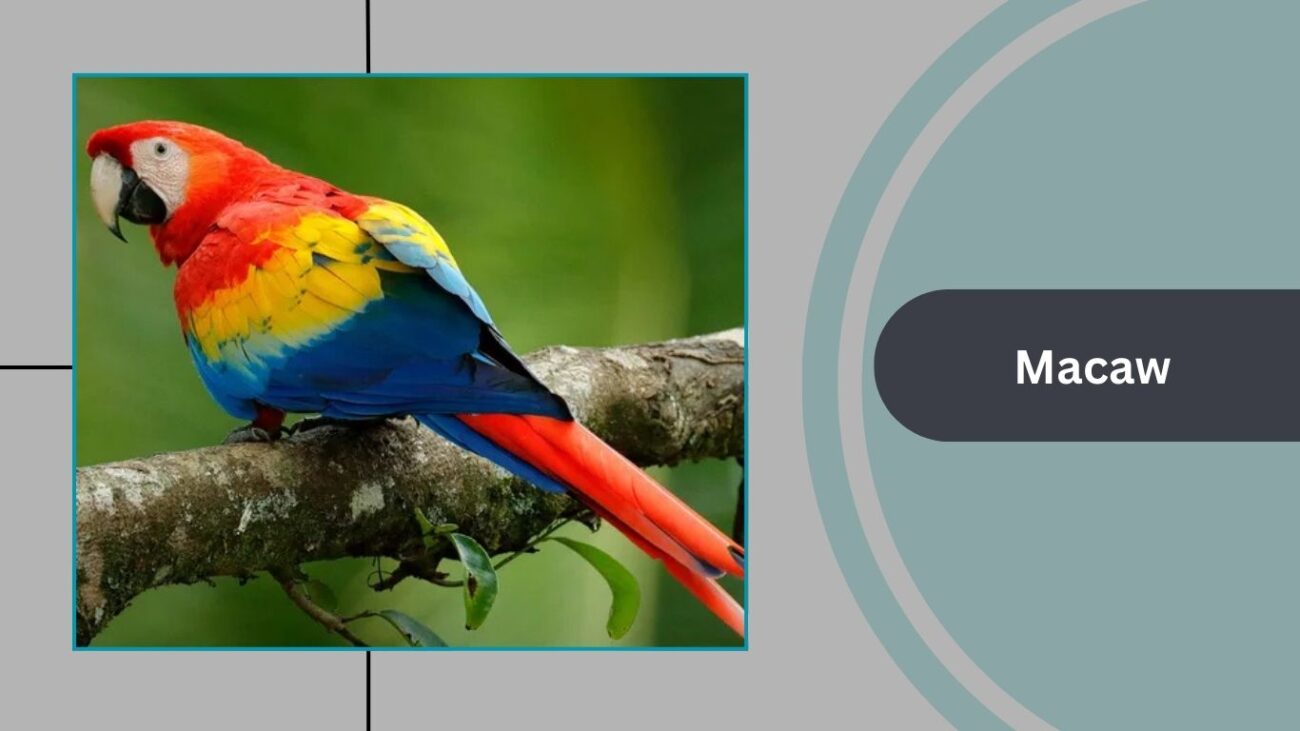
Macaws are among the largest and most striking parrots, famous for their brilliant plumage and loud, expressive personalities. Native to Central and South America, they are intelligent, social, and require a lot of attention and care. With proper conditions, Macaws can live 40–70 years, making them lifelong companions.
Identification
- Large size, ranging from 20–40 inches (50–100 cm) depending on the species
- Strong, curved beak capable of cracking hard nuts and seeds
- Long tail feathers that add to their striking appearance
- Plumage varies by species: Blue-and-Gold, Scarlet, Green-winged, Hyacinth, and more
- Bare facial patch around the eyes, often striped with small feathers
Habitat
In the wild, Macaws inhabit rainforests, woodlands, and savannas of South America. They are often seen flying in pairs or flocks, displaying strong family bonds. As pets, they require a very large cage or aviary and significant out-of-cage time for exercise and stimulation.
Diet
Their diet includes seeds, nuts, fruits, and vegetables. In captivity, they thrive on a base of pellets, supplemented with fresh produce such as leafy greens, bananas, apples, and peppers. Nuts like almonds and walnuts are important but should be given in moderation due to high fat content.
Behavior
Macaws are intelligent, playful, and highly vocal. They can learn words and sounds, enjoy chewing on wood and toys, and demand daily interaction. While affectionate, they can also be loud and require experienced bird keepers due to their size, strength, and long lifespan. When well-socialized, they become loyal companions with engaging personalities.
6. Cockatoo
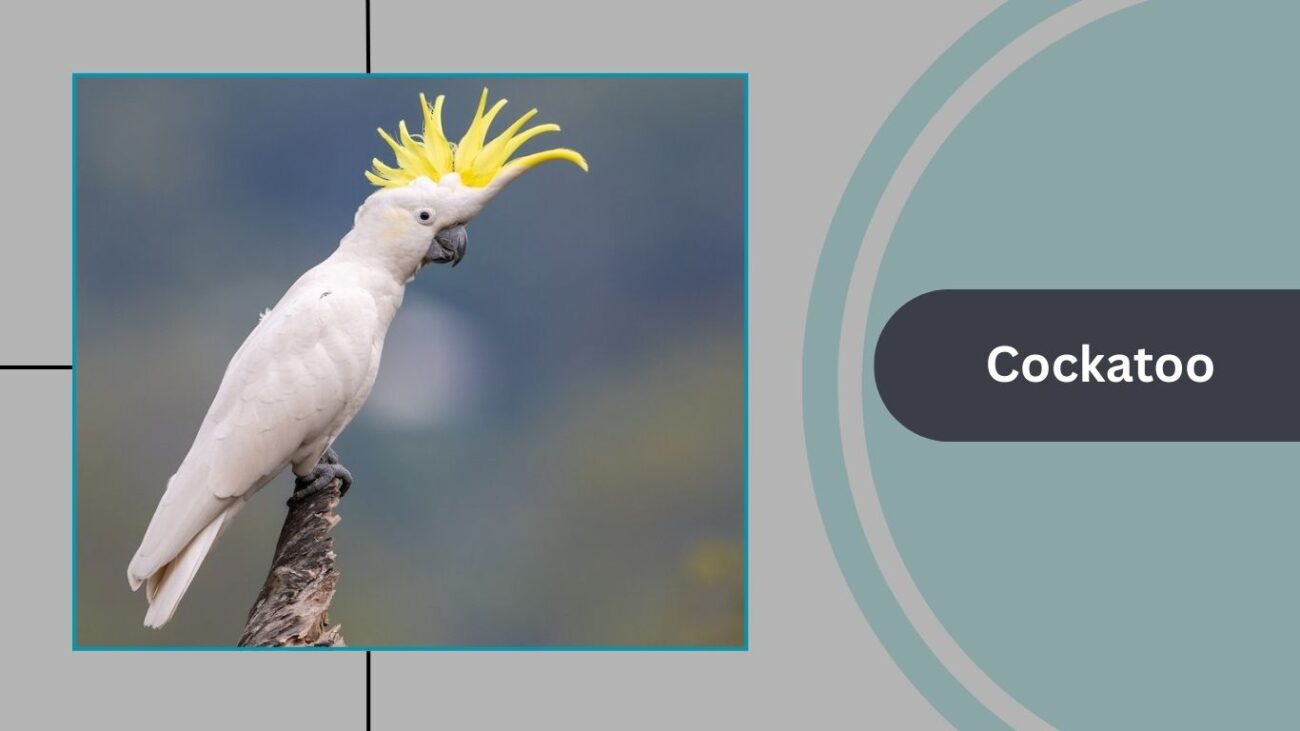
Cockatoos are highly social and affectionate parrots native to Australia, Indonesia, and nearby islands. Known for their expressive crests and loud calls, they are intelligent birds that crave interaction and can form very strong bonds with their owners. With proper care, Cockatoos can live 40–60 years, making them a long-term commitment.
Identification
- Medium to large size, ranging from 12–24 inches (30–60 cm) depending on species
- Prominent, movable crest of feathers on the head that rises when excited or alarmed
- Plumage is usually white, gray, or pink, with some species showing yellow or salmon highlights
- Strong, curved beak built for cracking nuts and chewing wood
- Dark eyes in females and reddish-brown in males (in some species)
Habitat
In the wild, Cockatoos are found in forests, woodlands, and open plains. They travel in noisy flocks and are known for their loud screeches. As pets, they require very large cages or aviaries, as well as plenty of out-of-cage time to prevent stress and boredom.
Diet
Cockatoos eat a varied diet consisting of seeds, nuts, berries, fruits, and roots in the wild. In captivity, they thrive on high-quality pellets supplemented with fresh vegetables (like carrots, spinach, and broccoli), fruits, and occasional nuts as treats.
Behavior
Cockatoos are extremely affectionate, often described as “cuddly” birds. They love attention and can become very attached to their owners, sometimes to the point of dependency. They are intelligent and need constant stimulation, toys, and training to stay happy. Without enough attention, they may develop behavioral problems such as feather plucking. They are also among the loudest parrots, making them unsuitable for quiet households.
7. Parrotlet
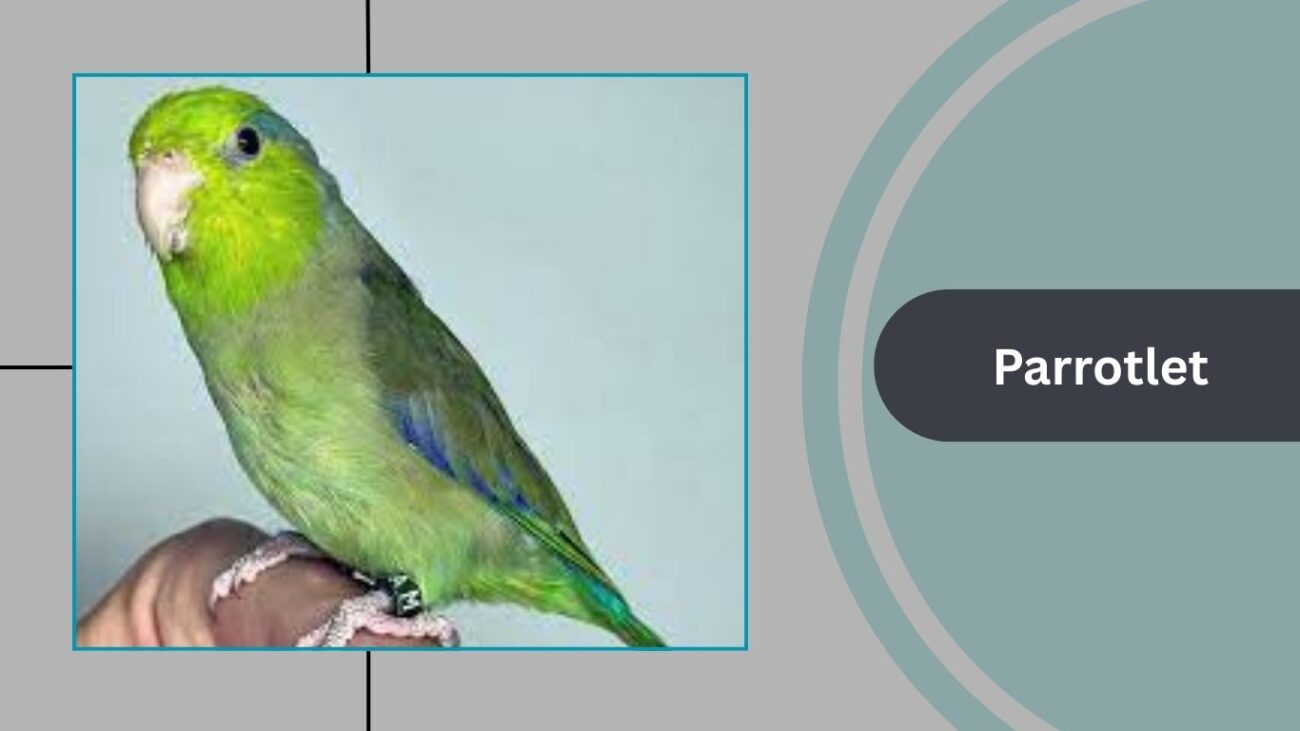
Parrotlets are tiny parrots with big personalities, often called “miniature Amazons” due to their bold and curious nature. Native to Central and South America, they are one of the smallest parrot species kept as pets but are highly intelligent and active. With good care, Parrotlets can live 15–20 years, making them delightful long-term companions.
Identification
- Very small size, around 4–5 inches (10–13 cm) long
- Stocky body with short tail and strong beak
- Plumage varies by species, most commonly green with blue markings on wings or rump
- Popular species include Pacific, Green-rumped, and Blue-winged Parrotlets
- Bright, expressive eyes that highlight their curious temperament
Habitat
In the wild, Parrotlets live in flocks in forests, scrublands, and grasslands across Central and South America. As pets, they thrive in cages with plenty of climbing space, perches, and toys. Despite their size, they need daily out-of-cage time in a safe environment for exercise.
Diet
Parrotlets eat a varied diet of seeds, fruits, berries, and plants in the wild. In captivity, their diet should include pellets as the base, fresh vegetables like leafy greens and peas, along with small amounts of fruits such as apples or bananas. Millet sprays can be given as treats.
Behavior
Parrotlets are energetic, playful, and bold. They form strong bonds with their owners and can be very affectionate when socialized properly. Despite their small size, they have strong personalities and can be territorial. They enjoy chewing, climbing, and exploring, and with training, some can learn words or simple tricks.
8. Conure
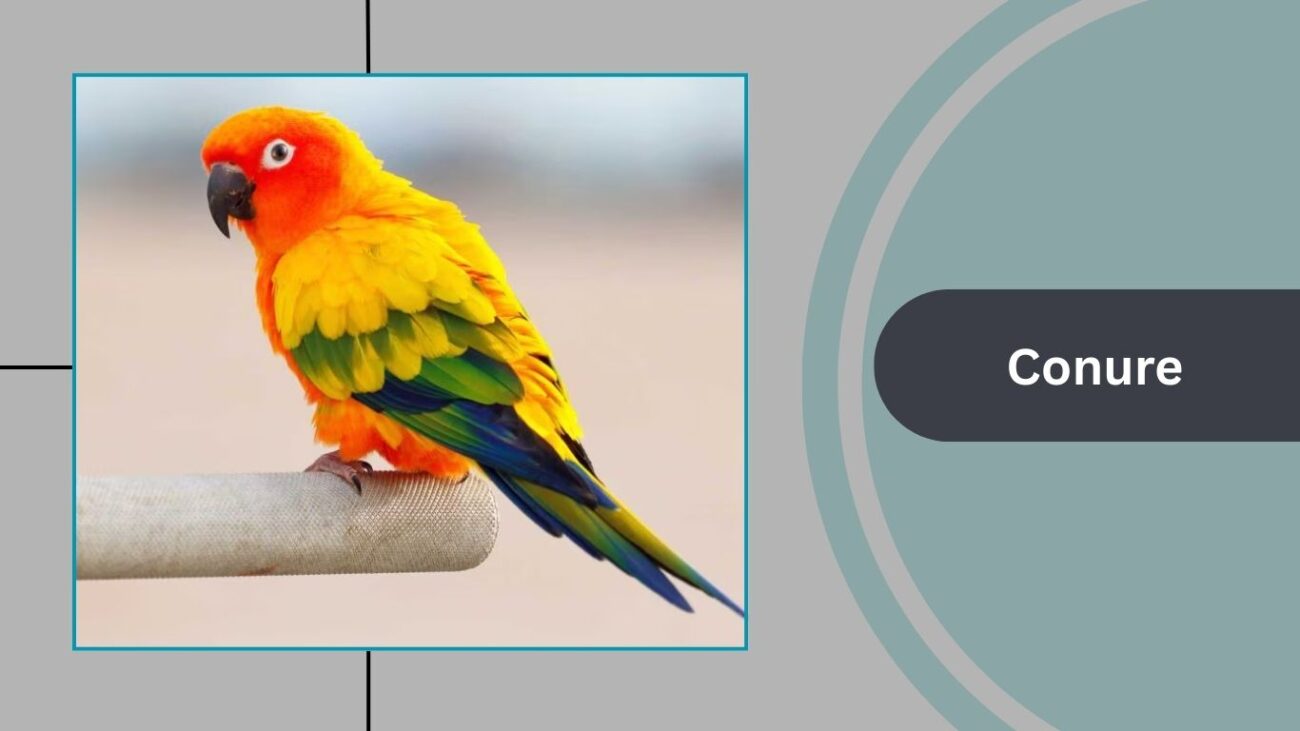
Conures are medium-sized parrots native to Central and South America, known for their playful, affectionate, and energetic personalities. They come in a wide variety of colors and are popular pets due to their social nature and entertaining behavior. With proper care, Conures can live 20–30 years.
Identification
- Medium size, about 10–20 inches (25–50 cm) depending on species
- Long, tapered tail feathers and slender body
- Coloration varies widely: Green-cheeked, Sun, Jenday, and Blue-crowned are common types
- Strong beak suited for climbing and chewing
- Expressive eyes and vibrant plumage, often with splashes of red, yellow, or blue
Habitat
In the wild, Conures inhabit tropical forests, savannas, and scrublands, often flying in noisy flocks. As pets, they require spacious cages with climbing structures, toys, and daily out-of-cage time to stay healthy and active.
Diet
Their diet should consist of high-quality pellets, seeds, fresh vegetables like leafy greens, peppers, and carrots, along with fruits such as mangoes, apples, and berries. Occasional nuts can be given as energy-rich treats.
Behavior
Conures are social, curious, and very playful. They love interacting with their owners, cuddling, and performing tricks. Many Conures are known for being loud and vocal, often producing high-pitched calls. They are intelligent and benefit from training, foraging toys, and plenty of attention to prevent boredom.
9. Canary
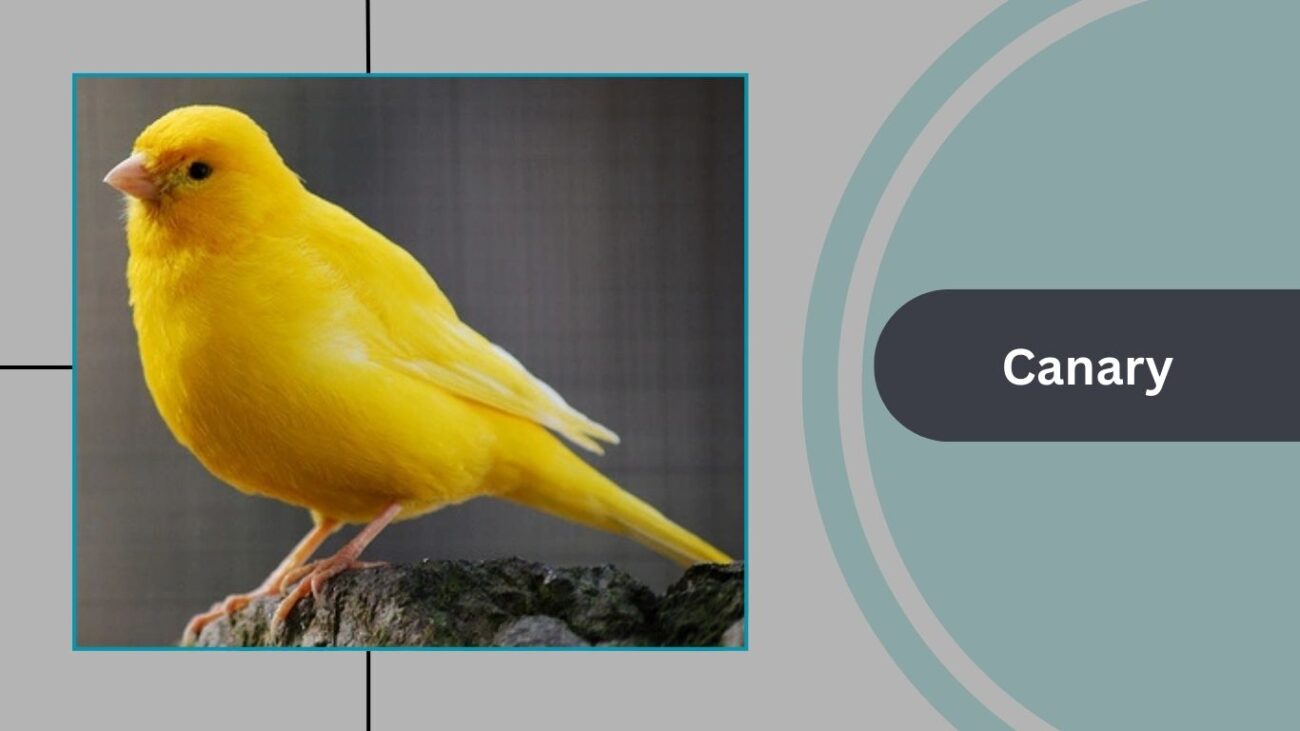
The Canary is a small songbird native to the Canary Islands, Azores, and Madeira. Famous for their melodious singing and vibrant colors, Canaries have been kept as pets for centuries. They are relatively low-maintenance compared to parrots, making them an excellent choice for beginner bird owners. With proper care, Canaries can live 10–15 years.
Identification
- Small size, about 5–6 inches (12–15 cm) long
- Slender body with short, slightly forked tail
- Plumage colors include yellow, orange, red, green, and white, depending on the breed
- Males are generally brighter and more frequent singers than females
- Distinct, cheerful singing voice in many varieties
Habitat
In the wild, Canaries are found in woodlands and grasslands of the Canary Islands and nearby regions. As pets, they thrive in medium-to-large cages with space to fly horizontally, as they enjoy exercise. They prefer a quiet environment and do well as solitary birds or in small groups.
Diet
A Canary’s diet should include a high-quality seed mix or pellets, supplemented with fresh vegetables such as spinach, broccoli, and kale. Fruits like apple, pear, and melon can be offered in moderation. Cuttlebone or mineral blocks are also essential for calcium intake.
Behavior
Canaries are cheerful, active, and relatively independent birds. They are admired for their singing, especially males who perform complex melodies. While they are not typically cuddly or hand-tame like parrots, they enjoy hopping, flying, and interacting visually with their owners. Their calm nature makes them delightful household companions.
10. Zebra Finch
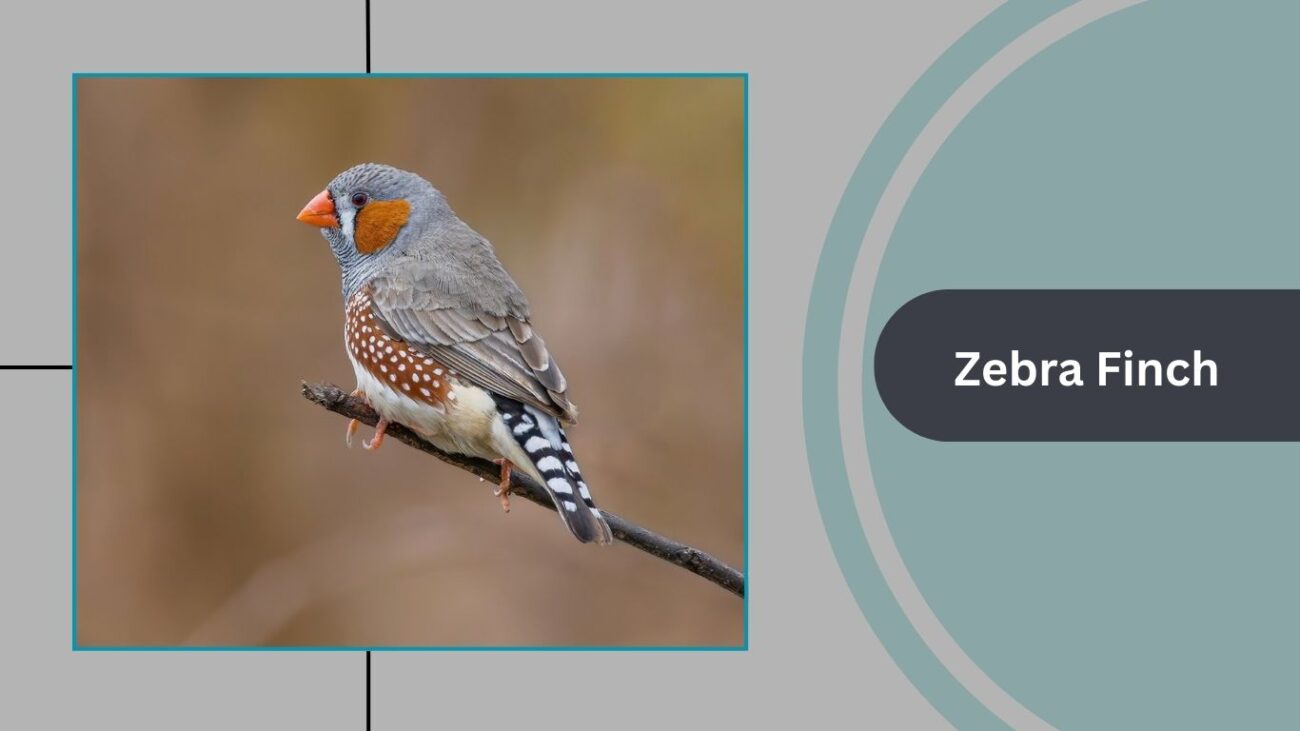
The Zebra Finch is one of the most popular pet finches, native to Australia. Known for their hardy nature, attractive markings, and cheerful chirps, Zebra Finches are easy to care for and well-suited for both beginners and experienced bird keepers. With proper care, they can live 5–9 years.
Identification
- Small size, about 4 inches (10 cm) long
- Gray body with black-and-white barred tail and orange beak
- Males have orange cheek patches, black breast bars, and spotted flanks
- Females are plainer with more subdued coloration
- Short, stout body with quick, fluttering flight
Habitat
In the wild, Zebra Finches inhabit dry grasslands, savannas, and open woodlands across Australia. They are often seen in large flocks near water sources. As pets, they thrive in spacious cages or aviaries with plenty of room for flying, perches, and nesting materials.
Diet
Their diet mainly consists of seeds, particularly millet and grass seeds. In captivity, they should be given a quality finch seed mix, along with fresh vegetables like spinach, lettuce, and peas. Egg food and cuttlebone are beneficial for breeding and calcium.
Behavior
Zebra Finches are lively, social, and active birds. They are not typically hand-tame but enjoy the company of other finches and do best when kept in pairs or small groups. Males sing simple yet cheerful songs, while both sexes communicate with soft chirps. They are constantly on the move, hopping and flying around their enclosure.
11. Gouldian Finch
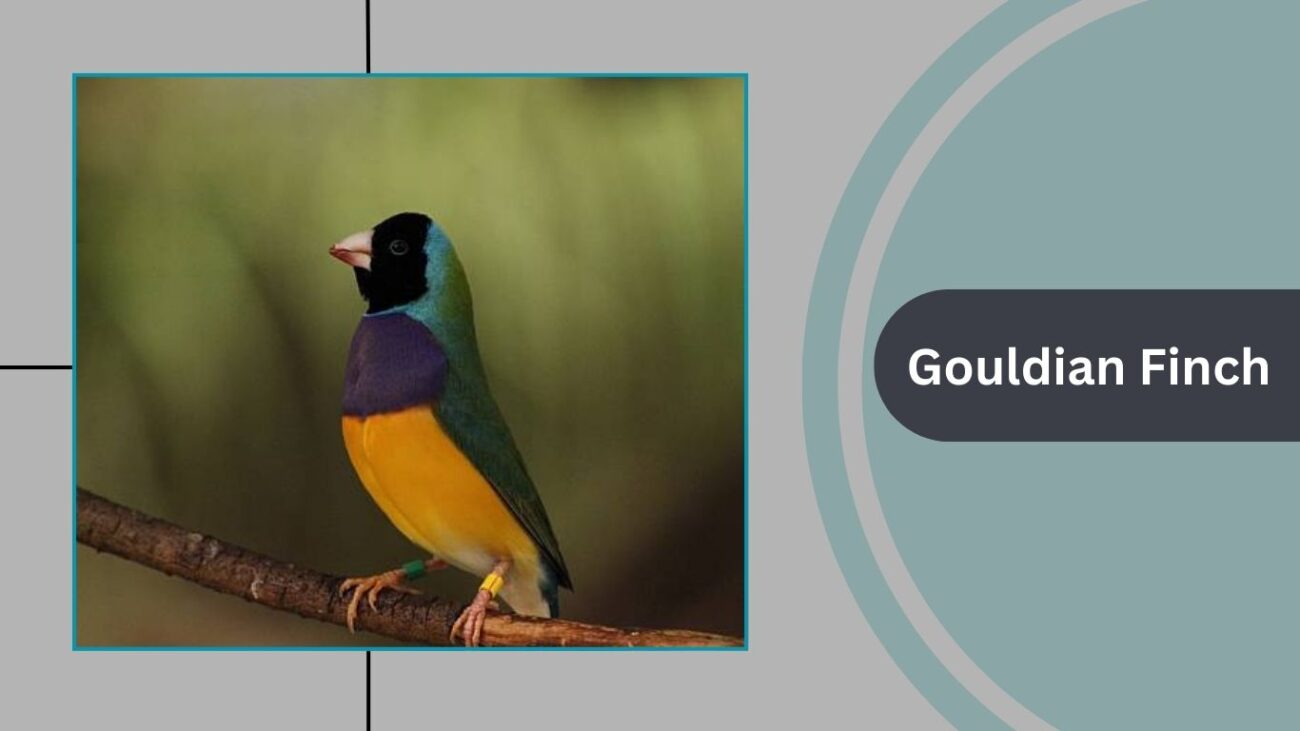
The Gouldian Finch, also known as the Rainbow Finch, is one of the most strikingly colorful pet birds. Native to northern Australia, they are admired for their vibrant plumage and gentle disposition. Though slightly more delicate than Zebra Finches, they make excellent aviary birds and can live 6–8 years with proper care.
Identification
- Small size, about 5–6 inches (12–15 cm) long
- Bright, multi-colored plumage: green back, yellow belly, purple chest
- Heads vary by morph—red, black, or yellow
- Females are slightly duller in color than males
- Short tail with two elongated central feathers in males
Habitat
In the wild, Gouldian Finches inhabit tropical savannas and open woodlands of northern Australia. They prefer warm climates and often nest in tree hollows. As pets, they thrive in large cages or aviaries with plenty of space for flying, perches, and companionship from other finches.
Diet
Their diet consists mainly of grass seeds in the wild. In captivity, a balanced seed mix supplemented with fresh greens like spinach and lettuce, along with sprouted seeds and egg food, keeps them healthy. Access to cuttlebone provides necessary calcium.
Behavior
Gouldian Finches are peaceful, quiet, and social birds. They are best kept in pairs or small groups and are more decorative than interactive, as they are not typically hand-tamed. Males sing soft, pleasant songs, while both sexes remain active and graceful flyers within their enclosure.
12. Indian Ringneck Parakeet
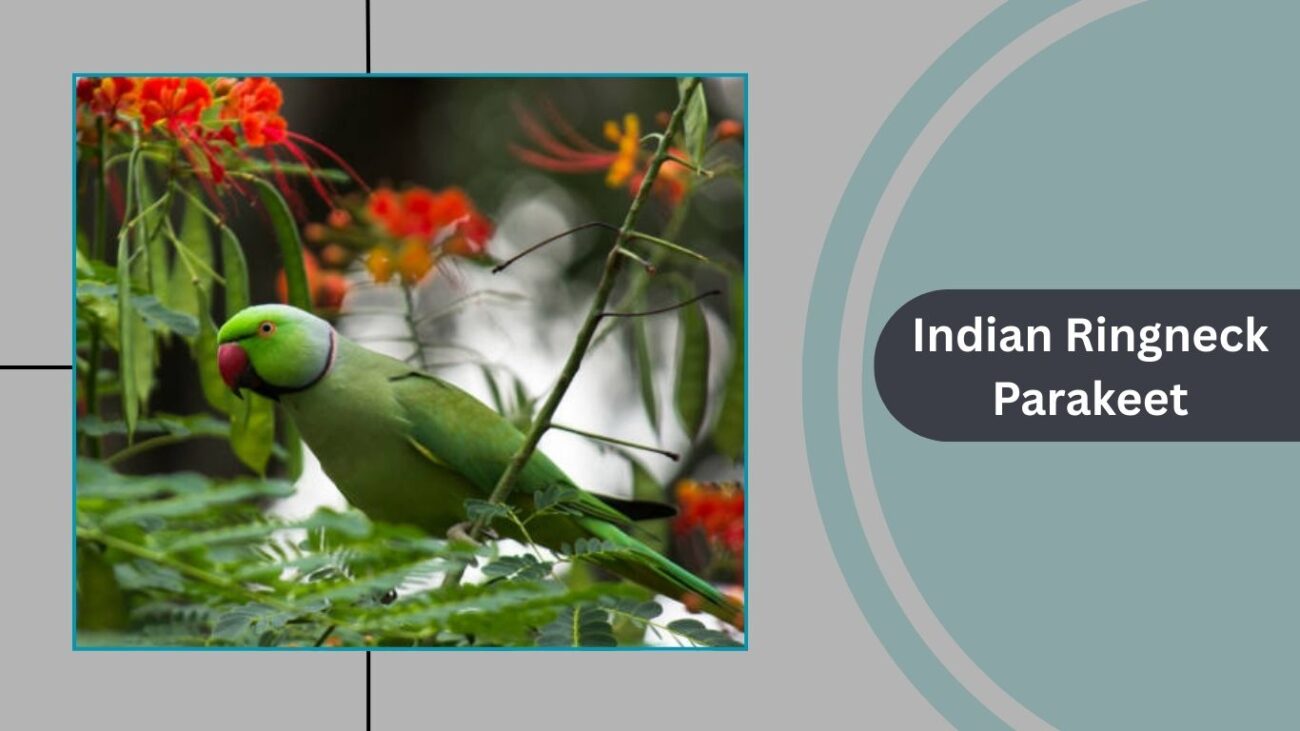
The Indian Ringneck Parakeet is a medium-sized parrot native to South Asia and parts of Africa. Known for their intelligence, talking ability, and striking appearance, they are popular among bird enthusiasts. With proper training and care, they can live 25–30 years, making them a long-term commitment.
Identification
- Medium size, about 14–17 inches (35–43 cm) long including tail
- Slim body with long, tapered tail feathers
- Bright green plumage is most common, though color mutations include blue, yellow, and albino
- Distinct black and rose-colored ring around the neck in adult males; females and young lack the full ring
- Strong red beak and expressive eyes
Habitat
In the wild, Indian Ringnecks inhabit forests, farmlands, and urban areas across India, Sri Lanka, and parts of Africa. They adapt well to different environments and often form flocks. As pets, they require a large cage or aviary with climbing space, toys, and daily out-of-cage exercise.
Diet
Their diet includes seeds, fruits, and berries in the wild. In captivity, they thrive on pellets, supplemented with fresh vegetables such as spinach, carrots, and broccoli, as well as fruits like apples, mangoes, and pomegranates. Nuts can be offered occasionally as treats.
Behavior
Indian Ringnecks are intelligent, curious, and active birds. They are excellent talkers, capable of learning many words and phrases with clear pronunciation. However, they can be independent and sometimes stubborn, requiring patient training and regular interaction. They are energetic, playful, and bond well when socialized early.
13. Eclectus Parrot
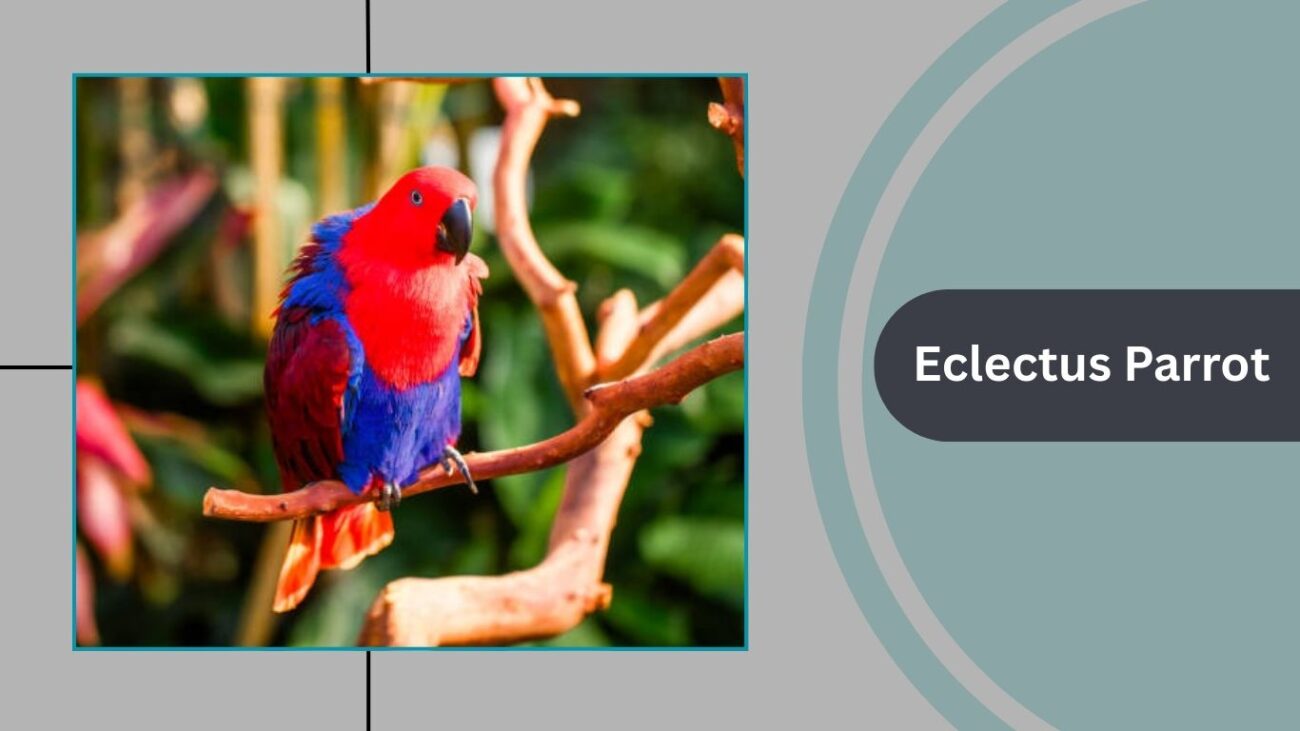
The Eclectus Parrot is a striking medium-to-large parrot native to the Solomon Islands, New Guinea, northeastern Australia, and nearby islands. Known for its extreme sexual dimorphism, males and females look completely different in color, making them one of the most visually unique parrot species. With proper care, they can live 30–50 years.
Identification
- Medium to large size, about 17–20 inches (43–50 cm) long
- Males: bright green plumage with red and blue accents, orange beak
- Females: vivid red and purple plumage with a black beak
- Stocky body with a short, square tail
- Intelligent, expressive eyes that vary in color with age
Habitat
In the wild, Eclectus Parrots inhabit rainforests, forest edges, and coastal woodlands, nesting in tree hollows. As pets, they require a very large cage or aviary with plenty of perches, toys, and daily flight or out-of-cage activity. They are highly active and benefit from mental enrichment.
Diet
Eclectus Parrots have a specialized diet compared to other parrots. They need a variety of fresh fruits, vegetables, and leafy greens, as they metabolize nutrients differently. Foods like papaya, mango, pomegranate, carrots, and leafy greens are essential. A smaller portion of pellets and minimal seeds are recommended.
Behavior
Eclectus Parrots are intelligent, calm, and gentle when well-socialized. They are capable of excellent speech mimicry and often develop large vocabularies. They enjoy interacting with their owners but can also be independent. They require consistent attention and mental stimulation to prevent boredom or behavioral issues.
14. Quaker Parrot (Monk Parakeet)
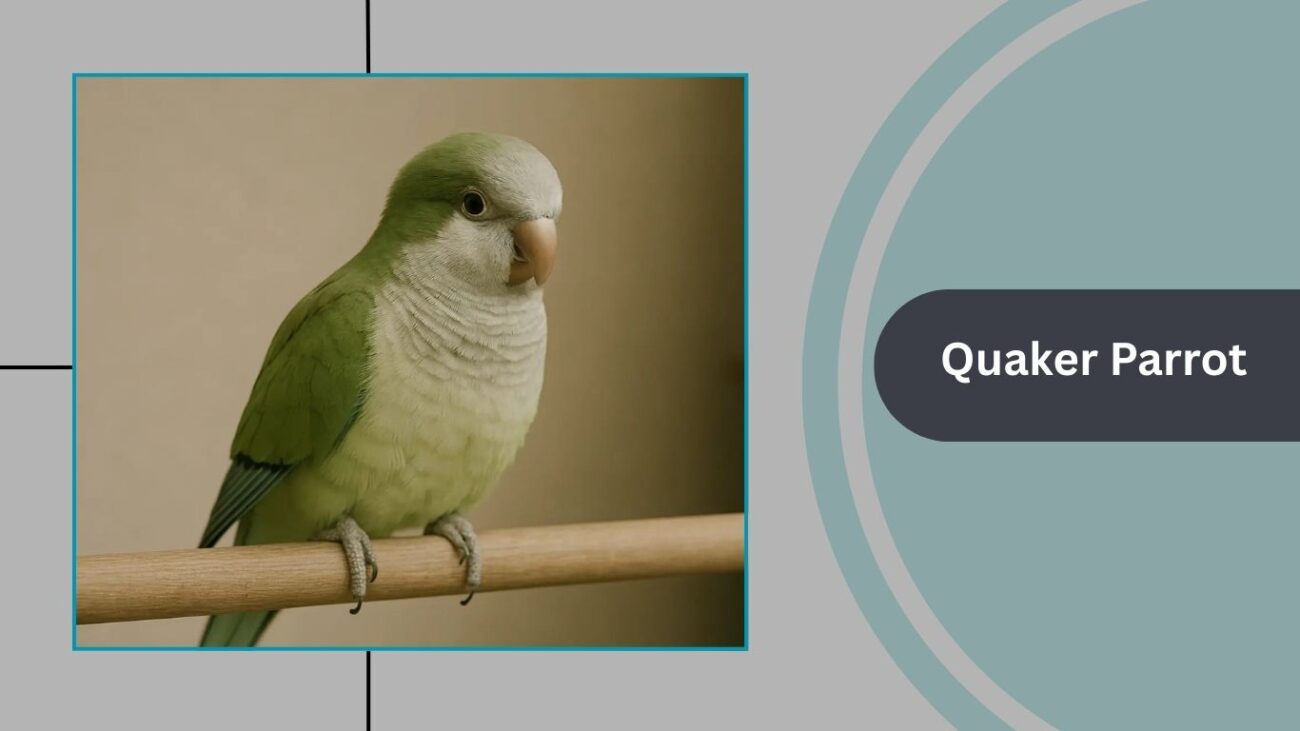
The Quaker Parrot, also known as the Monk Parakeet, is a small, social parrot native to South America. They are popular pets due to their playful personalities, intelligence, and impressive talking ability. Quakers can live 20–30 years with proper care, making them long-term companions.
Identification
- Small to medium size, about 11–12 inches (28–30 cm) long
- Bright green plumage with a grayish-white face, throat, and chest
- Blue flight feathers visible when wings are spread
- Strong, hooked beak, usually pale in color
- Expressive eyes and stocky build
Habitat
In the wild, Quaker Parrots are found in Argentina, Brazil, and surrounding regions. Unlike most parrots, they build large communal stick nests in trees or on man-made structures, often housing multiple pairs. As pets, they need a spacious cage, climbing opportunities, and toys for enrichment.
Diet
Their diet includes seeds, fruits, and vegetation in the wild. In captivity, they should be fed high-quality pellets, supplemented with leafy greens, carrots, corn, apples, and berries. Occasional nuts can be offered as treats.
Behavior
Quaker Parrots are highly social, energetic, and intelligent. They are skilled talkers and can mimic words and phrases with clarity. They enjoy human interaction and play, often forming strong bonds with their owners. However, they can also be territorial and protective of their cage or nesting area, requiring consistent training and socialization.
15. Pionus Parrot
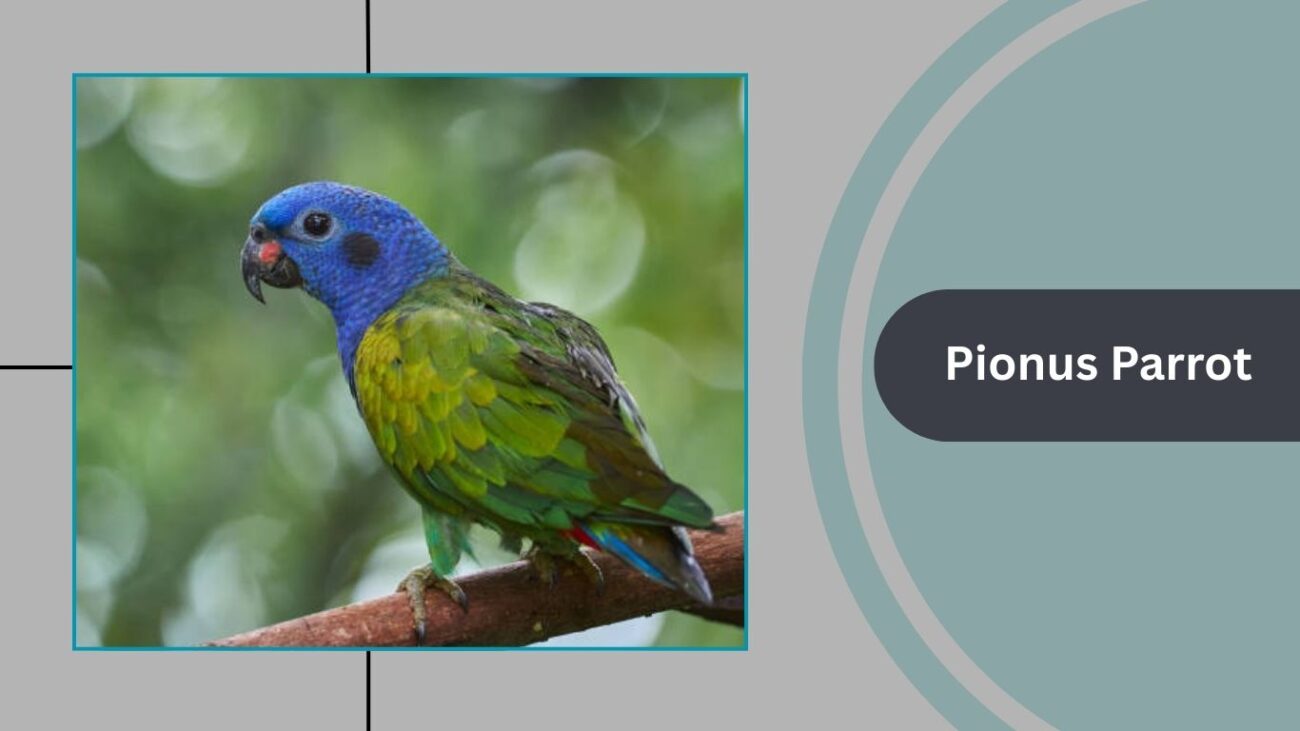
The Pionus Parrot is a medium-sized parrot native to Central and South America. Known for their calm and gentle nature, Pionus are less demanding than many other parrots, making them a good choice for families or first-time parrot owners. With proper care, they can live 25–30 years.
Identification
- Medium size, about 10–12 inches (25–30 cm) long
- Stocky body with short, square tail
- Plumage varies by species (Blue-headed, White-capped, Bronze-winged, etc.)
- Distinct red or pink patch under the tail, present in all Pionus species
- Dark beak and expressive eyes with subtle eye-rings
Habitat
In the wild, Pionus Parrots inhabit forests, woodlands, and mountainous regions of Central and South America. They are often found in small flocks or pairs. As pets, they need a medium-to-large cage with climbing opportunities, toys, and daily out-of-cage activity.
Diet
Their diet includes seeds, fruits, and berries in the wild. In captivity, they should be given high-quality pellets, fresh vegetables such as leafy greens, carrots, and broccoli, and fruits like apples, papayas, and grapes. Occasional seeds and nuts can be offered as treats.
Behavior
Pionus Parrots are quiet, gentle, and affectionate compared to more vocal parrot species. They are not known for being strong talkers, but some can learn words and sounds. They enjoy interaction but are also content to entertain themselves, making them less demanding than larger parrots. They are loyal, sweet-natured companions with calm personalities.
16. Amazon Parrot
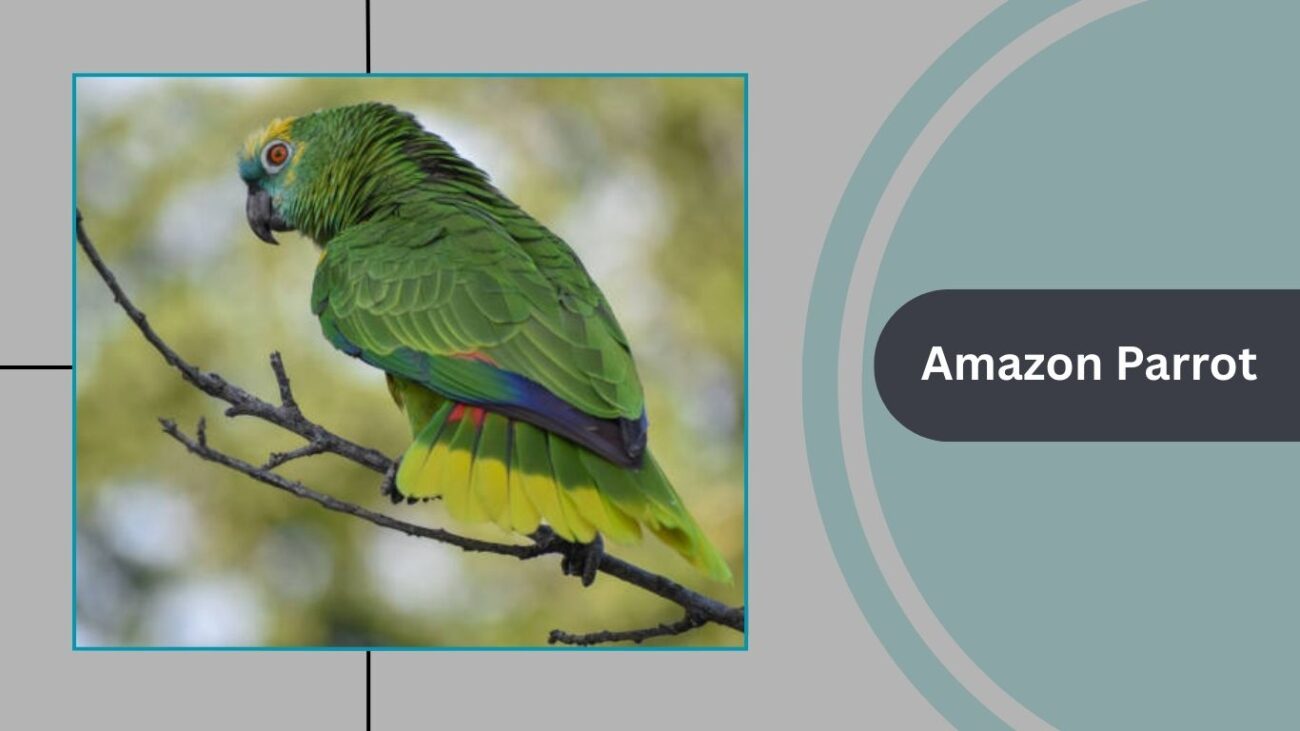
Amazon Parrots are medium-to-large parrots native to South and Central America, the Caribbean, and Mexico. They are highly intelligent, social, and known for their strong talking ability and expressive personalities. With excellent care, Amazon Parrots can live 40–60 years, sometimes even longer.
Identification
- Medium to large size, ranging from 10–18 inches (25–45 cm) depending on species
- Stocky body with short, blunt tail
- Predominantly green plumage, often with colorful accents of yellow, blue, or red on the head and wings
- Strong, curved beak ideal for cracking nuts and seeds
- Bright, expressive eyes with bare eye-rings
Habitat
In the wild, Amazon Parrots inhabit rainforests, woodlands, and savannas across the Americas. They live in flocks and are strong flyers with loud calls. As pets, they require large cages or aviaries, toys for mental stimulation, and daily time outside the cage for exercise and interaction.
Diet
Their diet consists of seeds, nuts, fruits, and vegetation in the wild. In captivity, they thrive on a base of high-quality pellets, fresh vegetables such as peppers, spinach, and carrots, along with fruits like bananas, papayas, and apples. Nuts should be given in moderation due to their fat content.
Behavior
Amazon Parrots are intelligent, playful, and social birds with bold personalities. They are excellent talkers and can learn many words, phrases, and even songs. They are also known for their loud voices and can become noisy if not engaged. These parrots form strong bonds with their owners and require consistent attention, training, and enrichment to stay happy and healthy.
17. Meyer’s Parrot
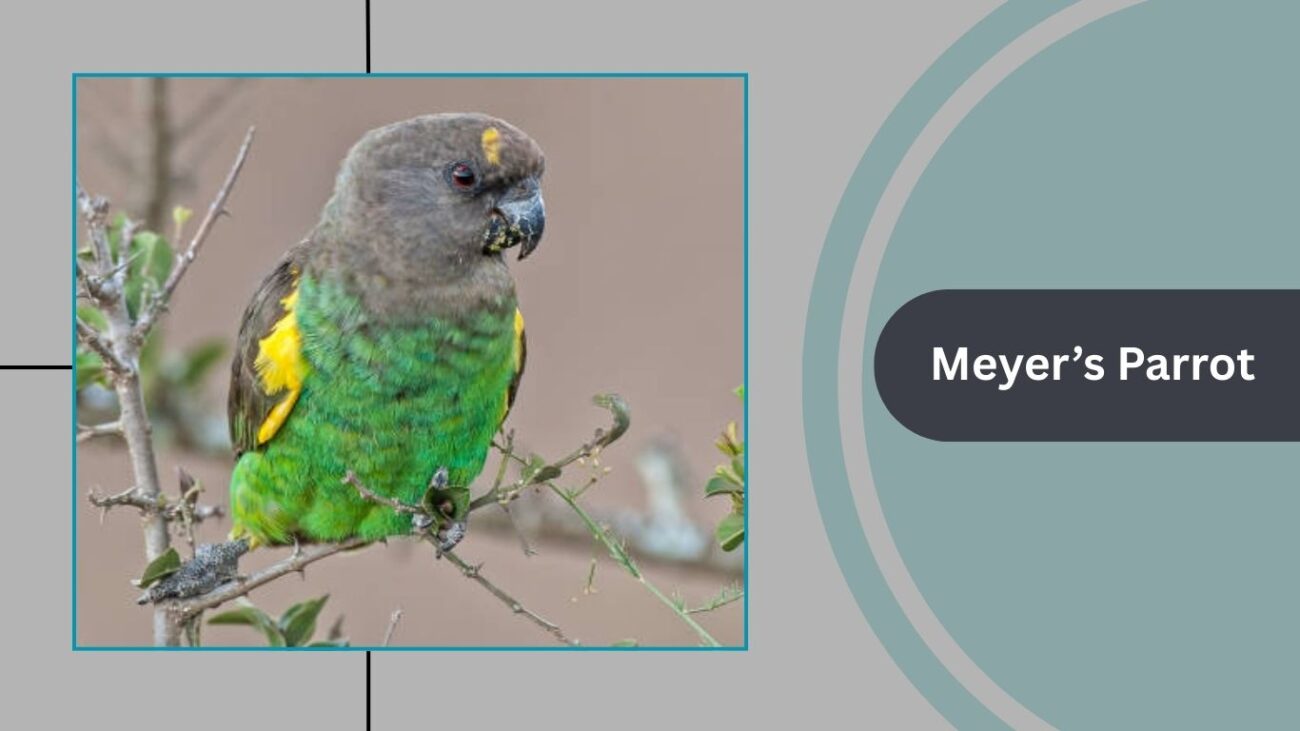
Meyer’s Parrot is a small, quiet parrot native to sub-Saharan Africa. They belong to the Poicephalus family, known for their calm nature and manageable size. Meyer’s Parrots are friendly, relatively easy to care for, and can live 20–30 years in captivity.
Identification
- Small to medium size, about 8–9 inches (20–23 cm) long
- Stocky body with short, square tail
- Plumage is mostly dark green with a grayish head
- Bright yellow patches on the wings and underparts
- Dark beak and striking yellow eyes in adults
Habitat
In the wild, Meyer’s Parrots inhabit woodlands, savannas, and river valleys across central and eastern Africa. They are often seen in pairs or small flocks. As pets, they do well in medium-sized cages with toys, perches, and daily free-flight time.
Diet
Their diet includes seeds, nuts, berries, and fruits in the wild. In captivity, they should be given a diet of pellets, fresh vegetables such as spinach, carrots, and peas, along with fruits like apples, grapes, and mangoes. Occasional nuts can be offered as treats.
Behavior
Meyer’s Parrots are calm, affectionate, and playful without being overly demanding. They are quieter than many other parrots, making them suitable for apartments or quieter households. While not the best talkers, some can learn words and whistles. They bond closely with their owners and enjoy interaction, training, and gentle play.
18. Caique

Caiques are energetic, playful parrots native to South America. Often called the “clowns of the parrot world,” they are loved for their lively personalities, bright colors, and strong bonding with owners. With proper care, Caiques can live 25–30 years.
Identification
- Small to medium size, about 9–10 inches (23–25 cm) long
- Stocky body with short, square tail
- Two main species: White-bellied Caique and Black-headed Caique
- Brightly colored plumage: white belly, green wings, yellow-orange thighs, and either black or orange head depending on species
- Dark beak and expressive eyes
Habitat
In the wild, Caiques are found in forests, woodlands, and floodplains across northern South America. They live in small flocks and are active foragers. As pets, they require a spacious cage, climbing structures, and daily free time outside the cage for exercise and play.
Diet
Their diet includes seeds, fruits, berries, and vegetation in the wild. In captivity, they thrive on pellets supplemented with leafy greens, corn, carrots, apples, bananas, and other fresh fruits. Occasional nuts can be offered as treats.
Behavior
Caiques are bold, playful, and very active. They enjoy hopping, climbing, and wrestling with toys, often entertaining their owners with silly antics. They are highly social and bond strongly with humans, often seeking constant attention. While not the best talkers, they can mimic whistles and sounds. Without enough stimulation, they may become mischievous, so regular play and training are essential.
19. Bourke’s Parakeet
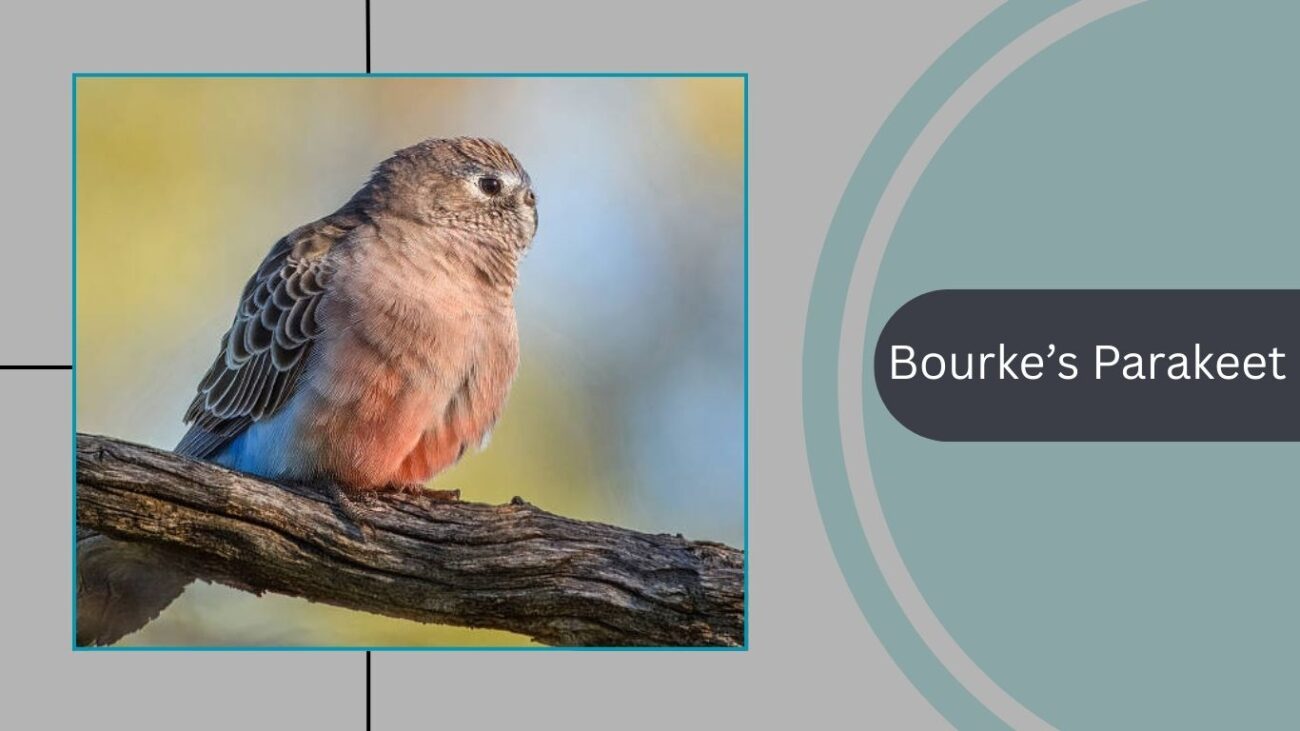
Bourke’s Parakeet is a gentle and quiet parrot species native to Australia. Unlike many other parakeets, they are calmer and less noisy, making them excellent pets for those who prefer peaceful companions. With proper care, they can live 10–15 years.
Identification
- Small size, about 7–8 inches (18–20 cm) long
- Slender body with long, tapering tail
- Wild type is mostly brown with a pink chest and blue highlights on wings
- Color mutations include rosy, lutino, and opaline forms
- Dark eyes and a relatively small, pale beak
Habitat
In the wild, Bourke’s Parakeets are found in arid and semi-arid regions of Australia, especially grasslands and open woodlands. They are often seen in pairs or small flocks. As pets, they thrive in medium to large cages with plenty of horizontal space for flight, toys, and perches.
Diet
Their natural diet consists of grass seeds and vegetation. In captivity, they do well on a high-quality seed mix or pellets, supplemented with leafy greens, vegetables such as carrots and peas, and occasional fruits like apple or pear. Fresh water and cuttlebone should always be available.
Behavior
Bourke’s Parakeets are calm, gentle, and relatively quiet birds. They are most active during dawn and dusk but spend much of the day perched quietly. Unlike many parrots, they are not known for talking but can be tamed to interact with owners. They are affectionate in their own way and adapt well to peaceful households.
20. Rosella
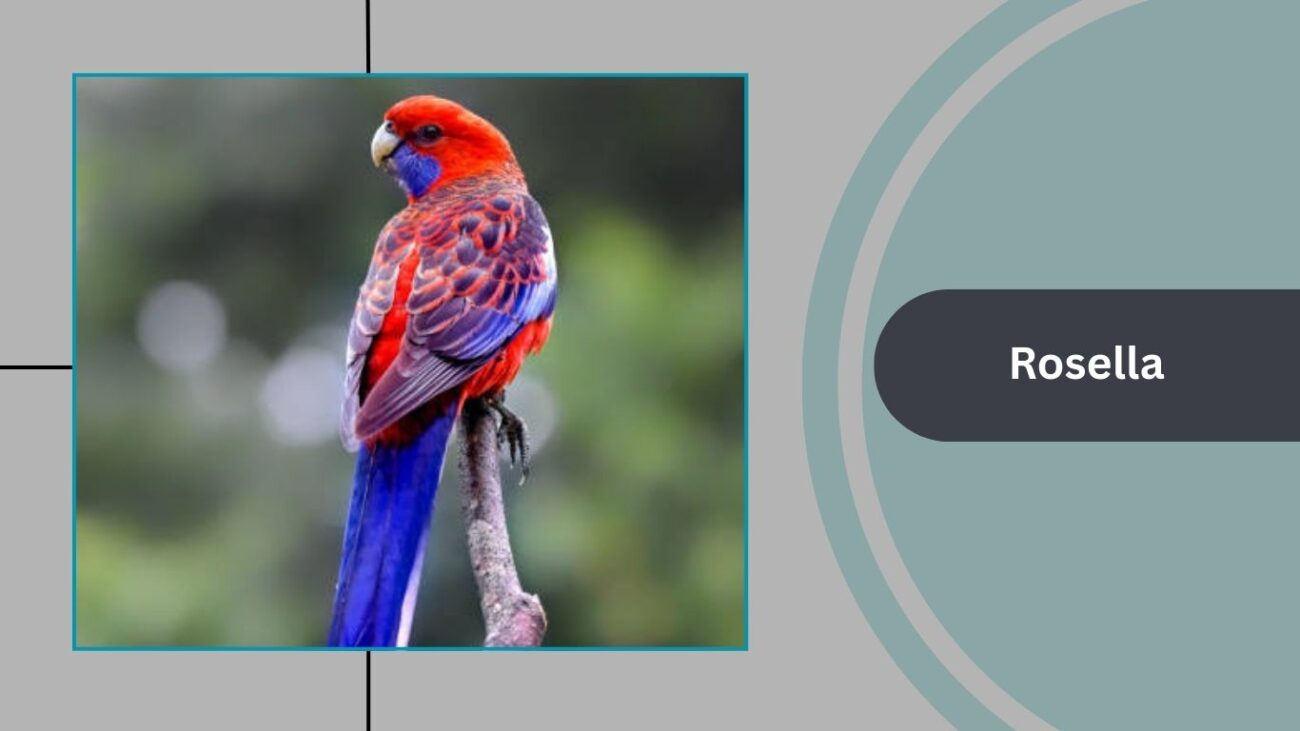
Rosellas are medium-sized parrots native to Australia and nearby islands. They are admired for their vivid, multicolored plumage and cheerful personalities. While not strong talkers, they are excellent whistlers and make beautiful aviary birds. With proper care, Rosellas can live 15–20 years.
Identification
- Medium size, about 10–14 inches (25–36 cm) long
- Bright, colorful plumage with red, yellow, blue, and green patterns depending on species
- Distinct white cheek patches
- Strong, slightly curved beak
- Long, broad tail feathers that aid in graceful flight
Habitat
In the wild, Rosellas inhabit woodlands, open forests, gardens, and grasslands throughout Australia. They are often seen in pairs or small flocks. As pets, they require large cages or aviaries with ample space for flying and toys for enrichment.
Diet
Their natural diet includes seeds, grasses, fruits, flowers, and insects. In captivity, a balanced diet of pellets, fresh vegetables like spinach, broccoli, and carrots, plus fruits such as apples, pears, and berries, keeps them healthy. Seeds should be offered in moderation.
Behavior
Rosellas are active, curious, and independent. They are not typically cuddly but enjoy interaction and can bond well with their owners. They are excellent whistlers, capable of learning tunes and mimicking sounds. However, they may become territorial, so proper training and socialization are important. They do best in homes where they have space to fly and explore.
21. Red-Bellied Parrot
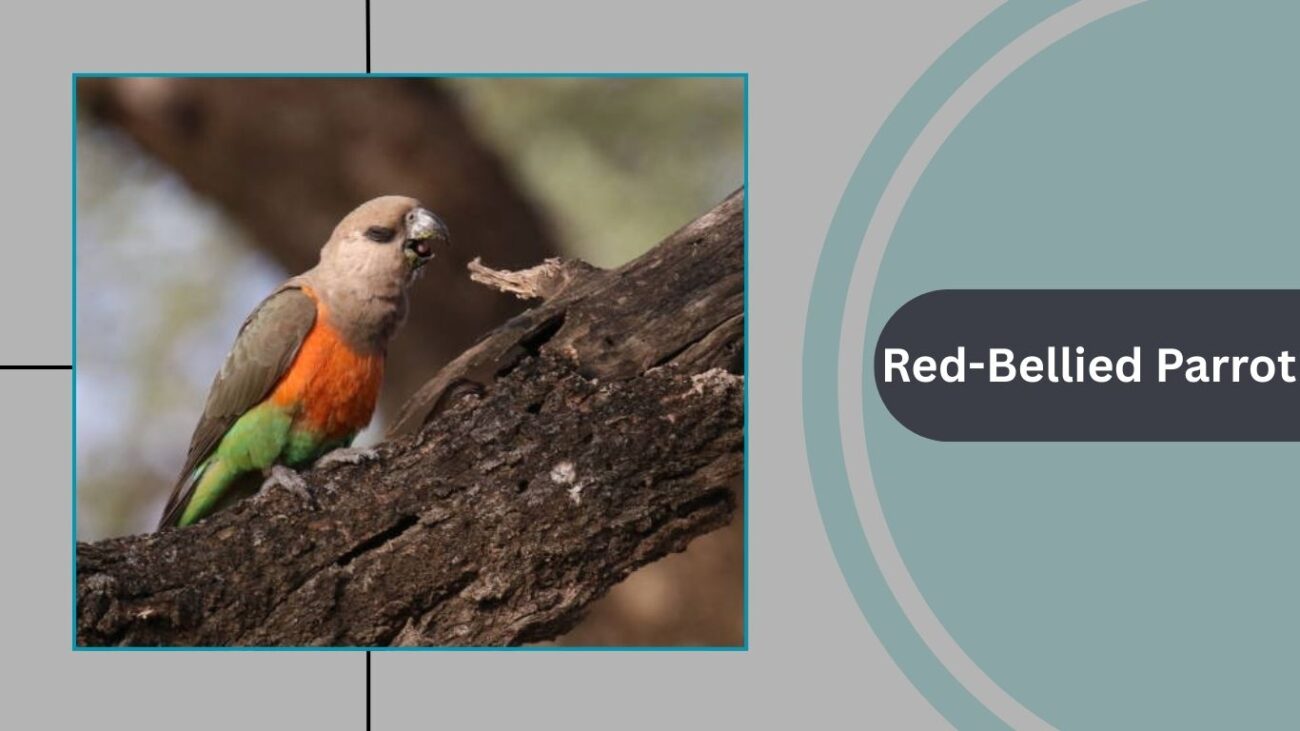
The Red-Bellied Parrot is a medium-sized parrot from Africa, belonging to the Poicephalus family. Known for its calm temperament and striking sexual dimorphism, it is a relatively quiet and affectionate pet bird. With good care, Red-Bellied Parrots can live 20–30 years.
Identification
- Medium size, about 8–9 inches (20–23 cm) long
- Stocky build with a short, square tail
- Males: gray head, green wings, and a distinctive bright red-orange belly
- Females: similar but with a green belly instead of red
- Dark beak and bright yellow eyes in adults
Habitat
In the wild, Red-Bellied Parrots inhabit dry woodlands, savannas, and forest edges across East Africa, especially in Ethiopia, Kenya, and Tanzania. As pets, they thrive in medium-to-large cages with perches, climbing opportunities, and toys to keep them mentally active.
Diet
Their diet consists of seeds, fruits, and berries in the wild. In captivity, they should be fed a high-quality pellet mix along with vegetables like carrots, peas, and leafy greens, plus fruits such as apples, mangoes, and papayas. Occasional nuts provide enrichment and healthy fats.
Behavior
Red-Bellied Parrots are intelligent, playful, and affectionate. They are quieter than many parrot species, making them suitable for apartment living. While not the best talkers, some individuals can learn words and whistles. They bond closely with their owners, enjoy interaction, and appreciate gentle handling and training sessions.
22. Senegal Parrot
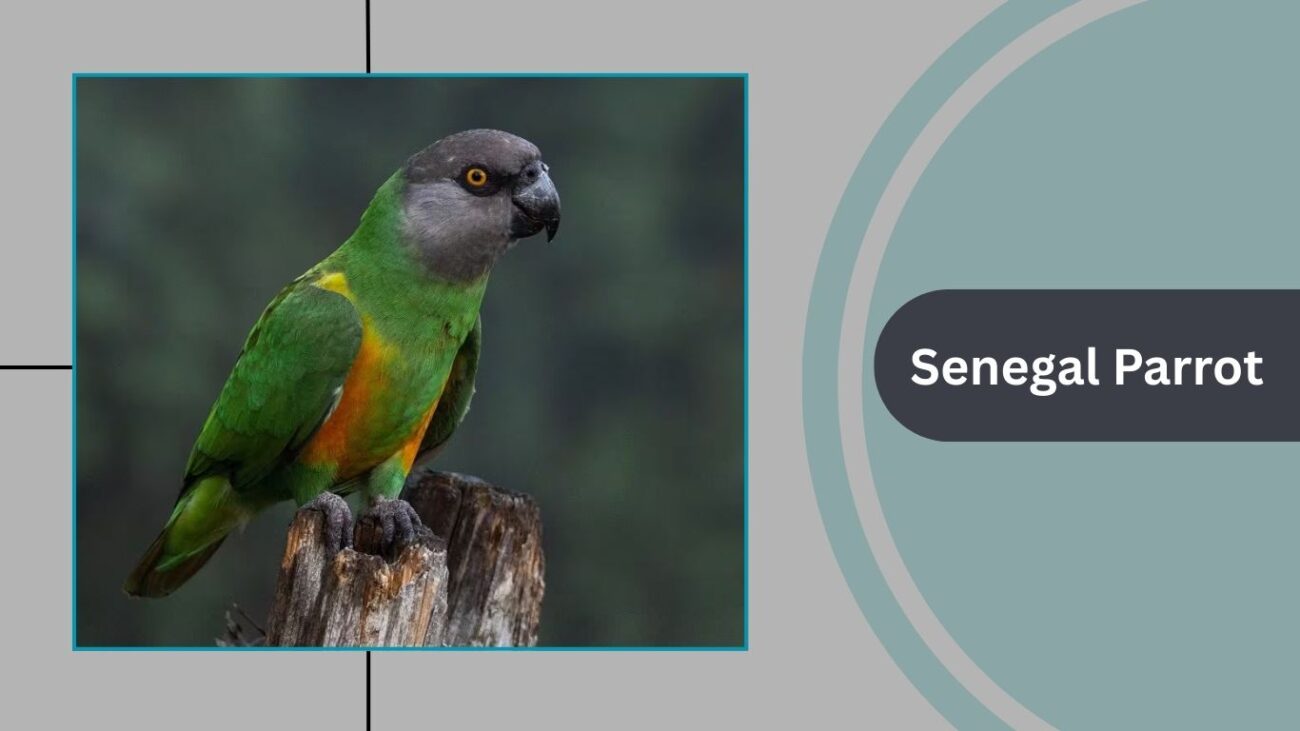
The Senegal Parrot is a small-to-medium parrot native to West Africa. Belonging to the Poicephalus family, it is popular for its calm temperament, quiet nature, and affectionate personality. With proper care, Senegal Parrots can live 25–30 years.
Identification
- Small to medium size, about 9 inches (23 cm) long
- Stocky body with a short, broad tail
- Distinctive green body, gray head, and yellow-orange belly patch
- Dark beak and bright yellow eyes in adults
- Compact build compared to larger parrots
Habitat
In the wild, Senegal Parrots inhabit savannas, open woodlands, and forest edges across West Africa, particularly in countries like Senegal, Ghana, and Nigeria. As pets, they thrive in medium-sized cages with perches, toys, and time outside the cage for exercise and play.
Diet
Their natural diet includes seeds, fruits, berries, and grains. In captivity, a balanced diet of pellets, fresh vegetables such as spinach, carrots, and peas, and fruits like apples, oranges, and grapes should be provided. Occasional nuts are also beneficial in moderation.
Behavior
Senegal Parrots are affectionate, playful, and quieter than many parrot species, making them good companions for households where noise is a concern. They can learn words and sounds, though not as extensively as larger parrots. They bond strongly with their owners and enjoy gentle play, training, and mental stimulation.
23. Lineolated Parakeet (Linnie)
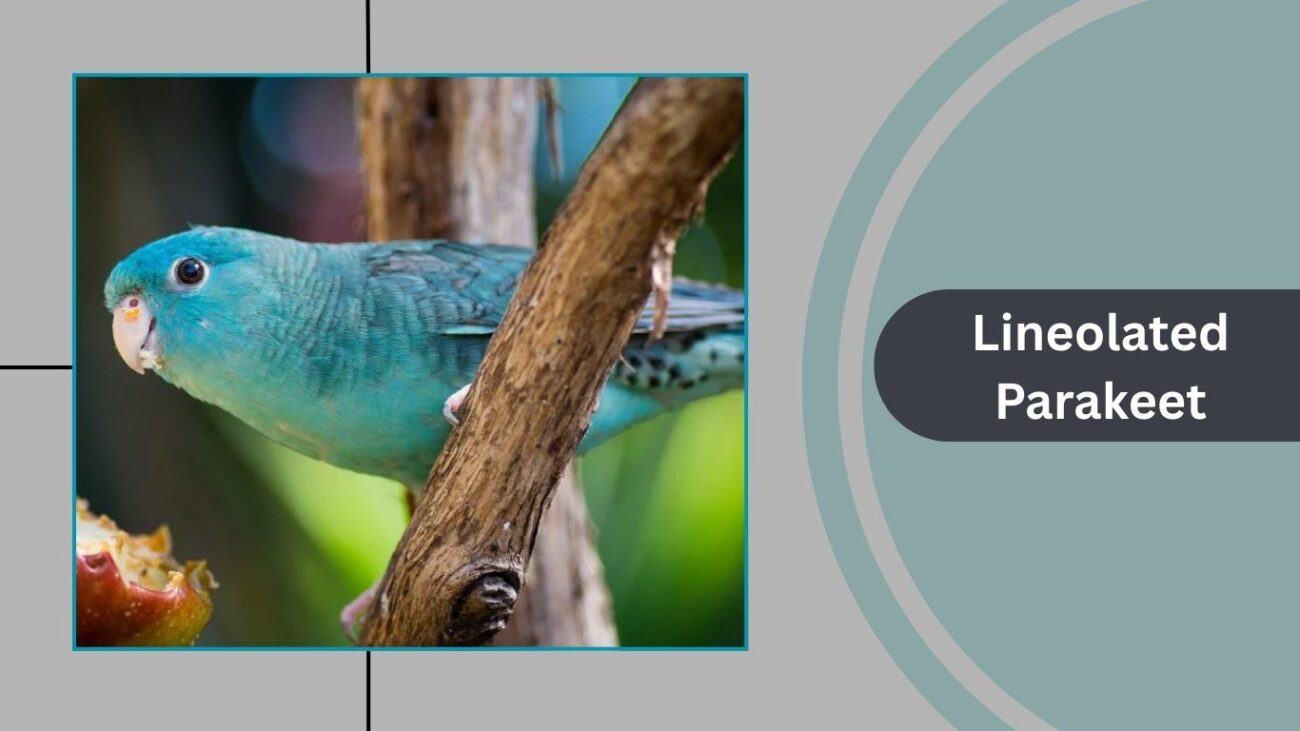
The Lineolated Parakeet, commonly called a “Linnie,” is a small parrot native to Central and South America. Known for their calm, quiet, and gentle personalities, Linnies are excellent pets for beginners and apartment dwellers. With good care, they can live 10–15 years.
Identification
- Small size, about 6–7 inches (15–18 cm) long
- Compact body with short, stubby tail
- Plumage is typically green with dark “lined” markings on the feathers
- Color mutations include blue, turquoise, lutino, and albino
- Small, curved beak and dark expressive eyes
Habitat
In the wild, Lineolated Parakeets inhabit cloud forests, woodlands, and mountainous regions in Mexico, Panama, Colombia, and Peru. They are often found in small flocks. As pets, they thrive in medium cages with plenty of perches, toys, and daily flight time in a safe space.
Diet
Their diet includes seeds, fruits, and vegetation in the wild. In captivity, they should be fed high-quality pellets, along with fresh vegetables like broccoli, peas, and leafy greens, plus fruits such as apples, berries, and grapes. Millet sprays can be offered as occasional treats.
Behavior
Linnies are gentle, quiet, and affectionate birds. They are less noisy than most parakeets, often communicating with soft chirps and whistles. They enjoy climbing, playing with toys, and bonding with their owners. With patience, they can learn tricks and may mimic a few words, though not as extensively as larger parrots.
24. Kakariki

The Kakariki, also known as the New Zealand Parakeet, is a lively and playful bird native to New Zealand. Its name means “small parrot” in the Māori language. Kakarikis are known for their high energy, constant movement, and curious nature. With proper care, they can live 10–15 years.
Identification
- Small to medium size, about 10–11 inches (25–28 cm) long
- Slim body with long tail feathers
- Bright green plumage with a vivid red patch on the forehead and crown
- Some mutations include yellow (lutino) and cinnamon forms
- Small, curved beak with bright, alert eyes
Habitat
In the wild, Kakarikis inhabit forests, scrublands, and grasslands across New Zealand and its offshore islands. They are active foragers and excellent climbers. As pets, they require a large cage or aviary with ample space for flying, climbing branches, and toys to keep them engaged.
Diet
Their natural diet includes seeds, fruits, insects, and flowers. In captivity, they should be fed a base of pellets or seeds, supplemented with leafy greens, corn, carrots, and fruits like apples, pears, and kiwis. Occasional protein sources such as boiled egg can also be offered.
Behavior
Kakarikis are energetic, curious, and always on the move. They enjoy exploring their environment, climbing, and digging in their food bowls or cage bedding. They are social and can become very affectionate with their owners, though they are not typically talkative. Their playful, busy nature makes them entertaining companions.
25. Blue-Headed Pionus

The Blue-Headed Pionus is a beautiful medium-sized parrot from Central and South America. Known for its gentle temperament and striking blue head, it is a favorite among bird enthusiasts seeking a quieter, affectionate companion. With good care, these parrots can live 25–40 years.
Identification
- Medium size, about 11 inches (28 cm) long
- Distinct bright blue head and neck with a green body
- Red patch of feathers under the tail, typical of all Pionus parrots
- Stocky build with a short, square tail
- Dark beak often with reddish markings on the sides
Habitat
In the wild, Blue-Headed Pionus parrots inhabit forests, woodlands, and edges of tropical lowlands across Venezuela, Trinidad, Brazil, and surrounding areas. They are often seen in small flocks. As pets, they need a medium-to-large cage with toys, perches, and time outside the cage for flying and exploring.
Diet
Their diet in the wild includes seeds, fruits, and berries. In captivity, they should be given pellets as a staple, along with fresh vegetables like carrots, leafy greens, and peas, plus fruits such as apples, papayas, and grapes. Occasional nuts can be offered for variety.
Behavior
Blue-Headed Pionus parrots are calm, affectionate, and relatively quiet compared to many other parrot species. While not the most skilled talkers, some can learn a few words or phrases. They are playful, enjoy gentle interaction, and bond well with their owners. Their steady and easygoing personality makes them excellent family pets.