

Owls are among the most fascinating birds of prey, known for their exceptional hunting skills, silent flight, and mysterious nocturnal habits. Found in nearly every part of the world, these raptors display an incredible variety in size, appearance, and behavior. In this guide, we’ll explore 27 remarkable owl species from around the globe, highlighting their unique features, preferred habitats, and hunting techniques that make each one special.
1. Barn Owl
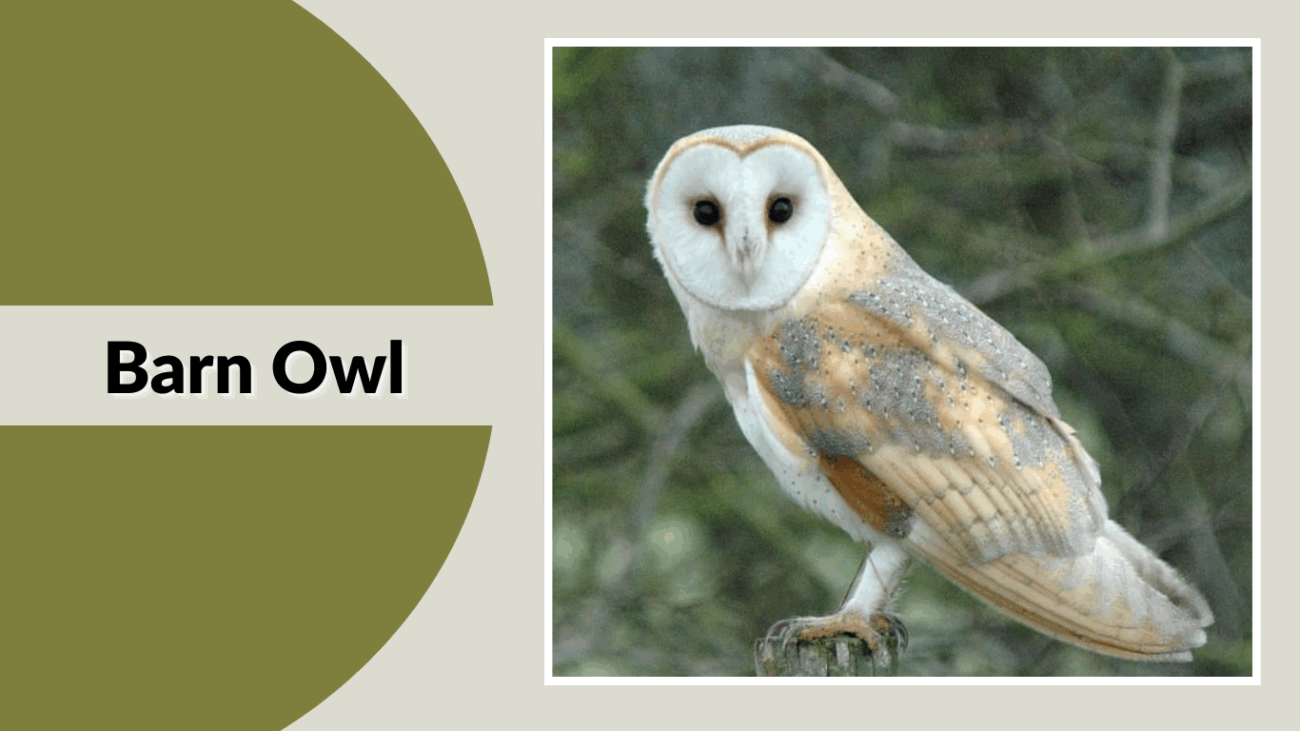
The barn owl is one of the most recognizable and widespread owl species in the world, easily identified by its pale, heart-shaped face and ghostly appearance in flight. Known for its silent hunting style and excellent low-light vision, the barn owl is a highly effective nocturnal predator. It often inhabits farmlands, grasslands, and open countryside, where it hunts for small mammals.
Identification
- Scientific Name: Tyto alba
- Body Length: 33–39 cm (13–15 in)
- Wingspan: 80–95 cm (31–37 in)
- Color: Pale white underside, golden-buff upperparts with fine speckles
- Face Shape: Distinctive heart-shaped facial disc
- Eyes: Dark, set in a white facial mask
Habitat and Distribution
Barn owls are found on every continent except Antarctica. They thrive in open habitats such as meadows, farmlands, marshes, and even near human settlements, often nesting in barns, silos, and old buildings.
Behavior and Diet
They are nocturnal hunters that rely heavily on sound to locate prey, even in complete darkness. Their diet primarily consists of small rodents like voles, mice, and shrews, helping control agricultural pests.
2. Snowy Owl
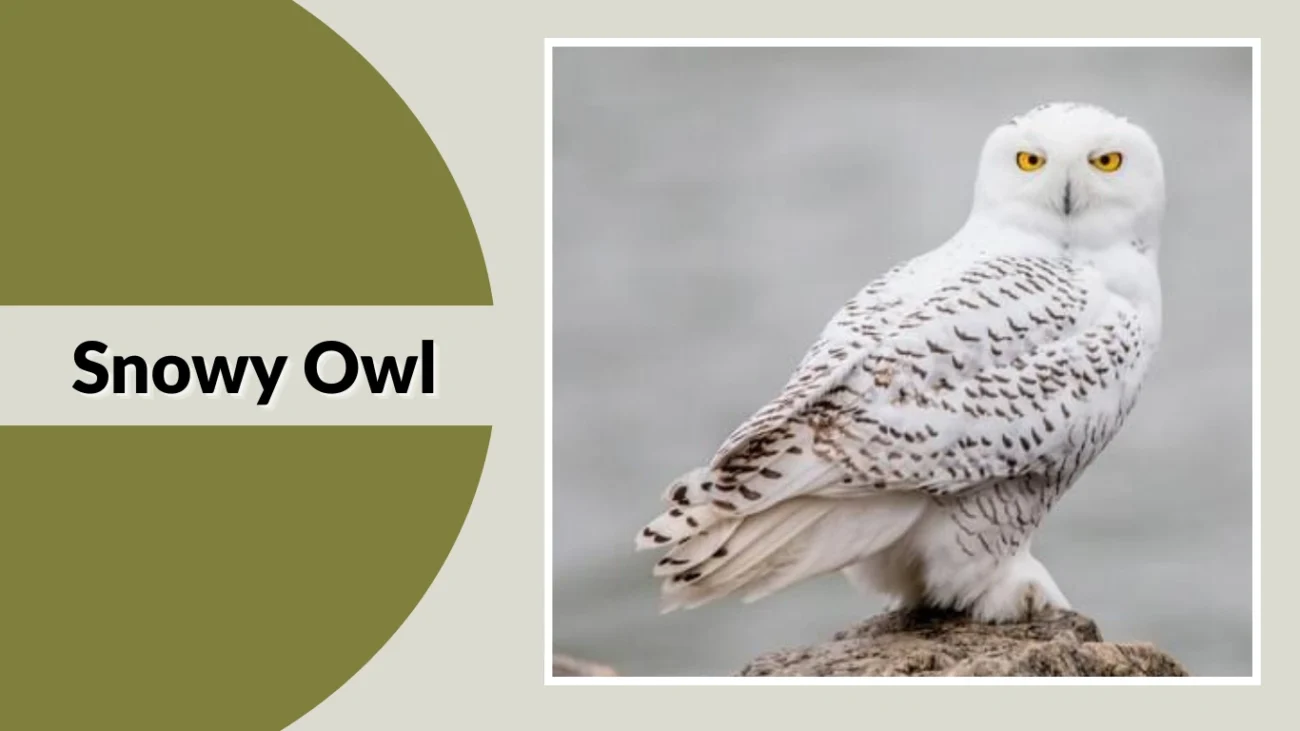
The snowy owl is a striking bird of prey, instantly recognizable by its brilliant white plumage, which helps it blend perfectly into snowy Arctic landscapes. Known as one of the largest owl species in the world, it is both powerful and adaptable, capable of surviving in some of the harshest climates on Earth. Snowy owls are diurnal during the breeding season, making them more visible than many other owl species.
Identification
- Scientific Name: Bubo scandiacus
- Body Length: 52–71 cm (20–28 in)
- Wingspan: 125–150 cm (49–59 in)
- Color: Mostly white; males are whiter, females and young have more dark barring
- Eyes: Bright yellow, large, and forward-facing
- Plumage: Dense feathers covering even the toes, for insulation against cold
Habitat and Distribution
Snowy owls breed in the Arctic tundra of North America, Europe, and Asia. In winter, they may migrate south to Canada, the northern United States, and occasionally farther south, often seen in open fields, coastal dunes, and airports.
Behavior and Diet
They are powerful hunters, feeding mainly on lemmings and other small mammals, but they also take birds such as ducks and ptarmigans. Unlike most owls, they often hunt during the day, especially in the constant daylight of the Arctic summer.
3. Great Horned Owl
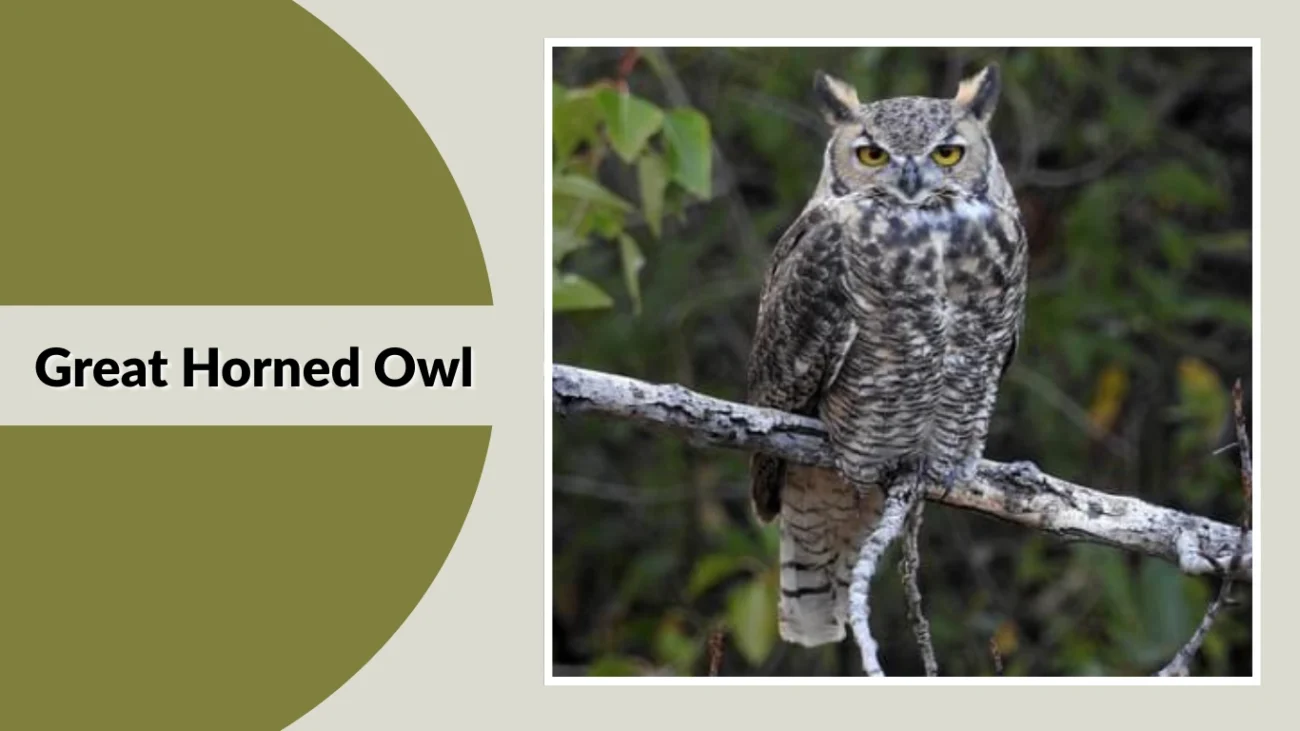
The great horned owl is one of the most powerful and adaptable owls in the Americas, recognized by its large size, tufted “horns” (which are actually feather tufts), and piercing yellow eyes. Known as the “tiger of the sky,” it is a formidable predator capable of taking down prey larger than itself.
Identification
- Scientific Name: Bubo virginianus
- Body Length: 45–63 cm (18–25 in)
- Wingspan: 91–153 cm (36–60 in)
- Color: Mottled gray-brown with a white throat patch
- Eyes: Bright yellow, forward-facing
- Facial Features: Prominent feather tufts (“horns”) on the head
Habitat and Distribution
Great horned owls are widespread across North and South America, found in forests, deserts, wetlands, grasslands, and even urban areas. Their adaptability allows them to thrive in diverse environments, from dense woodlands to city parks.
Behavior and Diet
These owls are apex nocturnal hunters, feeding on a wide range of prey including rabbits, skunks, rodents, birds, and even other raptors. They are known for their deep, resonant hoots and aggressive defense of nesting territories.
4. Barred Owl
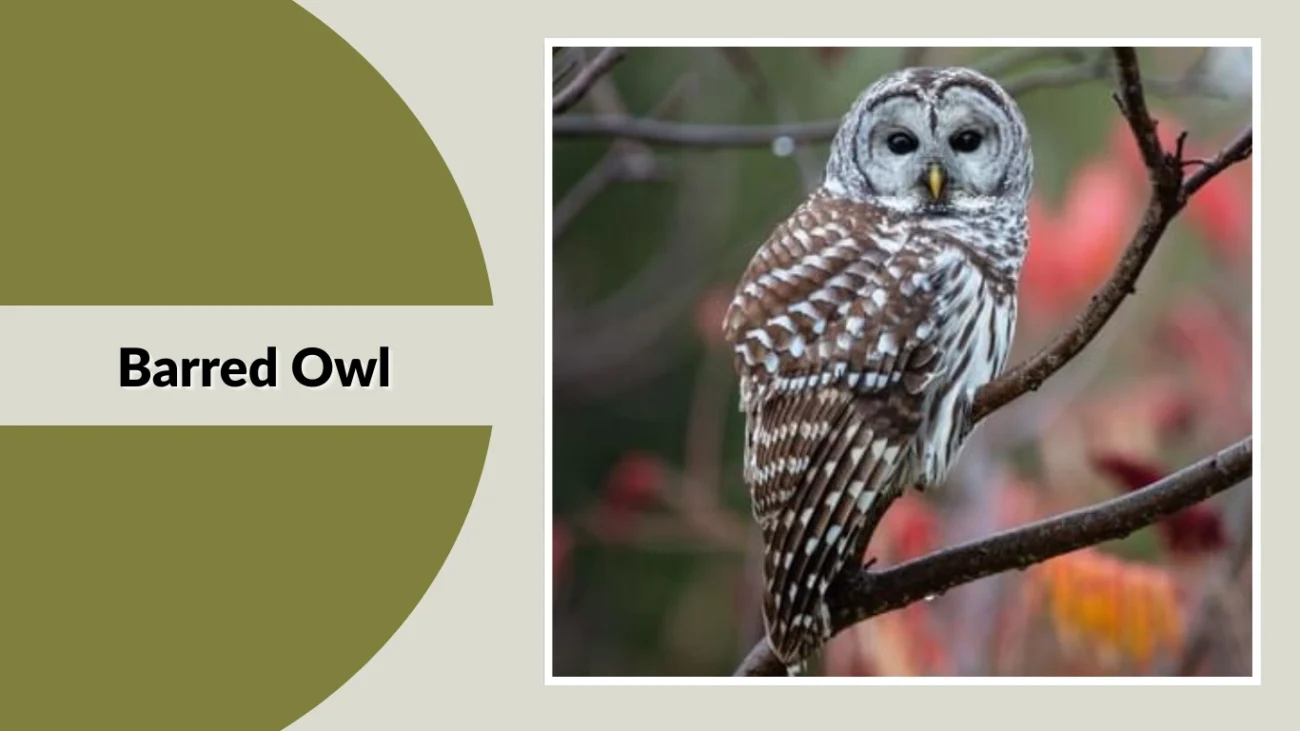
The barred owl is a large, stocky owl best known for its distinctive hooting call that sounds like “Who cooks for you? Who cooks for you all?” Its striking brown-and-white barred plumage and soulful dark eyes make it one of the most recognizable forest owls in North America.
Identification
- Scientific Name: Strix varia
- Body Length: 40–63 cm (16–25 in)
- Wingspan: 96–125 cm (38–49 in)
- Color: Brown upperparts with white barring; streaked underside
- Eyes: Large, dark brown (unlike most owls’ yellow eyes)
- Facial Disc: Pale with concentric brown rings
Habitat and Distribution
Barred owls inhabit mature forests, especially near water sources such as swamps, rivers, and lakes. They are found throughout eastern North America and have expanded their range into the Pacific Northwest.
Behavior and Diet
These owls are mostly nocturnal but may also be active in the day. They feed on small mammals, birds, amphibians, reptiles, and invertebrates. Known for their curiosity, barred owls often approach humans closely when in quiet natural areas.
5. Eastern Screech Owl
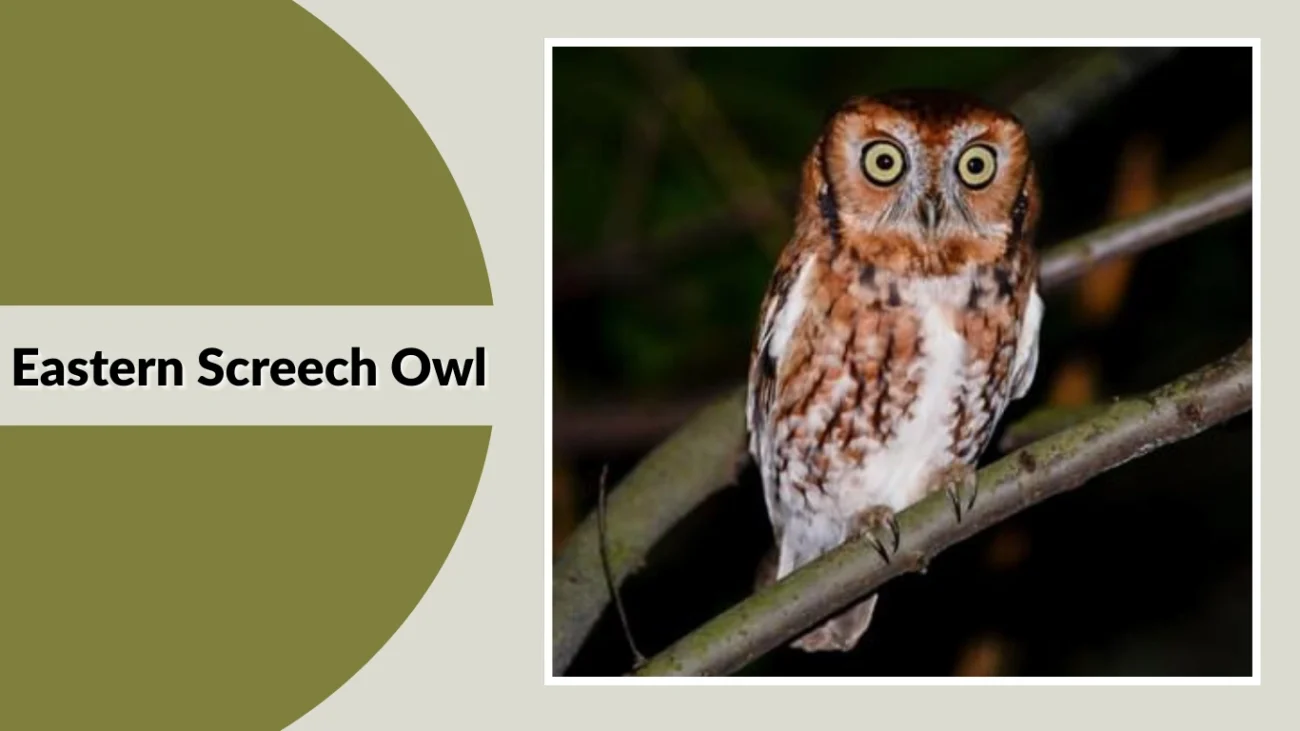
The eastern screech owl is a small but highly adaptable owl, often blending so well into tree bark that it’s nearly invisible during the day. Despite its name, it doesn’t actually “screech” but produces a series of trills and whinnies. This owl comes in two main color morphs—gray and reddish-brown—which serve as excellent camouflage.
Identification
- Scientific Name: Megascops asio
- Body Length: 16–25 cm (6–10 in)
- Wingspan: 46–61 cm (18–24 in)
- Color: Gray or rufous (reddish-brown) morph with streaked pattern
- Eyes: Yellow and prominent
- Ear Tufts: Small, pointed feather tufts on the head
Habitat and Distribution
Found throughout eastern North America, the eastern screech owl thrives in forests, woodlots, suburbs, and even city parks. They often nest in tree cavities or abandoned woodpecker holes.
Behavior and Diet
These owls are nocturnal, feeding on insects, small mammals, reptiles, amphibians, and birds. They are skilled hunters and can take prey larger than themselves. Their calls are often heard more than the birds are seen, making them a mysterious nighttime presence.
6. Western Screech Owl
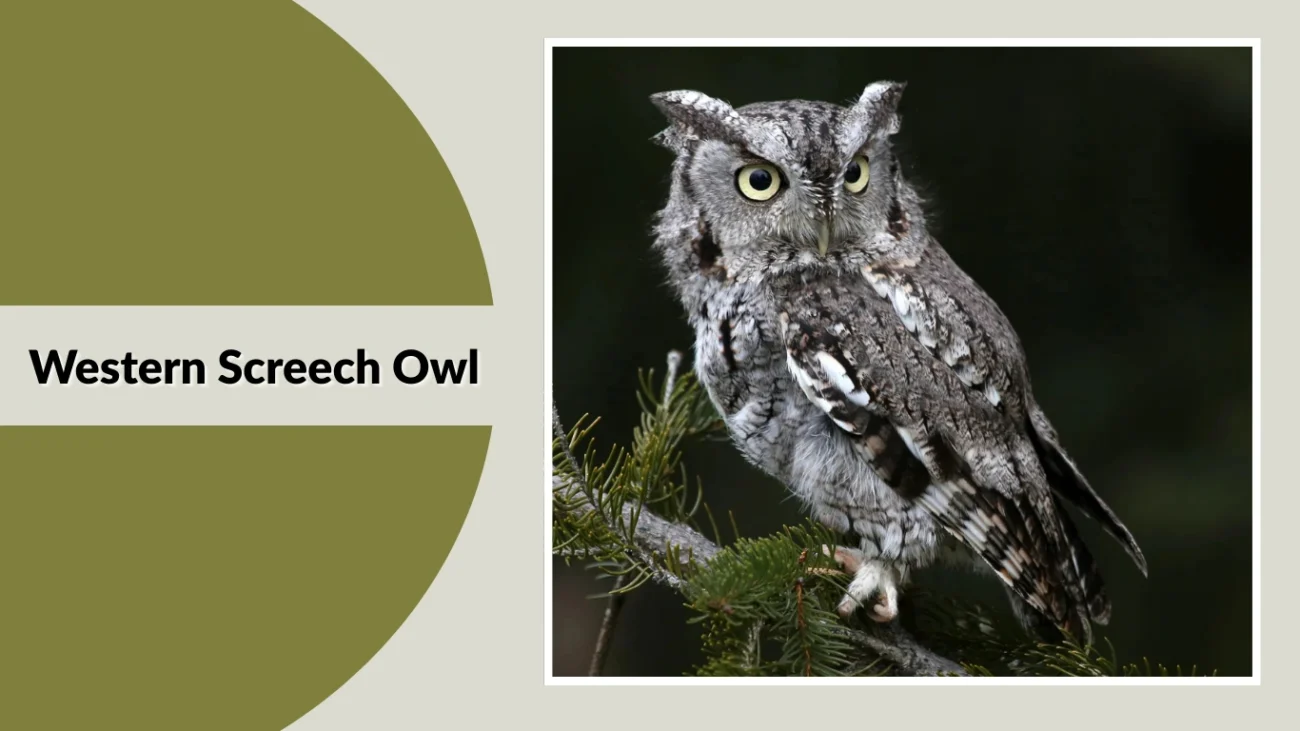
The western screech owl is a small, compact owl known for its camouflaged plumage that blends seamlessly with tree bark. Despite its size, it is a fierce hunter, capable of taking prey nearly as large as itself. Its call is a series of short, accelerating hoots rather than an actual “screech.”
Identification
- Scientific Name: Megascops kennicottii
- Body Length: 19–25 cm (7.5–10 in)
- Wingspan: 55–61 cm (22–24 in)
- Color: Gray or brown morph with intricate streaking and mottling
- Eyes: Yellow and alert
- Ear Tufts: Prominent, pointed feather tufts
Habitat and Distribution
Found in western North America, from southern Alaska through the United States to parts of Mexico. They inhabit woodlands, deserts with scattered trees, and suburban areas, often nesting in tree cavities or abandoned woodpecker holes.
Behavior and Diet
Western screech owls are nocturnal hunters, preying on small mammals, birds, reptiles, amphibians, and large insects. Their adaptability allows them to thrive in both rural and urban environments.
7. Northern Saw-whet Owl
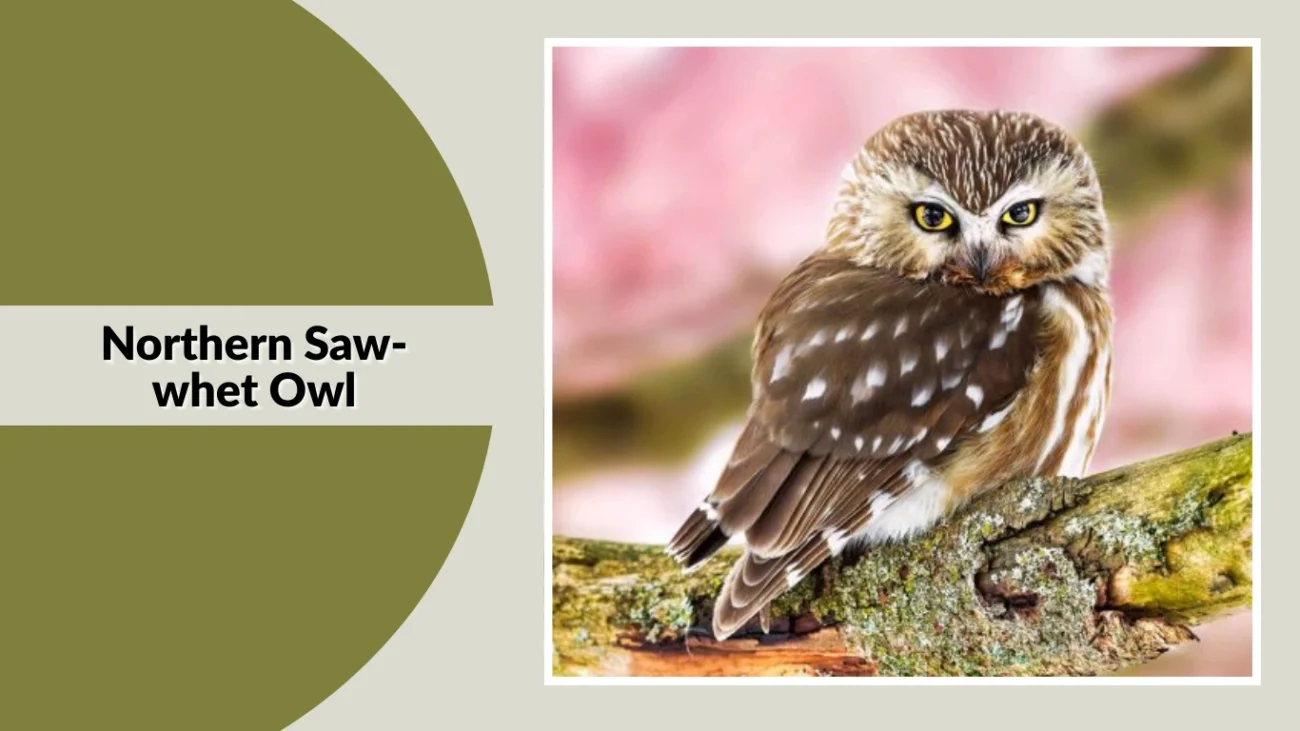
The northern saw-whet owl is one of the smallest owls in North America, known for its adorable, round-faced appearance and high-pitched tooting call. Despite its small size, it is a skilled nocturnal hunter with excellent vision and hearing. Its name comes from a call that early settlers thought resembled the sound of a saw being sharpened (“whetted”).
Identification
- Scientific Name: Aegolius acadicus
- Body Length: 17–22 cm (6.7–8.7 in)
- Wingspan: 42–56 cm (16.5–22 in)
- Color: Brown upperparts with white spots; pale facial disc with white “V” between the eyes
- Eyes: Bright yellow and large for its size
- Plumage: Soft and dense, aiding silent flight
Habitat and Distribution
Found across North America, from southern Canada through much of the United States and into Mexico. They favor dense coniferous or mixed forests, often near open areas for hunting.
Behavior and Diet
Northern saw-whet owls are secretive and mostly nocturnal, feeding mainly on small rodents, especially deer mice, but also insects and small birds. During migration, they may appear in unusual places, sometimes even in suburban backyards.
8. Boreal Owl
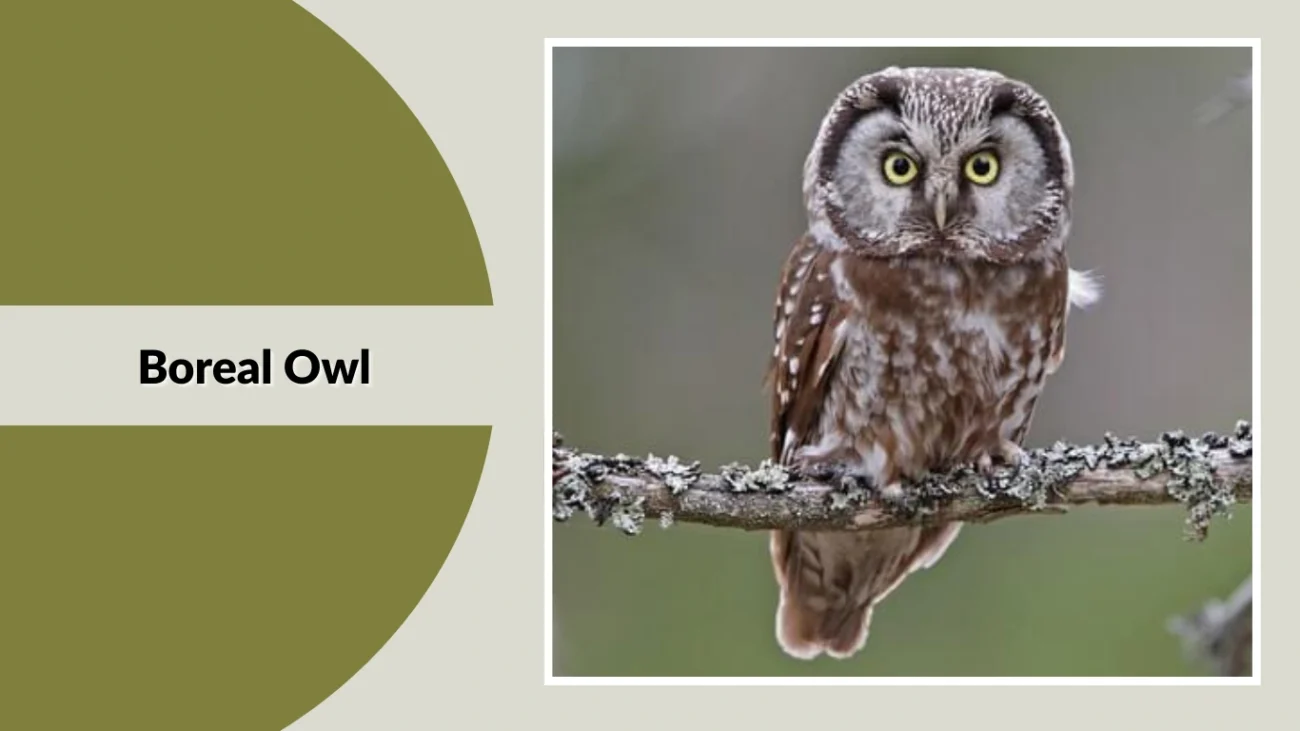
The boreal owl is a small, elusive owl that inhabits dense northern forests and is known for its large, piercing yellow eyes. Its secretive nature and preference for remote habitats make it one of the less commonly seen owl species in North America and Eurasia. At night, males produce a series of soft, haunting hoots to attract mates during the breeding season.
Identification
- Scientific Name: Aegolius funereus
- Body Length: 21–28 cm (8.3–11 in)
- Wingspan: 50–62 cm (19.7–24.4 in)
- Color: Brown upperparts with white spots; pale underside with brown streaks
- Eyes: Large, bright yellow
- Facial Disc: Round and pale with dark border
Habitat and Distribution
Boreal owls are found in northern coniferous forests across Canada, Alaska, northern Europe, and Asia. They prefer dense spruce and fir woods, often near forest clearings or wetlands.
Behavior and Diet
They are nocturnal hunters that rely heavily on hearing to detect prey under snow or leaf litter. Their diet consists mainly of small mammals such as voles and mice, but they also take birds and large insects when available.
9. Long-eared Owl
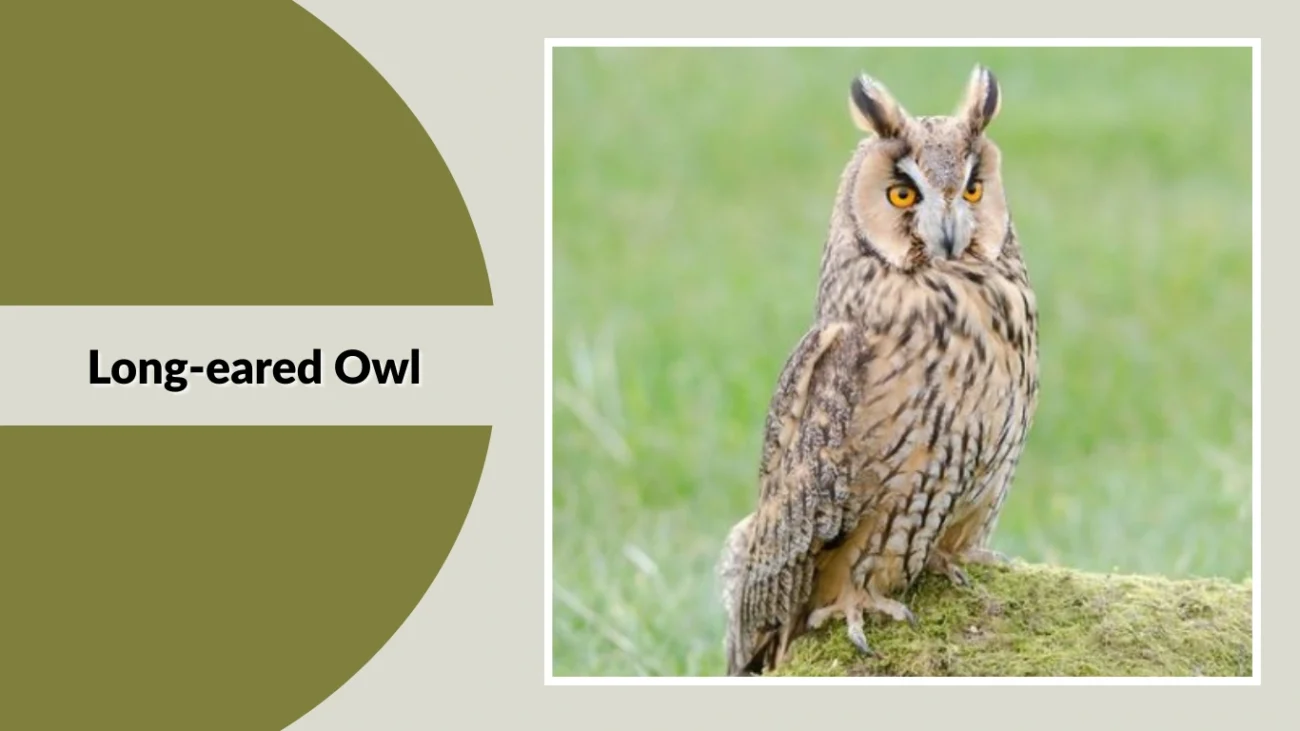
The long-eared owl is a medium-sized owl known for its tall, slender build and long feather tufts that resemble ears—though they are purely ornamental and not related to hearing. This secretive species is more often heard than seen, producing low, rhythmic hoots during the breeding season.
Identification
- Scientific Name: Asio otus
- Body Length: 31–40 cm (12–16 in)
- Wingspan: 86–102 cm (34–40 in)
- Color: Mottled brown, buff, and gray with streaked underparts
- Eyes: Striking orange-yellow
- Facial Disc: Narrow and pale, outlined with darker feathers
Habitat and Distribution
Found across North America, Europe, and Asia, long-eared owls prefer dense woodlands for roosting and open fields or meadows for hunting. They are migratory in colder regions but remain year-round residents in milder climates.
Behavior and Diet
Primarily nocturnal, they roost in dense foliage during the day and emerge at dusk to hunt. Their diet consists mostly of small mammals such as voles, mice, and shrews, but they will also take small birds when available.
10. Short-eared Owl
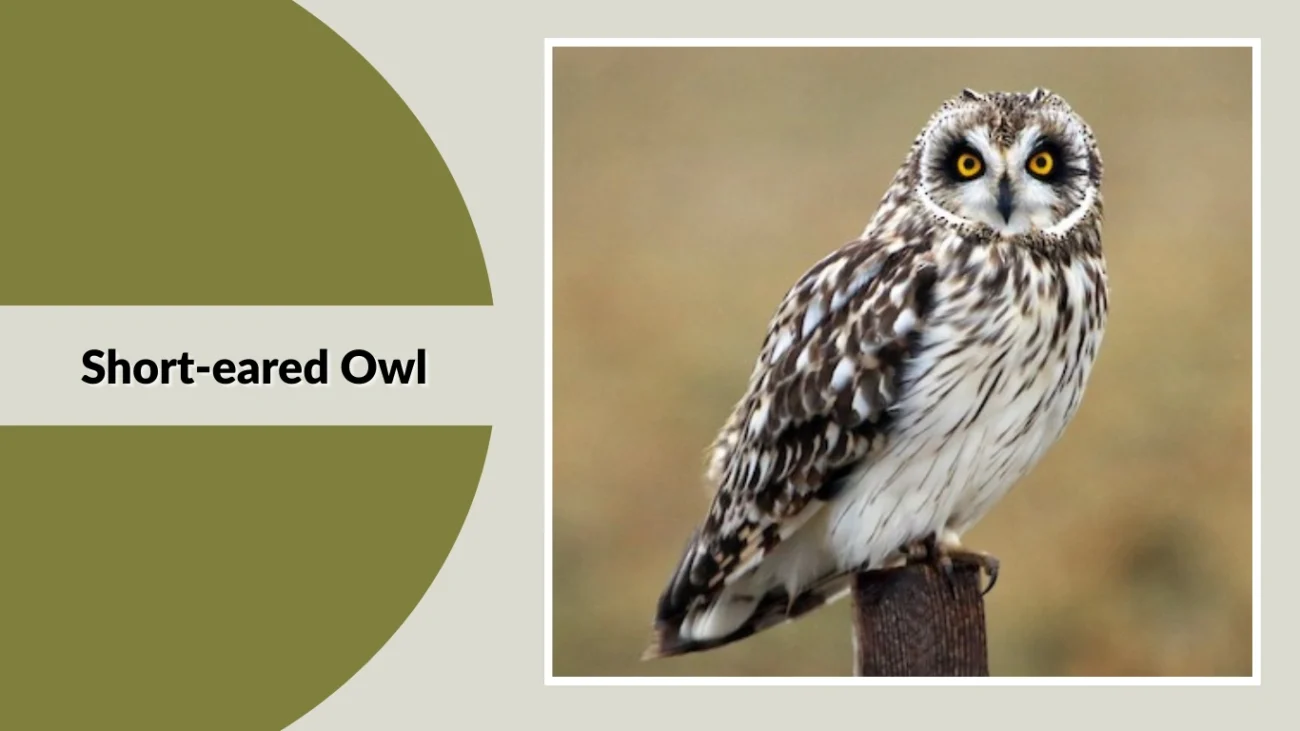
The short-eared owl is a medium-sized, highly adaptable owl recognized for its small, barely visible ear tufts and striking yellow eyes set in a black-rimmed facial disc. Unlike many owl species, it is often active during daylight, especially at dawn and dusk, making it easier to spot in the wild.
Identification
- Scientific Name: Asio flammeus
- Body Length: 34–43 cm (13–17 in)
- Wingspan: 85–110 cm (33–43 in)
- Color: Buff and brown mottled upperparts, pale underparts with streaking
- Eyes: Bright yellow with black outlines
- Ear Tufts: Very short and often not visible
Habitat and Distribution
Short-eared owls have one of the widest distributions of any owl species, found on every continent except Australia and Antarctica. They inhabit open grasslands, prairies, marshes, tundra, and agricultural fields.
Behavior and Diet
These owls are skilled hunters that rely on low, buoyant flight to scan for prey, mainly small mammals such as voles and mice. They also feed on small birds when available. Their diurnal and crepuscular activity patterns make them one of the more visible owl species in open habitats.
11. Tawny Owl
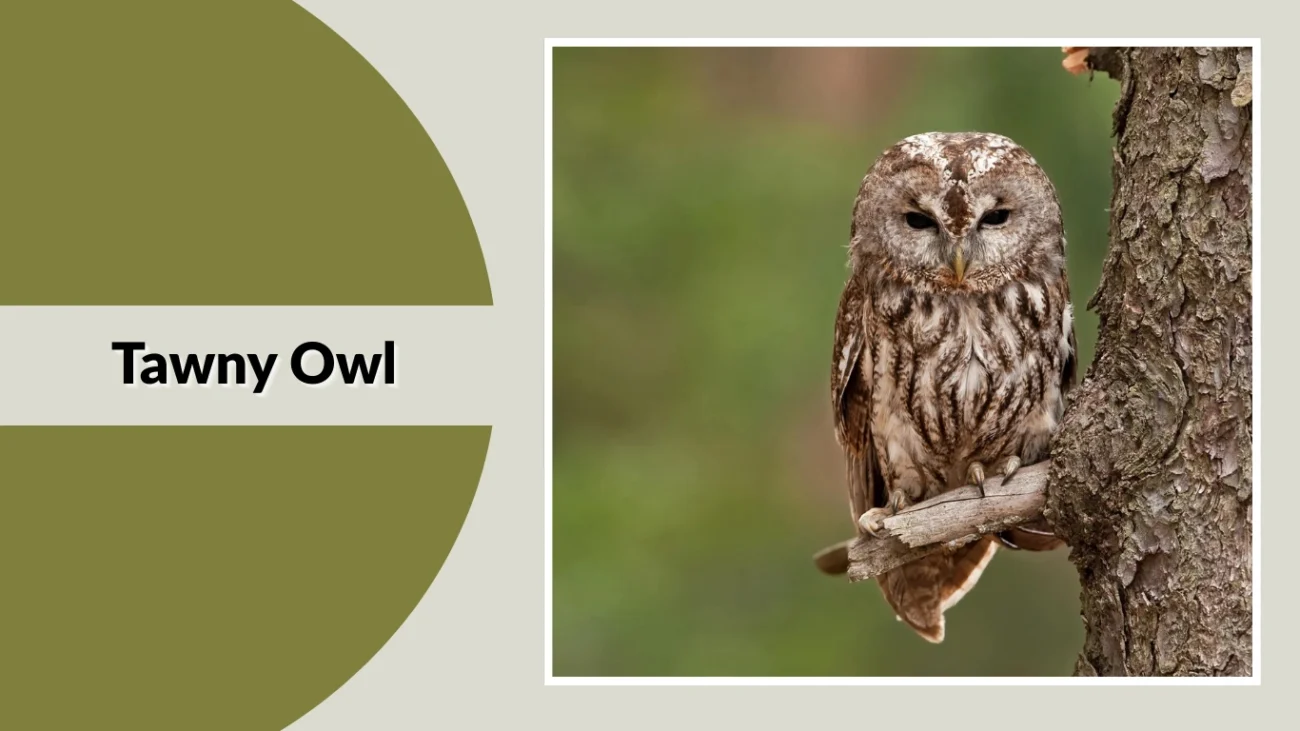
The tawny owl is a medium-sized, stocky woodland owl known for its rounded head, large dark eyes, and rich brown plumage. Its haunting, wavering hoot is one of the most iconic night sounds in European forests. This highly territorial species is rarely seen in daylight, relying on its camouflage to remain hidden.
Identification
- Scientific Name: Strix aluco
- Body Length: 37–43 cm (14.5–17 in)
- Wingspan: 81–105 cm (32–41 in)
- Color: Variable from reddish-brown to gray-brown with darker streaks
- Eyes: Large, deep brown (unlike the yellow eyes of many owls)
- Facial Disc: Rounded, pale with fine streaking
Habitat and Distribution
Widespread across Europe and parts of Asia, tawny owls prefer mature deciduous or mixed forests, but they also inhabit parks, gardens, and even urban areas with enough tree cover.
Behavior and Diet
They are nocturnal ambush predators, feeding on small mammals, birds, amphibians, and insects. Tawny owls are non-migratory and remain in the same territory year-round, fiercely defending it from other owls.
12. Eurasian Eagle-Owl
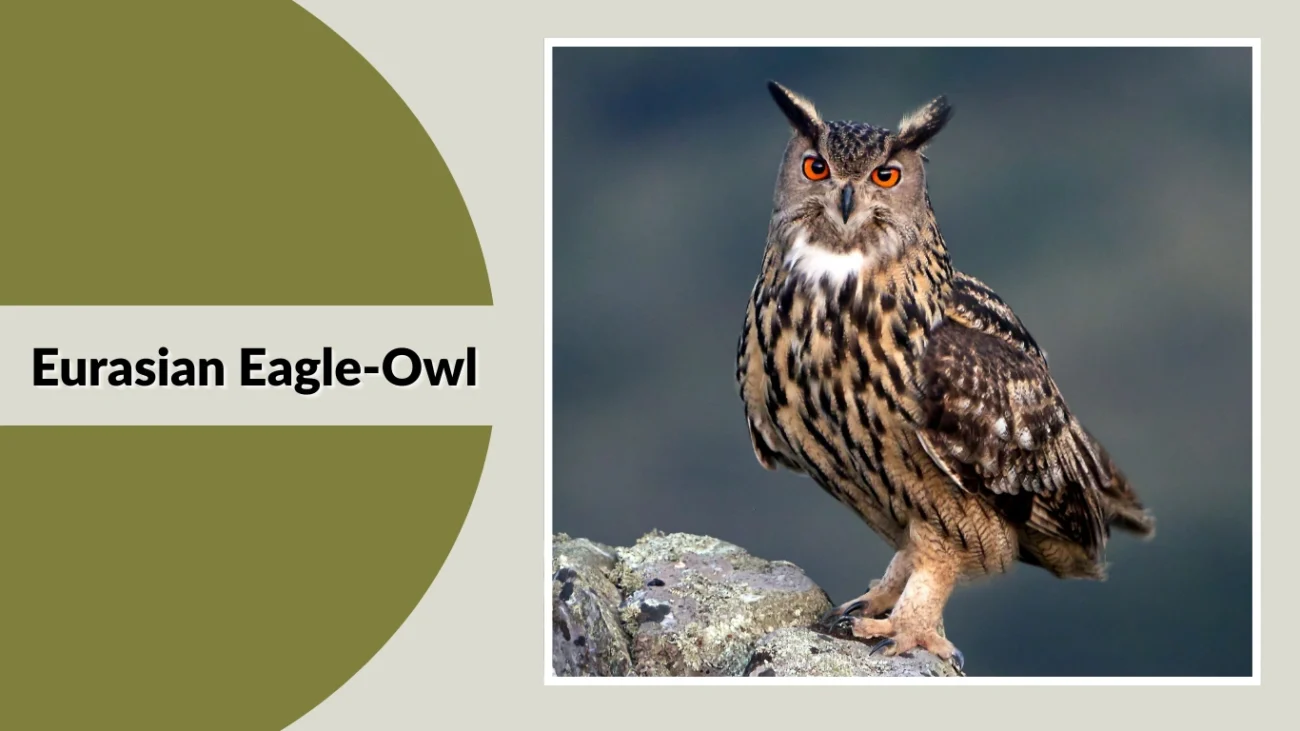
The Eurasian eagle-owl is one of the largest and most powerful owls in the world, with an imposing presence, striking orange eyes, and prominent feather tufts. Its deep, resonant hoot carries far through the forests and mountains it inhabits, making it a legendary predator in its range.
Identification
- Scientific Name: Bubo bubo
- Body Length: 60–75 cm (24–30 in)
- Wingspan: 160–188 cm (63–74 in)
- Color: Mottled brown, black, and cream with darker streaking
- Eyes: Intense orange, large, and forward-facing
- Ear Tufts: Prominent, upright feather tufts
Habitat and Distribution
Widespread across Europe, Asia, and parts of North Africa, Eurasian eagle-owls inhabit forests, rocky hillsides, cliffs, and even semi-desert regions. They prefer remote, undisturbed habitats with access to open hunting grounds.
Behavior and Diet
This apex nocturnal predator hunts a wide range of prey, from rabbits and hares to birds, reptiles, and even small foxes. It is fiercely territorial and has few natural enemies due to its size and power.
13. Little Owl
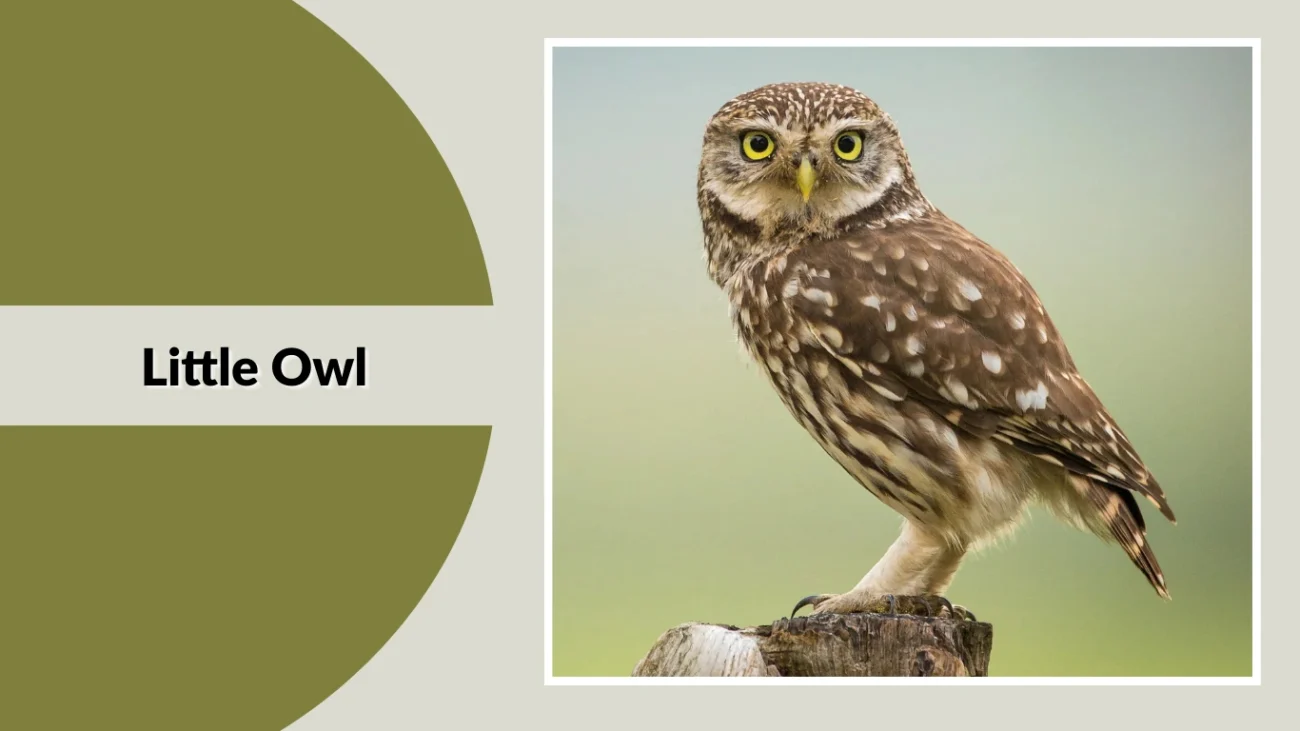
The little owl is a small, stocky owl with a fierce expression and bold demeanor, often seen perched in daylight on fence posts, rocks, or building roofs. Despite its size, it is a feisty and opportunistic predator, well-adapted to both rural and urban landscapes.
Identification
- Scientific Name: Athene noctua
- Body Length: 21–23 cm (8.3–9.1 in)
- Wingspan: 50–56 cm (19.7–22 in)
- Color: Brown with white spots on the head and wings; streaked underside
- Eyes: Bright yellow, giving a sharp, intense gaze
- Facial Disc: Flattened, with pale “eyebrow” markings
Habitat and Distribution
Native to Europe, Asia, and North Africa, little owls inhabit open countryside, farmland, orchards, and even villages. They prefer areas with scattered trees, old stone walls, and buildings that offer nesting sites.
Behavior and Diet
Unlike many owls, little owls are often active during the day, especially at dawn and dusk. Their diet includes insects, earthworms, small mammals, reptiles, and birds. They are known for bobbing their heads and scanning their surroundings before swooping down on prey.
14. Elf Owl
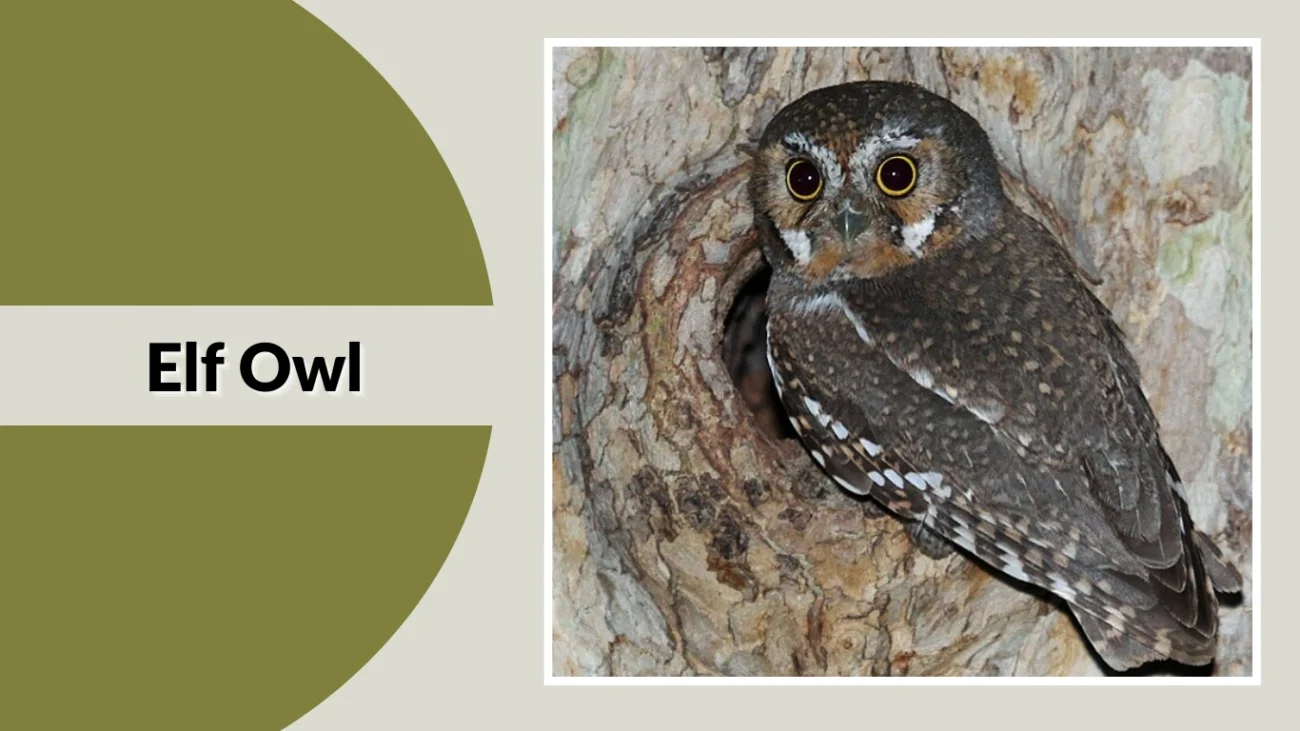
The elf owl is the smallest owl species in the world, about the size of a sparrow, yet it is an agile and capable predator. Its tiny size and nocturnal habits make it difficult to spot, but its high-pitched calls can often be heard on warm desert nights.
Identification
- Scientific Name: Micrathene whitneyi
- Body Length: 12.5–14.5 cm (5–5.7 in)
- Wingspan: 27 cm (10.5 in)
- Color: Grayish-brown with fine streaking and mottling
- Eyes: Yellow and large in proportion to its head
- Facial Disc: Rounded and pale with subtle markings
Habitat and Distribution
Native to the southwestern United States and Mexico, elf owls inhabit desert woodlands, saguaro cactus stands, and riparian forests. They often nest in old woodpecker holes in cacti or trees.
Behavior and Diet
Primarily insectivorous, elf owls hunt beetles, moths, crickets, and other invertebrates, but they may also take small lizards. They migrate south into Mexico during the winter and are most active during warm nights in the breeding season.
15. Flammulated Owl
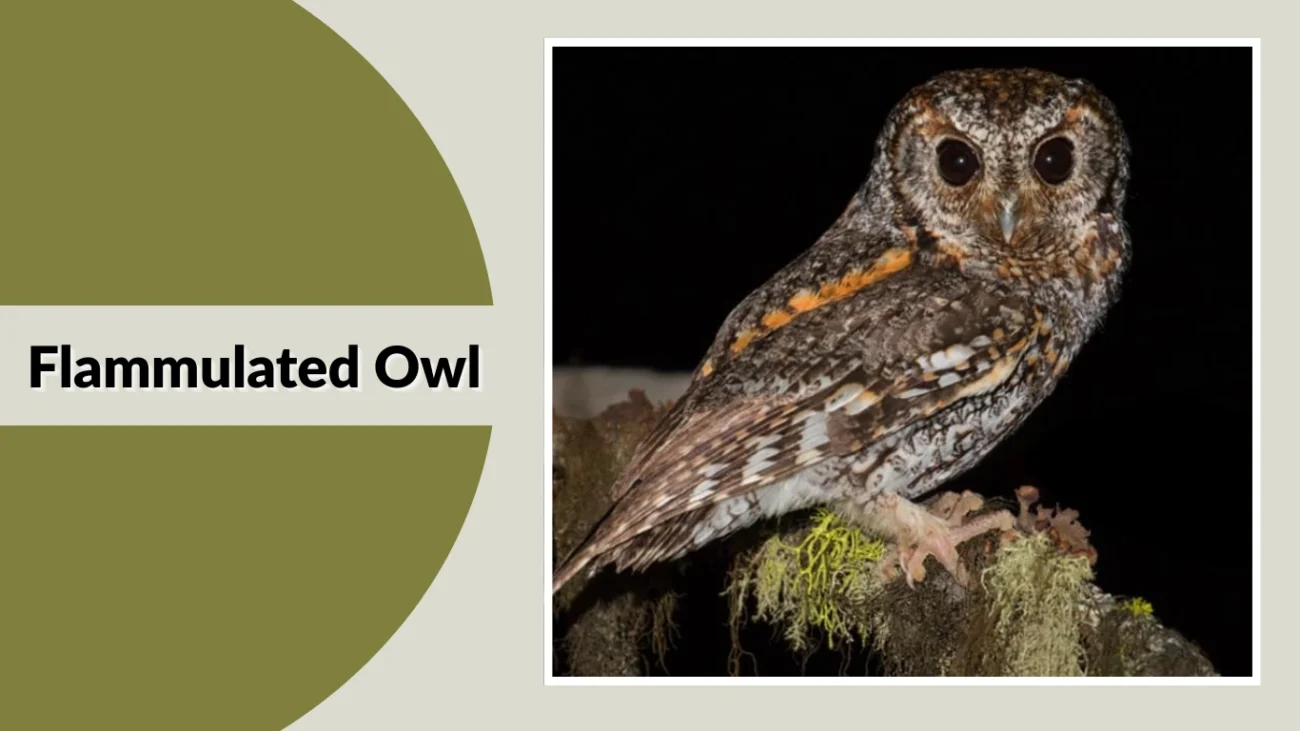
The flammulated owl is a tiny, secretive species named for its flame-like markings—subtle reddish or rust-colored streaks on its otherwise gray-brown plumage. Despite its small size, it is a long-distance migrant, traveling thousands of kilometers between breeding and wintering grounds.
Identification
- Scientific Name: Psiloscops flammeolus
- Body Length: 15–17 cm (6–7 in)
- Wingspan: 36–42 cm (14–16.5 in)
- Color: Gray-brown with rusty streaks and mottling
- Eyes: Dark brown (unusual among small owls, which often have yellow eyes)
- Ear Tufts: Small, sometimes barely visible
Habitat and Distribution
Flammulated owls breed in mature pine and mixed-conifer forests of western North America, from southern Canada through the United States into Mexico. In winter, they migrate to Central America.
Behavior and Diet
They are strictly nocturnal and feed mainly on insects, such as moths, beetles, and crickets, making them unique among many small owls that rely heavily on small mammals. Their soft, low-pitched hoots make them difficult to detect in the wild.
16. Spectacled Owl
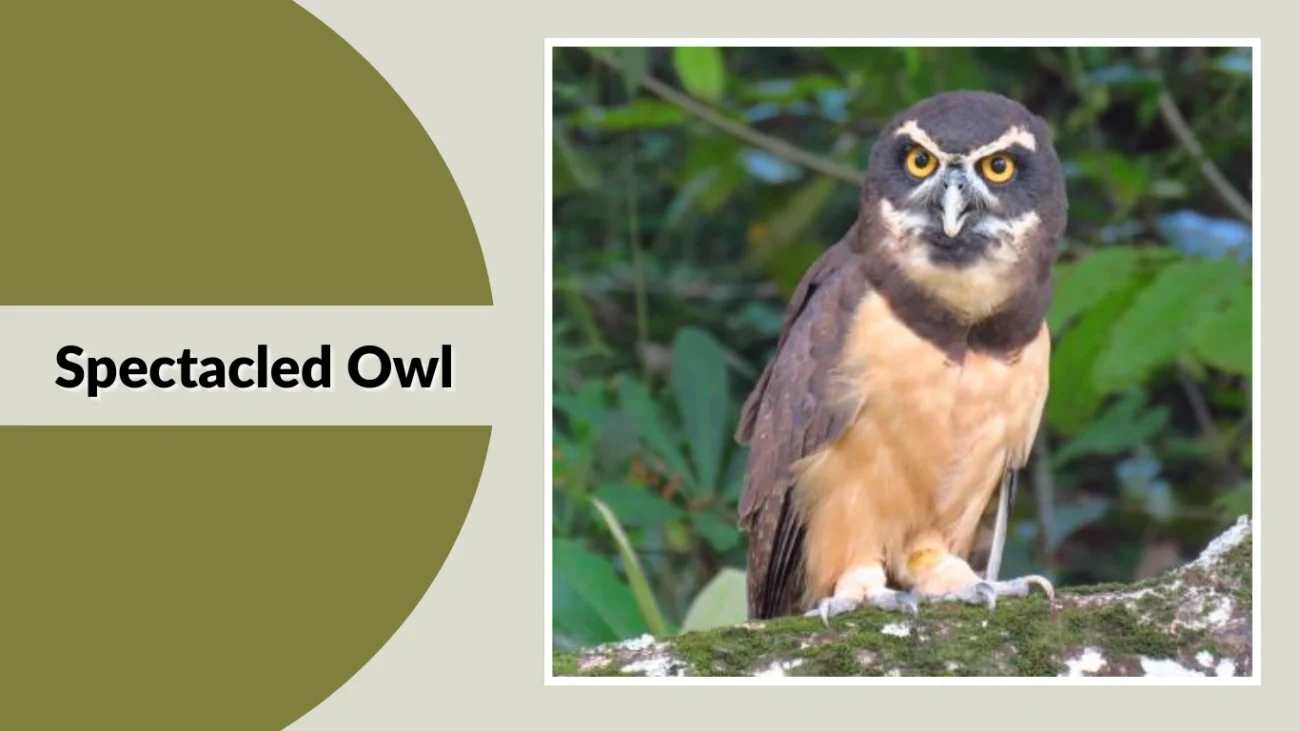
The spectacled owl is a large, tropical owl easily recognized by the striking white “spectacle” markings encircling its dark eyes. Its contrasting dark head and back with pale underparts give it a bold and unique appearance among owl species. It is a solitary and nocturnal hunter, often heard before it is seen due to its deep, rhythmic hoots.
Identification
- Scientific Name: Pulsatrix perspicillata
- Body Length: 43–52 cm (17–20 in)
- Wingspan: 76–91 cm (30–36 in)
- Color: Dark brown upperparts and head; white or buff underparts with a dark breast band
- Eyes: Yellow, framed by white “spectacle” markings
- Facial Disc: Prominent white rings around the eyes, extending to the throat
Habitat and Distribution
Found in tropical forests of Central and South America, from southern Mexico through the Amazon Basin. It prefers dense, humid lowland and foothill forests but may also be found in forest edges and plantations.
Behavior and Diet
The spectacled owl is a powerful nocturnal predator, feeding on small to medium-sized mammals, birds, reptiles, and large insects. It often hunts from a perch, swooping down silently to seize prey. Its deep, accelerating “pop-pop-pop” call is a signature sound in its range.
17. Spotted Owl
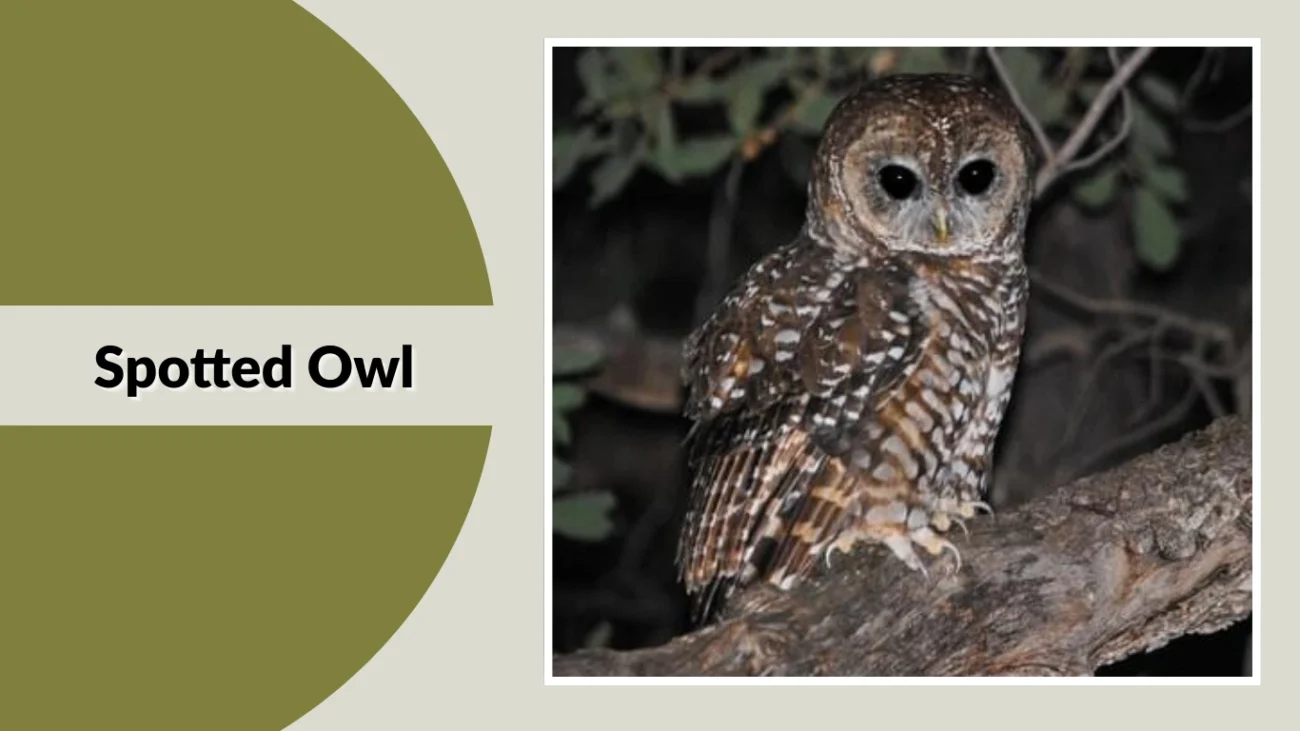
The spotted owl is a medium-sized, dark-eyed forest owl known for its reliance on old-growth forests and its distinctive spotted plumage. This species has become a symbol of forest conservation due to its declining numbers from habitat loss and competition with the barred owl.
Identification
- Scientific Name: Strix occidentalis
- Body Length: 43–48 cm (17–19 in)
- Wingspan: 114 cm (45 in)
- Color: Dark brown with white spots on the head, back, and underparts
- Eyes: Large, dark brown or black
- Facial Disc: Round and dark with fine spotting
Habitat and Distribution
Spotted owls inhabit old-growth and mature forests in western North America, from British Columbia through the Pacific Northwest and into parts of Mexico. They prefer dense, multi-layered forest canopies for nesting and roosting.
Behavior and Diet
Primarily nocturnal, they hunt from perches, feeding on small mammals such as flying squirrels and woodrats, as well as birds, insects, and reptiles. Due to their habitat specialization, they are highly sensitive to logging and habitat disturbance.
18. Northern Hawk Owl
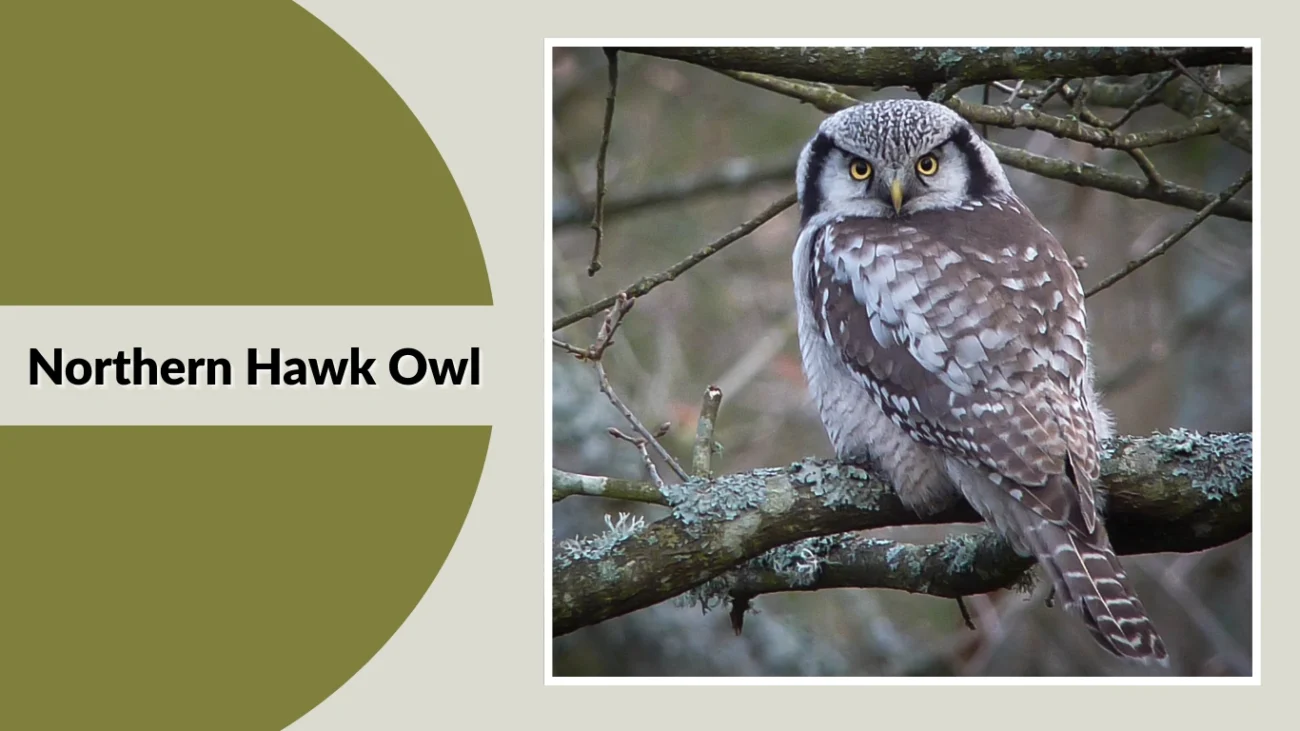
The northern hawk owl is a medium-sized owl with the hunting style and appearance of a hawk, combined with the keen senses of an owl. It is one of the few owl species active during the day, making it more visible than most, especially in open northern landscapes.
Identification
- Scientific Name: Surnia ulula
- Body Length: 36–45 cm (14–18 in)
- Wingspan: 69–82 cm (27–32 in)
- Color: Brown upperparts with white spots; pale underparts with dark streaks
- Eyes: Bright yellow and forward-facing
- Tail: Long and tapered, resembling that of a hawk
Habitat and Distribution
Found across boreal forests of North America, Europe, and Asia, the northern hawk owl favors open coniferous woodlands, forest edges, and areas with scattered trees and clearings.
Behavior and Diet
Unlike most owls, it hunts primarily by sight during daylight hours, scanning for prey from exposed perches. Its diet includes voles, lemmings, small birds, and occasionally squirrels. Known for its boldness, it may allow close approach by humans in the wild.
19. Ferruginous Pygmy Owl
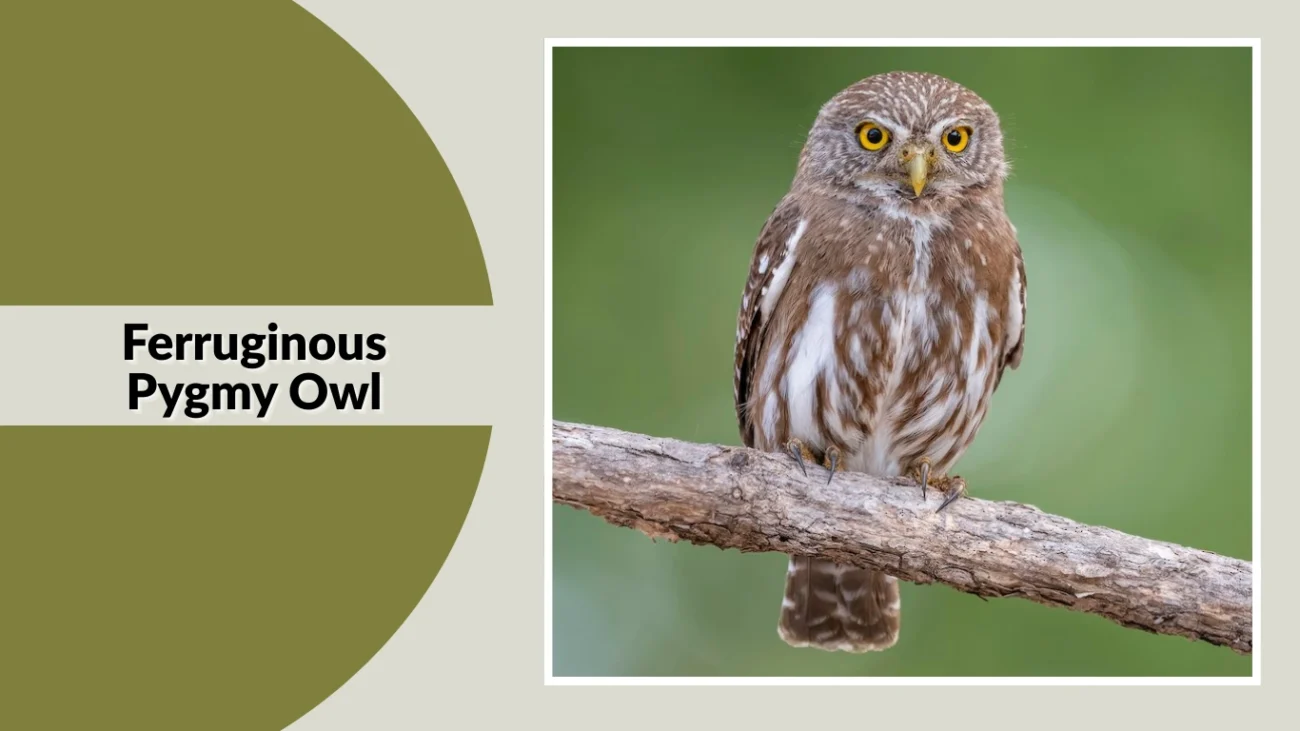
The ferruginous pygmy owl is a small but bold predator, easily recognized by its reddish-brown plumage and the distinctive “false eyes” on the back of its head, which help deter potential attackers. Despite its size, it is an active and fearless hunter, often seen during the day.
Identification
- Scientific Name: Glaucidium brasilianum
- Body Length: 15–17 cm (6–6.7 in)
- Wingspan: 38–46 cm (15–18 in)
- Color: Rusty brown or rufous with fine white streaking
- Eyes: Bright yellow, forward-facing
- Distinctive Feature: Dark spots on the back of the head resembling eyes
Habitat and Distribution
Found from the southwestern United States through Mexico, Central America, and into South America. It thrives in open woodlands, desert scrub, riparian areas, and agricultural lands.
Behavior and Diet
Ferruginous pygmy owls are diurnal and crepuscular hunters, feeding on insects, lizards, small birds, and mammals. They are known for their fast, direct flight and will readily take prey almost their own size. Their high-pitched, repetitive whistles often give away their location.
20. Burrowing Owl
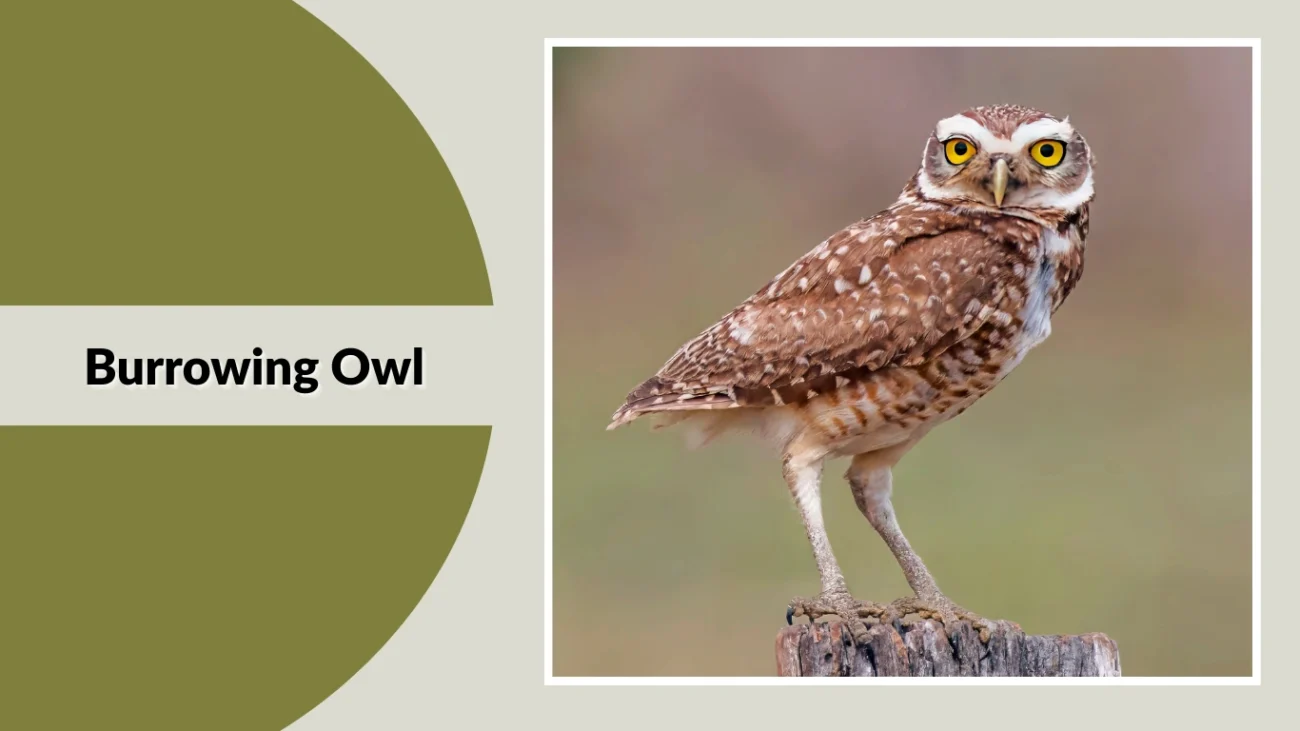
The burrowing owl is a small, long-legged owl that spends much of its time on the ground, unlike most owl species. It is well adapted to open landscapes and is famous for nesting in burrows, often those abandoned by mammals like prairie dogs or ground squirrels.
Identification
- Scientific Name: Athene cunicularia
- Body Length: 19–28 cm (7.5–11 in)
- Wingspan: 50–61 cm (20–24 in)
- Color: Brown with white spots; pale underparts with brown barring
- Eyes: Bright yellow
- Legs: Long and bare, adapted for running on the ground
Habitat and Distribution
Burrowing owls inhabit grasslands, deserts, prairies, and agricultural fields across North and South America. In North America, they are found from Canada through much of the United States into Central America, while South American populations occupy similar open habitats.
Behavior and Diet
Active both day and night, burrowing owls hunt insects, small mammals, reptiles, and amphibians. They often stand near their burrows during the day and will bob their heads when alarmed. Their habit of storing extra food in their burrows is an adaptation to survive in harsh environments with fluctuating prey availability.
21. Oriental Bay Owl
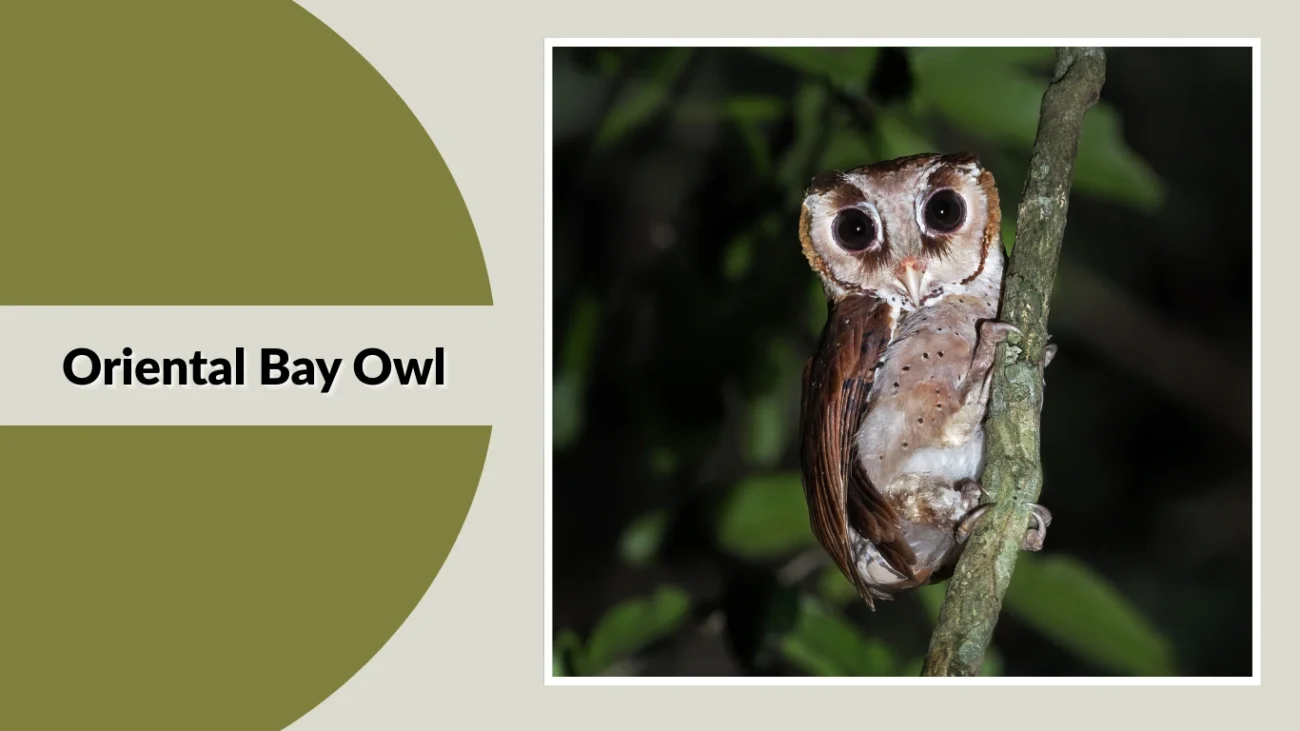
The oriental bay owl is a small, uniquely shaped owl with a distinctive heart-shaped facial disc that is longer and narrower than that of a barn owl. Its cryptic plumage and secretive habits make it one of the more elusive species in its range.
Identification
- Scientific Name: Phodilus badius
- Body Length: 22–30 cm (8.7–11.8 in)
- Wingspan: 76–80 cm (30–31.5 in)
- Color: Reddish-brown to chestnut with fine spotting and streaking
- Eyes: Dark brown, set within a narrow heart-shaped face
- Facial Disc: Long and tapering, giving a “masked” appearance
Habitat and Distribution
Found across South and Southeast Asia, including India, Sri Lanka, Myanmar, Thailand, Malaysia, and parts of Indonesia. Prefers dense evergreen forests, swamp forests, and bamboo thickets.
Behavior and Diet
The oriental bay owl is strictly nocturnal, emerging at night to hunt insects, small mammals, birds, and reptiles. It uses its exceptional hearing to locate prey in dense vegetation. Its eerie, high-pitched calls are often heard in the stillness of the night but rarely seen by humans.
22. Mottled Owl
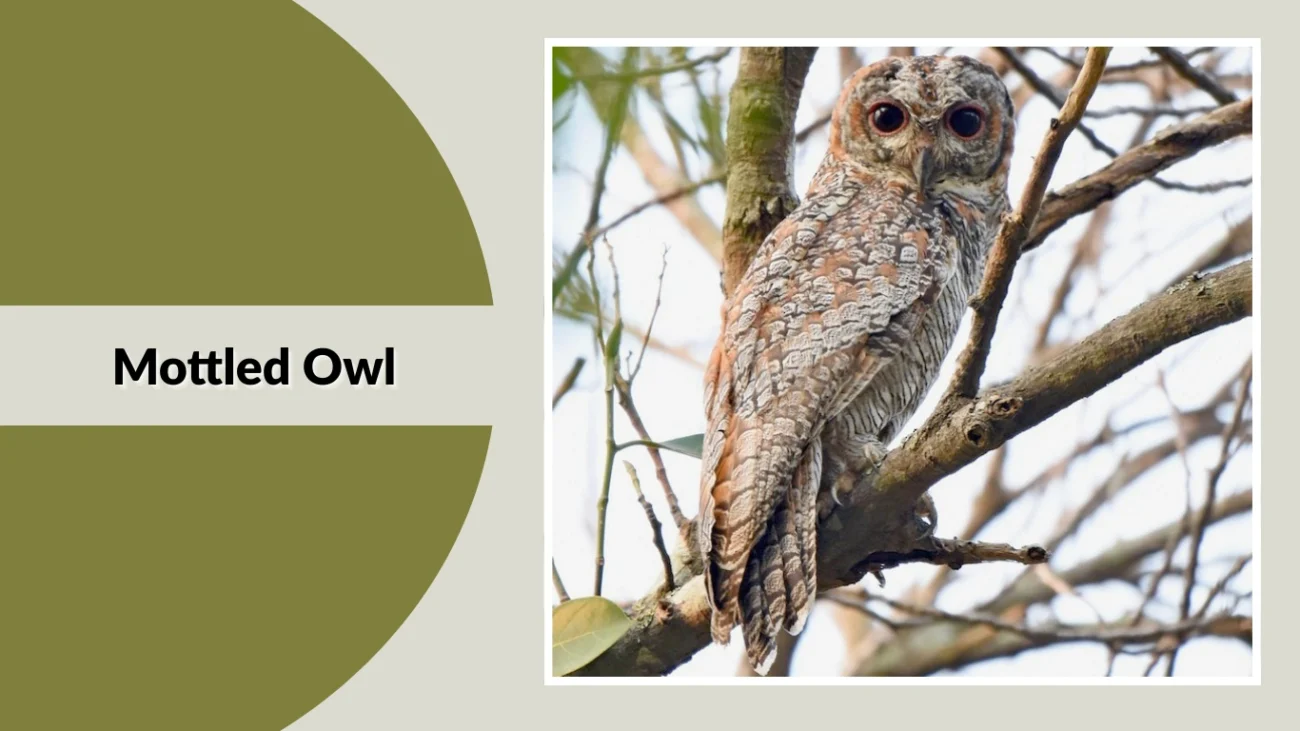
The mottled owl is a medium-sized, nocturnal owl with cryptic plumage that helps it blend seamlessly into the dense tropical forests it inhabits. Its haunting hoots and preference for deep forest cover make it more often heard than seen.
Identification
- Scientific Name: Ciccaba virgata
- Body Length: 33–38 cm (13–15 in)
- Wingspan: 75–85 cm (29.5–33.5 in)
- Color: Brown with darker mottling; pale facial disc with darker border
- Eyes: Dark brown
- Plumage: Soft, dense feathers for silent flight
Habitat and Distribution
Found in Central and South America, from Mexico through the Amazon Basin. Prefers humid lowland and montane forests, but can also be found in plantations and secondary growth areas with sufficient tree cover.
Behavior and Diet
The mottled owl hunts primarily at night, preying on small mammals, birds, reptiles, amphibians, and large insects. It typically hunts from a perch, swooping silently onto unsuspecting prey. Its low, resonant hoots carry far through the forest at night.
23. African Wood Owl
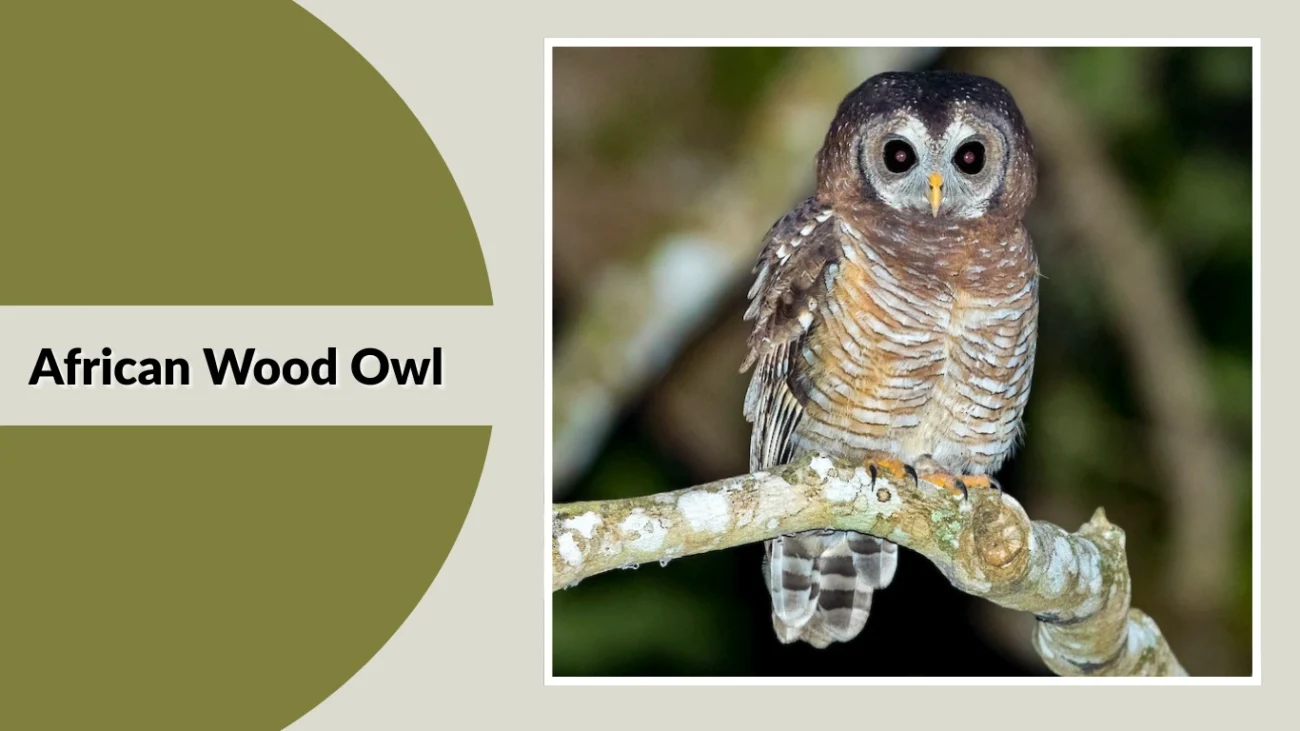
The African wood owl is a medium-sized forest-dwelling owl with a calm, rounded appearance and warm brown plumage patterned for excellent camouflage. Its soothing, rhythmic duet calls—often performed by pairs—are a distinctive sound in African woodlands at night.
Identification
- Scientific Name: Strix woodfordii
- Body Length: 30–36 cm (12–14 in)
- Wingspan: 75–90 cm (29.5–35.5 in)
- Color: Rich brown upperparts with lighter mottling; underparts pale with fine brown barring
- Eyes: Dark brown, giving a gentle expression
- Facial Disc: Rounded and pale, edged with a fine dark border
Habitat and Distribution
The African wood owl inhabits forests, wooded savannas, riverine woodlands, and dense gardens across sub-Saharan Africa, from Guinea and Sierra Leone in the west to Ethiopia, Kenya, and down to South Africa. It prefers areas with dense tree cover for roosting and nesting.
Behavior and Diet
Mostly nocturnal, this owl hunts by silently gliding through the forest canopy to catch prey. Its diet includes insects, small mammals, birds, reptiles, and amphibians. It often hunts from a perch, waiting patiently before swooping on its target. Pairs are known for their coordinated, rhythmic calls that strengthen their bond and mark their territory.
24. Ural Owl
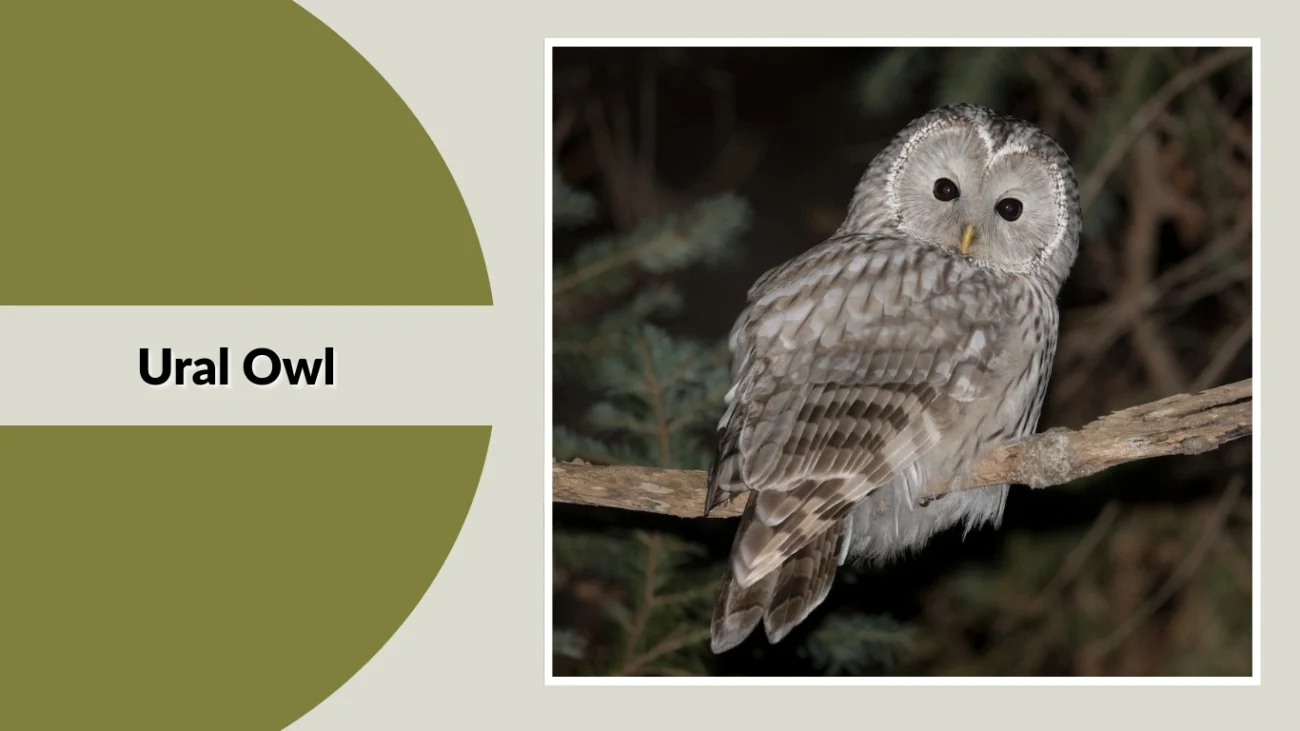
The ural owl is a large, powerful owl with a rounded head, long tail, and soft gray-brown plumage that blends perfectly into the forests it inhabits. Known for its piercing dark eyes and ghostly appearance in low light, it is a formidable nocturnal predator with a wide range across Eurasia.
Identification
- Scientific Name: Strix uralensis
- Body Length: 50–61 cm (20–24 in)
- Wingspan: 110–134 cm (43–53 in)
- Color: Pale gray to brownish-gray with fine streaking; lighter underside
- Eyes: Dark brown to black, giving a deep, intense gaze
- Facial Disc: Round and pale with subtle darker framing
Habitat and Distribution
Found from Scandinavia and Eastern Europe through Russia, Siberia, and into parts of Japan. Prefers mature mixed and coniferous forests, often near forest clearings, meadows, or wetlands where prey is abundant.
Behavior and Diet
The ural owl is a fierce and efficient nocturnal hunter, taking small to medium-sized mammals such as voles, mice, squirrels, and sometimes birds, reptiles, and amphibians. It often hunts from high perches, silently gliding down to capture prey. Highly territorial during breeding season, it is known to aggressively defend its nest against intruders, including humans.
25. Jungle Owlet
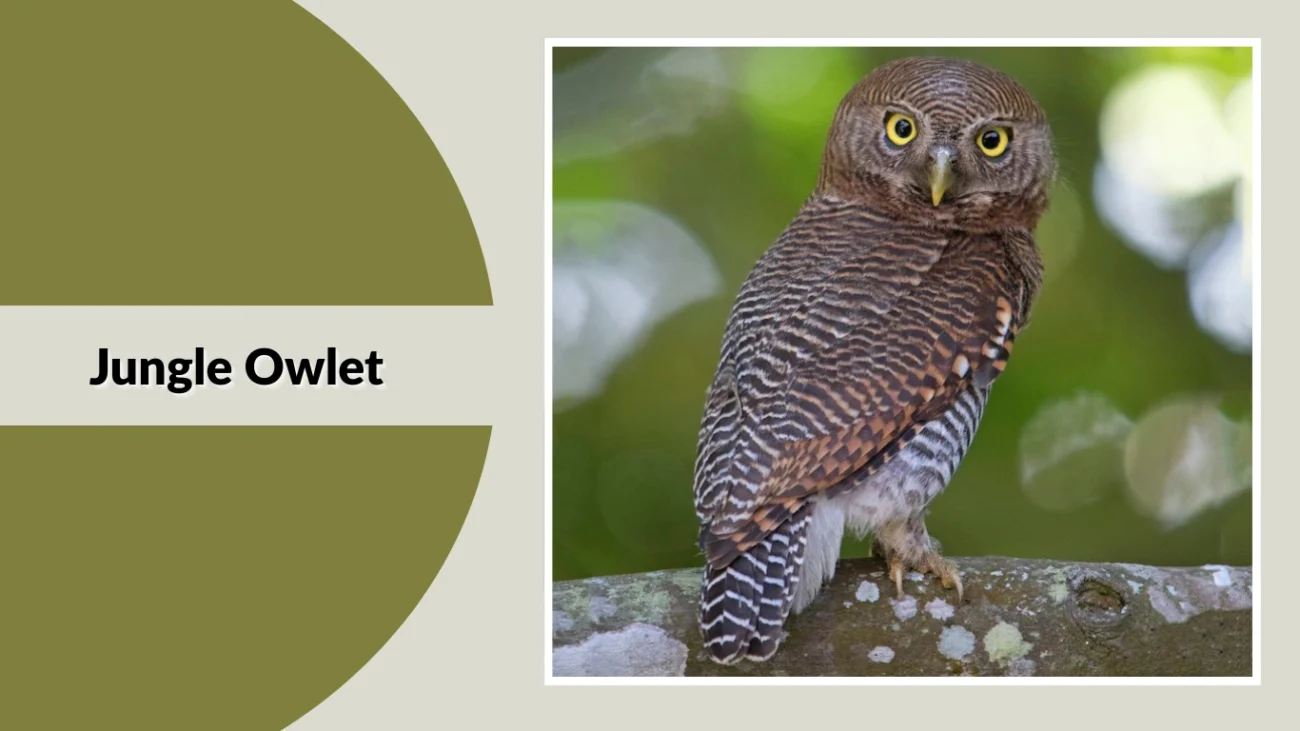
The jungle owlet is a small, round-headed owl with a compact build and no ear tufts, making it look quite different from many other owl species. Its finely barred plumage provides excellent camouflage against tree bark, and it is often detected by its series of clear, whistling calls.
Identification
- Scientific Name: Glaucidium radiatum
- Body Length: 20–23 cm (8–9 in)
- Wingspan: 45–50 cm (18–20 in)
- Color: Brownish-gray with fine white barring across the entire body
- Eyes: Bright yellow
- Facial Disc: Minimal, blending smoothly into the head
Habitat and Distribution
Native to the Indian subcontinent, the jungle owlet inhabits open woodlands, scrub forests, agricultural areas with scattered trees, and forest edges. It is often found at lower elevations but can occur in foothills.
Behavior and Diet
Active both during the day and at night, the jungle owlet feeds on large insects, small reptiles, rodents, and occasionally small birds. It often hunts from an exposed perch, scanning the ground before swooping down to grab prey. Known for its repetitive whistling notes, it can sometimes be located by its persistent calls during the early morning or evening.
26. Collared Scops Owl
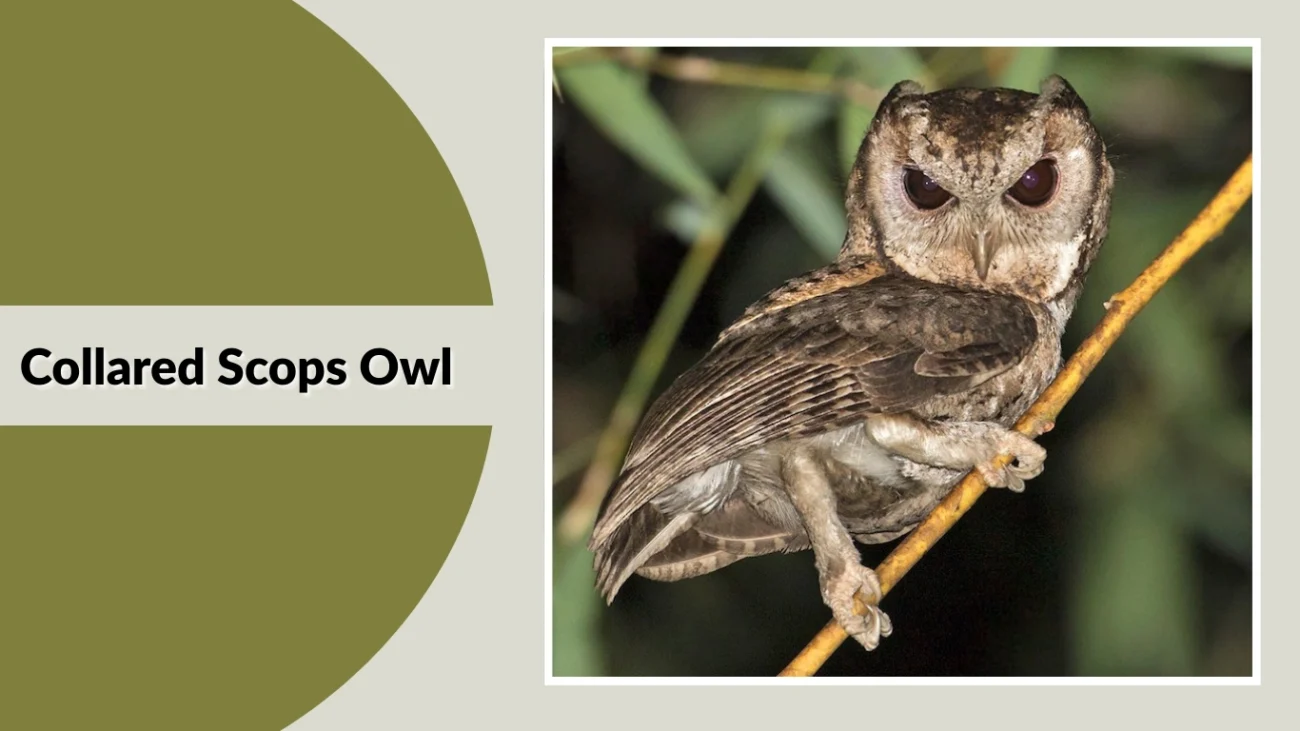
The collared scops owl is a small, well-camouflaged owl with short ear tufts and a distinctive pale collar around the back of its neck, which gives the species its name. Its excellent camouflage allows it to blend seamlessly with tree bark, making it extremely hard to spot during the day.
Identification
- Scientific Name: Otus lettia
- Body Length: 23–25 cm (9–10 in)
- Wingspan: 55–63 cm (22–25 in)
- Color: Gray-brown or rufous morph with fine streaking and mottling
- Eyes: Bright yellow
- Ear Tufts: Short and pointed, often held upright
Habitat and Distribution
The collared scops owl ranges across South Asia and Southeast Asia, from northern India and Nepal through Thailand, Malaysia, and into Indonesia. It inhabits open woodlands, forest edges, gardens, and cultivated areas with scattered trees.
Behavior and Diet
Nocturnal and secretive, it roosts in dense foliage by day and emerges at night to hunt insects, small reptiles, rodents, and occasionally small birds. It is known for its low, soft, repetitive “whu” calls, which can carry long distances on calm nights. This species often remains motionless when approached, relying on its camouflage to avoid detection.
27. Brown Fish Owl
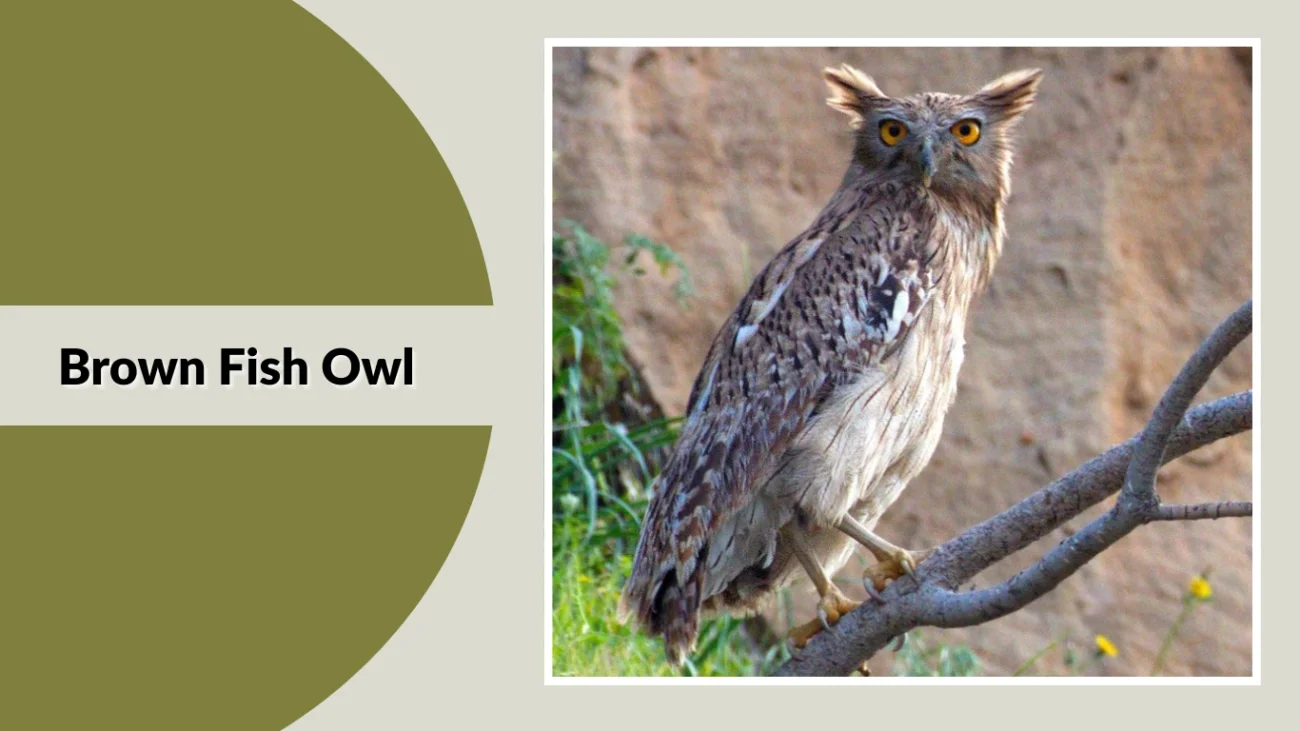
The brown fish owl is a large, robust owl adapted to hunting in and around water. Its fierce expression, bright yellow eyes, and heavily feathered legs make it stand out among other owl species. This bird is a skilled predator of aquatic and semi-aquatic prey, often seen perched near rivers and lakes.
Identification
- Scientific Name: Ketupa zeylonensis
- Body Length: 48–58 cm (19–23 in)
- Wingspan: 125–140 cm (49–55 in)
- Color: Rich brown with darker streaks; paler underparts with fine barring
- Eyes: Large, bright yellow
- Ear Tufts: Prominent and angled outward
Habitat and Distribution
The brown fish owl is found across South and Southeast Asia, from the Indian subcontinent through Sri Lanka, Myanmar, and parts of Southeast Asia. It inhabits forested areas near rivers, lakes, and coastal lagoons, often in lowland tropical and subtropical regions.
Behavior and Diet
Unlike most owls, the brown fish owl regularly hunts fish, crabs, and other aquatic animals, as well as amphibians, reptiles, and small mammals. It hunts mainly at night, scanning the water from a perch before swooping down to grab prey with its powerful talons. Pairs are often heard giving deep, booming calls, especially during the breeding season.