
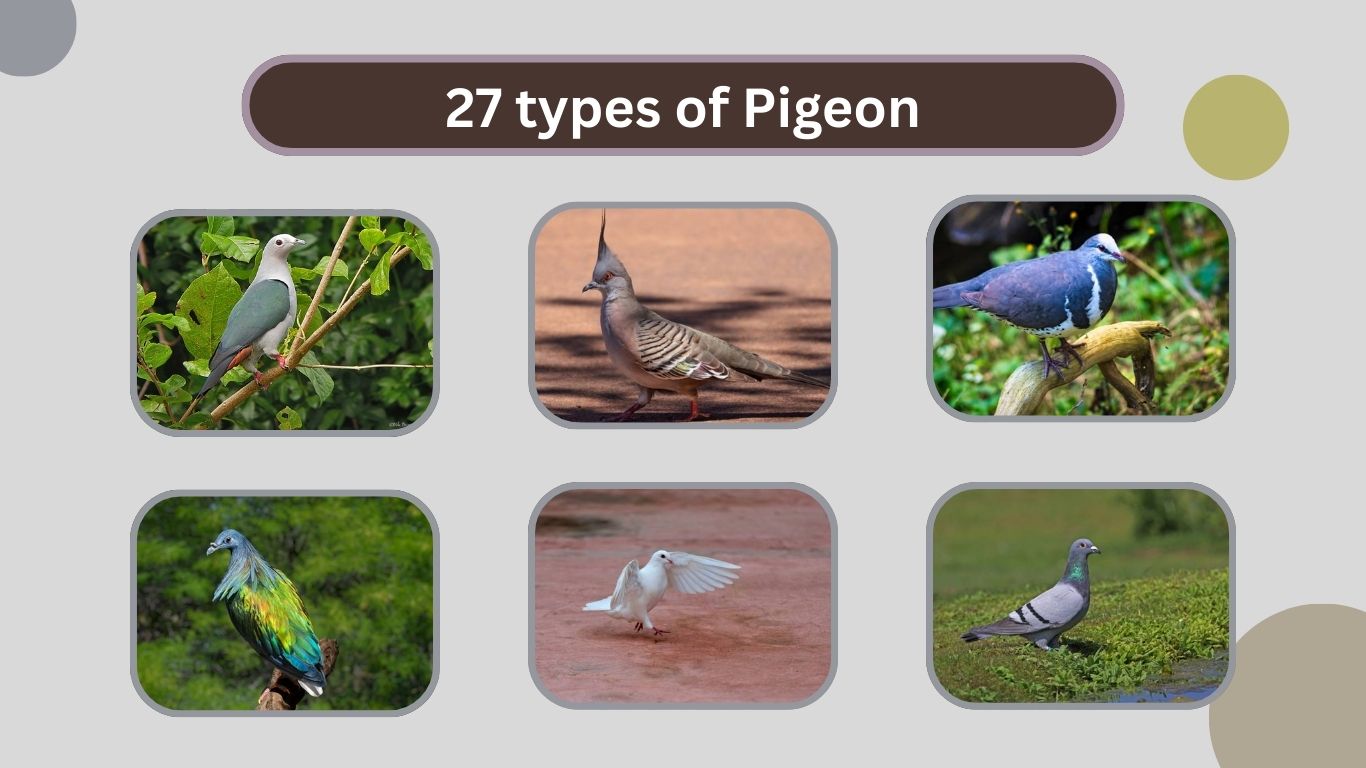
Pigeons are among the most adaptable and widespread birds on Earth, found in habitats ranging from dense forests to bustling cityscapes. They come in a remarkable variety of colors, sizes, and behaviors, from the humble Rock Pigeon to the magnificent Victoria Crowned Pigeon. In this guide, we explore 27 unique pigeon species, detailing their key identification features, habitats, and traits to help bird enthusiasts recognize and appreciate them in the wild.
1. Rock Pigeon
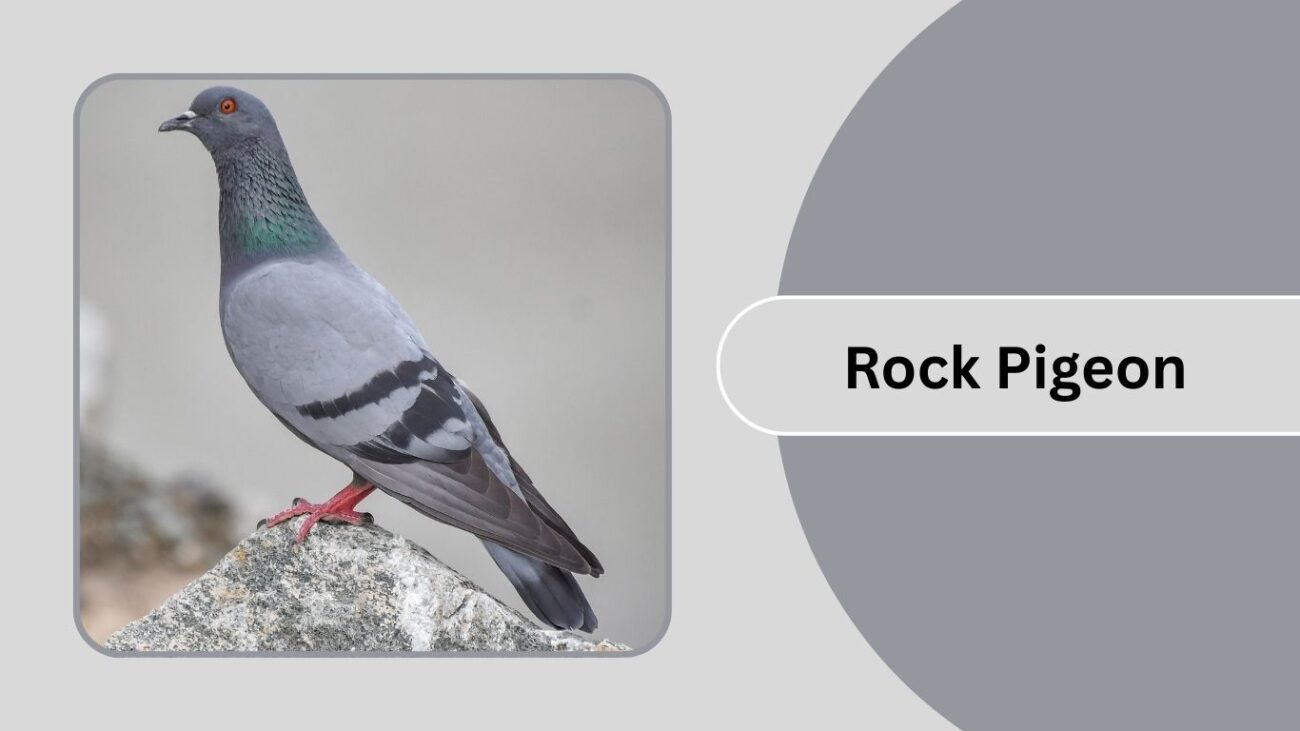
The Rock Pigeon (Columba livia), also known as the common pigeon, is one of the most widely distributed and recognizable bird species in the world. Originally native to Europe, North Africa, and parts of Asia, it has adapted to urban environments across every continent except Antarctica.
Identification
- Size: 30–35 cm (12–14 in) in length; wingspan 62–72 cm (24–28 in)
- Plumage: Varies widely in color due to domestication, but wild-type birds have bluish-gray bodies with two black wing bars and an iridescent green-purple sheen on the neck
- Bill: Short, slender, black with a pale cere
- Eyes: Usually orange or red in adults, brown in juveniles
- Tail: Dark band at the tip of a gray tail
Habitat & Distribution
Wild populations are found on rocky cliffs and coastal areas, but feral pigeons inhabit towns, cities, farmland, and even remote settlements worldwide. They often nest on buildings, bridges, and other man-made structures that mimic their natural cliffside homes.
Behavior & Diet
Highly social birds, Rock Pigeons often form flocks of dozens to hundreds. They feed mainly on seeds and grains but readily consume food scraps in urban areas. They are strong fliers, capable of covering long distances, and have an impressive homing ability that has been used in human communication for centuries.
Vocalizations
Their call is a soft, repetitive cooing sound—commonly heard in urban areas—that serves as both a mating and territorial display.
2. Homing Pigeon
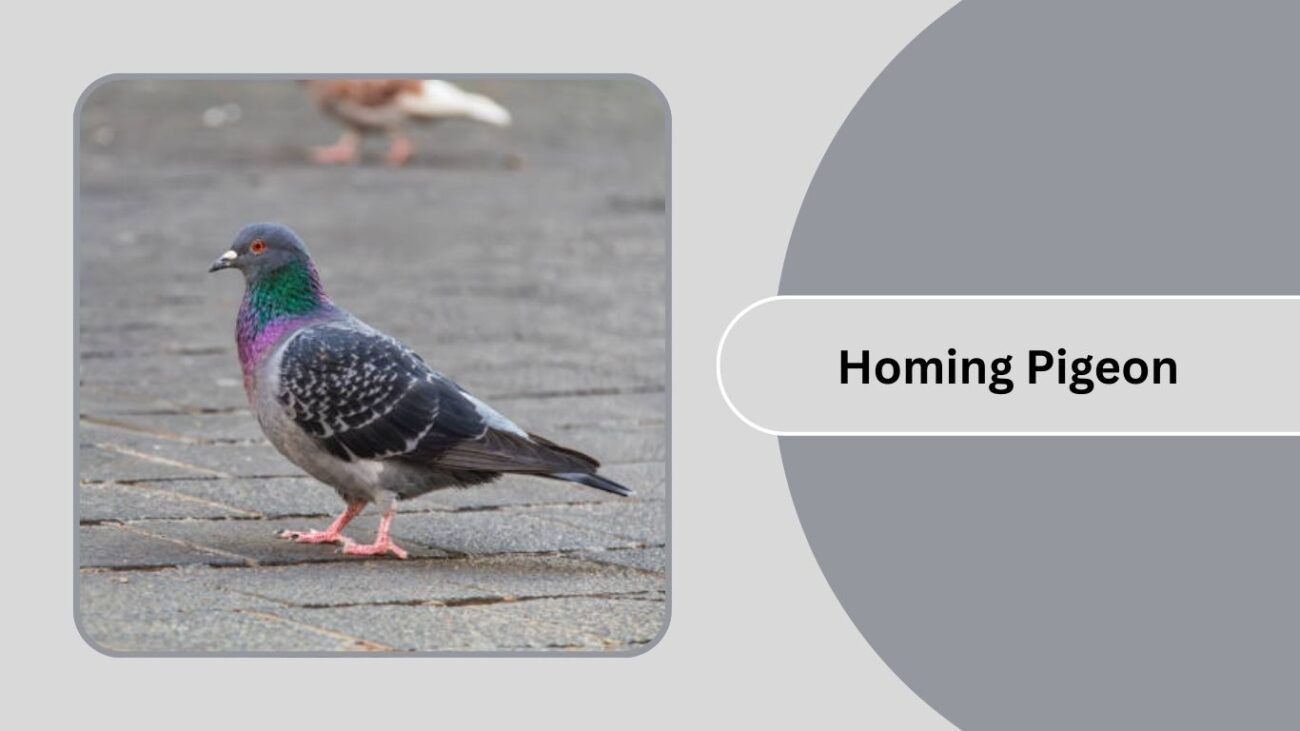
The Homing Pigeon (Columba livia domestica) is a selectively bred variety of the Rock Pigeon, renowned for its extraordinary navigational ability to return home over long distances. Historically, they played a vital role in delivering messages during wars and in remote areas.
Identification
- Size: 30–35 cm (12–14 in) long; wingspan about 62–72 cm (24–28 in)
- Plumage: Can vary greatly, from pure white to blue-gray, brown, or mottled; often sleek and well-groomed due to selective breeding
- Bill: Medium length, usually pale with a noticeable cere
- Eyes: Often bright orange, yellow, or pearl-colored
- Tail: Usually squared-off with clear feather patterning depending on strain
Habitat & Distribution
Kept worldwide by breeders, racers, and hobbyists. When released, they can navigate back to their home loft from hundreds of kilometers away. Wild or feral escapees sometimes join local pigeon flocks.
Behavior & Diet
Highly intelligent and social, Homing Pigeons display remarkable memory and orientation skills, relying on Earth’s magnetic field, sun position, and landmarks for navigation. They feed on grains, seeds, and occasionally fruits or small invertebrates.
Vocalizations
Soft cooing, similar to Rock Pigeons, but breeders sometimes notice subtle variations in calls during courtship or when homing.
3. Racing Pigeon
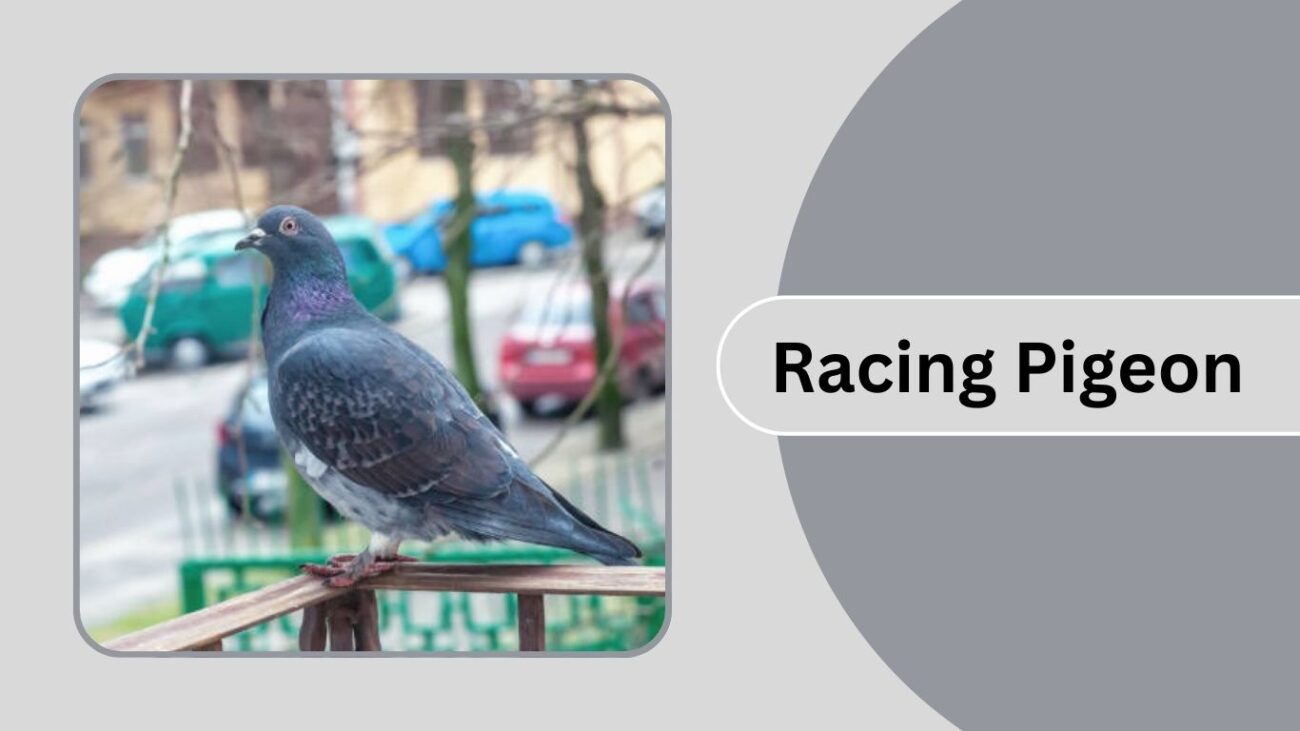
The Racing Pigeon (Columba livia domestica) is a specialized breed of domesticated pigeon selectively developed for speed, stamina, and homing ability. It is the athletic counterpart to the Homing Pigeon and is used in competitive pigeon racing worldwide.
Identification
- Size: Around 30–35 cm (12–14 in) in length; wingspan 60–72 cm (24–28 in)
- Plumage: Highly variable — can be solid, pied, or patterned in shades of blue-gray, white, black, red, or brown
- Bill: Medium, pale with a distinct cere
- Eyes: Often vivid orange, yellow, or pearl
- Tail: Streamlined and evenly fanned, aiding in aerodynamics
Habitat & Distribution
Bred and kept by pigeon fanciers globally. Racing pigeons are released from race points and return to their home lofts from distances ranging from 100 km to over 1,000 km. Some escape and integrate into feral flocks in cities.
Behavior & Diet
Known for exceptional flying speed and directional accuracy, they can reach speeds over 80 km/h (50 mph) in races. Fed on a carefully balanced diet of grains, seeds, and legumes to maximize performance. Highly loyal to their loft and bonded to their mates.
Vocalizations
Produces soft coos for communication and courtship. During racing season, they are generally quieter, focusing on orientation and endurance.
4. White Pigeon
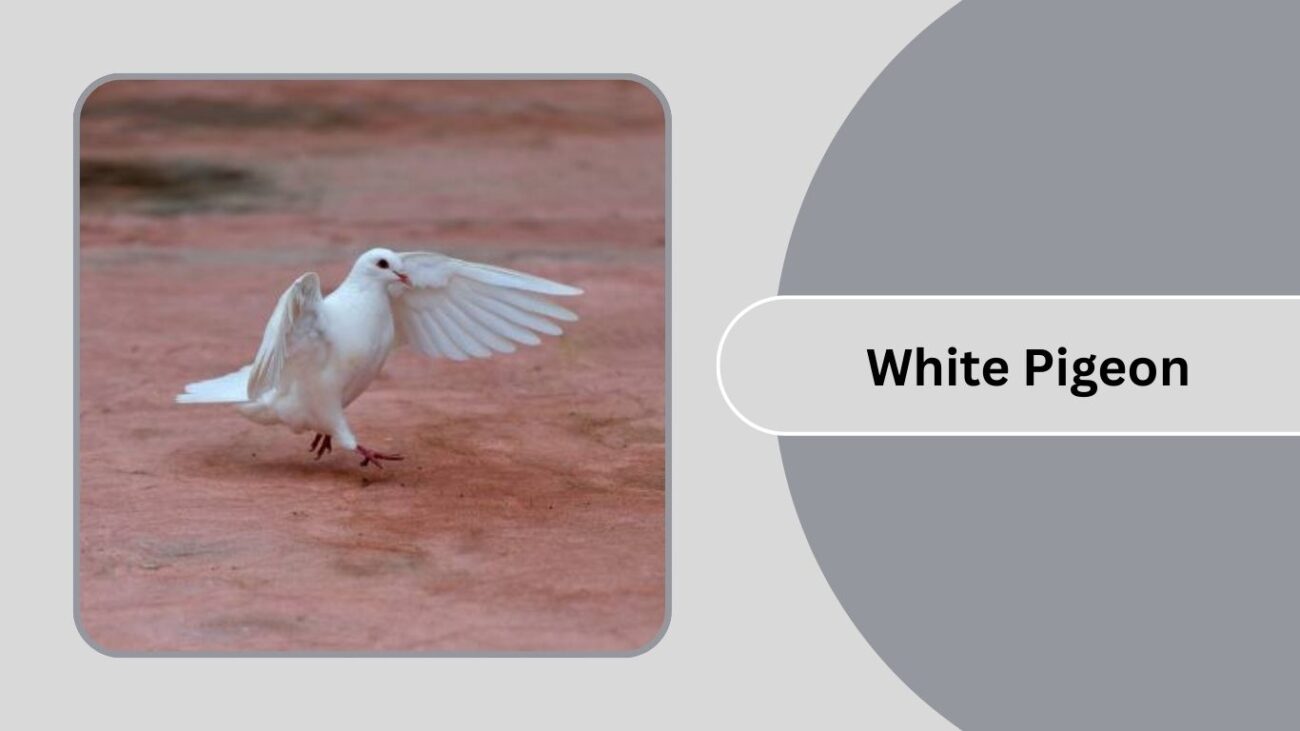
The White Pigeon (Columba livia domestica) is a domesticated variety of the Rock Pigeon, specially bred for its pure white plumage. Often associated with peace and ceremonial releases, this bird has symbolic and cultural significance across the world.
Identification
- Size: 30–35 cm (12–14 in) long; wingspan 60–72 cm (24–28 in)
- Plumage: Completely white, sometimes with a faint cream or ivory tone
- Bill: Pale pink with a light cere
- Eyes: Usually dark brown or black, occasionally ruby red in some strains
- Tail: Uniform white feathers, fan-shaped when spread
Habitat & Distribution
Kept worldwide for ceremonies, weddings, memorial events, and as pets. While most are domesticated, escaped individuals may survive in urban areas or rural farmlands, often joining feral pigeon flocks.
Behavior & Diet
Gentle and sociable, White Pigeons are strong fliers, sometimes trained for homing purposes. They feed on seeds, grains, and occasionally fruits. Because of their striking coloration, they are more vulnerable to predators in the wild, making domestication common.
Vocalizations
Soft, rhythmic cooing used in courtship, territorial displays, and communication with mates.
5. Victoria Crowned Pigeon
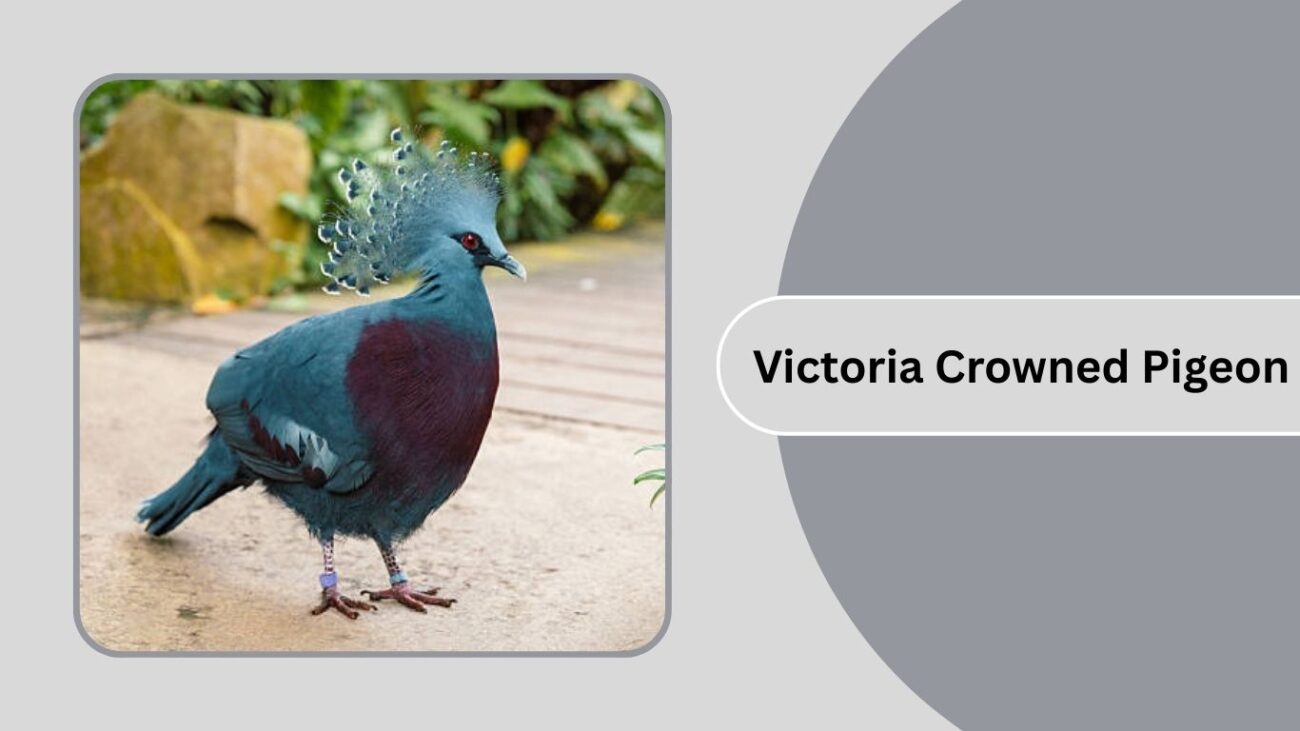
The Victoria Crowned Pigeon (Goura victoria) is one of the largest and most visually stunning pigeons in the world, named after Queen Victoria. Its elegant lace-like crest, vibrant plumage, and regal posture make it a favorite among bird enthusiasts and aviculturists.
Identification
- Size: 73–75 cm (29–30 in) long; weight 2.3–2.5 kg (5–5.5 lbs)
- Plumage: Overall blue-gray with a rich maroon chest and lighter blue wing coverts
- Crest: Striking fan-shaped crest tipped with white, giving a lacy appearance
- Bill: Black, slender, and slightly curved
- Eyes: Deep red, standing out against the bluish face
- Tail: Broad and blue-gray with a lighter tip
Habitat & Distribution
Native to the lowland and swamp forests of northern New Guinea and nearby islands. They prefer dense, humid forests and spend much of their time on the ground foraging.
Behavior & Diet
A ground-dwelling pigeon that feeds mainly on fruits, berries, seeds, and occasionally insects. They move slowly but gracefully, often in pairs or small groups. Known for their gentle disposition in captivity, they are a symbol of avian elegance.
Vocalizations
Low, deep “boom” calls that carry through the forest, often used to communicate with mates or mark territory.
6. Western Crowned Pigeon
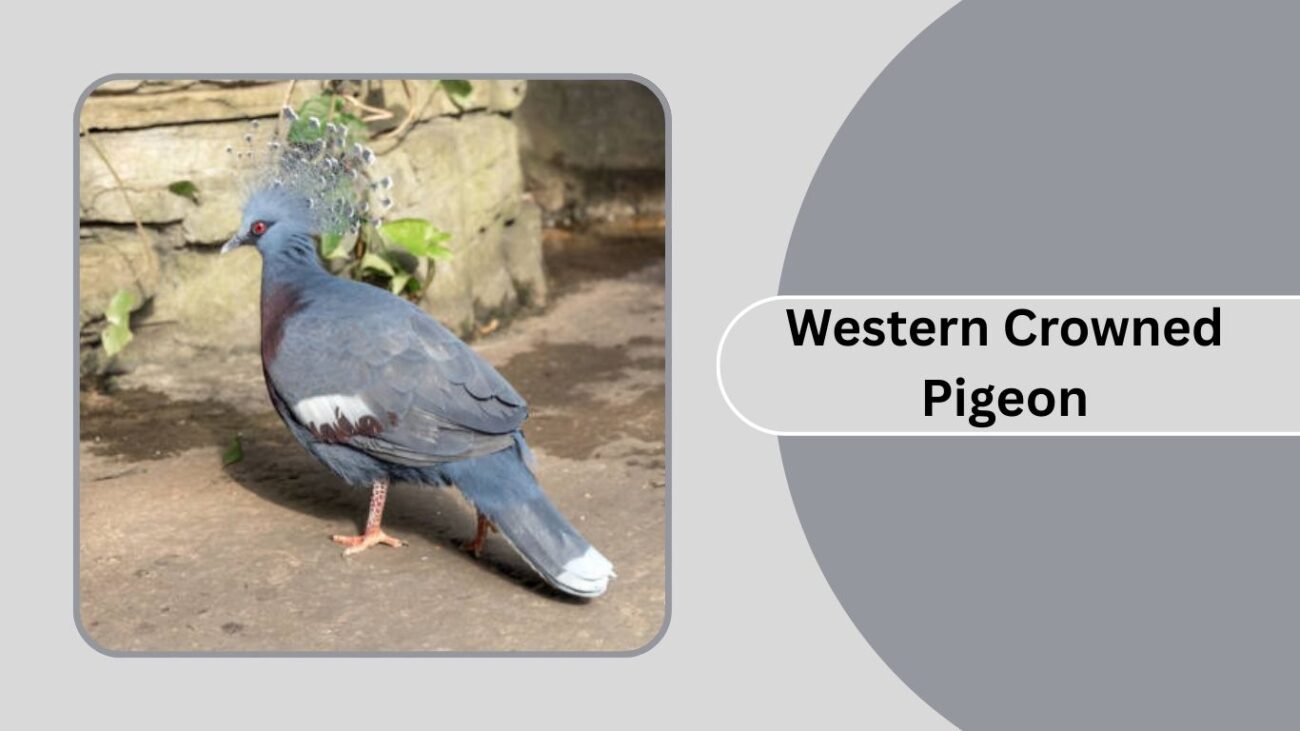
The Western Crowned Pigeon (Goura cristata) is a magnificent ground-dwelling pigeon native to New Guinea, known for its bright blue plumage and distinctive fan-shaped crest. Closely related to the Victoria Crowned Pigeon, it is equally striking but with a different crest structure and slightly smaller size.
Identification
- Size: 66–70 cm (26–28 in) in length; weight 2–2.3 kg (4.4–5 lbs)
- Plumage: Rich blue-gray body with a paler face and darker wings
- Crest: Elegant fan-like crest with intricate tips, lighter in color than the body
- Bill: Black, slim, and straight
- Eyes: Deep crimson, giving an intense gaze
- Tail: Broad, blue-gray with a subtle lighter band near the tip
Habitat & Distribution
Found mainly in the lowland forests of western New Guinea and surrounding islands. Prefers dense, undisturbed rainforest floors where it can forage without disturbance.
Behavior & Diet
A calm and deliberate walker, the Western Crowned Pigeon feeds on fallen fruits, seeds, and small invertebrates. It is often seen in pairs or small family groups, communicating with low calls and body displays. Due to habitat loss and hunting, it is considered vulnerable in the wild.
Vocalizations
Produces deep, resonant “boom” sounds that can travel far in the forest, often repeated in a rhythmic sequence during courtship or territorial defense.
7. Southern Crowned Pigeon
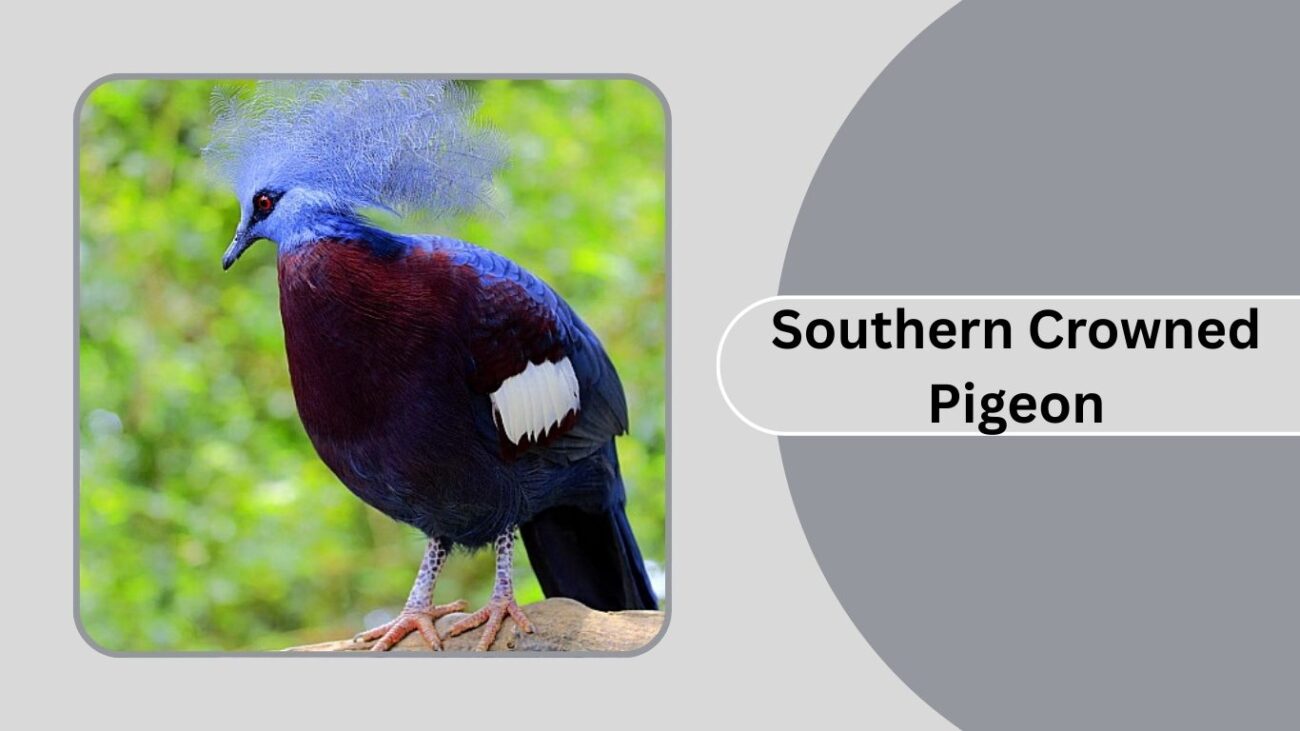
The Southern Crowned Pigeon (Goura scheepmakeri) is the third of the crowned pigeon species, recognized for its deep maroon chest and graceful lace-like crest. It is one of the most regal pigeons in the world and is highly sought after by bird lovers and conservationists.
Identification
- Size: 66–70 cm (26–28 in) long; weight 2–2.4 kg (4.4–5.3 lbs)
- Plumage: Blue-gray body with a rich wine-red breast and lighter blue wings
- Crest: Beautiful lacy crest tipped with white, fanning elegantly over the head
- Bill: Slender, black, and straight
- Eyes: Striking red, contrasting against the blue-gray face
- Tail: Broad and soft blue-gray with a slightly lighter tip
Habitat & Distribution
Endemic to the lowland rainforests of southern New Guinea. They prefer quiet, undisturbed forest floors where they can forage safely.
Behavior & Diet
These pigeons are primarily ground foragers, feeding on fallen fruits, seeds, and small invertebrates. They are slow-moving but alert, often found in pairs or small groups. Due to habitat loss and hunting for their beautiful feathers, they are listed as vulnerable.
Vocalizations
They produce low, booming calls that resonate through the forest, typically during mating rituals or to mark territory.
8. Nicobar Pigeon
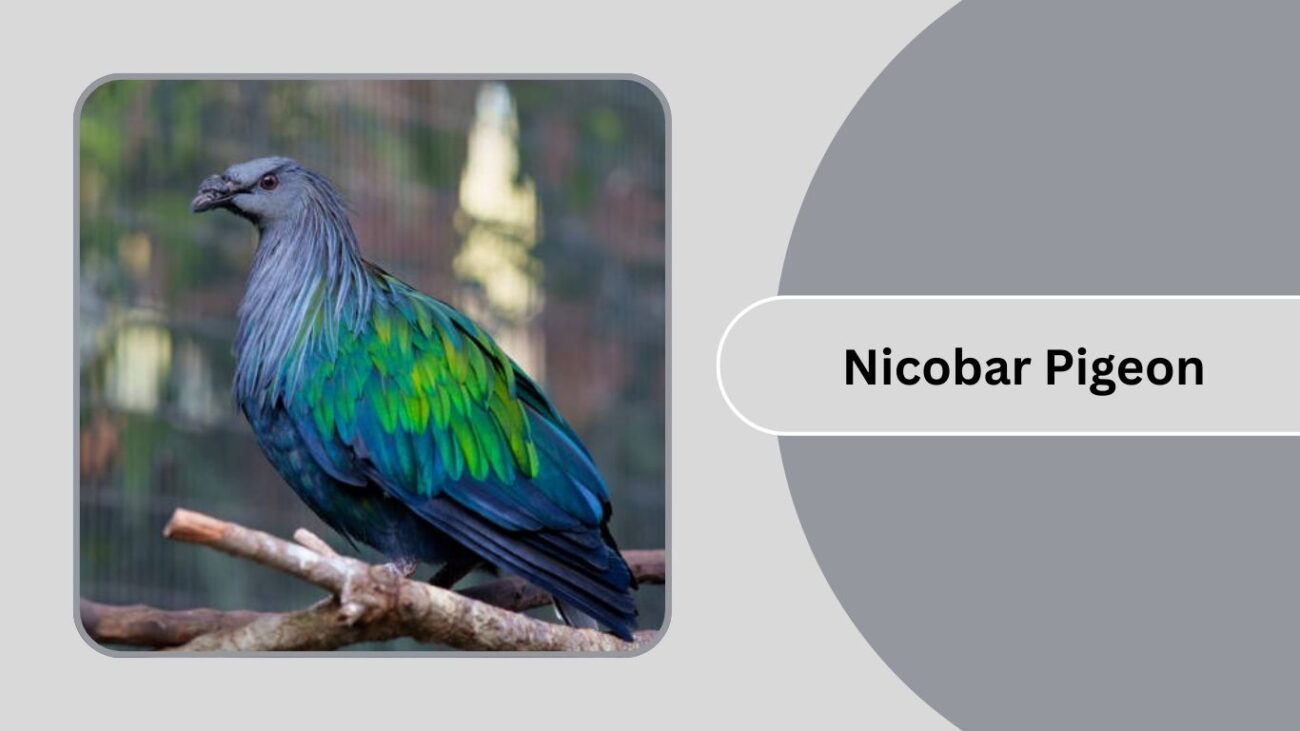
The Nicobar Pigeon (Caloenas nicobarica) is a brilliantly colored and rare pigeon species, famed for its metallic iridescent plumage and unique role as the closest living relative of the extinct Dodo. Its shimmering feathers and remote island habitat make it one of the most striking pigeons in the world.
Identification
- Size: 40 cm (16 in) long; weight around 600–700 g (1.3–1.5 lbs)
- Plumage: Iridescent green, blue, and copper feathers with a slate-gray head
- Neck Hackles: Long, pointed, metallic feathers draping over the neck and breast
- Bill: Dark gray with a small knob at the base
- Eyes: Dark brown to black
- Tail: Short, pure white, contrasting sharply with the colorful body
Habitat & Distribution
Found on small islands and coastal regions across Southeast Asia and the Pacific, including the Nicobar Islands, Andaman Islands, parts of Indonesia, the Philippines, and Papua New Guinea. Prefers dense forests and coastal woodlands, often roosting on offshore islets and flying to larger islands to feed.
Behavior & Diet
Feeds primarily on seeds, fruits, and berries, but also consumes small invertebrates. Known for strong, fast flight and seasonal movements between islands. They often gather in flocks, making them vulnerable to overhunting.
Vocalizations
Produces soft, repetitive cooing notes and occasional guttural sounds, mainly for mating communication and flock cohesion.
9. Rock Pigeon
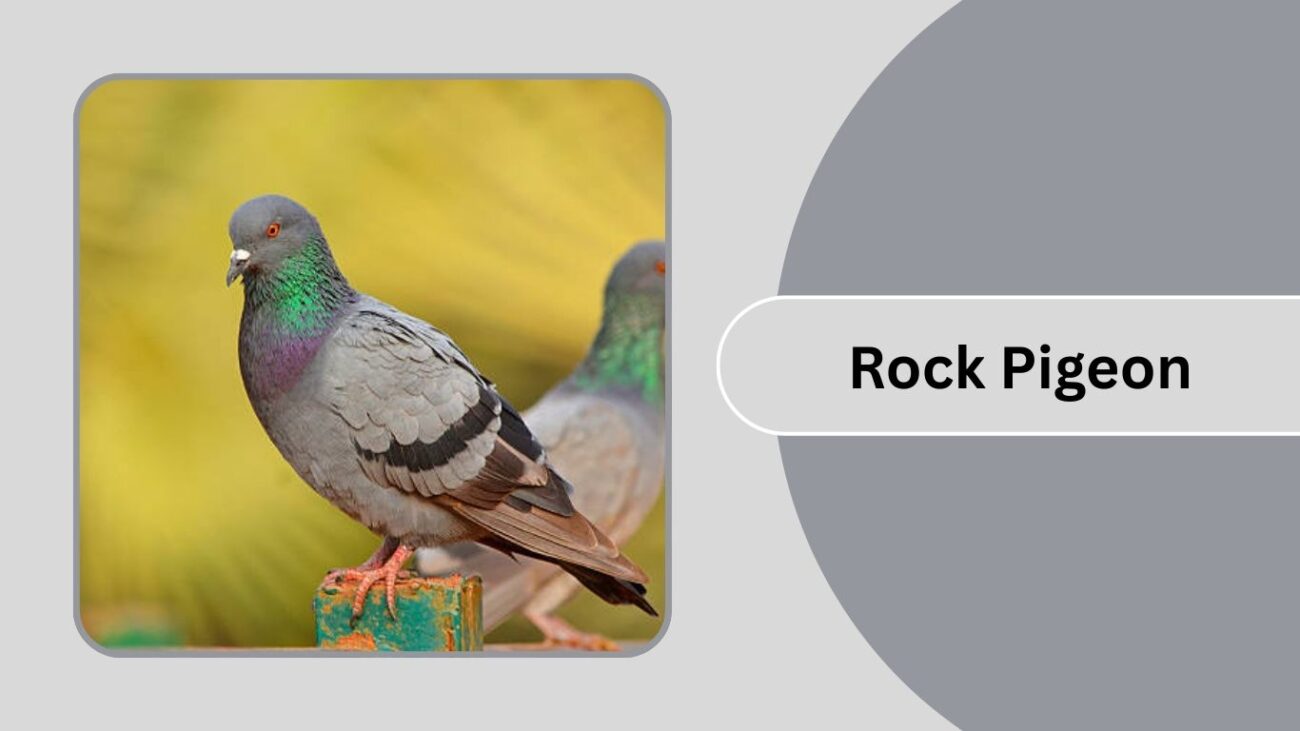
The Rock Pigeon (Columba livia) is one of the most widespread and recognizable pigeons in the world. Originally native to Europe, North Africa, and parts of Asia, it has been introduced globally and thrives in urban, suburban, and rural environments.
Identification
- Size: 30–35 cm (12–14 in) long; wingspan 62–72 cm (24–28 in)
- Plumage: Variable, but wild-type birds are bluish-gray with two black wing bars and iridescent green-purple neck feathers
- Bill: Dark with a pale cere
- Eyes: Usually orange or red, sometimes brown in darker varieties
- Tail: Gray with a dark terminal band
Habitat & Distribution
Naturally found in rocky cliffs and coastal areas, but now dominates cityscapes, farms, and towns across the globe. Adapted to nesting on building ledges, bridges, and other man-made structures that mimic natural cliff faces.
Behavior & Diet
Highly social, often forming large flocks. Feeds on seeds, grains, and food scraps in cities. Known for their homing ability, which has been utilized for centuries in communication and racing. Rock Pigeons are also the ancestors of many domesticated pigeon breeds.
Vocalizations
Deep, rolling coos used for courtship, territory defense, and communication within flocks.
10. Band-tailed Pigeon
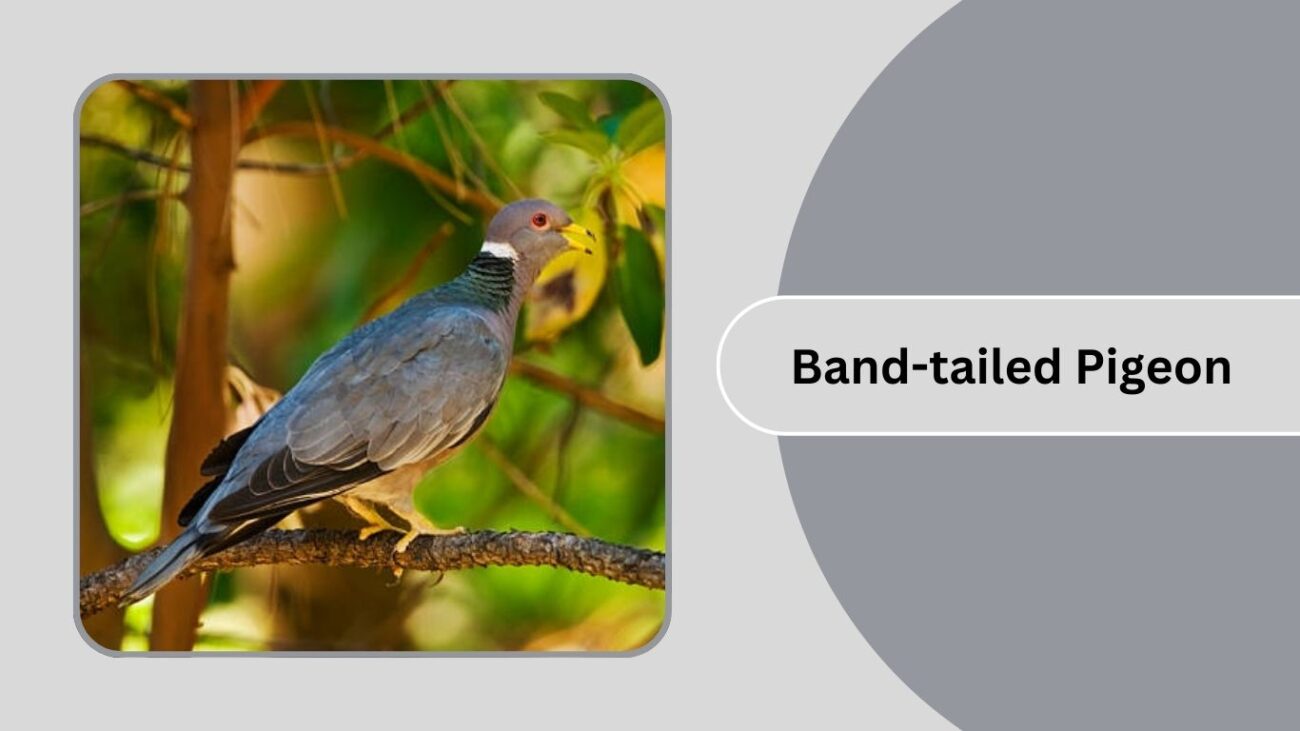
The Band-tailed Pigeon (Patagioenas fasciata) is a large, elegant pigeon native to the Americas, recognized by its distinctive tail band and soft pastel coloring. It is the largest native pigeon in North America and is closely related to the now-extinct Passenger Pigeon.
Identification
- Size: 33–40 cm (13–16 in) long; wingspan 66–74 cm (26–29 in)
- Plumage: Grayish overall with a purplish head and breast
- Neck: Iridescent greenish patch on the nape bordered by a thin white band
- Bill: Yellow with a dark tip
- Eyes: Yellow, surrounded by a bare yellow orbital ring
- Tail: Gray with a broad, pale band at the tip — its most distinguishing feature
Habitat & Distribution
Ranges from the western United States through Central America into South America. Prefers mountainous forests, oak woodlands, and coniferous habitats, but can also be found in semi-open country and near agricultural areas.
Behavior & Diet
Feeds mainly on acorns, berries, seeds, and cultivated grains. Often forages in flocks, especially during migration. Known to travel great distances in search of food, much like the Passenger Pigeon once did.
Vocalizations
Soft, low-pitched “hoo” or “coo” calls, often repeated and carrying over long distances in forested habitats.
11. White-crowned Pigeon
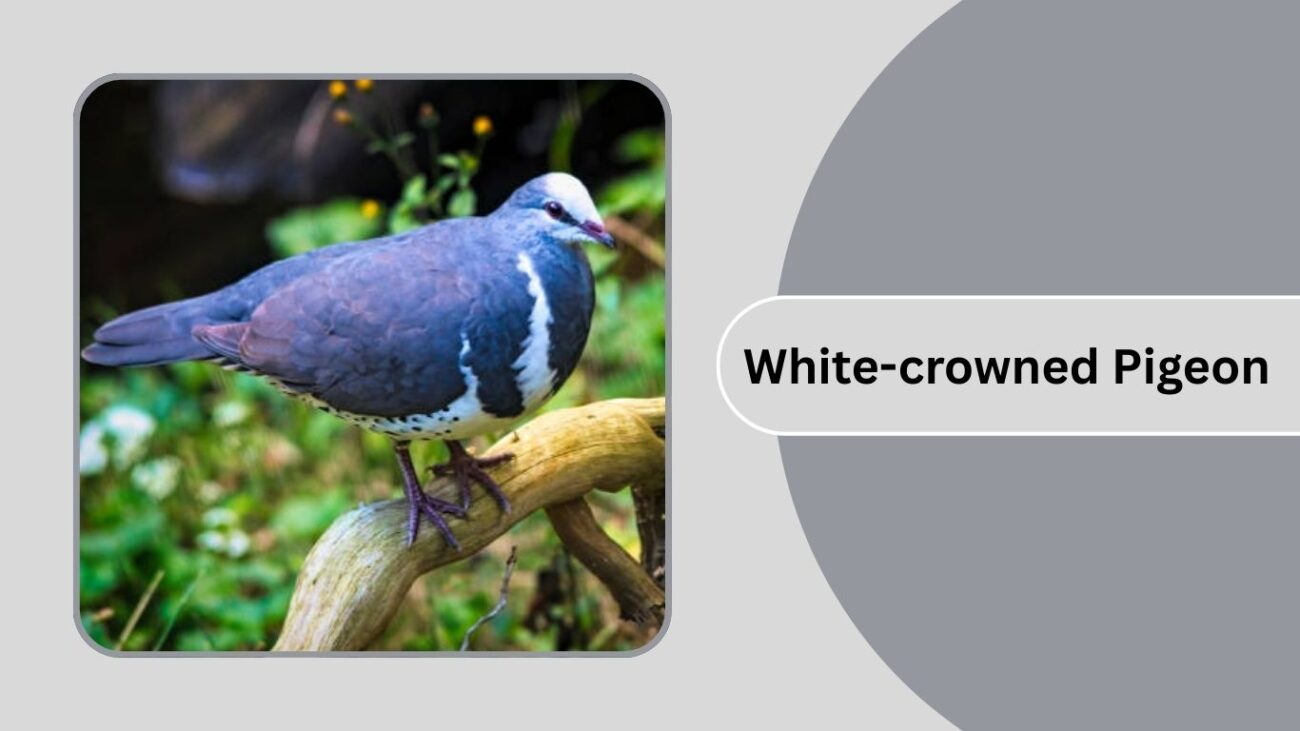
The White-crowned Pigeon (Patagioenas leucocephala) is a tropical pigeon with a striking white crown that contrasts beautifully with its otherwise dark body. It is an important seed disperser in the Caribbean ecosystem and is often seen in coastal and island habitats.
Identification
- Size: 29–35 cm (11–14 in) long; wingspan 48–55 cm (19–22 in)
- Plumage: Dark gray to slate-black body with iridescent greenish wings and back
- Crown: Distinctive white crown extending from the forehead to the nape
- Bill: Bright red with a pale tip
- Eyes: Deep red, adding to its vivid appearance
- Tail: Dark with a slight green sheen, squared at the end
Habitat & Distribution
Found in the Caribbean islands, southern Florida, and parts of Central America. Prefers coastal mangroves, small islands, and subtropical forests. It often nests on remote islands to avoid predators, flying to mainland areas to feed.
Behavior & Diet
Feeds mainly on fruits, particularly from tropical trees such as poisonwood and sea grape. Highly mobile, traveling long distances daily between feeding and nesting sites. Plays a vital ecological role in spreading seeds across island habitats.
Vocalizations
Soft, deep cooing calls, often given from a concealed perch in the forest canopy.
12. Speckled Pigeon
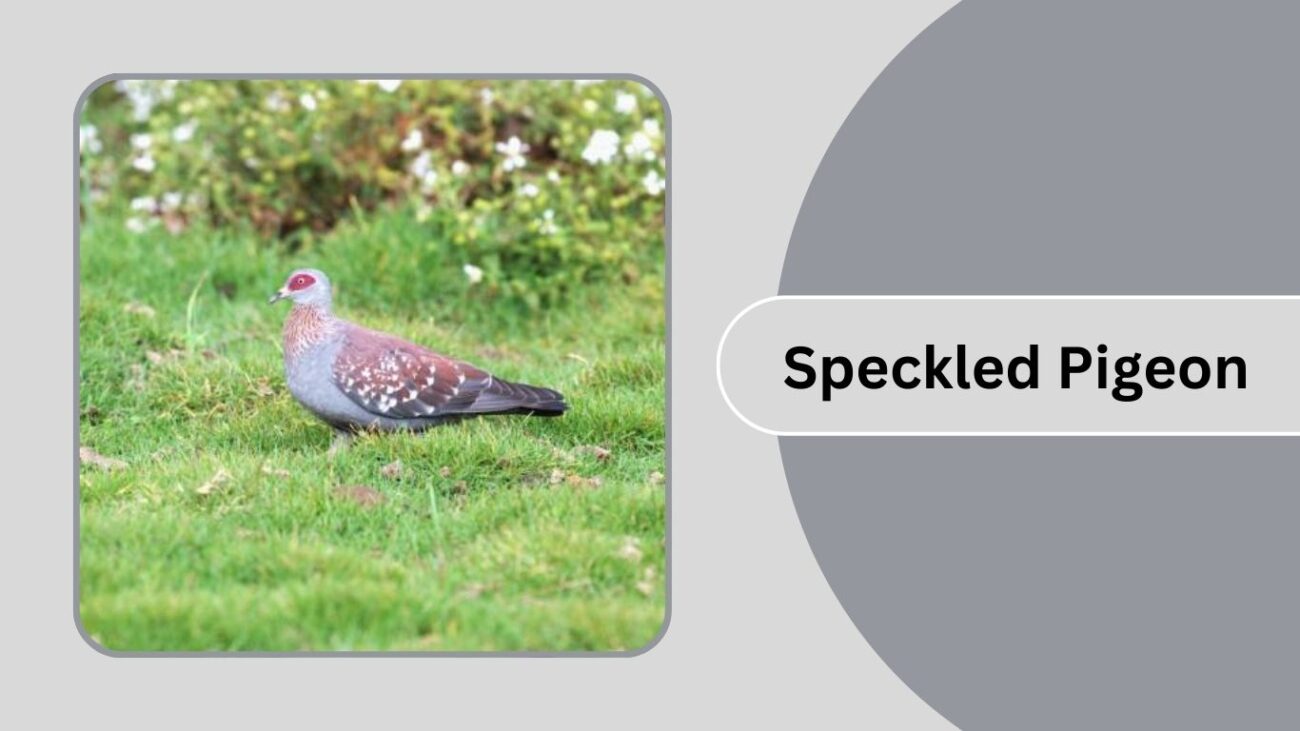
The Speckled Pigeon (Columba guinea), also called the African Rock Pigeon, is a hardy and attractive species native to sub-Saharan Africa. Its bold spotted wings and reddish eye patch make it one of the most easily recognizable pigeons on the continent.
Identification
- Size: 37–41 cm (14–16 in) long; wingspan 60–70 cm (24–28 in)
- Plumage: Gray-brown body with chestnut wings heavily speckled with white spots
- Head & Neck: Pale gray head and neck with a slight iridescent sheen on the neck
- Bill: Black, slim, and slightly curved
- Eyes: Red eyes with a bare red orbital ring that extends outward
- Tail: Gray with a darker terminal band
Habitat & Distribution
Widespread across sub-Saharan Africa, commonly found in savannas, farmlands, rocky cliffs, and urban areas. Often seen perching on rooftops, rocky outcrops, and telegraph poles.
Behavior & Diet
Feeds on seeds, grains, and agricultural crops, often in large flocks. Known for its adaptability to human environments, the Speckled Pigeon is a common sight in African cities. In rural areas, it can gather in large numbers around grain storage sites.
Vocalizations
Produces a series of low, repeated “coo” sounds, often delivered while perched in open view.
13. Pink-necked Green Pigeon
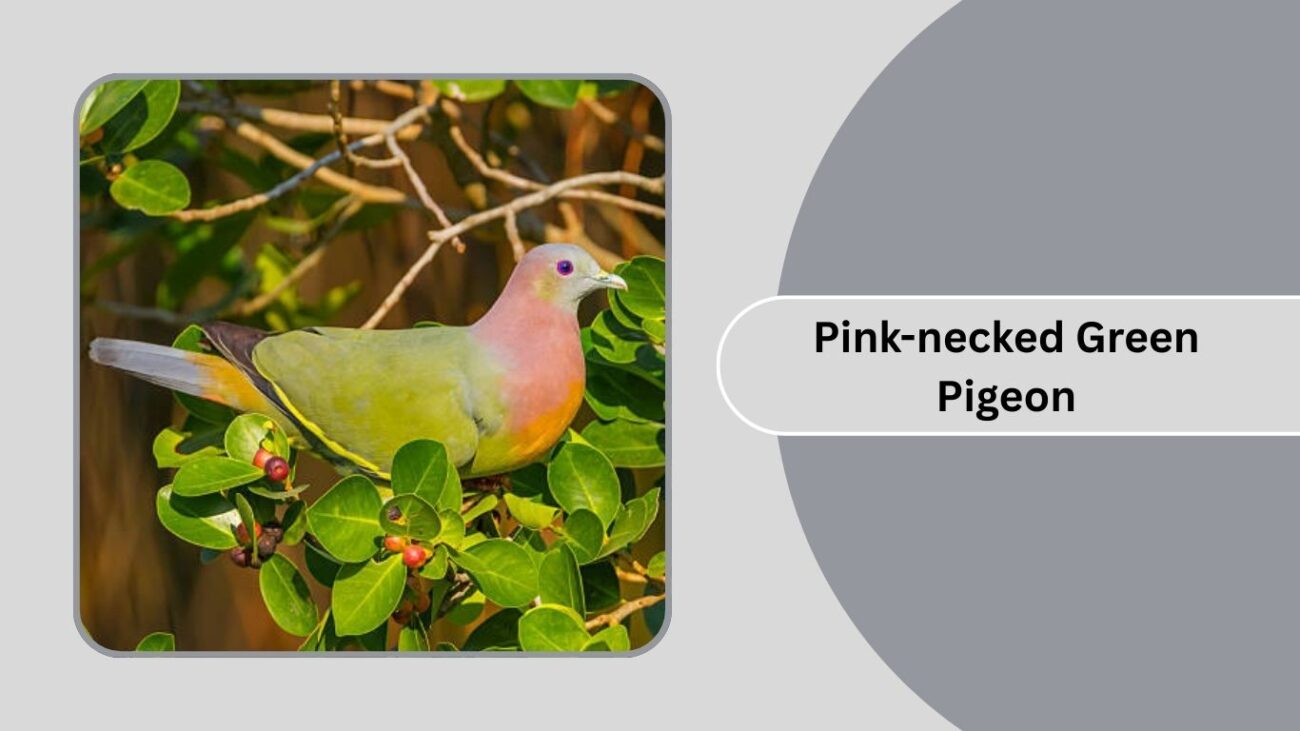
The Pink-necked Green Pigeon (Treron vernans) is a brilliantly colored fruit dove species native to Southeast Asia. Males are especially striking, with their vibrant pink neck and contrasting green and orange plumage, making them a favorite among birdwatchers.
Identification
- Size: 25–30 cm (10–12 in) long
- Plumage (Male): Pinkish-lilac neck and upper breast, orange breast band, bright green wings, and yellow belly
- Plumage (Female): Mostly green with a yellowish belly, lacking the male’s pink and orange tones
- Bill: Pale bluish with a whitish tip
- Eyes: Red with a pale orbital ring
- Tail: Greenish with a bluish tip
Habitat & Distribution
Found across Thailand, Malaysia, Singapore, Indonesia, and the Philippines. Prefers lowland forests, mangroves, gardens, and parks, often in areas with abundant fruiting trees.
Behavior & Diet
Feeds almost entirely on fruits and berries, particularly figs. Plays a vital role in seed dispersal within tropical ecosystems. Often seen in small flocks, flying swiftly between feeding and roosting sites.
Vocalizations
Soft, repetitive cooing or “whu-whu-whu” calls, usually heard from dense foliage where they perch quietly.
14. Common Emerald Dove
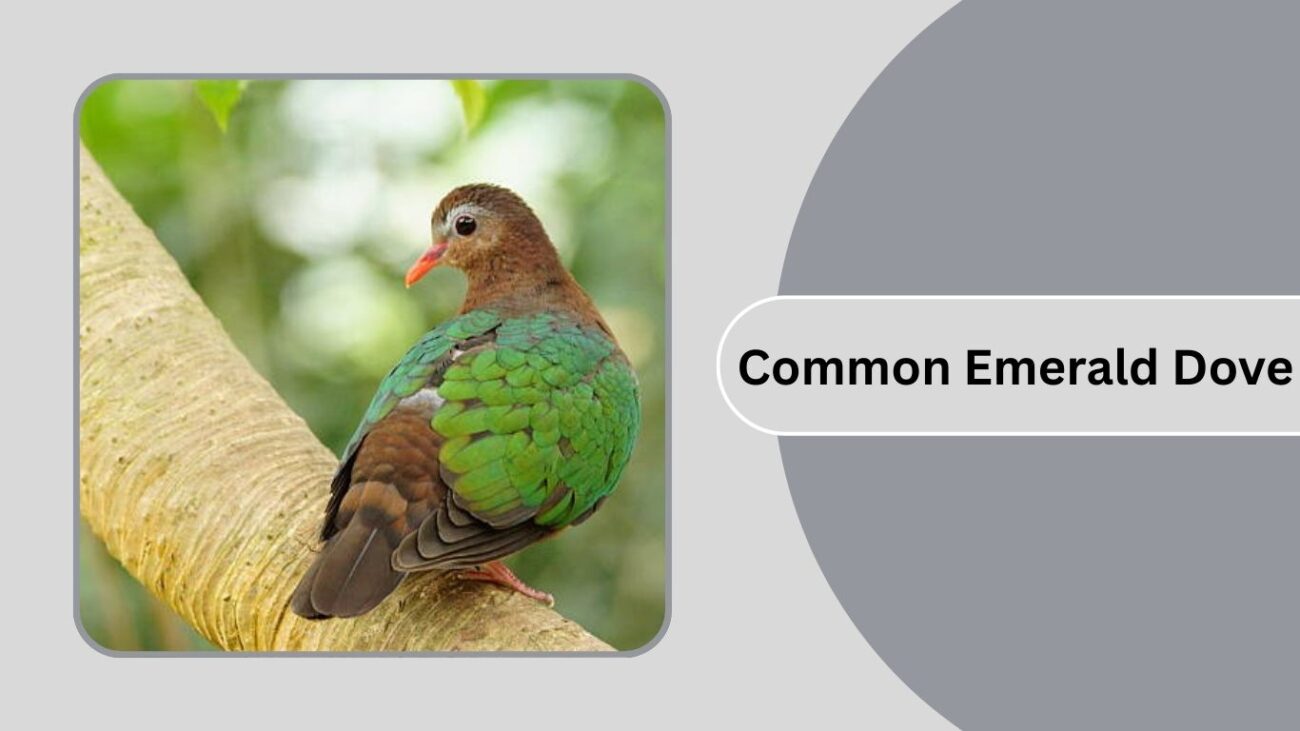
The Common Emerald Dove (Chalcophaps indica), also known as the Green Dove or Green-winged Pigeon, is a small yet striking pigeon species found in tropical and subtropical regions of Asia and Australia. Its bright emerald wings stand out vividly against its otherwise earthy tones.
Identification
- Size: 23–27 cm (9–10.5 in) long
- Plumage:
- Wings: Shimmering emerald-green
- Head & Underparts: Pinkish mauve to vinous brown
- Back & Tail: Dark brown with a blackish terminal band
- Wings: Shimmering emerald-green
- Bill: Bright red
- Eyes: Dark brown with a subtle gray orbital ring
- Sex Differences: Males have a white patch on the shoulders and forehead; females are duller without the white forehead
Habitat & Distribution
Widely distributed across the Indian subcontinent, Southeast Asia, Indonesia, the Philippines, and northern/eastern Australia. Prefers dense tropical forests, mangroves, and wooded areas, often foraging on the ground.
Behavior & Diet
Feeds mainly on seeds, small fruits, and fallen berries, often searching along forest floors. Known for being shy and quick to retreat into cover when disturbed. Usually solitary or found in pairs, but occasionally seen in small groups around food sources.
Vocalizations
A deep, resonant, and mournful “coo-oo” repeated at intervals, often echoing through dense forest habitats.
15. Victoria Crowned Pigeon
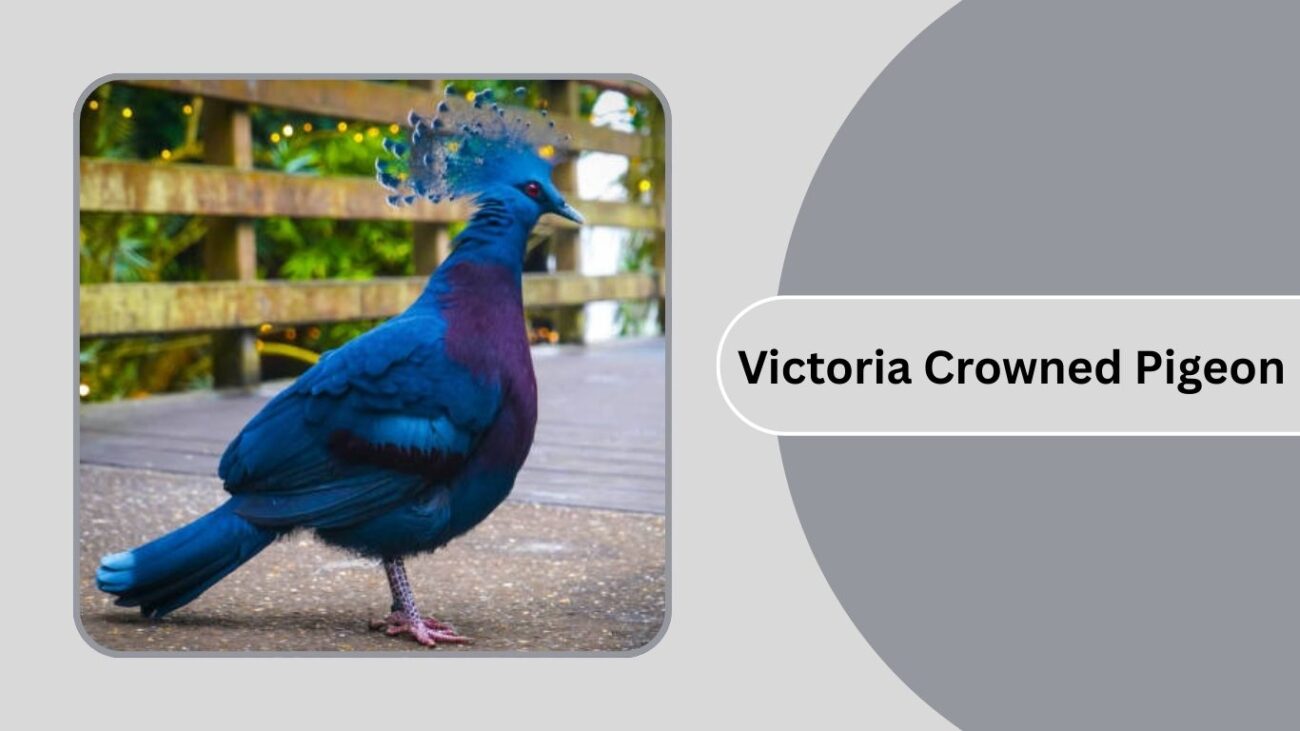
The Victoria Crowned Pigeon (Goura victoria) is one of the largest and most spectacular pigeon species in the world. Known for its majestic blue plumage and ornate lacy crest, it is a symbol of elegance among wild birds.
Identification
- Size: 70–75 cm (28–30 in) long; can weigh up to 2.5–3.5 kg (5.5–7.7 lbs)
- Plumage: Powdery blue overall with a deep maroon chest
- Crest: Large, lacy, fan-shaped crest tipped with white, resembling a crown
- Bill: Slender and black
- Eyes: Striking deep red eyes that stand out against the blue face
- Tail: Long and bluish, slightly rounded at the end
Habitat & Distribution
Native to the lowland and swamp forests of northern New Guinea and nearby islands. Prefers dense forested areas but can also be found in forest edges and clearings.
Behavior & Diet
Feeds mainly on fallen fruits, seeds, and occasionally small invertebrates. Walks gracefully on the forest floor, often in pairs or small groups. Known for its calm demeanor and willingness to tolerate close approach in the wild.
Vocalizations
Produces deep, resonant “boom” calls that can carry far through the forest. During courtship, males also make clapping sounds with their wings.
16. Nicobar Pigeon
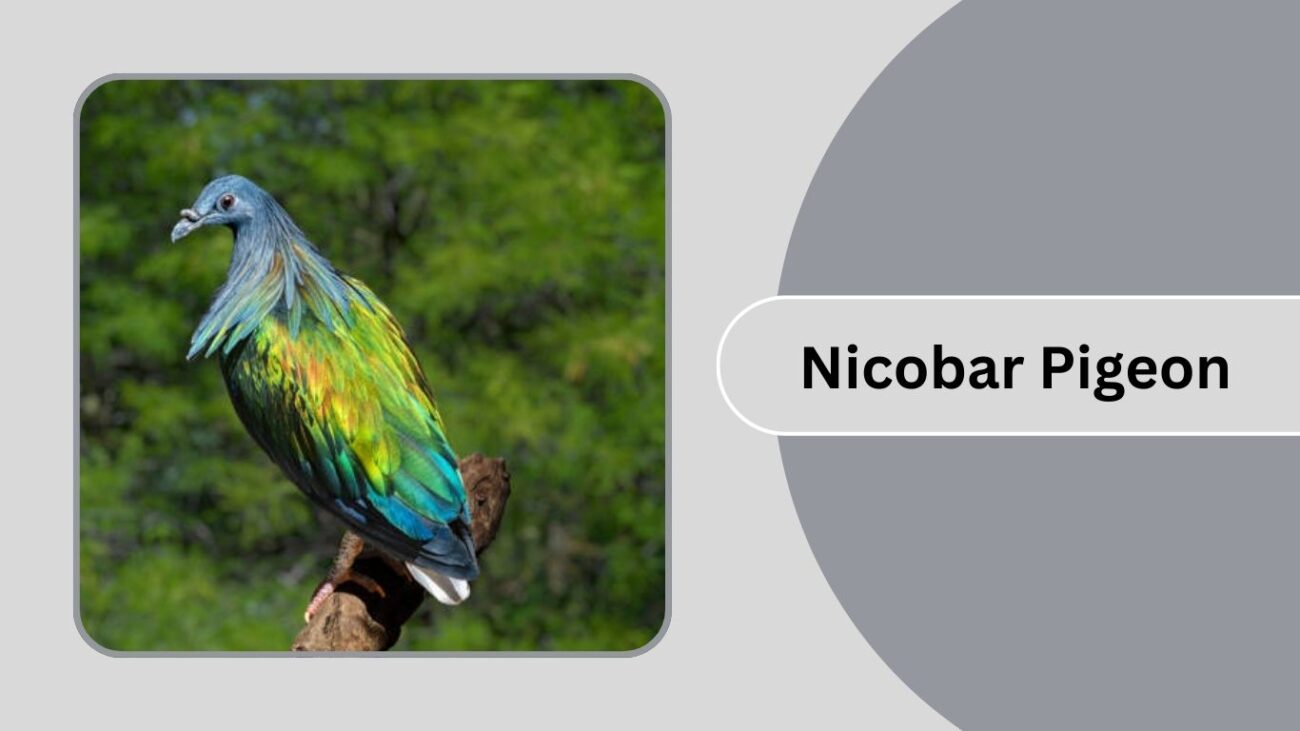
The Nicobar Pigeon (Caloenas nicobarica) is a dazzling tropical pigeon renowned for its metallic, iridescent plumage. It is considered the closest living relative of the extinct Dodo, making it both visually stunning and scientifically significant.
Identification
- Size: 40–42 cm (16–17 in) long
- Plumage:
- Body: Metallic green, blue, and copper sheen on long hackle-like neck feathers
- Head & Upper Neck: Gray with a darker face
- Tail: Short, pure white, creating a sharp contrast with the rest of the body
- Body: Metallic green, blue, and copper sheen on long hackle-like neck feathers
- Bill: Black with a pronounced cere at the base
- Eyes: Dark brown
- Legs & Feet: Purplish-red with strong claws
Habitat & Distribution
Found on small islands and coastal regions from the Nicobar Islands through Southeast Asia to the Solomon Islands. Prefers dense coastal forests, mangroves, and scrublands, often roosting on small offshore islets.
Behavior & Diet
Feeds mainly on seeds, fruits, and occasionally small invertebrates. Known to travel between islands in flocks to find food sources. Plays an important role in seed dispersal in its native ecosystems.
Vocalizations
Produces low, repetitive cooing sounds and soft guttural calls. Its flight is strong and direct, with distinctive whirring wingbeats.
17. Rock Pigeon (Common Pigeon)
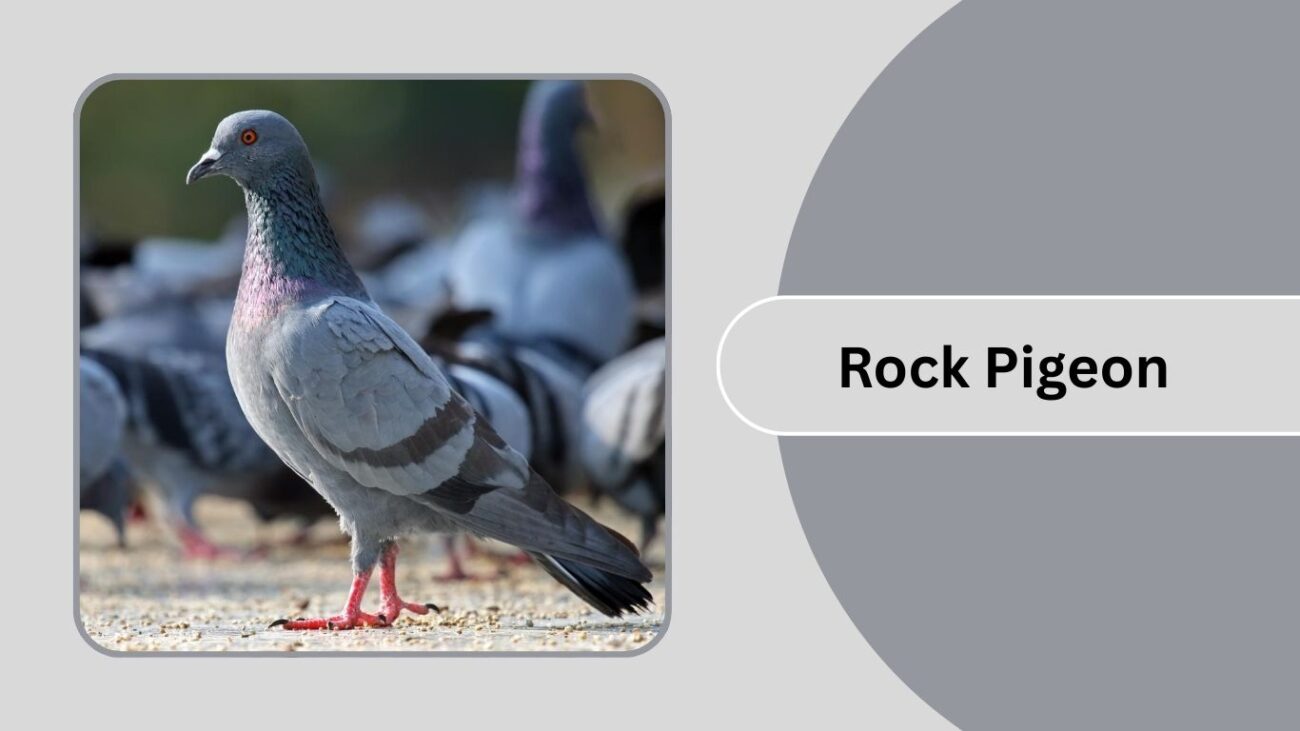
The Rock Pigeon (Columba livia), also known as the Common Pigeon, is one of the most widespread and familiar bird species globally. Originally native to Europe, North Africa, and parts of Asia, it has successfully adapted to urban environments worldwide.
Identification
- Size: 29–37 cm (11–14.5 in) long; wingspan 62–72 cm (24–28 in)
- Plumage: Typically bluish-gray with two distinct black wing bars; iridescent green and purple sheen on the neck and chest
- Bill: Black, slender with a pale cere
- Eyes: Orange, red, or gold with a pale orbital ring
- Tail: Gray with a black terminal band
- Variations: Many color morphs in feral populations, including white, brown, and pied patterns
Habitat & Distribution
Naturally inhabits rocky cliffs and coastal areas but is now abundant in cities, towns, and rural settlements across the globe. Often seen roosting on buildings, bridges, and other man-made structures.
Behavior & Diet
Omnivorous, feeding on seeds, grains, fruits, and scraps from human activity. Known for its strong homing ability, which has been utilized in messenger pigeon services for centuries. Typically forms large flocks, especially around food sources.
Vocalizations
Produces a soft, rolling “coo-oo” often heard during courtship or when perched.
18. Band-tailed Pigeon
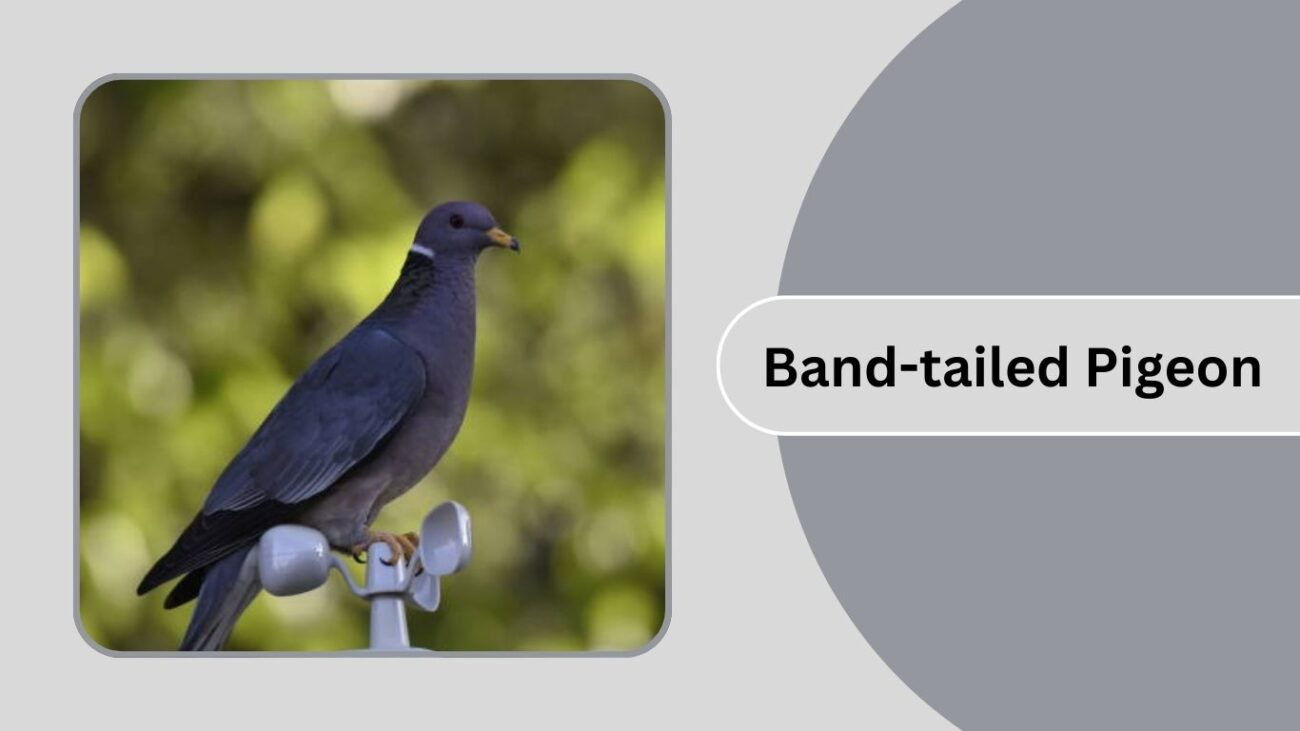
The Band-tailed Pigeon (Patagioenas fasciata) is a large, elegant pigeon native to the Americas, recognized for its gentle demeanor and distinctive tail markings. It is closely related to the extinct Passenger Pigeon, sharing similar flocking behavior and a love for forested habitats.
Identification
- Size: 33–40 cm (13–16 in) long; wingspan 50–65 cm (20–26 in)
- Plumage: Soft bluish-gray overall with a subtle purplish sheen on the head and neck
- Neck Marking: White crescent or half-collar at the back of the neck with a greenish iridescence above it
- Bill: Yellow with a black tip
- Eyes: Yellow with a dark pupil and a thin orange orbital ring
- Tail: Broad and gray with a distinct pale band across the tip
- Legs & Feet: Yellowish
Habitat & Distribution
Found from western North America down through Central America into parts of South America. Prefers mixed coniferous and oak forests, especially in mountainous regions, but also visits orchards and suburban gardens when food is abundant.
Behavior & Diet
Feeds primarily on acorns, berries, seeds, and cultivated grains. Known for long seasonal migrations in search of food sources. Often gathers in large, loose flocks that can number in the hundreds, especially at feeding sites.
Vocalizations
A deep, slow, and resonant “whoo-who-who” call, often repeated several times and carrying far through forested valleys.
19. White-crowned Pigeon
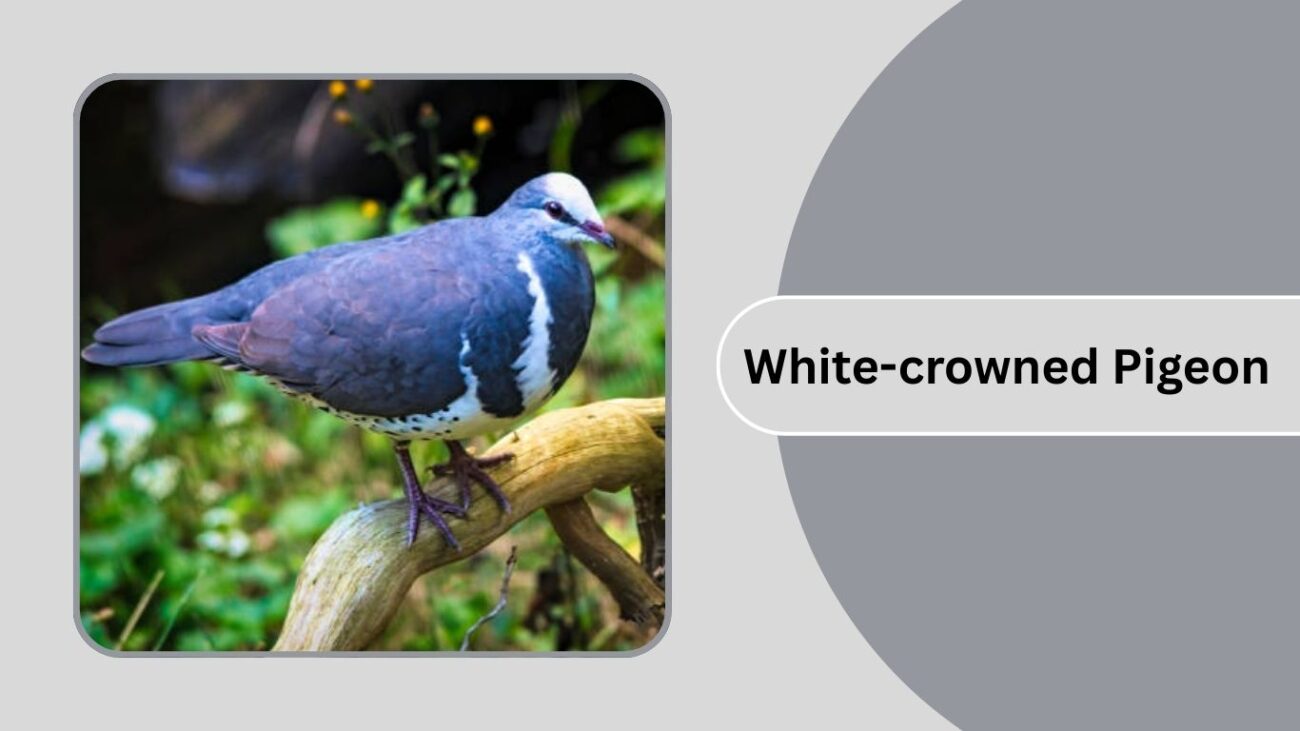
The White-crowned Pigeon (Patagioenas leucocephala) is a striking medium-sized pigeon native to the Caribbean region. It is best known for its pure white crown, which contrasts beautifully with its otherwise dark plumage. This species plays a vital role in tropical island ecosystems as a disperser of fruit seeds.
Identification
- Size: 29–35 cm (11–14 in) long; wingspan around 48–56 cm (19–22 in)
- Plumage:
- Head: Distinct white crown extending from forehead to nape
- Body: Slate-gray to dark bluish overall
- Neck: Slight iridescent green and purple sheen visible in sunlight
- Head: Distinct white crown extending from forehead to nape
- Bill: Reddish base with a pale tip
- Eyes: Dark reddish-brown with a thin red orbital ring
- Tail: Broad and grayish with a slightly darker band at the tip
- Legs & Feet: Reddish-pink
Habitat & Distribution
Primarily found in the Caribbean islands, southern Florida, the Bahamas, and parts of Central America. Prefers coastal mangroves, tropical hardwood forests, and small offshore islands. Often commutes between nesting islands and mainland feeding areas.
Behavior & Diet
Feeds mainly on fruits and berries, especially those of tropical trees such as poisonwood and figs. Frequently observed flying long distances over open water to reach feeding grounds. Nests are often placed in remote islets to avoid predators.
Vocalizations
Produces a soft, repetitive “coo-oo” or “whoo-ooo” sound, generally given from a concealed perch high in the canopy.
20. Speckled Pigeon
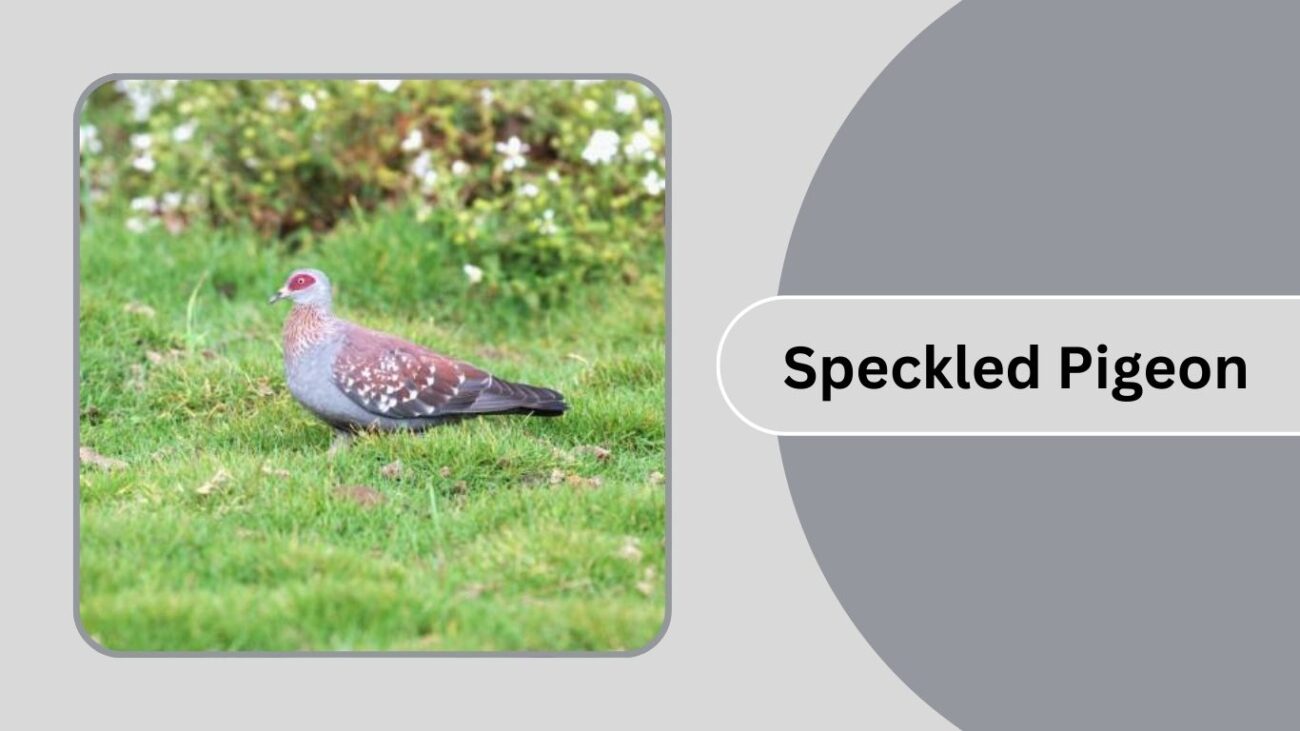
The Speckled Pigeon (Columba guinea), also known as the African Rock Pigeon, is a large and attractive species native to sub-Saharan Africa. Recognized by its striking spotted wings and bright red eye patch, it is a familiar sight around rocky areas, farmland, and urban settlements.
Identification
- Size: 37–41 cm (14.5–16 in) long; wingspan 60–70 cm (24–28 in)
- Plumage:
- Body: Gray-brown with a purplish wash on the breast
- Wings: Rich chestnut with prominent white speckles, especially noticeable in flight
- Head & Neck: Pale gray with faint streaking
- Body: Gray-brown with a purplish wash on the breast
- Bill: Dark gray, short and slightly hooked at the tip
- Eyes: Yellow to orange iris surrounded by a conspicuous bare red orbital skin patch
- Tail: Dark with a pale terminal band
- Legs & Feet: Pinkish-red
Habitat & Distribution
Widely distributed across sub-Saharan Africa, from Senegal to Ethiopia and down to South Africa. Often found in rocky hills, cliffs, and gorges, but also thrives in cultivated lands and towns. Frequently seen perching on rooftops and feeding in open fields.
Behavior & Diet
Feeds mostly on seeds, grains, and occasionally small invertebrates. Often forages on the ground in pairs or small groups. Has adapted well to human presence, often roosting on buildings in rural and urban areas.
Vocalizations
Produces a deep, rhythmic “coo-ooo, coo-ooo” sound, often repeated for long periods.
21. Lemon Dove
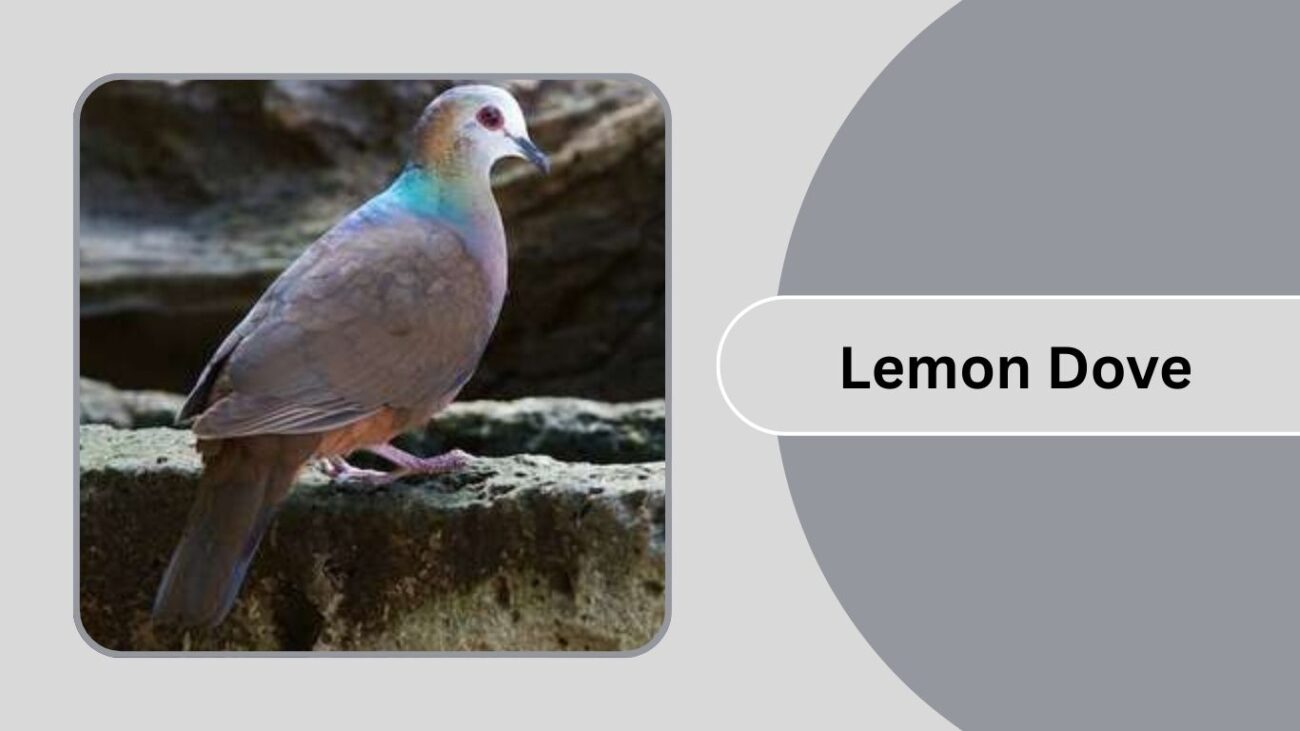
The Lemon Dove (Aplopelia larvata), also known as the Cinnamon Dove in some regions, is a shy and secretive pigeon found in forested habitats of sub-Saharan Africa. Its name comes from the pale yellowish wash that is visible on its belly and underparts in good lighting.
Identification
- Size: 28–30 cm (11–12 in) long
- Plumage:
- Head & Neck: Slate-gray in males, brownish in females, with a white facial patch around the bill and eyes
- Body: Brown to gray overall, with males generally darker
- Underparts: Subtle lemon or yellowish tinge on belly and flanks (more visible in certain light)
- Wings: Brown with a faint purplish sheen
- Head & Neck: Slate-gray in males, brownish in females, with a white facial patch around the bill and eyes
- Bill: Black and slender
- Eyes: Dark brown with a bare reddish or pinkish orbital skin
- Legs & Feet: Reddish-pink
Habitat & Distribution
Found in dense montane and lowland forests across sub-Saharan Africa, including West, Central, East, and southern regions. Prefers shady understories and is often found near forest streams or moist clearings.
Behavior & Diet
Extremely secretive, usually foraging alone or in pairs on the forest floor. Diet consists mainly of seeds, small fruits, and fallen berries. It spends much of its time walking quietly through leaf litter in search of food.
Vocalizations
A low, mournful “hoo-hoo-hoo” series, often repeated at long intervals. Calls are usually given from a hidden perch within dense foliage.
22. Pink-necked Green Pigeon
The Pink-necked Green Pigeon (Treron vernans) is one of Southeast Asia’s most colorful and eye-catching pigeons. The male’s pastel tones of pink, orange, and green make it stand out among foliage, while females have more subdued but equally attractive plumage. This species is a fruit-eating specialist and an important seed disperser in its ecosystem.
Identification
- Size: 25–30 cm (10–12 in) long
- Male Plumage:
- Head & Neck: Soft bluish-gray
- Upper Breast: Distinct rose-pink patch blending into orange on the lower breast
- Back & Wings: Bright green with darker flight feathers
- Belly: Yellowish-green
- Head & Neck: Soft bluish-gray
- Female Plumage:
- Entirely green with a lighter belly, lacking the pink and orange tones
- Entirely green with a lighter belly, lacking the pink and orange tones
- Bill: Pale bluish with a white tip
- Eyes: Pale blue to whitish with a thin orbital ring
- Legs & Feet: Pinkish-red
Habitat & Distribution
Found in lowland forests, mangroves, gardens, and urban parks throughout Southeast Asia, including Thailand, Malaysia, Indonesia, the Philippines, and Singapore. Often seen in fruiting trees in pairs or small flocks.
Behavior & Diet
Feeds almost exclusively on fruits, particularly figs and berries, plucking them directly from branches. Plays a crucial role in forest regeneration by dispersing seeds over long distances.
Vocalizations
A series of low, whistling “whoo-woo” notes, often repeated rapidly. Calls are soft and can be hard to hear over background noise.
23. Victoria Crowned Pigeon
The Victoria Crowned Pigeon (Goura victoria) is the largest and one of the most spectacular pigeon species in the world. Native to New Guinea, it is instantly recognizable for its elegant blue lace-like crest and deep maroon chest. This species is highly sought after for its beauty but is threatened by hunting and habitat loss.
Identification
- Size: 73–75 cm (29–30 in) long; can weigh up to 2.5–3.5 kg (5.5–7.7 lbs)
- Plumage:
- Head & Crest: Powdery blue-gray with a fan-shaped, lacy crest tipped in white
- Neck & Back: Bluish-gray
- Chest: Deep maroon
- Wings: Blue-gray with a distinct white wing bar
- Head & Crest: Powdery blue-gray with a fan-shaped, lacy crest tipped in white
- Bill: Slender and blackish
- Eyes: Striking red with a small black pupil
- Legs & Feet: Pale gray
Habitat & Distribution
Endemic to the northern lowland forests of New Guinea and nearby islands. Prefers swamp forests, sago palm groves, and areas near rivers, where it can find ample food and cover.
Behavior & Diet
Feeds mainly on fallen fruits, berries, and seeds, occasionally eating insects. Walks gracefully on the forest floor, often in pairs or small family groups. Despite its large size, it can fly short distances when disturbed.
Vocalizations
Produces a loud, deep, resonant “boom-boom” call that can carry far through dense forest.
24. Bronze-winged Pigeon
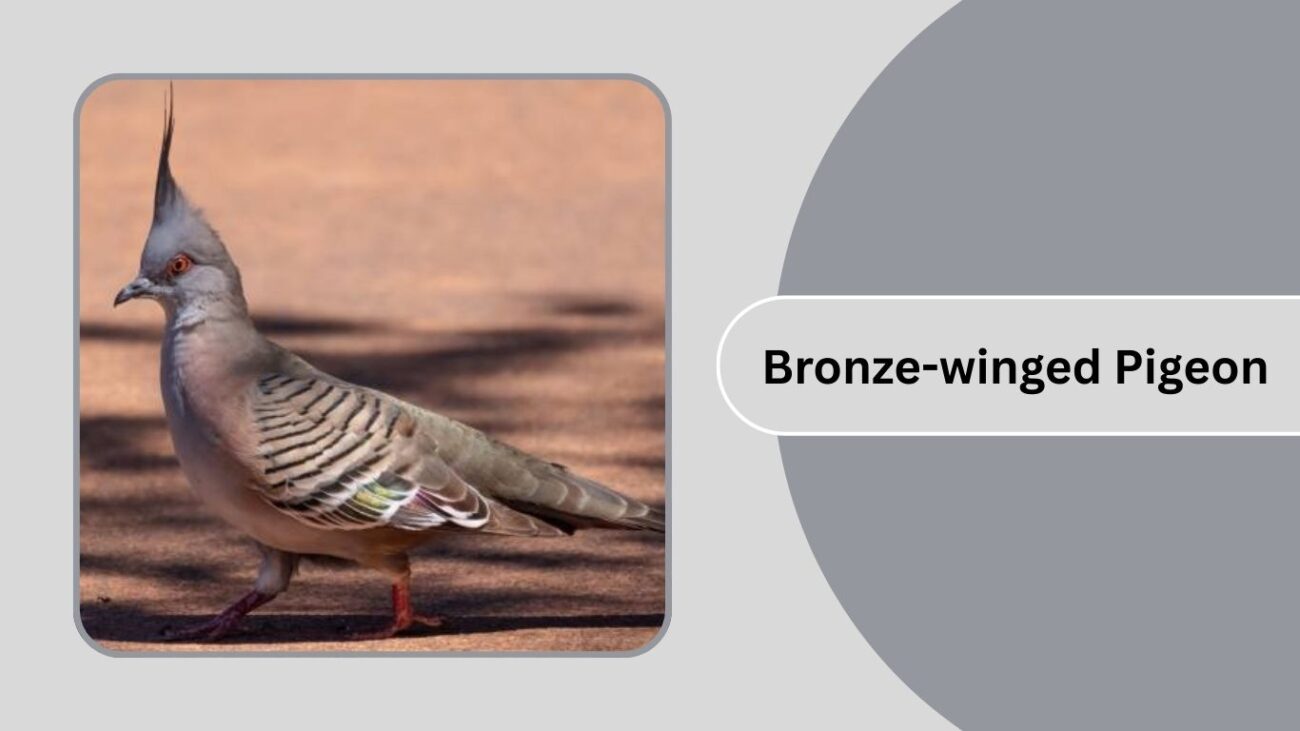
The Bronze-winged Pigeon (Phaps chalcoptera) is a medium-sized pigeon native to Australia, known for its shimmering bronze and green wing patches that flash in sunlight. Its combination of earthy browns with metallic highlights makes it one of the most visually striking ground-dwelling pigeons.
Identification
- Size: 33–36 cm (13–14 in) long
- Plumage:
- Head & Neck: Grayish with a pinkish hue on the neck
- Body: Brown overall, with a white line along the wing edge
- Wings: Iridescent bronze, green, and purple patches visible when light hits at the right angle
- Underparts: Buff to light brown
- Head & Neck: Grayish with a pinkish hue on the neck
- Bill: Dark gray, short, and slightly curved
- Eyes: Dark with a thin pale orbital ring
- Legs & Feet: Pinkish
Habitat & Distribution
Widespread across mainland Australia, inhabiting open woodlands, grasslands, and scrublands. Often found near water sources, where it drinks and forages. Adapts well to both coastal and inland environments.
Behavior & Diet
Primarily a ground forager, feeding on seeds, grains, and small invertebrates. Often seen in pairs or small flocks, walking with a distinctive bobbing motion. Flight is strong and direct, with a loud clapping sound made by the wings when taking off.
Vocalizations
Soft, mournful cooing notes, often given in a repeated, rhythmic pattern during the breeding season.
25. White-bellied Green Pigeon
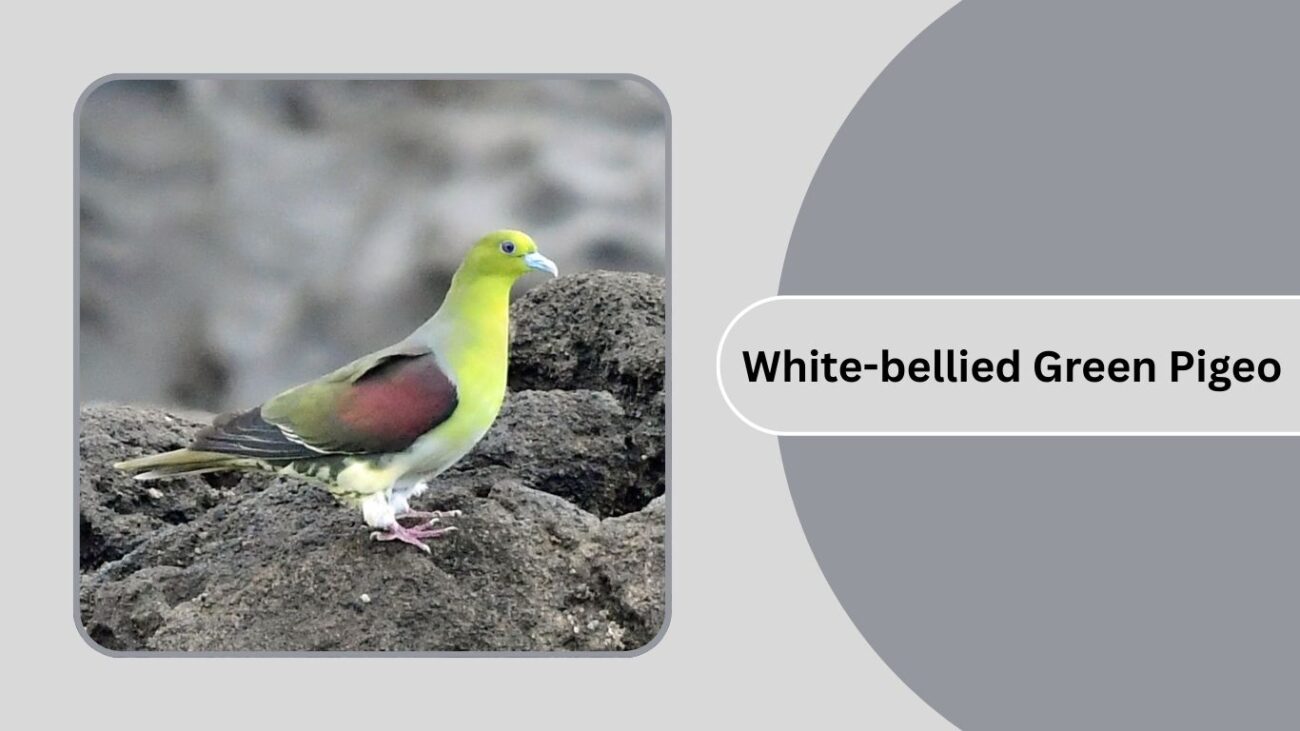
The White-bellied Green Pigeon (Treron sieboldii) is a striking fruit-dove found across East Asia, celebrated for its vivid green plumage and distinctive white underparts. Unlike many pigeon species, it is known for its unusual habit of drinking seawater, a rare behavior among birds.
Identification
- Size: 33–35 cm (13–14 in) long
- Plumage:
- Head & Back: Bright green
- Wings: Darker green with some yellow edging
- Belly: Clean white, sharply contrasting with the upperparts
- Tail: Dark with a pale terminal band
- Head & Back: Bright green
- Bill: Pale bluish with a whitish tip
- Eyes: Pale blue-gray surrounded by a narrow orbital ring
- Legs & Feet: Pinkish-red
Habitat & Distribution
Breeds in forests, woodlands, and coastal areas of Japan, Korea, Taiwan, and parts of China. Prefers fruiting trees in both inland and coastal environments.
Behavior & Diet
Feeds mainly on fruits and berries, especially figs. Often seen in small flocks moving between feeding sites. Unique among pigeons for frequently visiting coastal areas to drink seawater, possibly for mineral intake.
Vocalizations
A deep, resonant “hooo-ooo” call, repeated several times, often echoing through forest canopies.
26. Island Imperial Pigeon
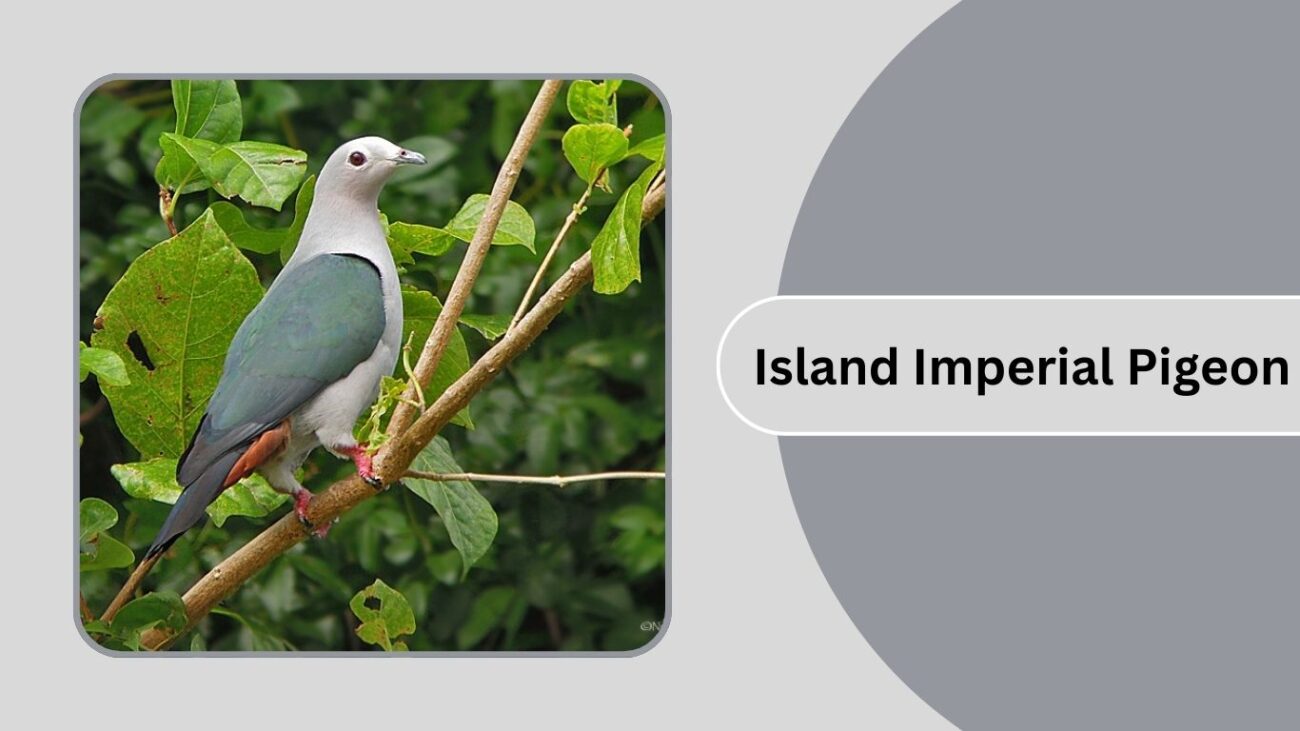
The Island Imperial Pigeon (Ducula pistrinaria) is a large, strong-flying pigeon native to the islands of the western Pacific. Known for its robust build and commanding presence, it often soars high above coastal forests before descending to feed in fruiting trees.
Identification
- Size: 40–44 cm (16–17 in) long
- Plumage:
- Head & Neck: Pale grayish-white
- Back & Wings: Dark slate-gray to blackish
- Belly & Underparts: Whitish to light gray
- Tail: Blackish with a pale terminal band
- Head & Neck: Pale grayish-white
- Bill: Black, short, and strong
- Eyes: Dark brown to black
- Legs & Feet: Dark gray
Habitat & Distribution
Inhabits coastal forests, mangroves, and offshore islets across the Bismarck Archipelago, Solomon Islands, and other Pacific island groups. Strongly associated with small, uninhabited islands where fruiting trees are abundant.
Behavior & Diet
Feeds mainly on large fruits and nuts, particularly figs, often swallowing them whole. Strong flier capable of covering long distances over open water to move between islands. Typically seen singly, in pairs, or in small feeding flocks.
Vocalizations
Deep, resonant cooing calls, sometimes delivered in slow, rhythmic sequences that carry across the canopy.
27. Speckled Pigeon
The Speckled Pigeon (Columba guinea), also called the African Rock Pigeon, is a large and hardy bird native to sub-Saharan Africa. Recognizable by its striking spotted wings and bright red eye patches, it often lives near rocky outcrops, farmlands, and even urban areas.
Identification
- Size: 37–41 cm (14–16 in) long
- Plumage:
- Head & Neck: Grayish with slight brown tones
- Back & Wings: Rich chestnut-brown covered in prominent white speckles
- Belly & Underparts: Light gray to buff
- Tail: Gray with a darker band near the tip
- Head & Neck: Grayish with slight brown tones
- Bill: Dark gray, short, and slightly hooked
- Eyes: Bright red orbital skin with dark pupils
- Legs & Feet: Pinkish-red
Habitat & Distribution
Common across much of sub-Saharan Africa, found in savannas, farmlands, rocky hills, cliffs, and urban rooftops. Often roosts on ledges, in quarries, or under bridges.
Behavior & Diet
Feeds mainly on seeds and grains, often foraging in agricultural fields. Comfortable around human settlements and frequently seen in large flocks. Flight is strong and direct, with rapid wingbeats.
Vocalizations
A deep, rolling “coo-coo-coo” that may be repeated in long sequences, especially during courtship displays.