
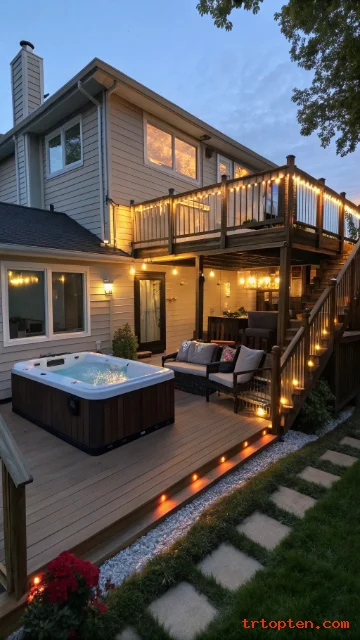
A bi-level house presents unique opportunities for creative deck design that maximizes your property’s potential.
The split-level architecture creates natural zones for distinct outdoor living areas that flow seamlessly from your home’s interior.
Multi-Tiered Entertainment Platform
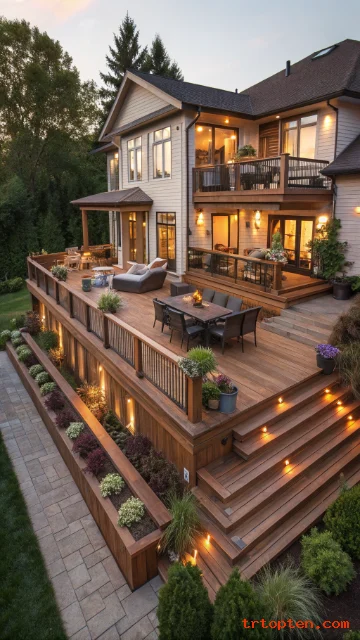
The multi-tiered entertainment platform creates distinct zones for dining, lounging, and cooking activities. Each level steps down gradually, following your home’s natural slope for a seamless transition between spaces. This design maximizes your usable square footage while maintaining visual interest throughout the entire deck structure.
Lower tiers work perfectly for casual seating areas around a fire pit or outdoor sofa configuration. Upper levels connect directly to your home’s main entry points for easy access to indoor amenities. The stepped design reduces the need for railings in certain areas, opening up sightlines across your entire property.
Strategic lighting along each tier transition ensures safety while highlighting your deck’s architectural features after sunset. Built-in planters at each level create natural dividers between activity zones without blocking views. This approach transforms a simple deck into a sophisticated outdoor living complex that serves multiple purposes.
Wraparound Bi-Level Design
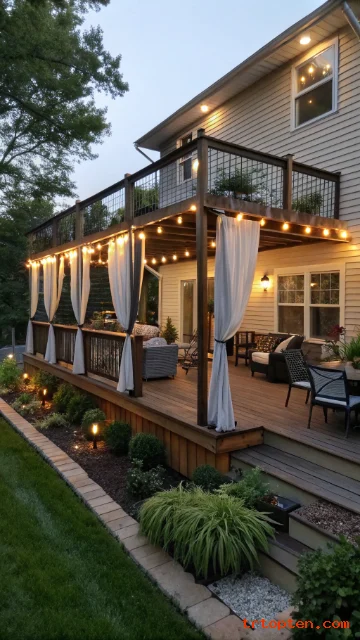
The wraparound design extends your deck space along two sides of your bi-level home for maximum accessibility. This configuration allows you to follow the sun throughout the day, choosing shaded or sunny spots as weather conditions change. The continuous pathway connects all entry points, eliminating dead ends and creating a flowing outdoor circulation pattern.
One section of the wrap can feature a covered pergola for protection from midday heat and light rain showers. The opposite wing might remain open for stargazing and unimpeded views of your garden or surrounding landscape. This versatility makes the wraparound design suitable for families who use their outdoor space throughout different seasons.
Corner seating arrangements take advantage of the L-shaped configuration, creating intimate conversation nooks. The wrap design naturally defines your property’s boundary while maintaining an open, inviting feel. This approach works exceptionally well on corner lots where you want to maximize views in multiple directions.
Floating Deck with Glass Railings
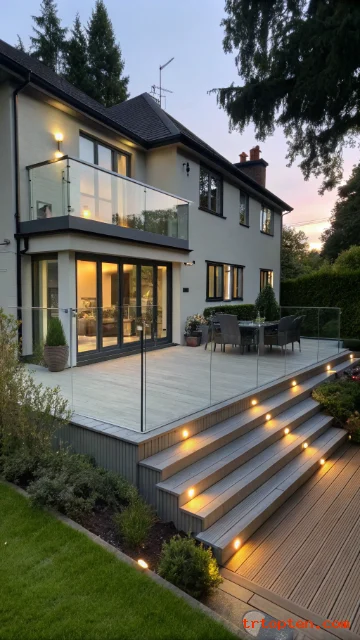
Floating decks appear to hover above your landscape, creating a modern aesthetic that complements contemporary bi-level architecture. Glass railings preserve unobstructed views while providing necessary safety barriers for elevated sections. The transparent panels reflect light beautifully, making your deck appear larger and more open than traditional railing systems.
The floating effect works best when you use hidden fastening systems that eliminate visible screw heads on the deck surface. Recessed lighting along the perimeter enhances the illusion of a structure suspended in space during evening hours. This design choice creates a dramatic visual impact that increases your home’s curb appeal significantly.
Glass railings require minimal maintenance compared to wood options, simply needing occasional cleaning to maintain clarity. The contemporary look pairs exceptionally well with composite decking materials in grey or warm brown tones. This bi-level house deck idea transforms your outdoor space into a showcase of modern design principles.
Covered Lower Level Patio Deck
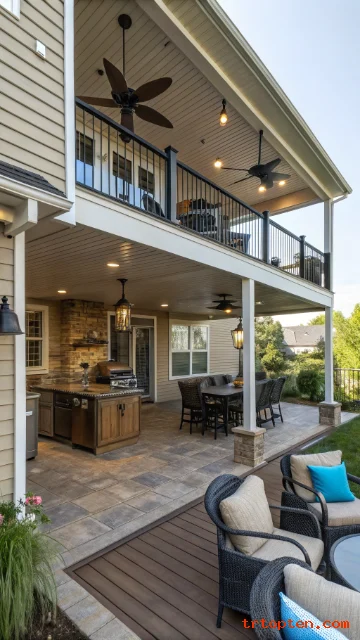
The covered lower level creates a protected outdoor room that extends your living space throughout the year. This design positions the upper deck as a roof for the lower patio, providing shelter from rain and excessive sun exposure. The covered area becomes an ideal spot for outdoor kitchens, dining sets, or comfortable lounge furniture.
Proper drainage systems channel water away from the covered space, keeping the lower deck dry and usable in various weather conditions. Ceiling fans and pendant lighting fixtures add comfort and ambiance to this protected outdoor room. The upper deck’s structure supports the roofing material, creating a cohesive architectural statement.
The covered lower level functions as an outdoor living room that seamlessly connects to your garden or yard. This bi-level deck idea works particularly well in regions with unpredictable weather patterns. The dual-level coverage provides options for sunny upper deck activities and shaded lower deck relaxation simultaneously.
Curved Bi-Level Deck Design
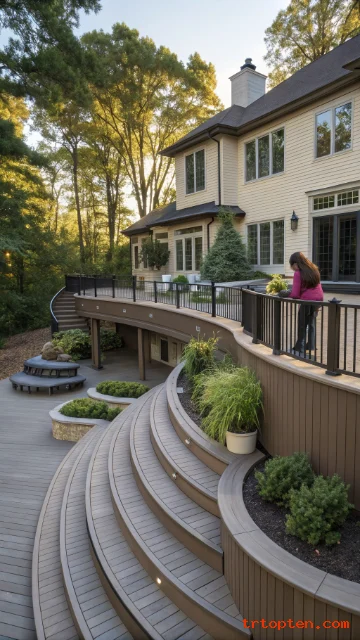
Curved decks soften the angular lines of bi-level architecture, creating a more organic and inviting outdoor space. The sweeping curves guide foot traffic naturally around your home’s perimeter while adding visual interest. This design approach requires specialized framing techniques but delivers a unique aesthetic that sets your property apart.
The curved lower level can follow the natural contours of your landscape, minimizing the need for extensive grading work. Upper deck curves might echo the shape of a bay window or circular dining area below. These flowing lines create a harmonious connection between your home and the surrounding environment.
Custom curved benches and planters integrate seamlessly into the deck’s architecture, enhancing the organic feel. The rounded edges improve safety by eliminating sharp corners that could cause injury. This bi-level house deck idea works beautifully in settings with natural landscaping features like mature trees or rock formations.
Hot Tub Integration Deck
Hot tub integration creates a luxurious spa experience directly outside your bi-level home’s lower level. The lower deck provides a stable foundation for the heavy hot tub while maintaining easy access from indoor living spaces. Upper decks can overlook the hot tub area, creating visual connection between different outdoor zones.
Proper structural reinforcement ensures your deck safely supports the significant weight of a filled hot tub. Privacy screens or trellises around the hot tub area create an intimate retreat within your larger deck space. Steps leading down from the upper deck provide convenient access to the spa area without navigating through other activity zones.
The hot tub deck section should feature slip-resistant surfaces and convenient storage for towels and spa accessories. Integrated lighting around the hot tub enhances safety and creates a relaxing evening atmosphere. This bi-level house deck idea transforms your outdoor space into a personal wellness retreat.
Outdoor Kitchen Bi-Level Design
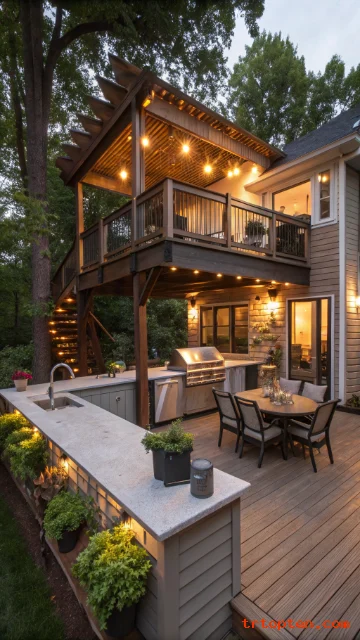
The outdoor kitchen deck positions cooking and dining areas on separate levels for efficient entertaining flow. The upper deck houses the grill, prep stations, and refrigeration units close to your indoor kitchen access. The lower deck becomes a dedicated dining space with tables and seating for family gatherings.
Weather-resistant cabinetry and countertops withstand outdoor conditions while providing ample storage for cooking essentials. A pergola or partial roof over the kitchen area protects appliances and chefs from direct sun and light rain. The separation between cooking and dining areas keeps smoke and heat away from your guests.
The two-level configuration allows multiple activities to occur simultaneously without crowding. This bi-level deck idea accommodates both casual family meals and larger social gatherings with ease. The outdoor kitchen becomes the heart of your outdoor living space, encouraging more frequent use of your deck.
Garden Terrace Bi-Level Deck
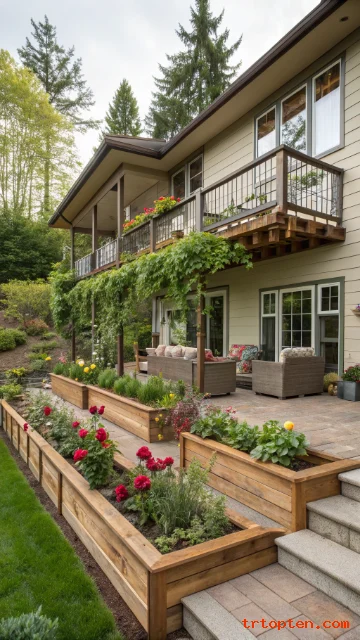
The garden terrace design integrates planting areas directly into your deck structure for a lush, natural aesthetic. Lower levels feature raised planter beds that connect your deck to the surrounding landscape. Upper levels provide viewing platforms where you can enjoy your garden from above.
Built-in planter boxes along railings and stairways add greenery without sacrificing valuable floor space. Trellises support climbing plants that create natural shade and privacy screens between deck sections. The integration of plants softens the hard surfaces of your deck, creating a more welcoming environment.
This bi-level house deck idea works wonderfully for homeowners who enjoy gardening and outdoor aesthetics. The terraced planting approach creates visual interest at every level of your outdoor space. Seasonal flowers and foliage ensure your deck remains colorful and engaging throughout the year.
Fire Pit Conversation Deck
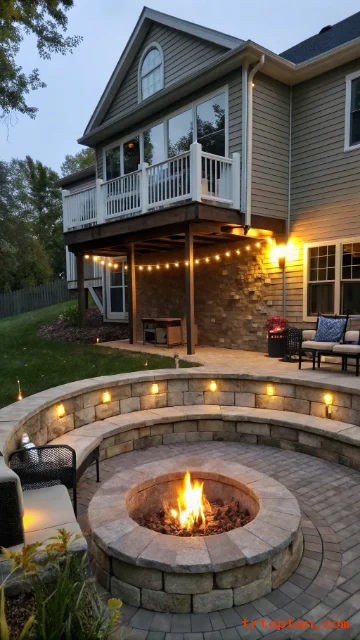
The fire pit deck creates a cozy gathering spot on the lower level of your bi-level outdoor space. A sunken fire pit area provides protection from wind while creating an intimate atmosphere for evening conversations. The upper deck serves as a viewing platform where guests can observe the fire from above.
Built-in seating around the fire pit maximizes space while ensuring everyone stays comfortably warm. Fire-resistant materials like stone or concrete surround the fire feature for safety and durability. The lower-level location keeps smoke away from upper deck activities and interior living spaces.
This bi-level deck idea transforms your outdoor space into a year-round entertainment destination. The fire pit becomes a natural gathering point that encourages social interaction and relaxation. Evening gatherings around the fire create lasting memories for family and friends.
Infinity Edge Bi-Level Deck
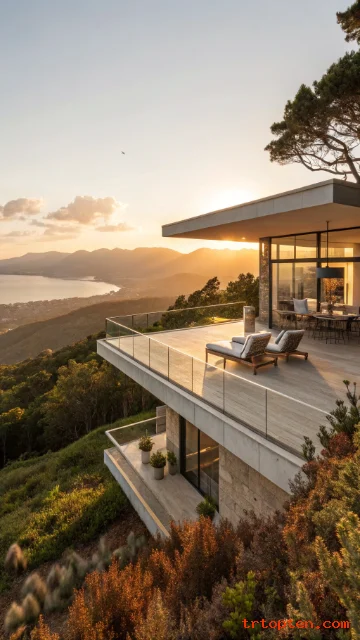
The infinity edge design creates the illusion that your deck extends infinitely into the surrounding landscape. This dramatic effect works best on properties with significant elevation changes or stunning views. The lower deck appears to float above the ground, blurring the boundary between built and natural environments.
Hidden drainage systems channel water away from the deck’s edge, maintaining the clean visual line. The upper deck provides a traditional viewing platform that complements the dramatic lower level. This design approach requires careful engineering and professional installation for proper execution.
The infinity edge concept works particularly well on bi-level homes with hillside or waterfront locations. This bi-level house deck idea creates a stunning visual statement that dramatically enhances your property’s value. The contemporary aesthetic appeals to homeowners seeking a truly unique outdoor living space.
Dual Staircase Deck Configuration
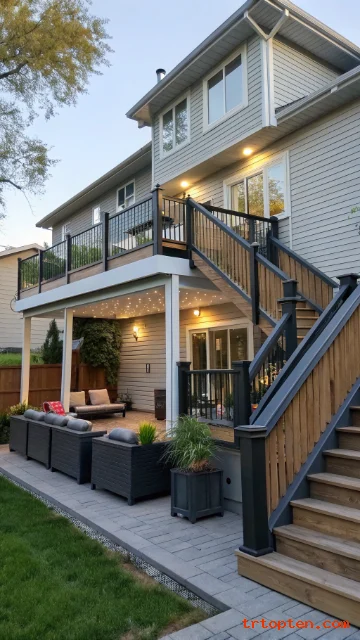
The dual staircase design provides separate access points to different areas of your bi-level deck. One staircase leads from the upper deck to the lower entertainment zone. The second staircase connects the lower deck directly to your garden or yard below.
This configuration improves traffic flow by preventing bottlenecks during gatherings. Guests can move freely between levels without crossing through active activity zones. The dual access points also provide convenient escape routes in case of emergency.
Each staircase can feature unique design elements like built-in planters or integrated lighting. The dual approach allows you to create distinct arrival experiences for different areas of your deck. This bi-level house deck idea enhances both functionality and safety of your outdoor space.
Pergola-Covered Upper Deck
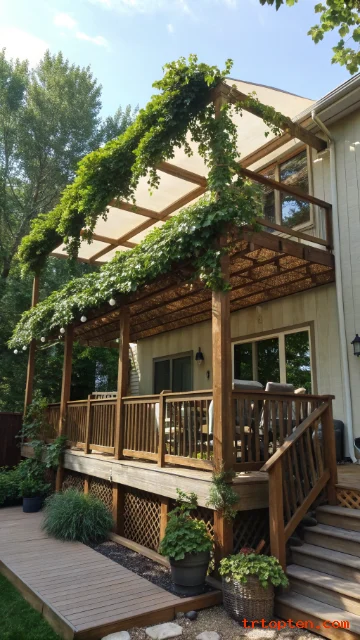
The pergola-covered upper deck creates a shaded retreat that protects you from harsh sun exposure. The open roof structure allows filtered light to create interesting shadow patterns throughout the day. Climbing vines can be trained over the pergola for additional shade and natural beauty.
The covered upper deck becomes a comfortable outdoor living room that extends your usable space. Retractable shade sails or curtains add flexibility to control light and privacy levels. The pergola structure provides attachment points for hanging plants, fans, and lighting fixtures.
This design approach makes your upper deck usable during the hottest parts of summer days. The lower deck remains open for sun-loving activities like sunbathing or gardening. This bi-level house deck idea offers the best of both shaded and sunny outdoor experiences.
Built-In Seating Bi-Level Deck
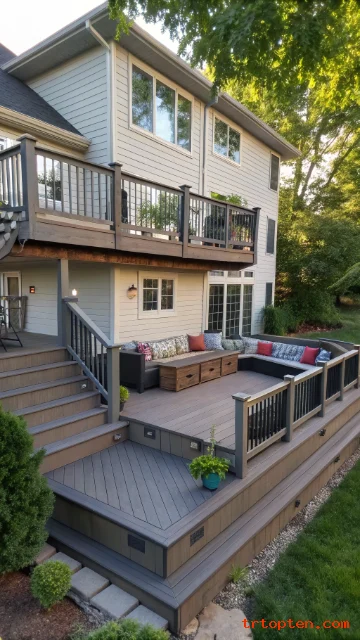
Built-in seating maximizes your deck’s usable space while eliminating the need for bulky furniture. Benches integrated along railings and walls provide ample seating without cluttering the deck surface. The lower level might feature L-shaped seating arrangements that create natural conversation groupings.
Storage compartments hidden beneath bench seats offer convenient space for cushions, gardening supplies, and outdoor games. The built-in approach ensures your seating remains in place during windy conditions. This design choice creates a clean, uncluttered look that emphasizes your deck’s architectural features.
The seating can be customized with backrests and armrests for optimal comfort. This bi-level house deck idea works particularly well for entertaining spaces where seating is a priority. The permanent nature of built-in seating adds structural value to your deck investment.
Water Feature Deck Integration
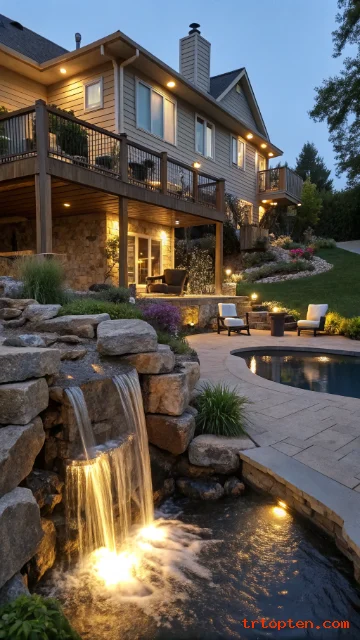
Water feature integration adds a soothing auditory element to your bi-level deck experience. A cascading waterfall flows from the upper deck level down to a reflection pool on the lower level. The sound of moving water creates a peaceful atmosphere that masks unwanted neighborhood noise.
Recirculating pump systems minimize water consumption while maintaining consistent flow. LED lighting illuminates the water feature at night, creating a dramatic focal point. The water element can be customized with natural stone or contemporary metal finishes.
The lower-level pool can double as a decorative fish pond or simply a reflective water surface. This bi-level house deck idea adds a resort-like quality to your outdoor space. The visual and auditory appeal of water enhances the overall deck experience significantly.
Multi-Level Play Deck
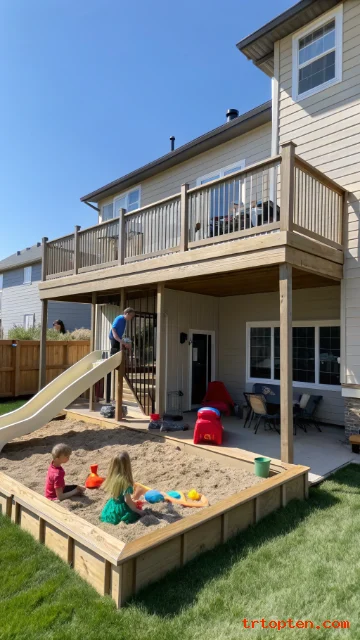
The play deck design creates dedicated zones for children’s activities on separate levels from adult entertaining spaces. The lower deck features safe, enclosed areas with soft surfaces for play equipment and games. The upper deck provides adult seating with sightlines to monitor children’s activities below.
Slides can be integrated into the deck structure, connecting upper and lower levels for added fun. Built-in sandboxes or water play areas occupy dedicated sections of the lower deck. The separation of play and relaxation zones ensures everyone enjoys their outdoor experience.
Safety railings and gates are essential components of this deck design. This bi-level house deck idea allows families to enjoy their outdoor space together while maintaining appropriate supervision. The multi-functional approach maximizes your deck’s value for families with children.
Outdoor Cinema Bi-Level Deck
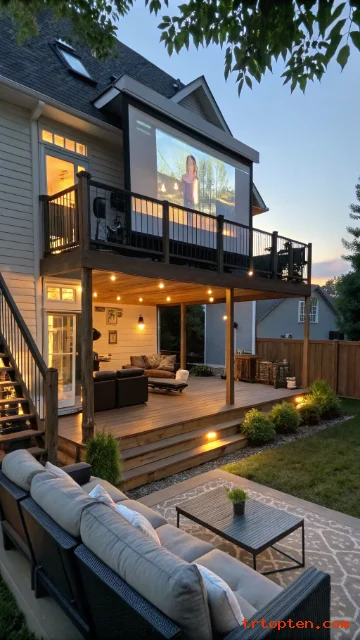
The outdoor cinema deck creates a dedicated entertainment zone for movie screenings under the stars. The upper deck houses a projector and sound system, projecting onto a retractable screen mounted below. The lower deck becomes tiered seating, providing everyone with unobstructed views of the screen.
Comfortable outdoor seating with cushions enhances the movie-watching experience. The lower-level configuration prevents noise from disturbing upper deck activities or interior living spaces. Outdoor speakers deliver quality sound while minimizing disturbance to neighbors.
This bi-level deck idea transforms your outdoor space into a summer entertainment destination. Movie nights become memorable events that bring family and friends together. The dedicated cinema setup encourages more frequent outdoor gatherings.
Solar-Powered Bi-Level Deck
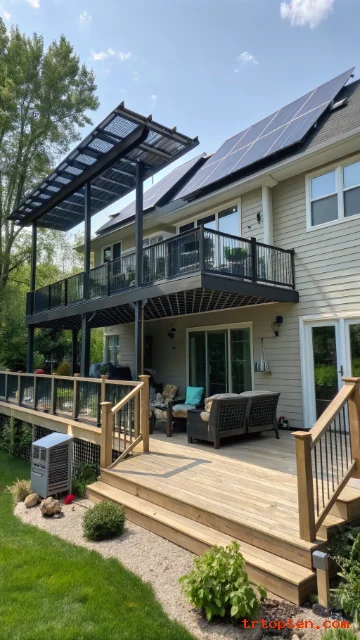
Solar-powered deck design integrates renewable energy generation into your outdoor living space. Photovoltaic panels mounted on pergolas or railings provide clean electricity for lighting and appliances. The upper deck might feature solar panels that also provide shade for the lower level below.
Battery storage systems ensure consistent power availability during evening hours. LED lighting powered by solar energy creates beautiful nighttime ambiance without increasing utility costs. The lower deck can feature solar-powered water features or charging stations for devices.
This environmentally conscious approach reduces your carbon footprint while providing modern convenience. This bi-level house deck idea appeals to homeowners interested in sustainable living. The solar integration adds value through reduced energy costs and environmental benefits.
Tropical Oasis Bi-Level Deck
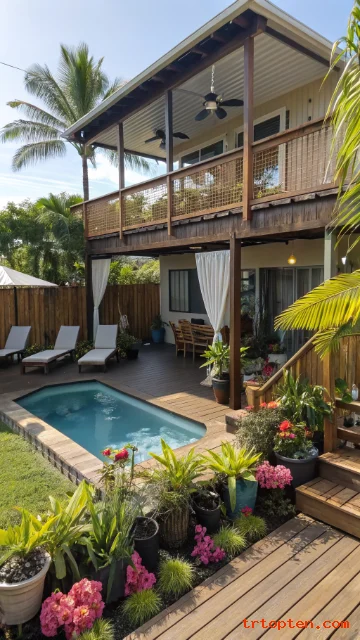
The tropical oasis design transforms your bi-level deck into a lush, exotic retreat. The lower deck features a plunge pool surrounded by tropical plants and comfortable loungers. The upper deck provides shaded seating areas with ceiling fans and outdoor curtains for a resort-like feel.
Large potted palms and flowering tropical plants create privacy and visual interest at every level. Bamboo screens provide privacy without blocking cooling breezes. The tropical theme extends to furniture, accessories, and lighting choices throughout the deck.
This bi-level house deck idea works wonderfully in warm climates where outdoor living is possible year-round. The exotic atmosphere provides a daily escape from routine stresses. The tropical theme creates a unique outdoor experience that enhances your quality of life.
Rustic Lodge Bi-Level Deck
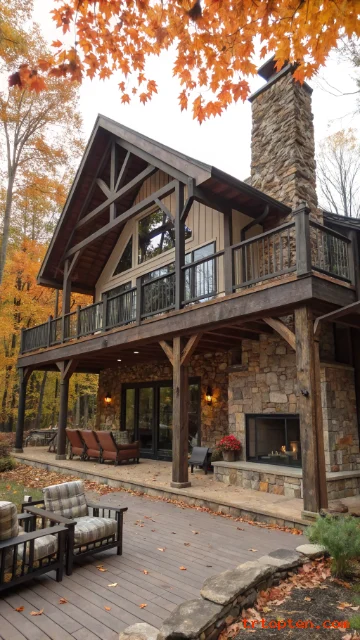
The rustic lodge design uses natural materials to create a warm, cabin-like atmosphere on your bi-level deck. Heavy timber framing and rough-sawn decking materials evoke the feel of a mountain retreat. The lower deck might feature a large stone fireplace with built-in wood storage.
Exposed beams and post-and-beam construction add architectural interest and visual warmth. The rustic aesthetic incorporates natural stone, reclaimed wood, and wrought iron accents. The upper deck could feature a covered hot tub area with timber framing for added coziness.
This bi-level house deck idea appeals to homeowners who love outdoor living and natural materials. The rustic theme works particularly well on properties with wooded surroundings. The warm ambiance encourages relaxation and connection with nature.
Contemporary Minimalist Deck
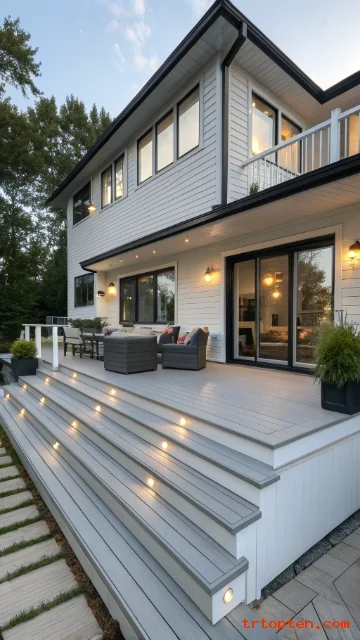
The contemporary minimalist design emphasizes clean lines and simple forms for a sophisticated look. The lower deck features a single material palette with seamless transitions between indoor and outdoor spaces. The upper deck provides a viewing platform with integrated seating and storage.
Hidden hardware and lighting fixtures maintain the clean aesthetic without visual clutter. Monochromatic color schemes with subtle texture variations create visual interest. The minimalist approach eliminates unnecessary decoration, focusing on form and function.
This bi-level house deck idea creates a calm, organized outdoor space that complements modern architecture. The clean design requires less maintenance than more decorative alternatives. The contemporary aesthetic appeals to homeowners seeking a sophisticated outdoor environment.
Wildlife Observation Deck
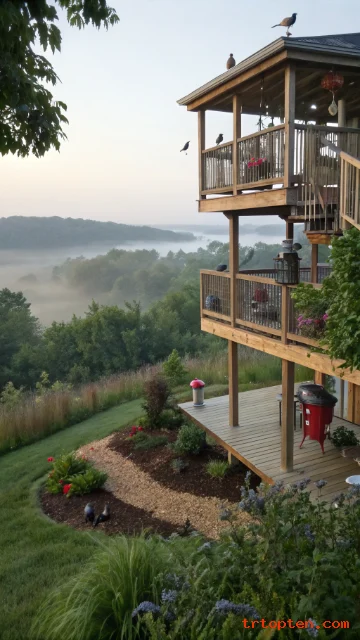
The wildlife observation deck positions you to enjoy nature from the comfort of your outdoor space. The lower deck provides cover and shelter for observing birds and animals from a respectful distance. The upper deck offers panoramic views of natural surroundings and wildlife activity.
Built-in feeders and birdbaths attract wildlife to viewing areas without interfering with your comfort. The design incorporates natural materials that blend with the surrounding environment. The deck’s location takes advantage of natural wildlife corridors and feeding areas.
This bi-level house deck idea appeals to nature enthusiasts and photography lovers. The observation setup encourages appreciation of local wildlife and natural ecosystems. The outdoor space becomes a daily source of wonder and connection to nature.
Multi-Purpose Workout Deck
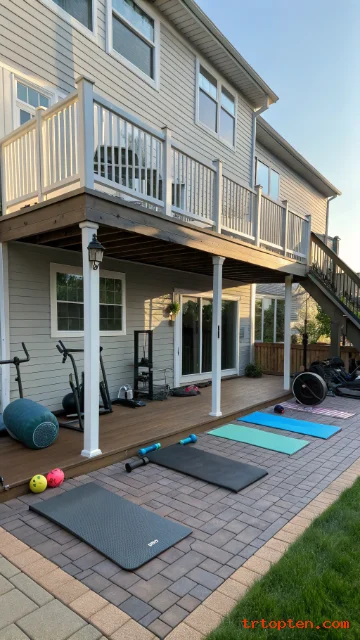
The workout deck design converts your bi-level outdoor space into a functional fitness area. The lower deck provides level surfaces for yoga, stretching, and bodyweight exercises. The upper deck might feature built-in equipment like pull-up bars and resistance training stations.
Shaded areas on the lower deck protect you from direct sun during intense workouts. Weather-resistant flooring materials provide safe, non-slip surfaces for exercise activities. The open-air setting energizes workouts while providing fresh air and natural light.
This bi-level house deck idea promotes health and wellness while maximizing outdoor space usage. The workout area encourages regular exercise in a pleasant environment. The fitness focus adds functional value to your deck investment.
Entertainment Bar Deck
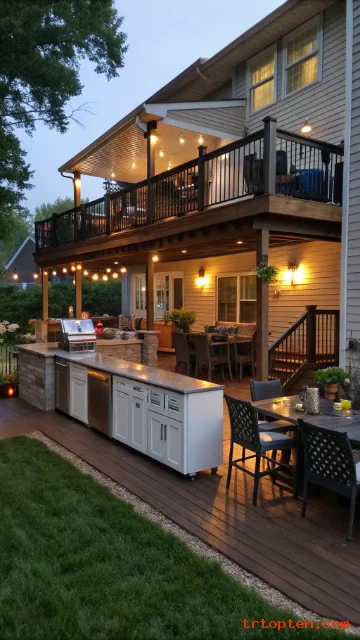
The entertainment bar deck creates a dedicated social hub on your bi-level outdoor space. The lower deck features a full bar with seating, refrigerator, and storage for beverages and glassware. The upper deck provides additional seating and dining areas for social gatherings.
The bar area incorporates weather-resistant materials and proper drainage for easy cleanup. Bar-style seating encourages conversation and social interaction among guests. The lower-level bar serves as a natural gathering point for parties and casual get-togethers.
This bi-level house deck idea transforms your outdoor space into a premier entertainment destination. The dedicated bar area encourages hosting and social events. The entertainment focus adds significant enjoyment value to your deck.
Zen Garden Deck
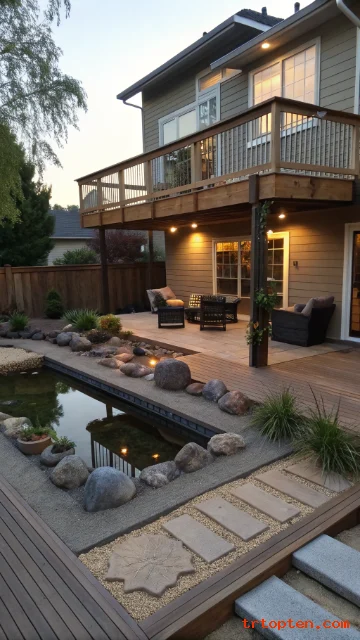
The Zen garden deck combines Japanese garden principles with functional outdoor living space. The lower deck features a meditation area with comfortable seating and a small reflecting pool. The upper deck offers a viewing platform overlooking a carefully arranged dry garden and rock formations.
Raked sand patterns and carefully placed stones create visual interest and promote relaxation. The minimalist design emphasizes natural materials and simple, clean lines. The Zen aesthetic encourages mindfulness and peace in your outdoor environment.
This bi-level house deck idea transforms your outdoor space into a sanctuary of calm. The meditative atmosphere provides an escape from daily stress. The Japanese-inspired design adds cultural and aesthetic depth to your property.
Year-Round Bi-Level Deck
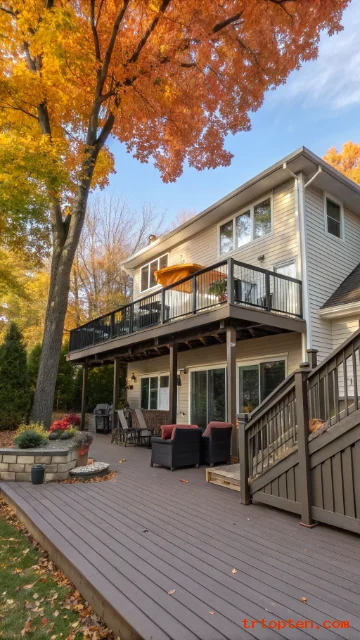
The year-round design incorporates features that make your deck usable in all seasons. The lower deck includes protected areas with weather-resistant heating elements and windbreaks. The upper deck features retractable covers that provide protection from rain and snow.
Insulated flooring options and outdoor-rated heating ensure comfort in cooler weather. The design accommodates seasonal changes in sun angle and temperature variation. Proper drainage and materials resistant to freeze-thaw cycles extend the deck’s lifespan.
This bi-level house deck idea maximizes your investment by providing usable space throughout the year. The all-weather capabilities encourage more consistent outdoor living. The year-round functionality adds practical value to your home.
What is the best material for bi-level house decks?
Composite decking materials offer excellent durability and low maintenance for bi-level decks. Pressure-treated wood provides a more affordable option but requires regular sealing and maintenance. Premium hardwood options like Ipe offer natural beauty and exceptional longevity for high-end projects.
How much does a bi-level deck typically cost?
Bi-level deck costs vary significantly based on size, materials, and complexity of design. Basic wood construction typically ranges from $35 to $50 per square foot installed. Premium materials and complex features can drive costs above $100 per square foot.
Do I need permits for a bi-level deck?
Most municipalities require building permits for any deck construction project. Bi-level designs often need additional structural review due to increased complexity. Contacting your local building department early ensures you meet all safety and zoning requirements.
How long does it take to build a bi-level deck?
Basic bi-level deck construction typically takes two to four weeks from start to finish. Complex designs with integrated features may require six weeks or more for proper installation. Weather conditions and material availability can significantly affect construction timelines.
Can I build a bi-level deck on a steep slope?
Yes, bi-level decks work exceptionally well on steep slopes, maximizing usable outdoor space. Special foundation techniques like helical piles or concrete piers provide stable support on challenging terrain. Professional engineering consultation ensures safe and effective construction.
What is the best railing option for bi-level decks?
Glass railings offer unobstructed views and modern aesthetics for elevated deck sections. Cable railings provide minimal visual obstruction while maintaining safety requirements. Traditional wood railings offer classic styling and cost-effective solutions for any budget.
How do I maintain my bi-level deck?
Regular cleaning and inspection prevent costly repairs and extend your deck’s lifespan. Wood decks require annual sealing or staining to protect against moisture and UV damage. Composite decks need periodic cleaning with appropriate products to maintain their appearance.
What type of lighting works best for bi-level decks?
LED lighting offers energy efficiency and long-lasting performance for deck illumination. Step lights and rail lights improve safety on multiple levels during evening hours. String lights and accent lighting create ambiance for social gatherings and relaxation.
Can I add a hot tub to my existing bi-level deck?
Yes, but you must have a structural engineer evaluate your deck’s load capacity first. Hot tubs weigh thousands of pounds when filled with water, requiring proper reinforcement. Professional installation ensures safety and compliance with building codes.
How do I choose between wood and composite materials?
Wood offers natural beauty and lower initial cost but requires regular maintenance. Composite materials provide longer durability and minimal maintenance at a higher price point. Consider your lifestyle, budget, and willingness to maintain your deck when choosing materials.
Conclusion
These 25 bi-level house deck ideas demonstrate the incredible potential of split-level outdoor spaces for modern living. From entertainment hubs to peaceful retreats, each concept offers unique advantages that enhance your property’s functionality and beauty.