
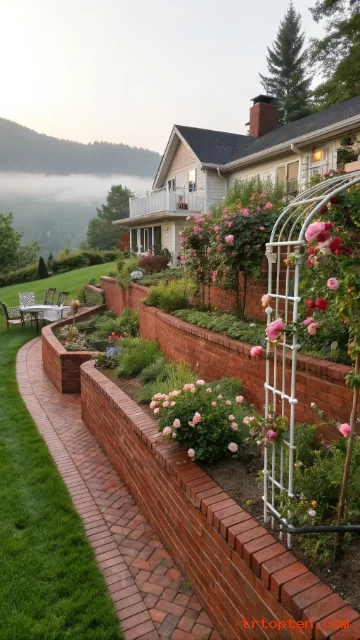
The right 24 sloped backyard retaining wall ideas can turn a difficult hill into a safe, useful, and beautiful outdoor space.
A retaining wall can hold soil, create flat areas, guide water, and add strong visual structure to your backyard.
Natural Stone Retaining Wall
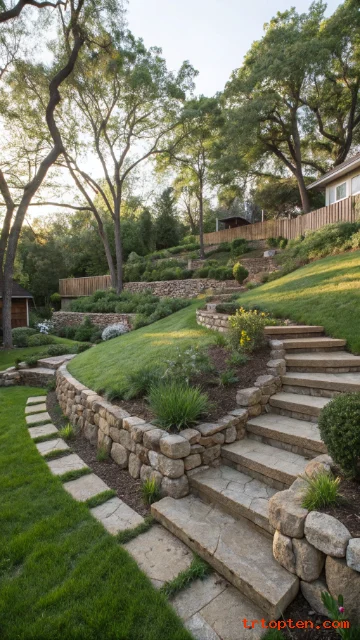
A natural stone retaining wall gives a sloped backyard a timeless and grounded look. The stones blend with grass, shrubs, trees, and garden beds, so the wall feels like part of the landscape.
You can use large irregular stones for a rustic style or cut stone blocks for a cleaner design. This wall works well when you want strength, texture, and a natural finish in one feature.
Natural stone also ages well because moss, lichen, and weather marks add character over time. Use drainage gravel behind the wall, so water does not build pressure behind the stones.
Tiered Retaining Wall With Garden Beds
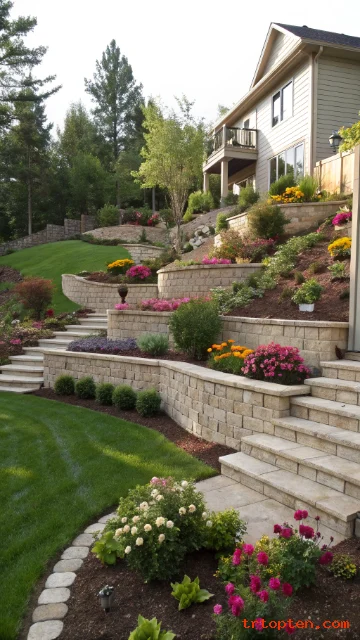
A tiered retaining wall divides a steep backyard into several flat planting levels. Each level can hold flowers, herbs, shrubs, or small trees, which gives the yard depth and color.
This design works well for homeowners who want a garden but have limited flat ground. The tiers slow water runoff and make the slope easier to manage.
Use matching materials across all levels to create a clean and connected look. Add mulch and drip irrigation to keep the planting beds healthy with less daily care.
Concrete Block Retaining Wall
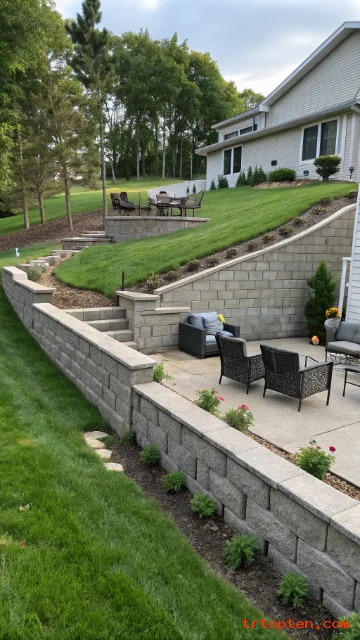
A concrete block retaining wall gives a sloped backyard a clean and sturdy structure. The blocks create straight lines, so the space looks organized and easy to maintain.
This wall suits a modern backyard, but it also works with simple traditional homes. You can choose gray, tan, charcoal, or textured blocks to match your outdoor style.
Concrete blocks need a strong base and proper drainage for long-term performance. Add capstones on top to create a finished edge that looks polished.
Timber Retaining Wall
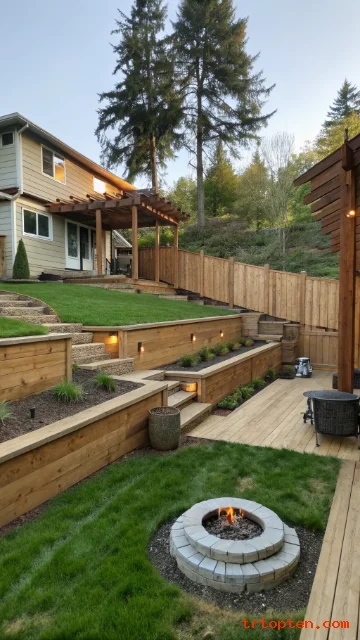
A timber retaining wall adds warmth to a sloped backyard. The wood creates a casual and natural look that works well near decks, fire pits, and play areas.
Pressure-treated timber, cedar, and railroad-tie-style beams are common choices. The design feels simple, but the wall still needs drainage and secure anchoring.
This idea works best for low to medium wall heights. Stain the wood in a warm brown or soft black tone to match fences, pergolas, or deck boards.
Gabion Basket Retaining Wall
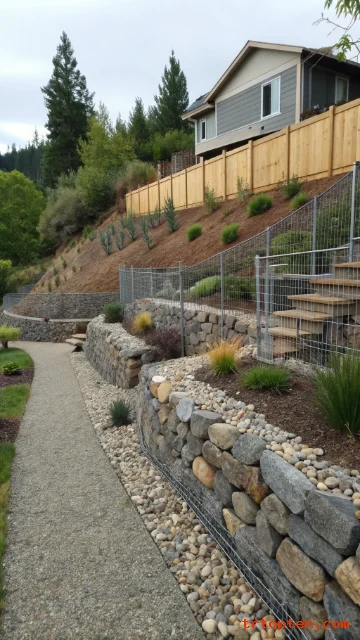
A gabion retaining wall uses wire baskets filled with rocks. The design looks bold, textured, and strong, which makes it a great choice for steep backyard slopes.
Gabion walls drain water well because gaps between the stones allow water to pass through. This feature can reduce pressure behind the wall and support better slope control.
You can fill the baskets with river rock, crushed stone, or recycled concrete pieces. Pair the wall with ornamental grasses to soften the industrial look.
Curved Retaining Wall
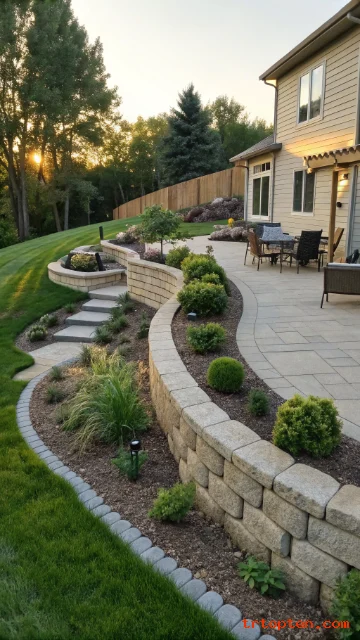
A curved retaining wall softens the shape of a sloped backyard. The curve guides the eye across the landscape and makes the yard feel more relaxed.
This idea works well around patios, seating areas, pools, and garden beds. Curves also help the wall follow the natural slope instead of fighting against it.
Use stone, concrete blocks, or brick to build a clean curve. Add low plants along the base to make the wall feel connected to the ground.
Retaining Wall With Built-In Steps
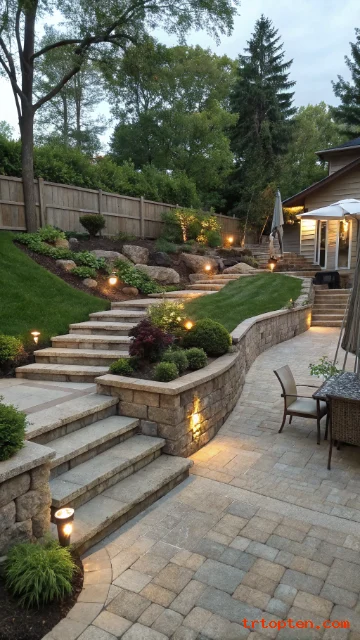
A retaining wall with built-in steps makes a sloped backyard easier to use. The steps connect upper and lower levels, so people can move through the yard safely.
This design also gives the slope a clear path and a finished look. Use stone steps for a natural style or concrete steps for a clean modern style.
Lighting along the steps improves safety after sunset. Add plants beside the steps to soften hard edges and create a welcoming path.
Retaining Wall With Seating
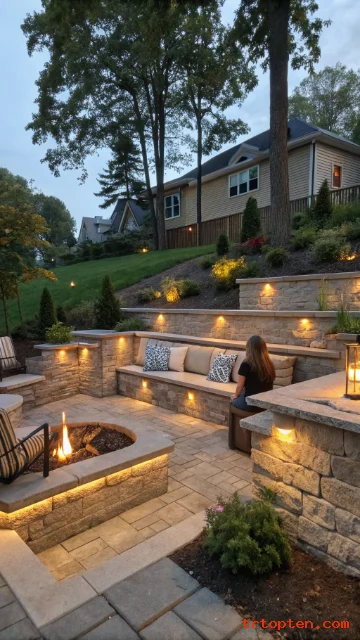
A retaining wall with built-in seating saves space and adds function. The wall holds the slope while the seat creates a place to relax, gather, or watch kids play.
This idea works well near patios, fire pits, and outdoor dining areas. A wide capstone or smooth concrete top can turn the wall into a bench.
Add cushions for comfort, but choose weather-resistant fabrics. Keep the seat height comfortable, so guests can use it without strain.
Boulder Retaining Wall
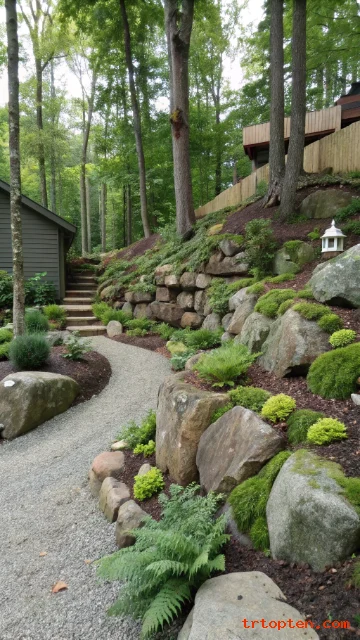
A boulder retaining wall creates a bold and natural look on a sloped backyard. Large rocks hold soil while giving the yard a rugged outdoor feel.
This wall suits woodland homes, mountain homes, and rustic garden designs. The boulders look best when their sizes and shapes vary in a natural pattern.
Plant creeping ground cover between some stones to soften the design. Use heavy equipment and expert placement for large boulders because weight and stability matter.
Brick Retaining Wall
A brick retaining wall adds classic charm to a sloped backyard. The brick pattern brings warmth, order, and texture to the landscape.
This design works well with traditional homes, cottage gardens, and older properties. Red brick feels timeless, while tan or painted brick can feel softer and brighter.
Use a proper footing because brick walls need stable support. Add a stone or concrete cap to protect the top from weather damage.
Retaining Wall With a Water Feature
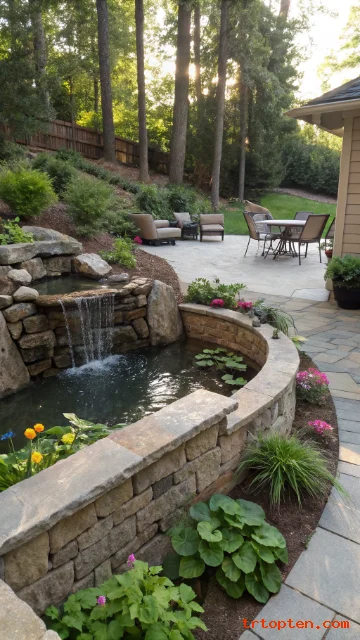
A retaining wall with a water feature turns a slope into a focal point. Water can flow from the wall into a small pond, basin, or narrow channel.
This idea adds movement and sound to the backyard. The gentle water noise can make a seating area feel calm and private.
Use waterproofing, pumps, and proper drainage to protect the wall. Add stones and moisture-loving plants around the base for a natural finish.
Modern Smooth Concrete Retaining Wall
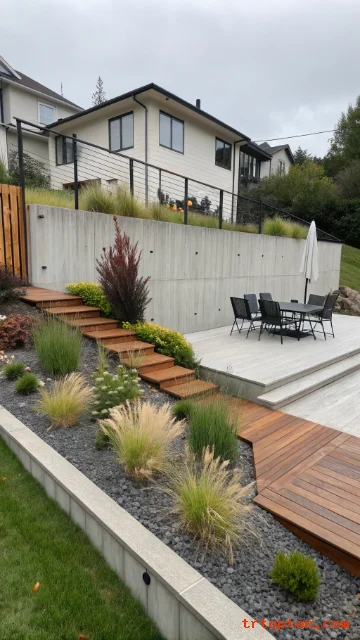
A smooth concrete retaining wall gives a sloped backyard a sleek and simple look. The flat surface creates a clean backdrop for plants, furniture, and lighting.
This wall fits modern homes with large windows, patios, and straight lines. It also works well with gravel, steel edging, and minimalist planting.
Concrete can look cold without soft details, so add grasses, vines, or warm wood accents. Use control joints and drainage to help the wall perform well over time.
Retaining Wall With Raised Planters
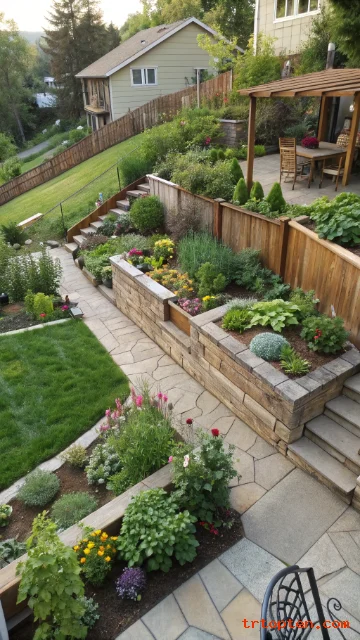
A retaining wall with raised planters gives a sloped backyard more growing space. The planters can hold flowers, vegetables, herbs, or small shrubs.
This design works well when the soil on the slope is poor or hard to access. Raised beds give plants better soil depth and easier care.
Use the same material for the wall and planters to keep the layout cohesive. Add a drip system to water each planter with less waste.
Dry Stack Retaining Wall
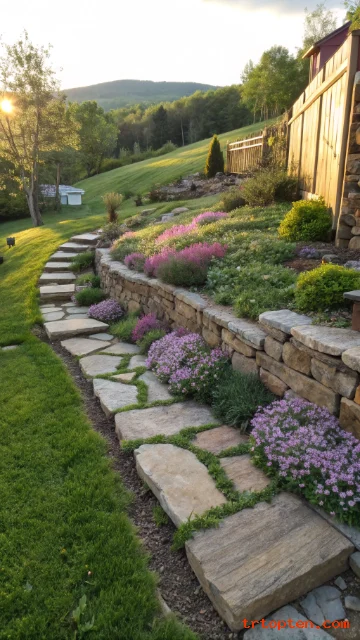
A dry stack retaining wall uses stones without visible mortar. The result feels natural, handmade, and relaxed.
This wall works best for lower slopes and garden edges. The small gaps between stones help drainage and allow tiny plants to grow.
Choose flat stones that stack securely and sit level. Add gravel behind the wall to reduce soil pressure and improve water movement.
Retaining Wall With Privacy Planting
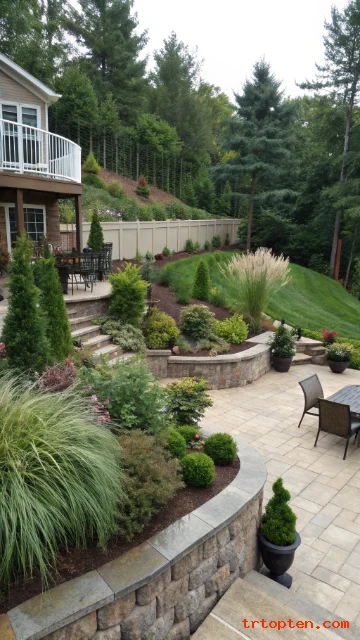
A retaining wall with privacy planting solves two backyard problems at once. The wall holds the slope, and the plants block views from neighbors.
Use tall grasses, evergreen shrubs, bamboo alternatives, or small trees above the wall. This creates a layered screen that feels green instead of heavy.
Choose plants with roots that suit retaining wall areas. Avoid large trees too close to the wall because strong roots can create pressure later.
Corten Steel Retaining Wall
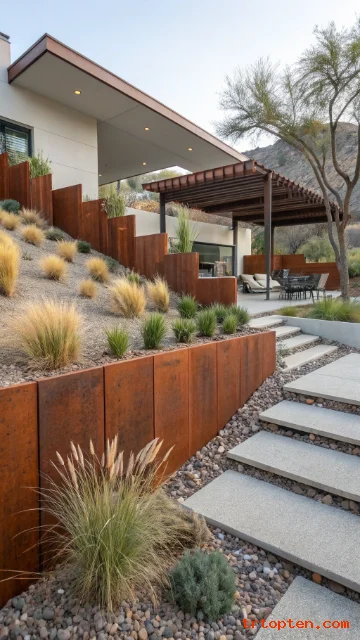
A Corten steel retaining wall adds a bold and modern edge to a sloped backyard. The warm rust color contrasts well with green plants, gravel, and concrete.
This wall suits contemporary homes and desert-style landscapes. The steel panels create thin, clean lines that save space on tight slopes.
Corten steel develops a protective weathered surface over time. Use it with grasses, succulents, and stone mulch for a low-maintenance yard.
Retaining Wall Around a Patio
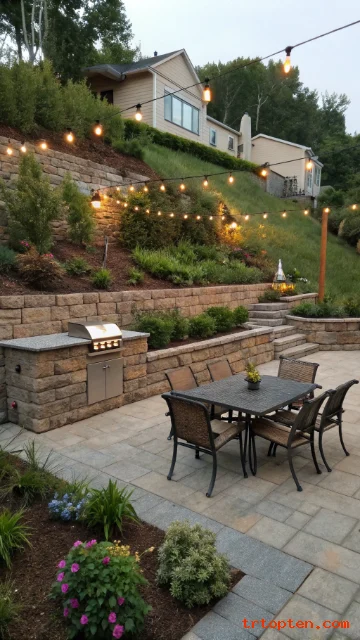
A retaining wall can carve a flat patio into a sloped backyard. The wall holds the hillside while the patio creates a stable space for seating, dining, or grilling.
This idea can make a small sloped yard feel much more useful. The patio becomes a clear outdoor room instead of leftover space.
Use pavers, stone, or concrete for the patio floor. Add wall lights and planters to make the area feel complete.
Retaining Wall With Landscape Lighting
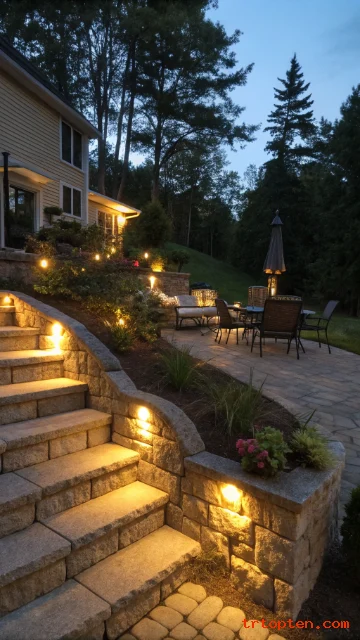
A retaining wall with landscape lighting looks beautiful at night and safer after dark. Lights can highlight stone texture, steps, plants, and pathways.
Use low-voltage lights under capstones or at the base of the wall. This creates a soft glow without making the yard feel harsh.
Lighting also helps guests move through a sloped backyard with confidence. Place lights near steps, turns, and seating areas for the best effect.
Retaining Wall With a Fire Pit Area
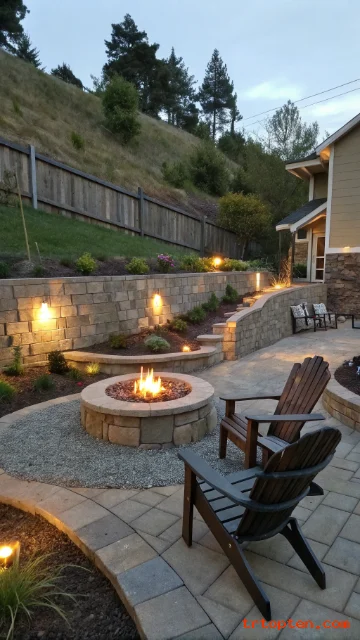
A retaining wall can frame a fire pit area on a sloped backyard. The wall holds back soil and gives the fire pit zone a cozy enclosed feel.
This idea works well when the lower yard has room for chairs and a circular seating layout. The wall can also act as extra seating with a wide cap.
Use fire-safe materials near the pit and keep plants at a safe distance. Gravel, pavers, and stone work well because they handle heat better than mulch.
Retaining Wall With a Lawn Terrace
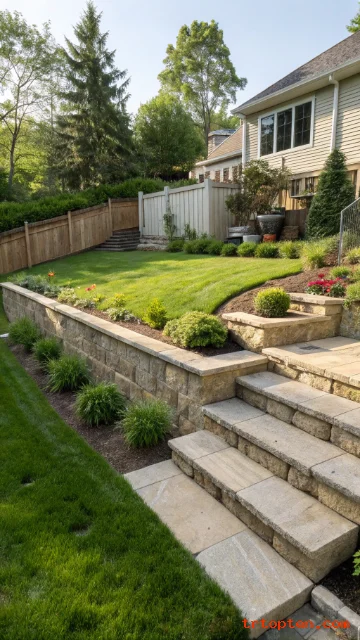
A retaining wall with a lawn terrace creates flat green space on a slope. This design gives kids, pets, and guests a safer area to use.
The wall holds the upper soil while the terrace creates a clean open zone. It also makes mowing and yard care easier than working on a steep incline.
Use turf, edging, and simple planting beds to keep the terrace neat. Add steps or a path so the terrace connects well with the rest of the yard.
Retaining Wall With Gravel Garden
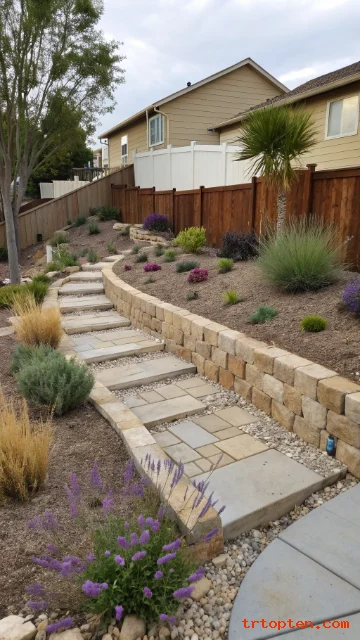
A retaining wall with a gravel garden creates a clean and low-care backyard design. Gravel controls weeds, improves drainage, and gives the slope a crisp finish.
This idea works well in dry climates or busy households. Pair gravel with drought-tolerant plants like lavender, yucca, sedum, or ornamental grass.
Use metal edging to keep gravel from spreading into lawn or pathways. Choose stone colors that match the retaining wall for a balanced look.
Retaining Wall With Terraced Vegetable Garden
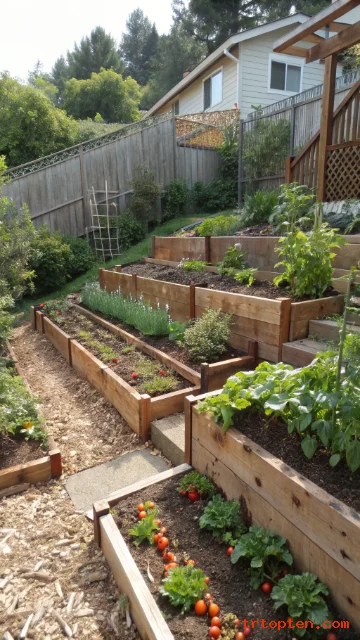
A terraced vegetable garden turns a sloped backyard into a productive space. Retaining walls create flat beds where vegetables can grow with better soil and drainage.
This idea works well for tomatoes, peppers, lettuce, herbs, beans, and strawberries. The terraces also make planting and harvesting easier because each bed has clear access.
Use safe materials for edible garden beds and avoid treated wood that can leach unwanted chemicals. Add compost, mulch, and irrigation to support steady growth.
Retaining Wall With Flowering Shrubs
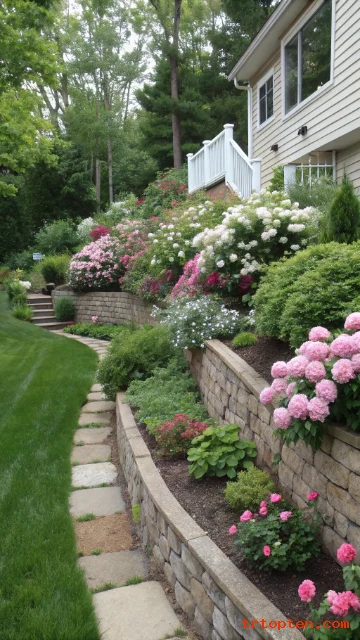
A retaining wall with flowering shrubs brings color and structure to a sloped backyard. Shrubs can soften the wall and make the slope look full instead of bare.
Use hydrangeas, roses, spirea, azaleas, or native flowering shrubs based on your climate. Mix bloom times so the yard has color across more than one season.
Plant taller shrubs behind the wall and lower flowers near the front. This layered layout helps the retaining wall feel like part of a designed garden.
Mixed Material Retaining Wall
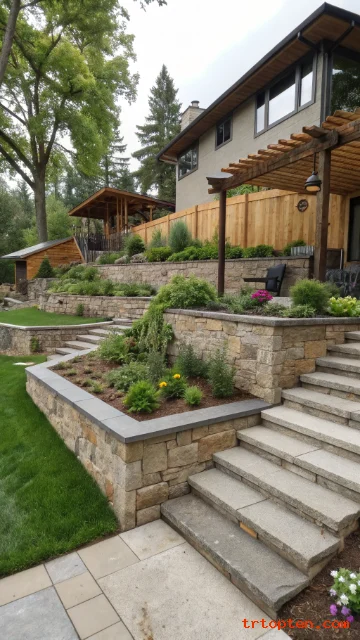
A mixed material retaining wall creates a custom look for a sloped backyard. You can combine stone, wood, concrete, steel, brick, or gravel for strong contrast.
This idea works well when your home uses more than one exterior material. Match the wall materials to the house, deck, fence, or patio for a connected design.
Keep the color palette simple so the wall does not feel busy. Use one main material and one accent material for the cleanest result.
What is the best retaining wall for a sloped backyard?
The best retaining wall depends on the slope height, soil type, drainage, budget, and design style. Stone, concrete block, timber, gabion, and poured concrete can all work well when the wall has a strong base and proper drainage.
Do I need drainage behind a retaining wall?
Yes, most retaining walls need drainage behind them. Gravel, drainage pipe, and weep holes help move water away from the wall and reduce pressure.
How high can a backyard retaining wall be?
Many small garden retaining walls stay under 3 or 4 feet, but local rules can vary. Taller walls often need permits, engineering, and professional installation.
What is the cheapest retaining wall idea for a sloped yard?
Timber, concrete blocks, and some dry stack stone walls can cost less than custom stone or poured concrete. The final cost depends on wall height, access, drainage, labor, and material prices.
Can I build a retaining wall myself?
You can build a small low retaining wall yourself if the slope is gentle and the soil conditions are simple. Hire a professional for tall walls, steep slopes, poor drainage, or walls near structures.
What plants work well near retaining walls?
Ornamental grasses, creeping ground covers, lavender, sedum, small shrubs, and native plants often work well near retaining walls. Choose plants with root systems that support the soil without damaging the wall.
How do I make a retaining wall look attractive?
You can add capstones, lighting, steps, plants, seating, or a water feature. A clean layout and repeated materials can make the retaining wall look planned instead of purely functional.
Can a retaining wall stop erosion?
A retaining wall can help control erosion by holding soil in place and slowing runoff. The wall must include drainage and stable construction to work well over time.
What is the best retaining wall idea for a small sloped backyard?
A tiered wall, curved wall, or wall with built-in seating can work well in a small sloped backyard. These designs save space while adding function and style.
Conclusion
These 24 sloped backyard retaining wall ideas show how a steep yard can become useful, safe, and beautiful.
A good retaining wall does more than hold soil because it can create patios, garden beds, steps, seating, privacy, and outdoor rooms.