
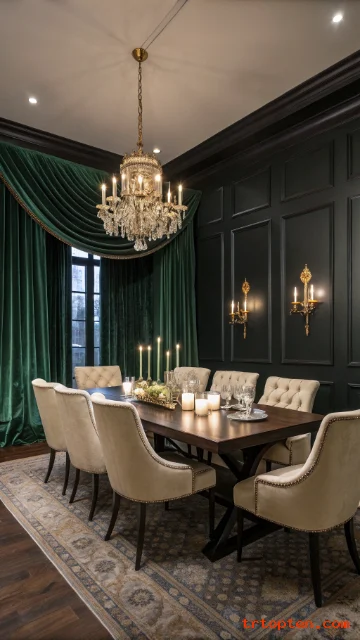
Dining room windows shape the mood of the whole space. These 25 dining room window covering ideas will help you control light, add privacy, and make your dining area feel warm, stylish, and finished.
Soft Linen Curtains for a Relaxed Dining Room
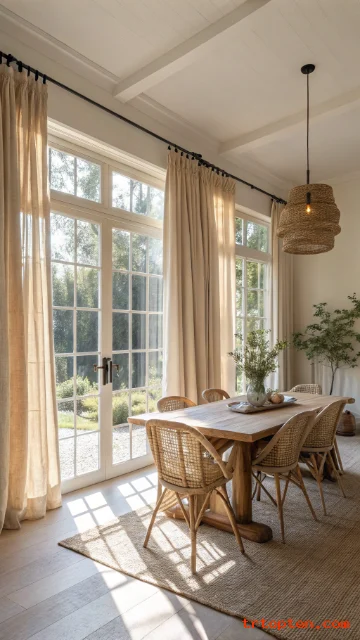
Soft linen curtains give a dining room a calm and airy look. They filter sunlight without making the room feel dark or heavy.
Choose neutral linen panels in white, beige, oatmeal, or light gray for a clean style. Hang the curtain rod high above the window to make the ceiling look taller.
Linen works well with wood tables, woven chairs, and simple dinnerware. It creates a natural setting that feels comfortable for daily meals and small gatherings.
Floor-Length Drapes for a Formal Look
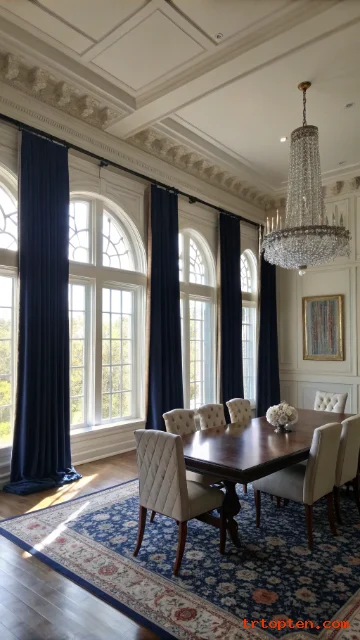
Floor-length drapes make a dining room feel elegant and polished. They add height, softness, and a sense of structure to the space.
Choose heavier fabrics like velvet, cotton blend, or lined polyester for a more refined look. Use rich colors like navy, charcoal, forest green, or warm taupe.
This idea works well in traditional, transitional, and luxury dining rooms. Pair the drapes with a chandelier and a large rug for a complete design.
Sheer White Curtains for Soft Light
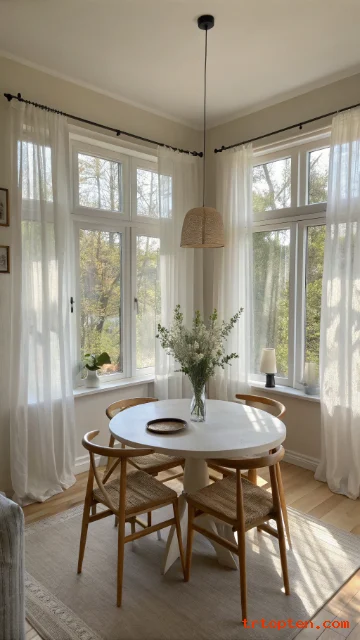
Sheer white curtains help sunlight enter the dining room in a gentle way. They soften harsh glare and create a bright, open feeling.
Use them in rooms that do not need full privacy during the day. Layer them with blackout panels if the dining room faces a street or neighbor’s window.
Sheers look best when they are full and slightly gathered. Choose extra-wide panels so the window does not look thin or unfinished.
Roman Shades for a Tailored Finish
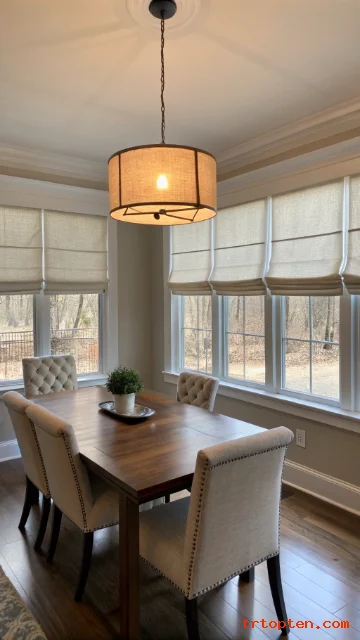
Roman shades give dining room windows a clean and custom look. They fold neatly when raised and create soft fabric lines when lowered.
Choose flat Roman shades for a modern room and relaxed Roman shades for a softer style. Use linen, cotton, or patterned fabric to match your dining room colors.
Roman shades work well on single windows, bay windows, and narrow dining room windows. They keep the window area neat without taking up wall space.
Bamboo Shades for Natural Texture
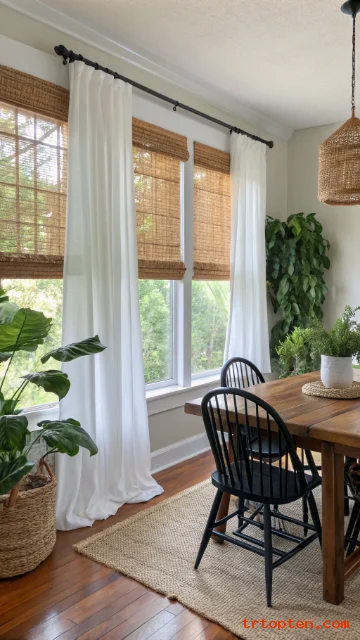
Bamboo shades bring warmth and texture to a dining room. They look natural, casual, and stylish without feeling too busy.
Use bamboo shades with white walls, wood furniture, and green plants. The woven texture adds depth and helps the room feel less flat.
For more privacy, choose lined bamboo shades. For a softer layered look, pair them with plain curtain panels on both sides.
Cafe Curtains for Charming Privacy
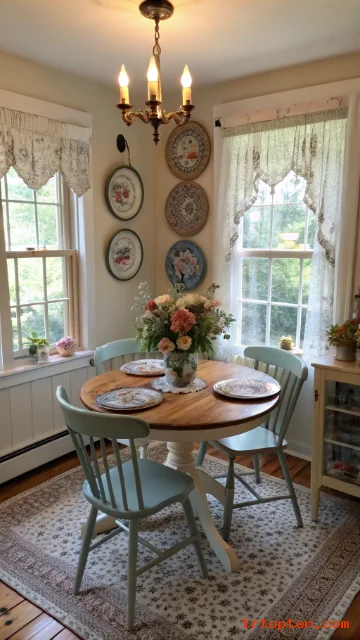
Cafe curtains cover the lower half of the window and leave the top open. They give privacy while still allowing daylight to enter the room.
This style works well in breakfast nooks, cottage dining rooms, and casual eating areas. Use cotton, linen, gingham, or small floral prints for a cozy look.
Cafe curtains feel friendly and relaxed. They also work well when the dining room faces a sidewalk or close neighbor.
Wooden Blinds for Classic Control
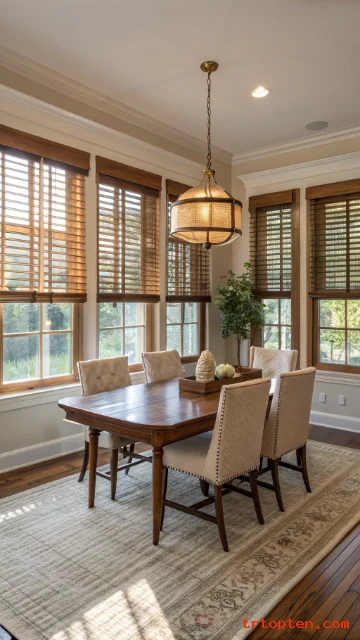
Wooden blinds give you strong control over light and privacy. You can tilt the slats to block glare while keeping the room bright.
Choose real wood for a warm, premium look or faux wood for better moisture resistance. Match the blind color to the dining table or floor for a connected design.
Wooden blinds suit farmhouse, coastal, traditional, and modern dining rooms. They look simple when closed and sharp when raised.
Black Window Shades for Bold Contrast
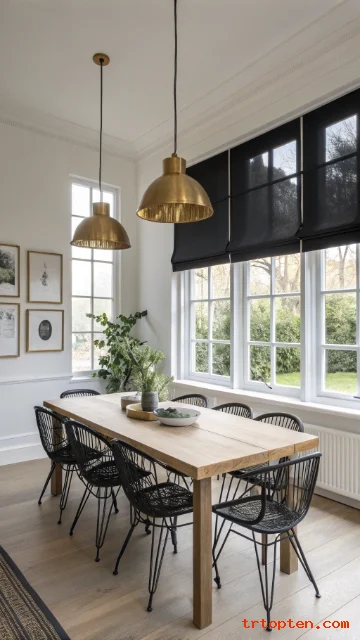
Black window shades create a bold and modern dining room style. They add contrast against white walls and make the window area stand out.
Use black roller shades, Roman shades, or woven shades for this look. Keep the rest of the room balanced with wood, white, beige, or brass details.
This idea works best in modern, industrial, and contemporary dining rooms. It gives the space a strong frame without adding clutter.
Patterned Curtains for Personality
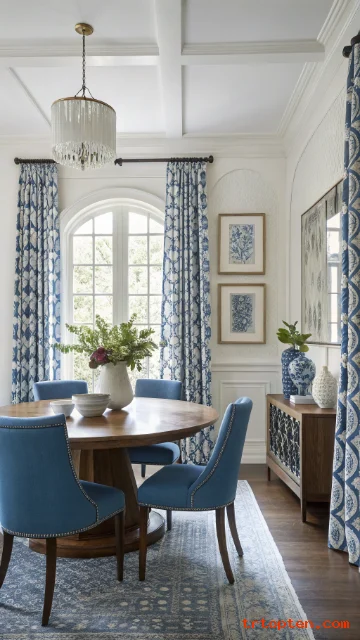
Patterned curtains help a dining room feel lively and personal. They can bring color, movement, and character into a plain space.
Choose small patterns for a subtle look and large patterns for a stronger statement. Floral, stripe, geometric, and block-print designs all work well.
Pull one or two colors from the curtain pattern and repeat them in the rug, art, or table decor. This makes the dining room feel planned and balanced.
Velvet Drapes for a Luxe Dining Space
Velvet drapes add depth, softness, and drama to a dining room. They work especially well in spaces used for dinner parties and evening meals.
Choose jewel tones like emerald, sapphire, burgundy, or deep plum for a rich effect. Use lighter velvet shades like champagne or blush for a softer style.
Velvet also helps reduce echo in rooms with hard floors and large tables. This makes the dining room feel warmer and more comfortable.
Roller Shades for a Clean Modern Look
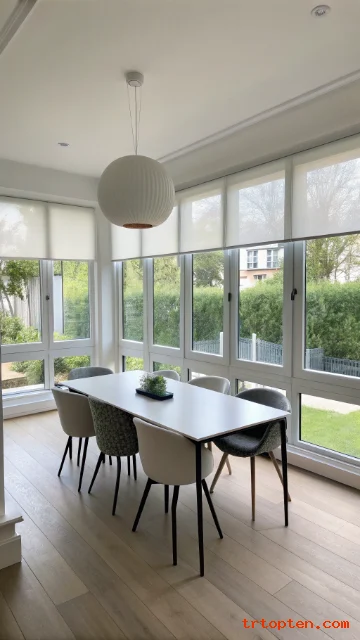
Roller shades give dining room windows a simple and neat finish. They roll up cleanly and do not distract from furniture or wall decor.
Choose light-filtering roller shades for daytime comfort and blackout roller shades for stronger privacy. Solar roller shades can reduce glare in bright dining rooms.
This style fits modern homes, apartments, and open-plan dining areas. It keeps the design practical while still looking fresh.
Layered Curtains and Shades for Flexibility
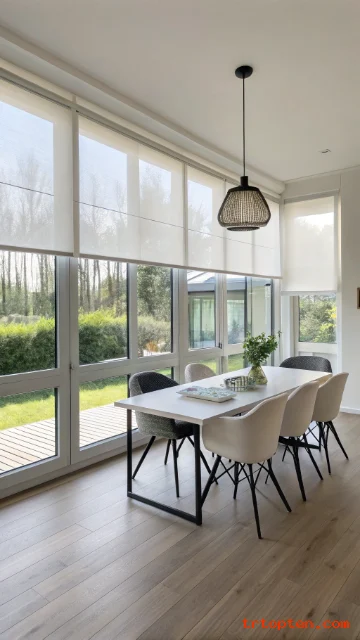
Layering curtains with shades gives you more control over light and privacy. The shade handles daily function while the curtains add softness and style.
Try bamboo shades with white curtains for a natural look. Try Roman shades with drapes for a more formal dining room.
This idea works well for windows that get strong sun at certain times of day. You can adjust each layer to match meals, work, or evening gatherings.
Plantation Shutters for Timeless Style
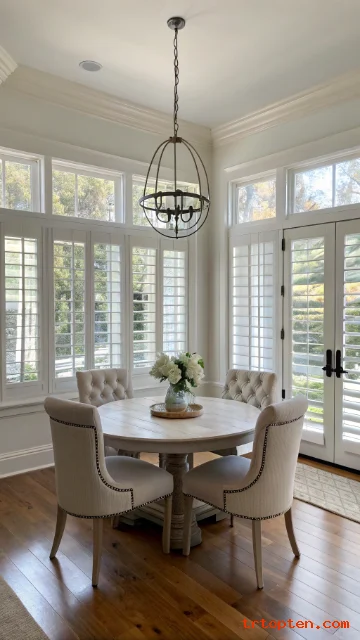
Plantation shutters give dining room windows a crisp and timeless look. They offer privacy, light control, and architectural detail.
Use white shutters for a bright classic room and stained wood shutters for a warmer design. Wide louvers create a clean and updated feel.
Shutters work well in homes with traditional trim and strong window frames. They also make the dining room look finished even without curtains.
Ceiling-to-Floor Curtains for Height
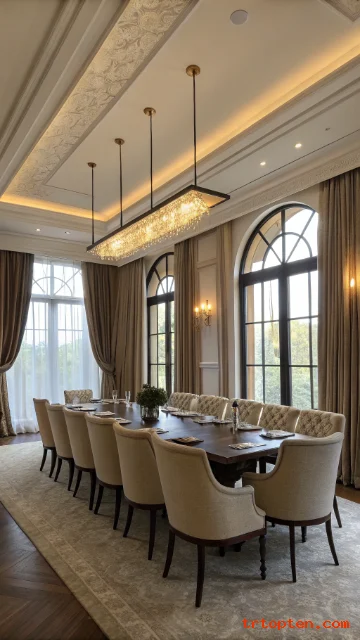
Ceiling-to-floor curtains make dining room walls look taller. They draw the eye upward and create a grander sense of space.
Mount the curtain rod close to the ceiling rather than directly above the window. Let the fabric touch the floor or break slightly for a soft finish.
This idea works well in small dining rooms because it adds visual height. It also looks beautiful in large rooms with tall windows.
Arched Window Coverings for Character
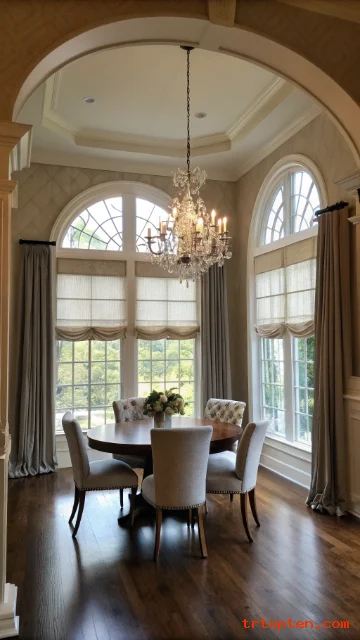
Arched dining room windows need coverings that respect their shape. Custom shutters, Roman shades, and curved curtain rods can all work well.
Keep the arch visible when it is a strong design feature. Use side panels or lower shades so the window still feels special.
This approach helps the room keep its architectural charm. It also prevents a beautiful window from looking covered or hidden.
Neutral Curtains for a Calm Dining Area
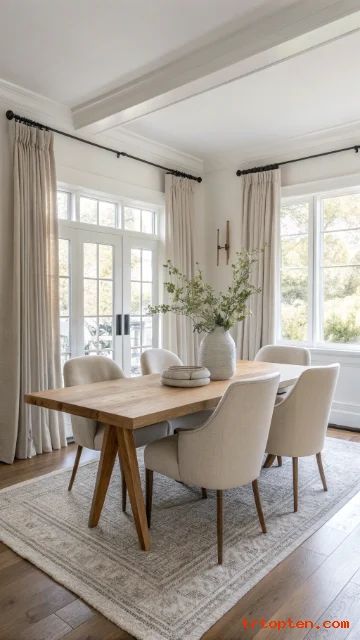
Neutral curtains create a calm and flexible dining room. They work with many furniture styles, wall colors, and seasonal table settings.
Choose warm whites, soft beige, taupe, greige, or light gray. These colors make the room feel clean without looking cold.
Neutral window coverings also help buyers like the room if you plan to sell your home. They keep attention on the table, lighting, and overall layout.
Striped Curtains for Visual Height
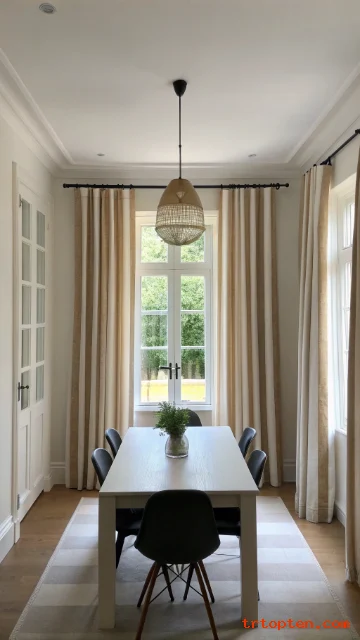
Striped curtains add rhythm and movement to dining room windows. Vertical stripes can make the room feel taller and more structured.
Use thin stripes for a classic look and wide stripes for a bolder design. Keep the color palette simple so the room does not feel crowded.
Striped curtains pair well with solid rugs, plain chairs, and simple table settings. They add pattern without taking over the whole dining room.
Floral Curtains for a Fresh Cottage Feel
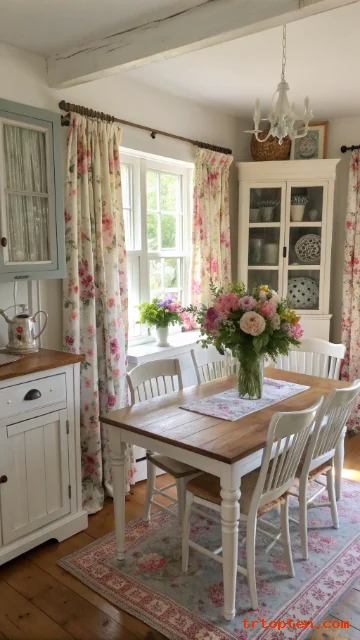
Floral curtains make a dining room feel fresh, soft, and welcoming. They work well in cottage, vintage, farmhouse, and romantic interiors.
Choose muted florals for a gentle look or colorful florals for a brighter room. Match the flower colors with napkins, dishes, or wall art.
Floral window coverings look best when the rest of the space has simple shapes. This keeps the dining room charming instead of crowded.
Solar Shades for Bright Dining Rooms
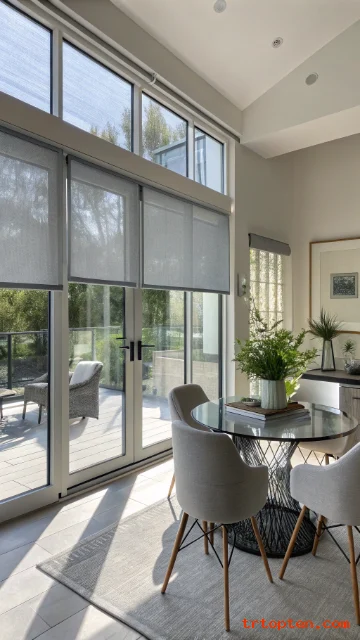
Solar shades reduce glare while keeping the dining room connected to the outside view. They are useful when sunlight hits the table during breakfast or dinner.
Choose a lower openness level for more privacy and a higher openness level for a clearer view. Light colors reflect heat, while dark colors improve outward visibility.
Solar shades fit modern homes and dining rooms with large glass doors. They keep the space comfortable without adding heavy fabric.
Woven Wood Roman Shades for Warmth
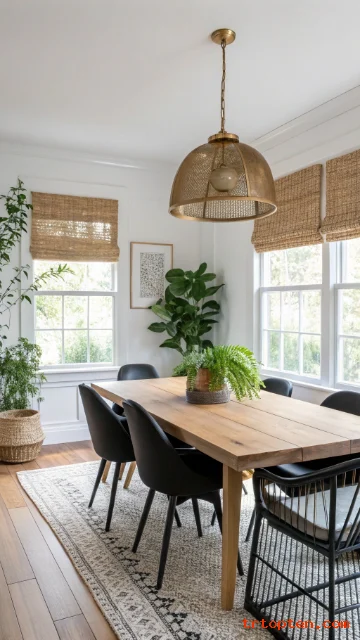
Woven wood Roman shades combine the shape of Roman shades with natural woven texture. They bring warmth to the dining room without looking too rustic.
Choose grasses, reeds, bamboo, or jute blends for varied texture. Add privacy lining if the window faces a street or nearby home.
These shades pair well with wood tables, black chairs, white walls, and brass lights. They create an earthy look that still feels polished.
Pinch Pleat Drapes for a Designer Look
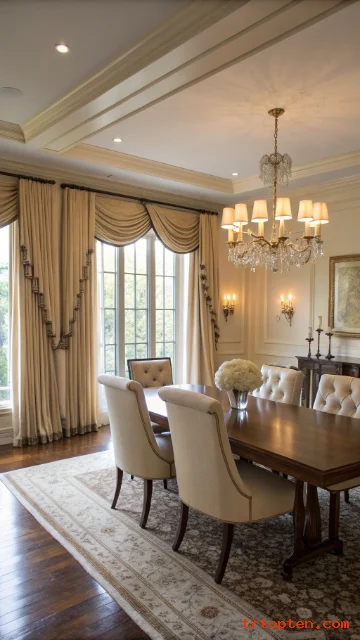
Pinch pleat drapes give dining room windows a custom and refined finish. The pleats create clean folds that hang evenly from top to bottom.
Use curtain rings or a track system to make the drapes glide smoothly. Choose lined fabric so the panels keep their shape.
This style works well when you want the dining room to feel professionally designed. It adds order, softness, and a classic sense of detail.
Colorful Curtains for a Cheerful Dining Room
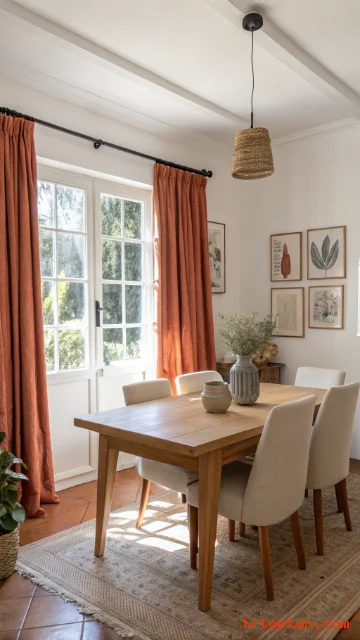
Colorful curtains can make a dining room feel happy and energetic. They work well when the rest of the space uses simple furniture and plain walls.
Try blue for a fresh look, green for a natural feel, or terracotta for warmth. Use the curtain color again in the centerpiece, artwork, or chair cushions.
This idea helps a plain dining room feel more complete. It also lets you change the mood without replacing large furniture.
Minimal Track Curtains for Large Windows
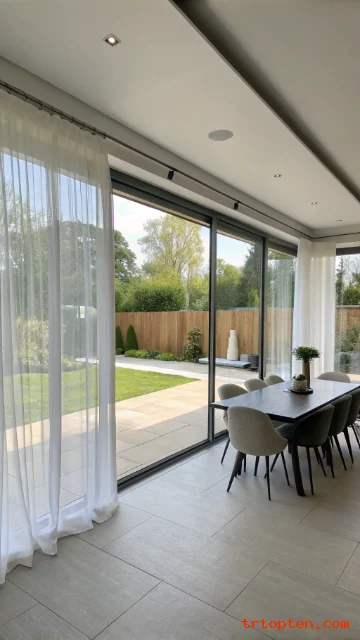
Track curtains work well for wide dining room windows and sliding glass doors. The track creates a clean line and makes the panels easy to move.
Use wave-fold or ripple-fold curtains for a smooth modern look. Choose plain fabric in white, beige, gray, or soft black.
This idea suits open dining rooms that connect to patios or backyards. It gives privacy at night and a clean view during the day.
Half Shutters for Light and Privacy
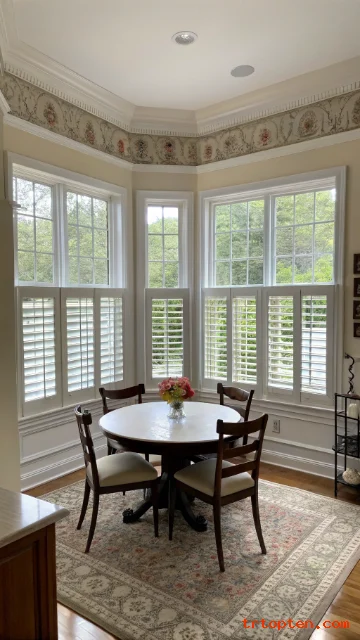
Half shutters cover the lower part of the dining room window. They provide privacy while leaving the upper glass open for daylight.
This style works well in street-facing dining rooms. It also keeps the space bright during the day.
Pair half shutters with simple top curtains if you want a softer finish. The look feels classic, practical, and charming.
Custom Printed Shades for a Unique Statement
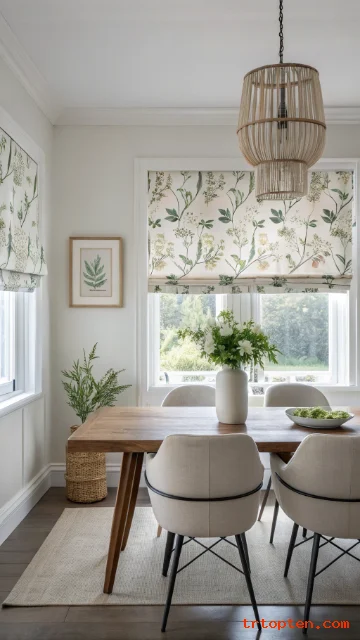
Custom printed shades let you add art, pattern, or a soft scenic design to dining room windows. They work best when you want the window covering to become a focal point.
Choose a print that matches the room’s colors and theme. Botanical prints, soft landscapes, and subtle geometric patterns all work well.
Keep the dining table, rug, and wall decor simple so the shade can stand out. This creates a personal look without making the room feel busy.
What Are the Best Dining Room Window Covering Ideas for Privacy?
The best privacy options include lined Roman shades, wooden blinds, plantation shutters, roller shades, and layered curtains. These coverings block views while still letting you control natural light.
For street-facing dining rooms, cafe curtains and half shutters also work well. They cover the lower glass and keep the room bright.
What Window Coverings Make a Dining Room Look Bigger?
Ceiling-to-floor curtains can make a dining room look taller and larger. Light-colored sheers and neutral panels can also make the space feel open.
Mount the curtain rod wider than the window frame to create the look of a bigger window. This simple trick helps the wall feel more balanced.
Are Curtains or Blinds Better for a Dining Room?
Curtains add softness, color, and a finished look. Blinds give better control over light and privacy.
Many dining rooms look best with both. Use blinds or shades for function, then add curtains for warmth and style.
What Color Curtains Work Best in a Dining Room?
Neutral colors work best for a calm and flexible dining room. White, beige, taupe, gray, and greige match many furniture styles.
Rich colors also work well when you want drama. Navy, green, burgundy, and charcoal can make the room feel more formal.
How Long Should Dining Room Curtains Be?
Dining room curtains should usually reach the floor. Floor-length panels look polished and help the window feel taller.
For a relaxed look, let the fabric touch the floor lightly. For a clean look, let the panels stop just above the floor.
Can I Use Sheer Curtains in a Dining Room?
Sheer curtains work well in dining rooms that need soft light more than full privacy. They make the space feel bright, airy, and welcoming.
Use them alone for a light look. Layer them with lined panels or shades when you need more privacy at night.
What Window Coverings Work Best for Small Dining Rooms?
Small dining rooms work well with Roman shades, roller shades, bamboo shades, and ceiling-height curtains. These options keep the window area neat and open.
Use light colors to make the room feel larger. Avoid bulky fabrics that cover too much wall space.
How Do I Choose Dining Room Window Coverings?
Start with your main need, such as privacy, light control, style, or insulation. Then choose a material and color that match your dining table, chairs, walls, and lighting.
A formal dining room may need drapes, shutters, or Roman shades. A casual dining room may look better with linen curtains, bamboo shades, or cafe curtains.
Conclusion
The best dining room window covering ideas improve light, privacy, and style at the same time.
Linen curtains, Roman shades, shutters, bamboo shades, and layered panels can all make your dining room feel more complete.