
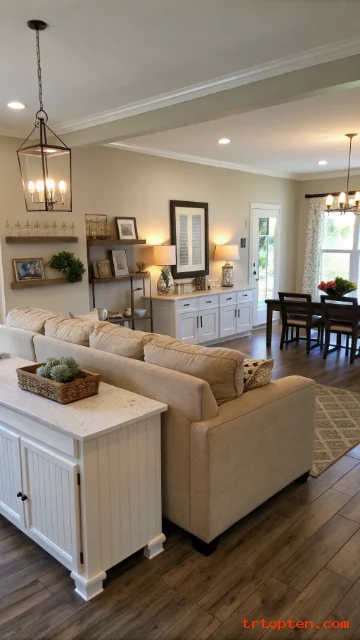
27 kitchen and living room ideas can help you create a home that feels warm, useful, and easy to enjoy every day. A shared kitchen and living room works best when the layout, colors, lighting, and furniture support both cooking and relaxing.
This guide gives you simple ideas that improve style, comfort, storage, and flow. Each idea uses clear design choices that make the space feel balanced and welcoming.
Create One Clear Color Palette
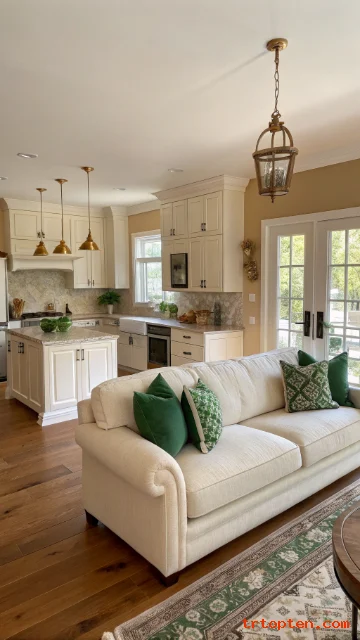
A shared kitchen and living room looks better when both areas use one clear color palette. You can choose soft white, warm beige, light gray, or natural wood as the main base.
Use two or three accent colors to keep the space calm and connected. A green sofa pillow can match kitchen plants, and brass cabinet handles can match a living room lamp.
Keep large surfaces simple, including walls, cabinets, rugs, and sofas. Then use smaller decor pieces to add color without making the room feel busy.
Use a Kitchen Island as a Room Divider
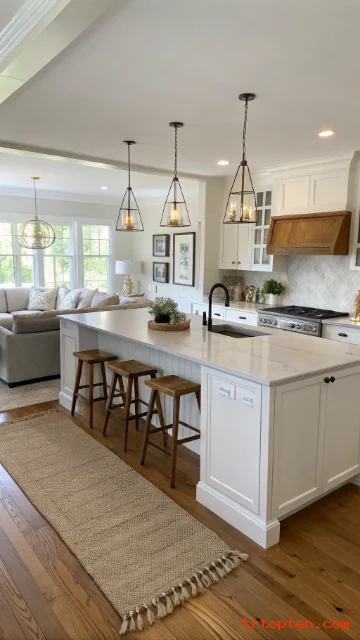
A kitchen island can separate the kitchen from the living room without closing the space. It gives the room structure while keeping the view open.
Choose an island with seating if your family likes casual meals or quick coffee breaks. Bar stools can face the living room so people can talk while someone cooks.
Add pendant lights above the island to make it feel like its own zone. This simple lighting choice helps the eye understand where the kitchen ends and the living room begins.
Match Wood Tones Across Both Spaces
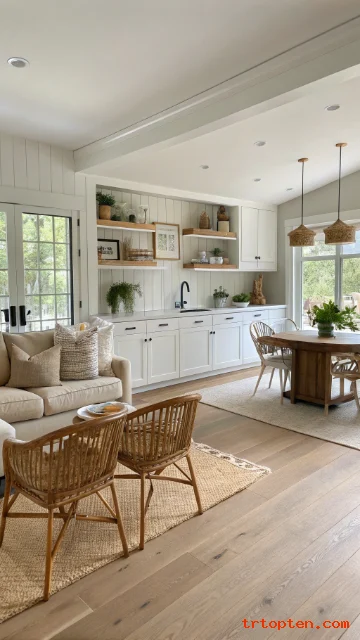
Wood tones can make a kitchen and living room feel warm and connected. Use the same or similar wood finish on floors, shelves, chairs, and tables.
Light oak works well in small rooms because it feels airy. Walnut creates a richer look and works well with cream, black, or deep green accents.
Do not mix too many wood colors in one open space. Two wood tones can look polished, but five tones can make the room feel scattered.
Add a Large Area Rug in the Living Room
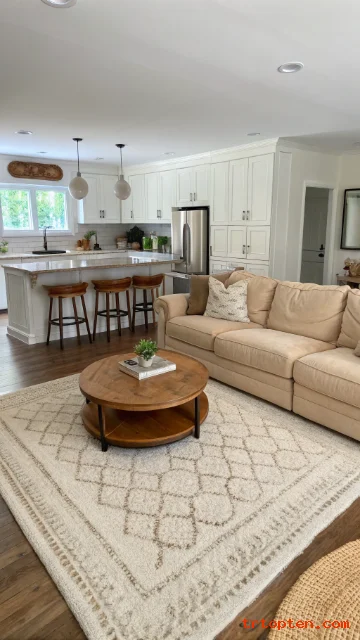
A large area rug can define the living room inside an open floor plan. It tells the eye that the sofa, coffee table, and chairs belong together.
Choose a rug that sits under the front legs of the main furniture pieces. This placement makes the seating area feel complete and grounded.
Pick a rug color that connects with kitchen finishes. A cream rug with tan lines can match wood cabinets, stone counters, or woven bar stools.
Keep the Flooring Continuous
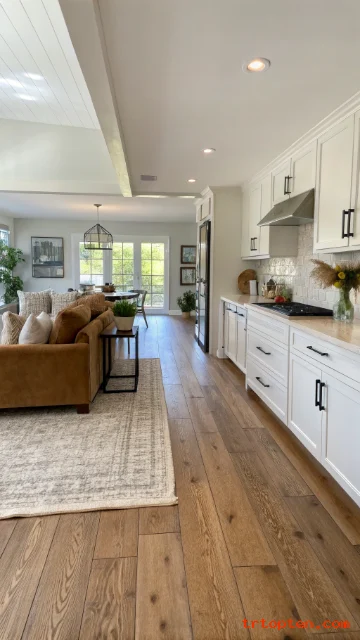
Continuous flooring helps a kitchen and living room feel larger. It removes visual breaks and gives the space a smooth flow.
Luxury vinyl plank, engineered wood, tile, and polished concrete can all work well. Choose a durable surface because the kitchen needs easy cleaning and the living room needs comfort.
Use rugs instead of flooring changes to mark different zones. This method keeps the room open while still giving each area a clear purpose.
Use Matching Light Fixtures
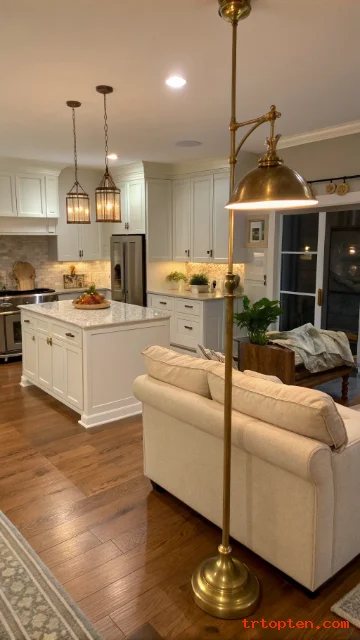
Matching light fixtures can tie the kitchen and living room together. They do not need to be identical, but they should share one finish or shape.
Use black metal, brass, matte white, or woven shades across the room. A brass pendant over the island can pair with a brass floor lamp near the sofa.
Layer lighting so the space works at all times of day. Use ceiling lights, task lights, floor lamps, and small table lamps for a warm effect.
Build Open Shelving Near Both Areas
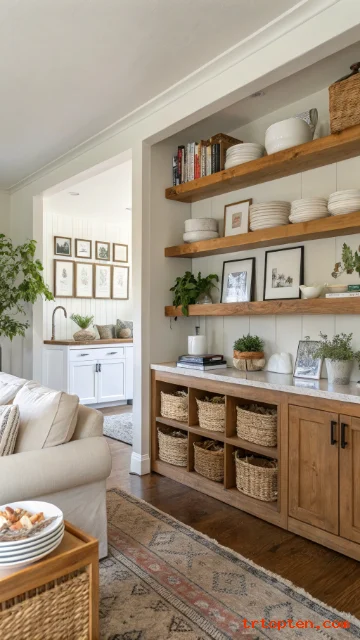
Open shelving can connect the kitchen and living room through shared styling. Use shelves to display dishes, cookbooks, plants, framed art, and small baskets.
Keep the shelf colors and materials consistent with the room. Wood shelves with black brackets can match a black coffee table or black cabinet pulls.
Avoid filling every shelf with items. Open space around decor makes the shelves look calm and intentional.
Choose a Sofa That Faces the Kitchen
A sofa that faces the kitchen can make the whole space feel social. People can relax in the living room while still talking to someone cooking.
This layout works well for families and guests. It keeps conversation easy and makes the kitchen feel like part of the main living area.
Place a slim console table behind the sofa if the back is visible. The table can hold lamps, books, or bowls and make the layout look finished.
Add Plants to Soften the Space
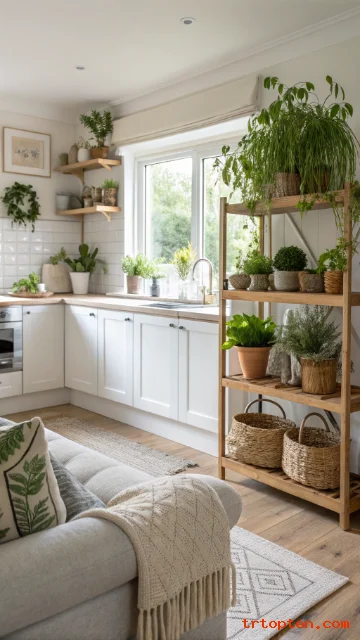
Plants can make a kitchen and living room feel fresh and alive. They add color, shape, and texture without making the design feel heavy.
Place herbs near the kitchen window and larger plants near the sofa. This simple mix brings greenery into both zones.
Use matching planters to keep the look clean. Ceramic, terracotta, or woven planters can support many decor styles.
Use Built-In Storage Around the Living Room
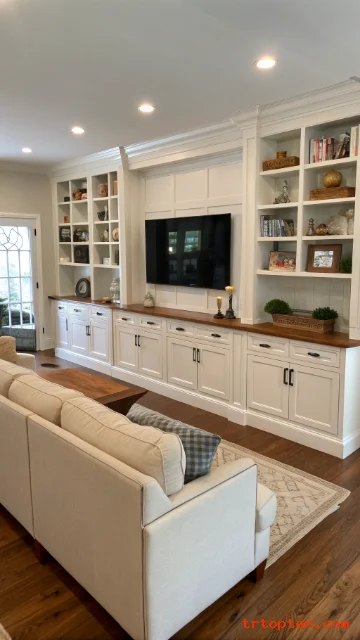
Built-in storage can make an open kitchen and living room feel organized. Cabinets, shelves, and media units can hold books, games, dishes, and daily items.
Choose finishes that match the kitchen cabinets for a connected look. White built-ins can match white cabinets, while wood built-ins can echo an island base.
Closed storage works best for clutter. Open shelves can hold only the pieces that look nice and support the room style.
Add a Statement Backsplash
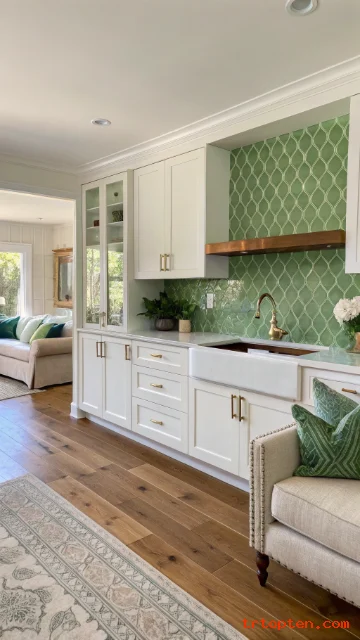
A statement backsplash can give the kitchen personality without taking over the living room. It becomes a focal point that still feels connected to the full space.
Choose tile colors that appear in the living room decor. Blue tiles can match pillows, while soft green tiles can match plants and artwork.
Keep nearby decor simple if the backsplash has a strong pattern. This balance helps the room feel stylish instead of crowded.
Use a Dining Table Between the Two Areas
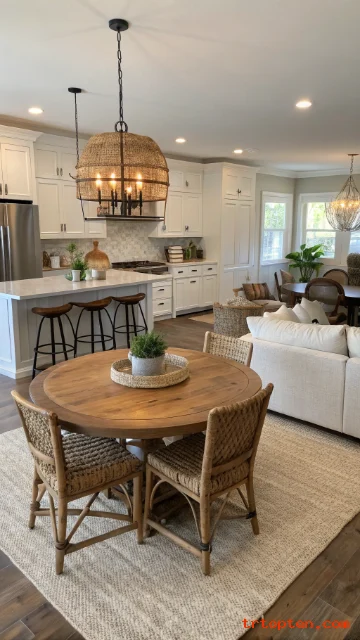
A dining table can act as a bridge between the kitchen and living room. It creates a natural middle zone for meals, work, and conversation.
Choose a table shape that fits the room. Round tables soften tight spaces, while rectangular tables work well in long open layouts.
Match the dining chairs with the living room and kitchen finishes. This makes the table feel like part of the full design rather than a separate piece.
Paint an Accent Wall in the Living Room
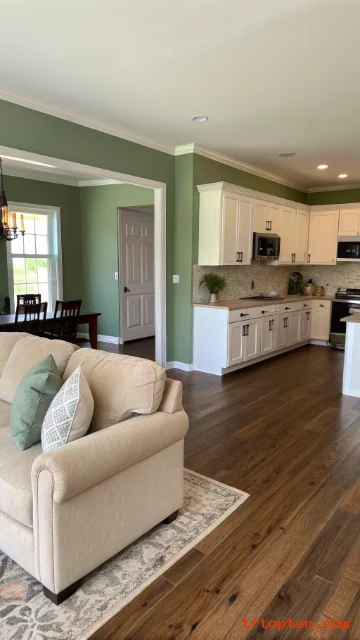
An accent wall can anchor the living room in an open plan. It gives the sofa area a clear background and adds visual interest.
Use a color that connects with kitchen details. A charcoal wall can match black hardware, and a sage wall can match green tile or plants.
Keep the rest of the walls light if the room is small. This keeps the open space bright and comfortable.
Choose Low Furniture for Better Sight Lines
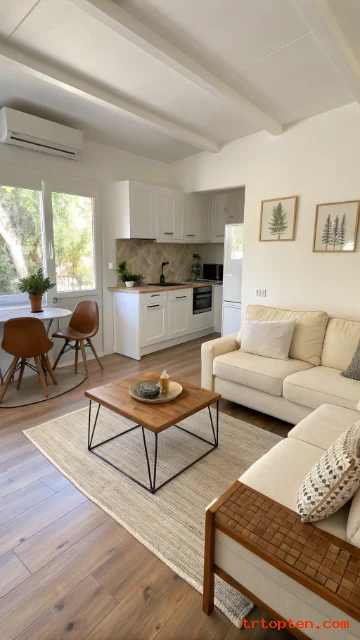
Low furniture keeps an open kitchen and living room feeling spacious. It lets light move across the room and helps people see from one zone to another.
Choose a low sofa, a slim coffee table, and open-frame chairs. These pieces create comfort without blocking the room.
This idea works very well in small homes and apartments. Clear sight lines can make a modest space feel much larger.
Add Texture With Woven Decor
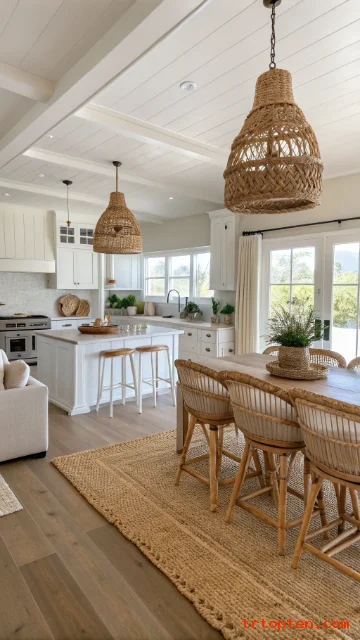
Woven decor can warm up a kitchen and living room quickly. Baskets, rattan chairs, jute rugs, and woven pendant lights add natural texture.
Use woven pieces in both zones for balance. A woven fruit basket in the kitchen can match a woven tray on the coffee table.
Keep the color palette simple when using lots of texture. Cream, tan, brown, and white work well together and feel relaxed.
Make the Fireplace a Shared Focal Point
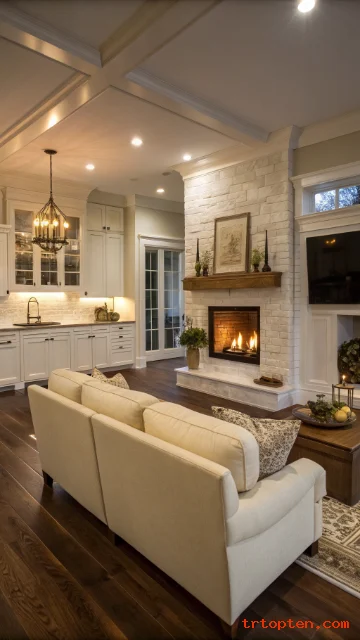
A fireplace can serve both the kitchen and living room if the layout allows it. It creates warmth and gives the open area a strong center.
Arrange the sofa and chairs to face the fireplace. Keep the kitchen sight line open so the fireplace remains visible from the cooking area.
Use mantel decor that matches the kitchen style. Brass candlesticks, wood frames, or ceramic vases can connect the two spaces.
Use Black Accents for Contrast
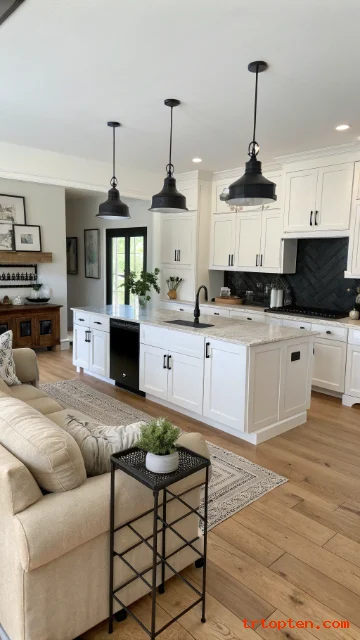
Black accents can make a kitchen and living room feel sharp and modern. Use black in small doses through cabinet pulls, light fixtures, frames, and table legs.
This contrast works well with white, beige, wood, and stone. It gives the room structure without making it feel dark.
Repeat black accents across both areas. This keeps the design consistent and helps the eye move through the full space.
Add a Small Coffee Station
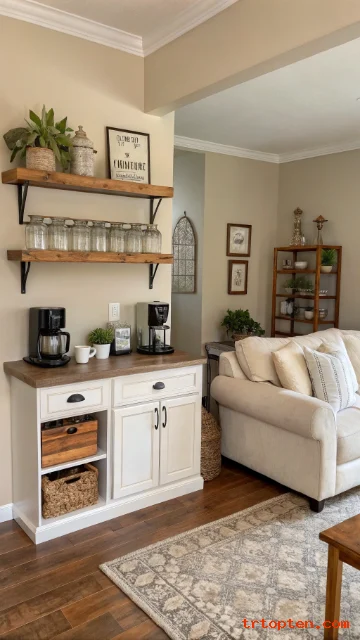
A coffee station can make the kitchen feel more personal and useful. It can sit on a counter, inside a cabinet, or beside the dining area.
Style the station with mugs, jars, a tray, and a small plant. Keep the items grouped so the setup looks tidy.
Connect the coffee station to the living room mood. A warm lamp, framed print, or wood tray can make it feel cozy and inviting.
Use Glass Doors or Large Windows
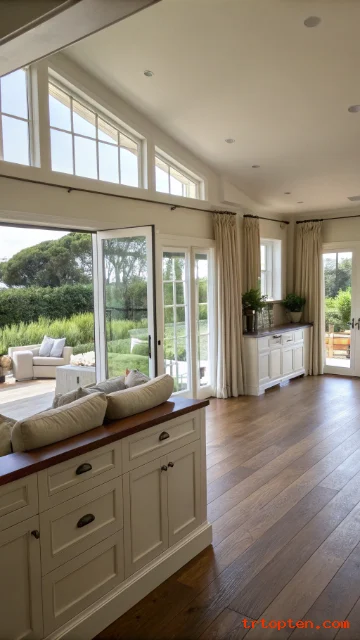
Glass doors and large windows can make a kitchen and living room feel bright and open. Natural light improves both cooking and relaxing areas.
Keep window treatments simple so the light can enter the room. Linen curtains, woven shades, or bare windows can all work well.
Place seating where people can enjoy the view. This makes the living room feel connected to the outdoors and gives the kitchen a fresh backdrop.
Add Art That Connects Both Spaces
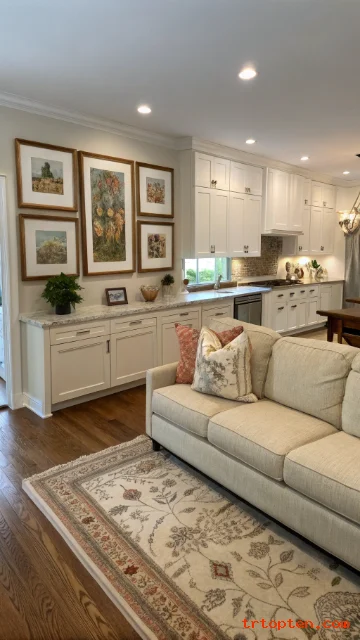
Art can help a kitchen and living room share one design story. Choose colors, frames, or themes that work with both areas.
Hang larger art above the sofa and smaller art near the kitchen or dining area. This creates rhythm across the room.
Use simple frames for a cleaner look. Wood, black, white, or brass frames can match common kitchen finishes.
Keep Countertops Clear
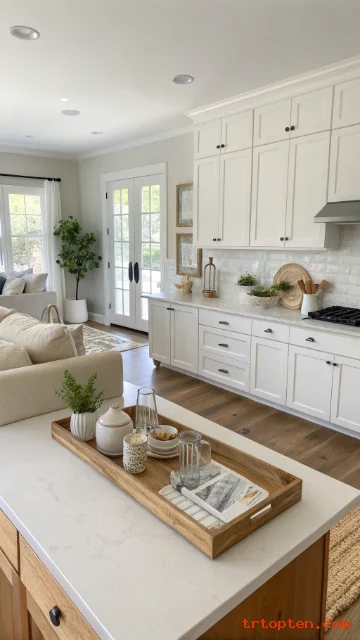
Clear countertops make an open kitchen look cleaner from the living room. This matters because the kitchen stays visible all day.
Store small appliances in cabinets when they are not used often. Keep only daily items, such as a coffee maker or fruit bowl, on the counter.
Use trays to group items that must stay out. A tray makes soap, oil, or utensils look planned instead of messy.
Choose Bar Stools With Comfort and Style
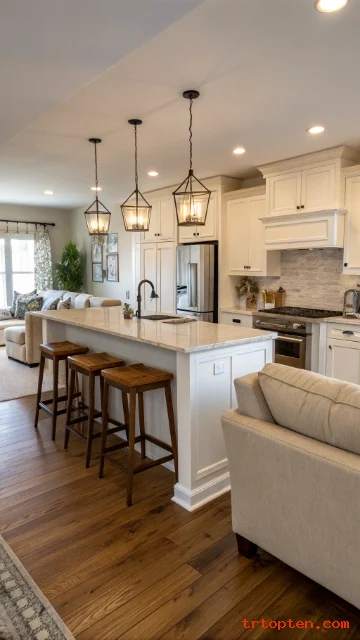
Bar stools can change the feel of an open kitchen and living room. They sit in a visible spot, so they should look good and feel comfortable.
Choose stools with backs if people sit there often. Backless stools work better when you need to tuck them fully under the island.
Match the stool material to the living room furniture. Wood, metal, leather, or woven seats can help the two areas feel connected.
Use Sliding Doors for Flexible Privacy
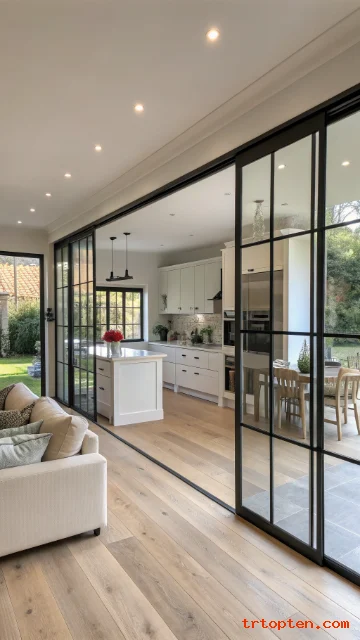
Sliding doors can give an open kitchen and living room more control. They can close off noise, smells, or clutter when needed.
Glass sliding doors keep the room bright even when closed. Wood or painted doors add more privacy and a stronger design statement.
This idea works well for homes that host guests often. You can keep the space open during gatherings and close it during quiet moments.
Add Warm Under-Cabinet Lighting
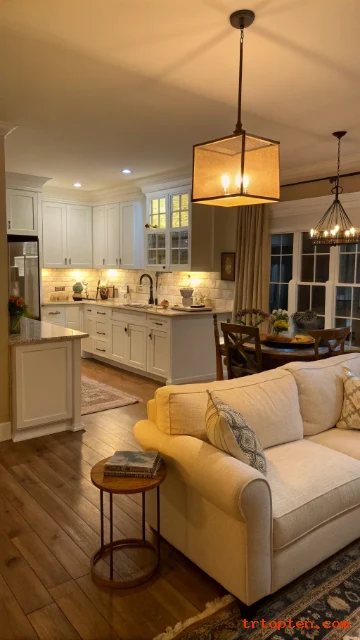
Under-cabinet lighting makes the kitchen look polished from the living room. It also helps with food prep and creates a soft evening glow.
Choose warm white lighting for a cozy effect. Cool lighting can feel harsh in a room that also serves as a relaxing space.
Use this lighting with lamps in the living room. The combined glow makes the open area feel calm at night.
Add a Narrow Console or Sideboard
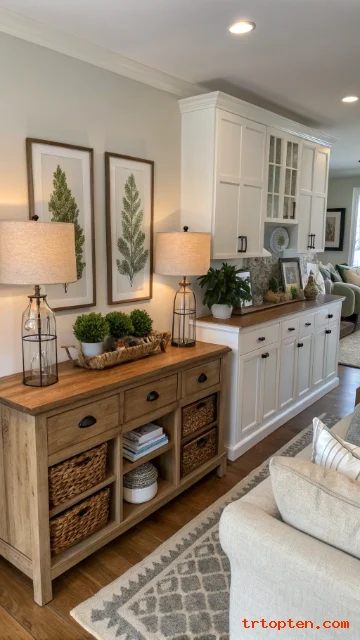
A console or sideboard can add storage and style between the kitchen and living room. It works well against a wall, behind a sofa, or near a dining table.
Use it to store dishes, linens, games, or serving pieces. The top can hold lamps, art, plants, and a tray.
Choose a finish that matches other furniture in the room. A wood sideboard can connect with wood shelves, stools, or the coffee table.
Mix Modern and Cozy Elements
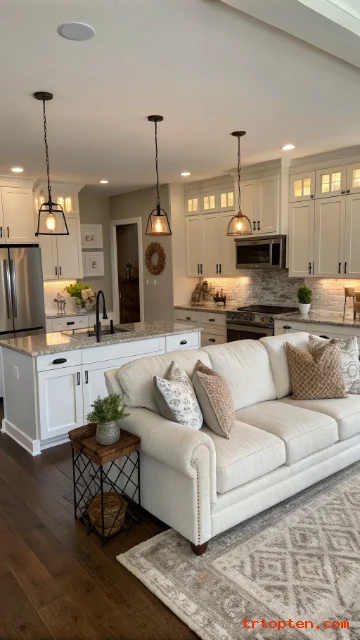
A kitchen and living room can feel stylish without feeling cold. Mix clean modern lines with soft cozy textures.
Use sleek cabinets, simple lighting, and smooth counters in the kitchen. Then add pillows, throws, rugs, and warm lamps in the living room.
This balance makes the room useful and inviting. It also keeps the design current without losing comfort.
Create a Family-Friendly Layout
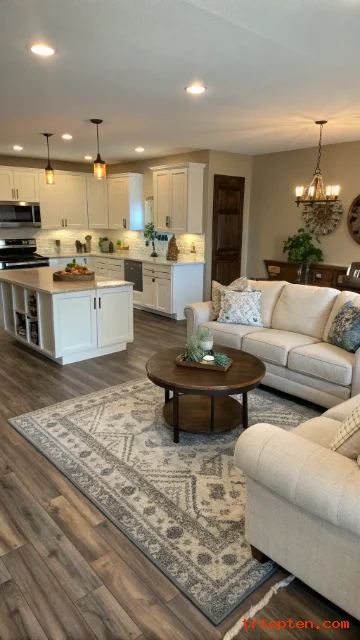
A family-friendly kitchen and living room should support daily life. It needs easy walking paths, durable surfaces, and comfortable seating.
Choose washable rugs, stain-resistant fabrics, rounded tables, and closed storage. These choices help the room stay safe and easy to maintain.
Place the seating where people can relax while meals are prepared. This layout helps the kitchen and living room work as one shared family space.
What are the best 27 kitchen and living room ideas for small homes?
The best ideas for small homes include continuous flooring, low furniture, clear countertops, and one simple color palette. These choices help the room feel open, organized, and calm.
How do I make my kitchen and living room look connected?
You can connect both spaces by repeating colors, wood tones, lighting finishes, and decor materials. A shared rug color, matching metal accents, or similar furniture shapes can create a smooth look.
What color works best for an open kitchen and living room?
Warm white, beige, greige, soft gray, and light taupe work well because they support many styles. These colors make the space feel bright and easy to decorate.
Should the kitchen and living room have the same flooring?
The same flooring often works best in an open layout. It creates a seamless flow and makes the total space feel larger.
How can I divide a kitchen and living room without walls?
You can use a kitchen island, dining table, area rug, sofa placement, lighting, or open shelving. These choices create zones while keeping the room open.
What furniture works best in an open kitchen and living room?
Low sofas, slim tables, comfortable bar stools, and storage pieces work well. These pieces support comfort without blocking light or movement.
How do I make an open kitchen and living room feel cozy?
Use warm lighting, soft rugs, pillows, throws, plants, and natural textures. These details make the open space feel relaxed and lived in.
What lighting should I use in a kitchen and living room combo?
Use layered lighting with pendants, ceiling lights, under-cabinet lights, floor lamps, and table lamps. This mix supports cooking, dining, reading, and relaxing.
How do I keep an open kitchen looking neat from the living room?
Keep countertops clear, use trays, store appliances in cabinets, and choose closed storage. A simple cleaning routine also helps the room stay guest-ready.
Conclusion
These 27 kitchen and living room ideas can help you design a space that feels open, cozy, and practical.
Start with the ideas that solve your biggest needs, such as better storage, clearer zones, warmer lighting, or a stronger color palette.