
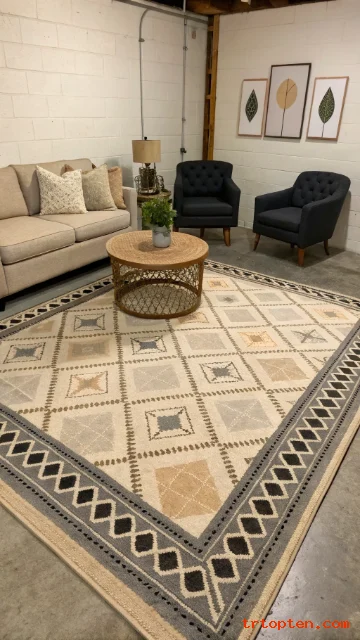
Basement concrete floor paint ideas can turn a cold lower level into a clean, useful, and stylish room.
The right paint color, finish, and pattern can make your basement feel brighter, warmer, and more finished.
Soft Gray Basement Floor Paint
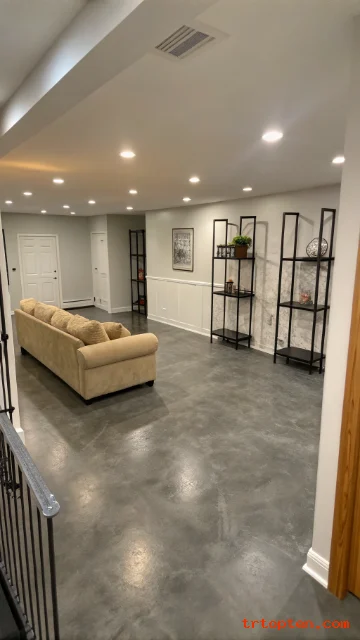
Soft gray paint gives a basement floor a clean and timeless look. It works well with white walls, black trim, wood furniture, and metal shelves.
This color hides light dust better than bright white paint. It also makes small basements feel more open without feeling cold.
Use a satin or low-gloss concrete floor paint for a smooth finish. Add a clear sealer on top if the room gets heavy foot traffic.
Warm Beige Concrete Floor Paint
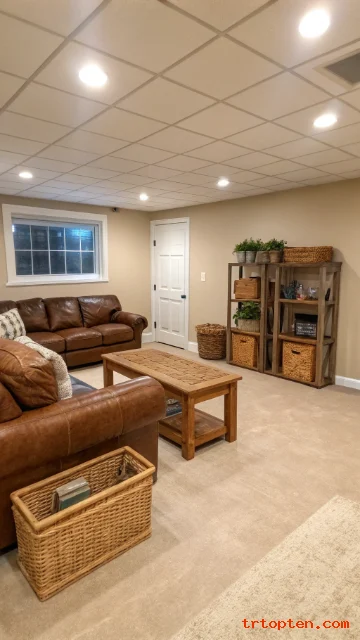
Warm beige paint makes a basement feel cozy and calm. It brings a soft neutral base that works with farmhouse, rustic, coastal, and modern decor.
This paint color looks good with cream walls, brown leather seating, and woven baskets. It also reduces the harsh look that raw concrete often has.
Choose a beige shade with a light brown or sand undertone. Avoid yellow-heavy beige if your basement lighting already feels warm.
Charcoal Painted Basement Floor
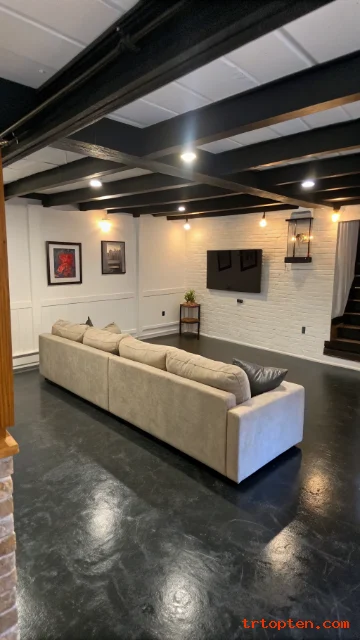
Charcoal paint gives the floor a bold and polished look. It works best in basements with good lighting and light wall colors.
This dark shade hides marks, small stains, and uneven concrete texture. It also creates strong contrast with white baseboards and pale furniture.
Use charcoal floor paint in a media room, game room, or home gym. Add area rugs to soften the room and break up the dark surface.
White Painted Concrete Floor
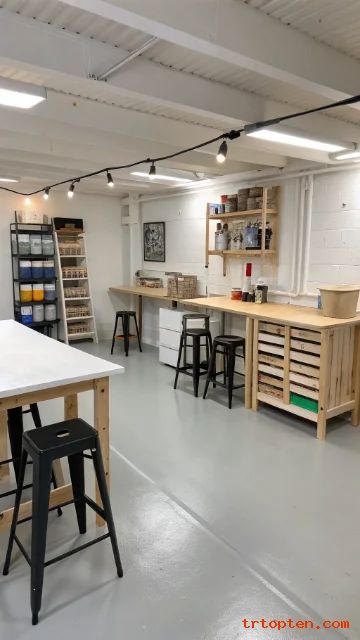
White concrete floor paint can make a dark basement feel fresh and bright. It reflects light and helps the whole room look larger.
This idea suits minimalist rooms, craft studios, laundry rooms, and Scandinavian-style spaces. It also pairs well with pale wood, black accents, and soft textiles.
White floors need more cleaning than medium shades. Use durable porch and floor paint with a clear protective coat for better stain resistance.
Light Blue Basement Floor Paint
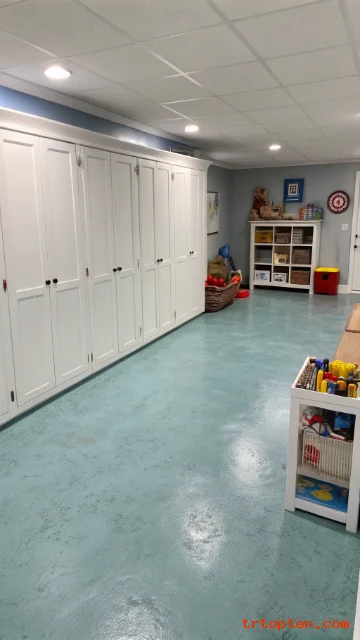
Light blue floor paint brings a soft, cheerful look to the basement. It can make the space feel brighter and less heavy.
This color works well with coastal decor, kids’ playrooms, laundry spaces, and hobby rooms. It pairs nicely with white cabinets, pale gray walls, and natural wood.
Choose a muted blue instead of a strong primary blue. A soft blue-gray shade feels more grown-up and easier to decorate around.
Sage Green Concrete Floor Paint
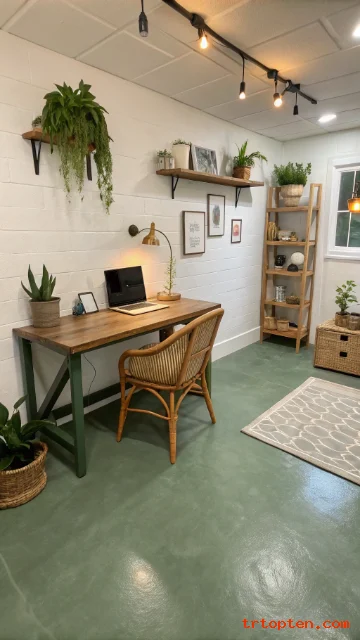
Sage green paint gives a basement floor a calm and natural feel. It adds color without making the room feel loud.
This shade works well in plant rooms, home offices, craft rooms, and relaxed lounge areas. It pairs with white walls, rattan chairs, tan rugs, and wood shelves.
Use sage green when you want a grounded look with a little personality. It can make a basement feel connected to nature, even without many windows.
Navy Blue Painted Basement Floor
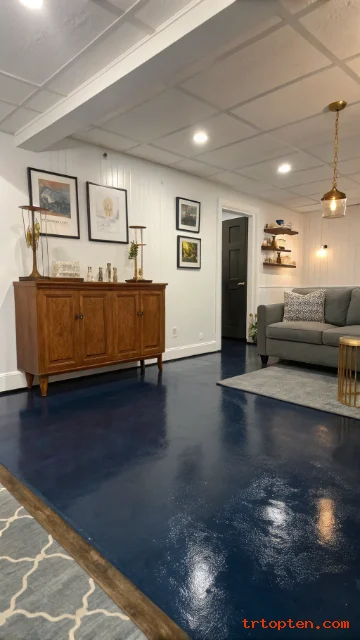
Navy blue paint creates a rich and stylish basement floor. It feels bold but still classic.
This color looks great with white walls, brass accents, light gray furniture, and walnut wood. It works especially well in a home bar, music room, or media room.
Use navy in a basement that has enough light to balance the dark floor. A semi-gloss finish can add depth and make the color feel elegant.
Terracotta Basement Floor Paint
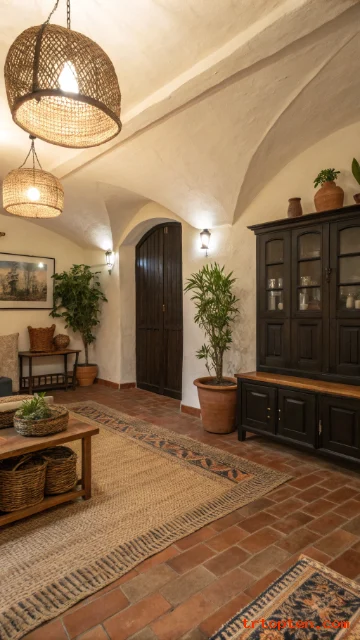
Terracotta paint adds warmth and character to a concrete basement floor. It gives the room an earthy look that feels inviting.
This color works well with Spanish, Mediterranean, boho, and rustic decor. It pairs with cream walls, clay pots, woven rugs, and dark wood furniture.
Use terracotta in a basement dining area, studio, or casual lounge. Keep the walls light so the floor color remains warm instead of heavy.
Black Painted Concrete Floor

Black paint gives a basement floor a dramatic and modern finish. It can make the space feel sleek and intentional.
This idea works well in a home gym, music studio, bar area, or industrial-style basement. It pairs with exposed beams, metal furniture, brick walls, and bright white trim.
Black floors show dust more than gray floors, so plan for regular sweeping. Use a tough floor coating because scratches can stand out on dark paint.
Two-Tone Painted Basement Floor
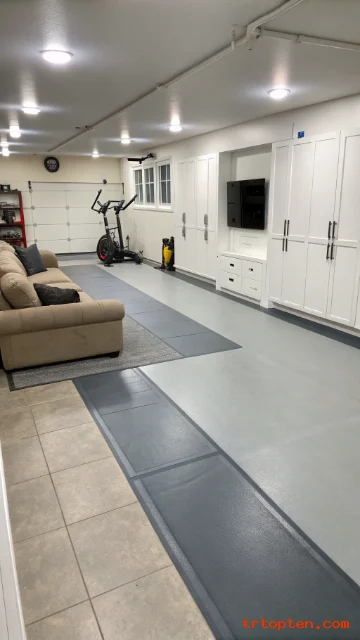
A two-tone floor can give your basement more visual interest. You can combine light gray with charcoal, beige with white, or sage with cream.
This idea works well when you want to define zones without building walls. Paint one color for the seating area and another color for a gym, workspace, or play zone.
Keep both colors in the same undertone family for a smooth look. Use painter’s tape and a laser line for crisp borders.
Painted Checkerboard Floor
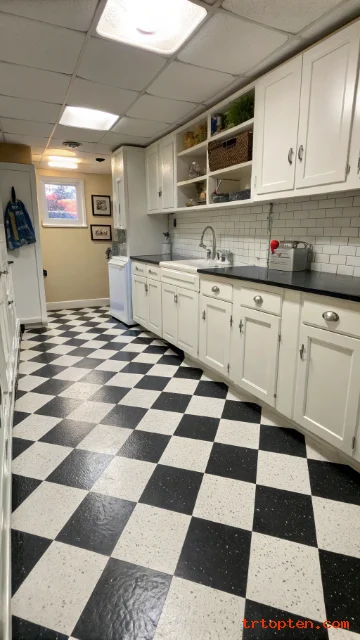
A checkerboard floor makes a basement feel playful and classic. Black and white is the most popular choice, but gray and white also looks softer.
This pattern works well in laundry rooms, game rooms, craft spaces, and retro-style basements. It brings strong design value without expensive flooring.
Measure each square before you paint so the pattern stays even. Seal the finished floor to protect the edges of the painted squares.
Painted Concrete Floor With Border
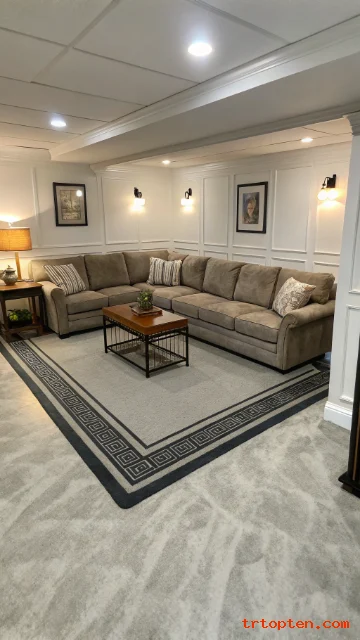
A painted border can make a plain basement floor look finished. It gives the room the look of a built-in area rug.
This idea works well around seating zones, pool tables, craft tables, or home office corners. Use a darker border on a light floor for a framed effect.
Keep the border simple for the cleanest result. A 4-inch to 8-inch border often looks balanced in most basement rooms.
Faux Tile Painted Basement Floor
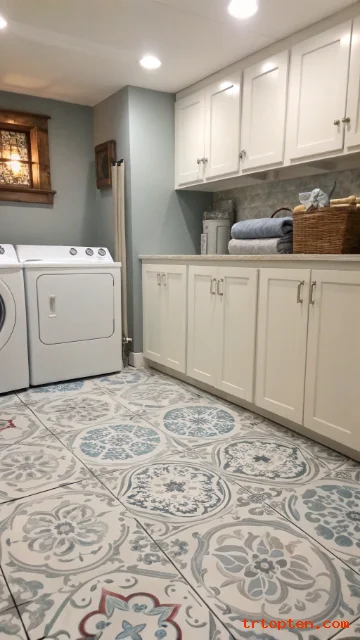
Faux tile paint can give concrete the look of ceramic or stone tile. It costs less than installing real tile and still adds pattern.
This idea works well in laundry rooms, basement bathrooms, mudroom areas, and craft spaces. You can use stencils to create squares, diamonds, or encaustic-style designs.
Choose two or three colors so the floor does not feel too busy. Seal the design well because detailed patterns need strong protection.
Speckled Epoxy Paint Look
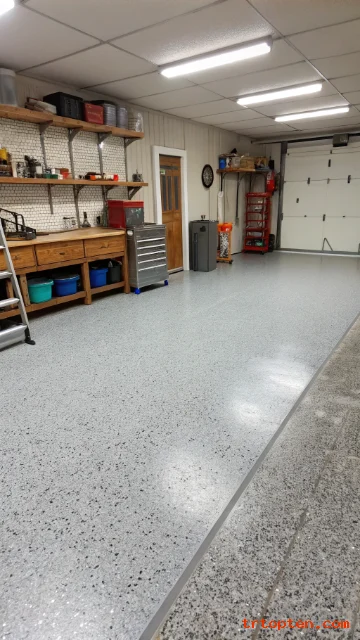
A speckled epoxy-style floor gives a basement a clean garage-inspired finish. It hides dust, small chips, and everyday marks very well.
This idea works in workshops, home gyms, storage rooms, and busy family basements. The tiny color flakes add texture and make the floor look more durable.
Use a base color like gray, tan, or beige. Add decorative flakes while the coating is wet, then seal the floor for a smooth protective layer.
Concrete Floor With Painted Stripes
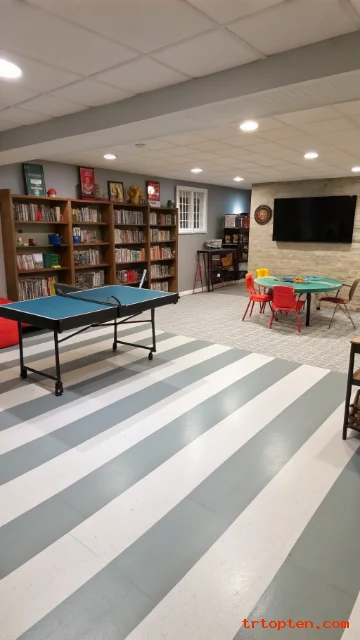
Painted stripes can make a basement floor feel fun and custom. They can also make a narrow room look longer or wider.
Use wide stripes for a bold modern look. Use thin stripes for a softer and more subtle effect.
This idea works well in kids’ rooms, game rooms, workout spaces, and creative studios. Choose two simple colors so the pattern feels planned.
Warm Brown Painted Concrete Floor
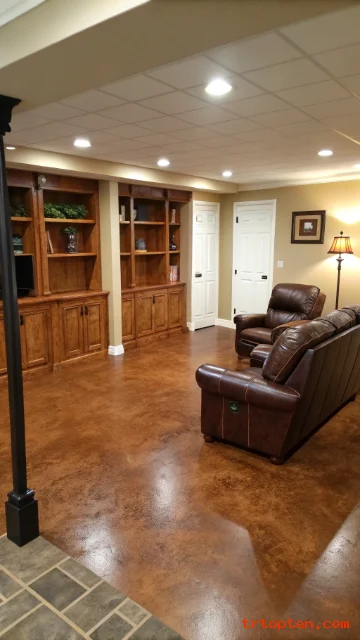
Warm brown paint can make concrete look grounded and rich. It gives a basement the feeling of stained wood without installing wood flooring.
This color works well with rustic, cabin, industrial, and traditional decor. It pairs with cream walls, leather chairs, black metal lights, and wood shelves.
Choose a medium brown for the best balance. Very dark brown can make a basement feel smaller if the room lacks strong lighting.
Painted Concrete Floor With Rug Effect
A painted rug design gives a basement floor charm without fabric maintenance. It works well in damp basements where real rugs may trap moisture.
You can paint a rectangle with a border, corner details, and a central pattern. This design fits under a coffee table, dining table, or craft table.
Use colors that match the rest of the room. Seal the design so chair legs and foot traffic do not wear it down fast.
Pale Greige Basement Floor Paint
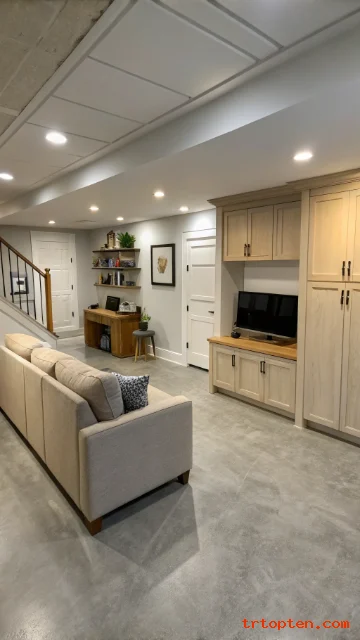
Pale greige blends gray and beige for a soft neutral basement floor. It feels warmer than gray and more modern than beige.
This color works with many wall colors and furniture styles. It is a smart choice when you want flexibility for future decor changes.
Use pale greige in a family room, guest room, or multipurpose basement. It helps the floor look finished without taking attention from the furniture.
Painted Concrete Floor With Geometric Pattern
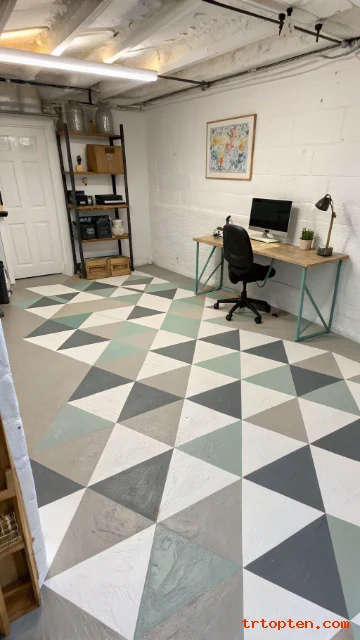
A geometric painted floor can give a basement a designer look. Triangles, diamonds, and angled shapes add movement to a plain concrete slab.
This idea works best when the rest of the room stays simple. Use neutral walls and clean furniture so the floor becomes the main feature.
Plan the pattern on paper before you paint. Use painter’s tape carefully because sharp lines make the design look professional.
Basement Floor Painted in Soft Cream
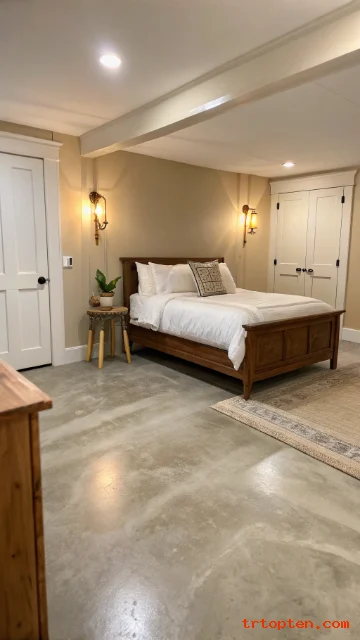
Soft cream paint makes a basement feel warm, bright, and clean. It works better than pure white when you want a gentle look.
This color pairs well with wood tones, linen fabrics, brass lights, and soft gray furniture. It can make a basement bedroom or guest room feel more comfortable.
Use washable floor paint because light cream can show spills. Add a protective coat if the room will get frequent use.
Industrial Gray Concrete Floor Paint

Industrial gray paint gives a basement a raw but finished style. It keeps the concrete look while making the surface cleaner and easier to maintain.
This idea suits workshops, music rooms, storage spaces, and modern basements with exposed ceilings. It pairs well with black metal, brick, plywood, and simple shelving.
Choose a medium gray with a satin finish for a practical result. It will hide dirt better than pale gray and feel less heavy than charcoal.
Painted Basement Floor With Metallic Sheen
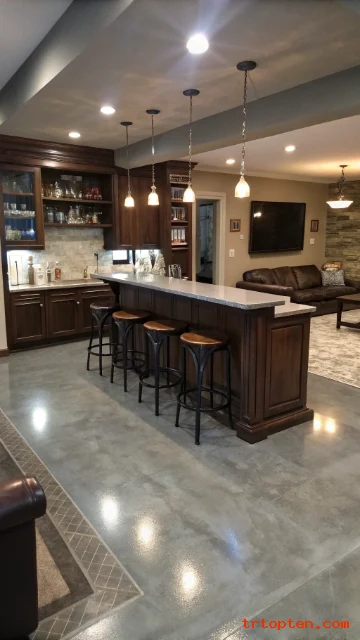
A metallic paint finish can make a basement floor look bold and custom. Silver, pewter, bronze, and copper tones can add depth to the concrete.
This idea works well in home bars, entertainment rooms, art studios, and modern lounges. It looks best with controlled lighting that reflects softly on the floor.
Use metallic floor coating in small doses if you prefer a subtle look. A full metallic floor can feel dramatic, so balance it with simple walls and furniture.
Basement Floor Painted With Color Blocks
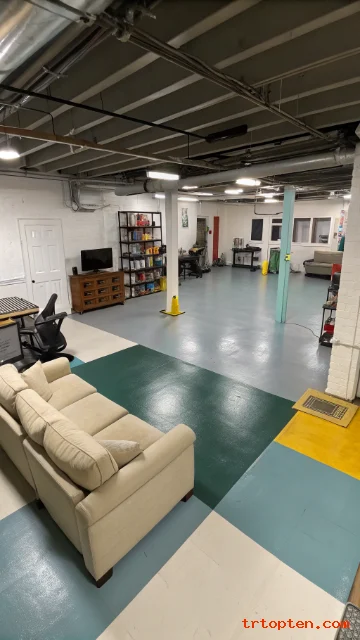
Color blocking can divide a large basement into clear activity areas. It can help one open room serve as a lounge, gym, playroom, and office.
Use different paint colors for each zone, but keep the palette controlled. Gray, sage, cream, and charcoal can work together without looking messy.
This idea is useful for families who need flexible space. It gives each area a clear purpose while keeping the floor easy to clean.
Deep Green Painted Concrete Floor
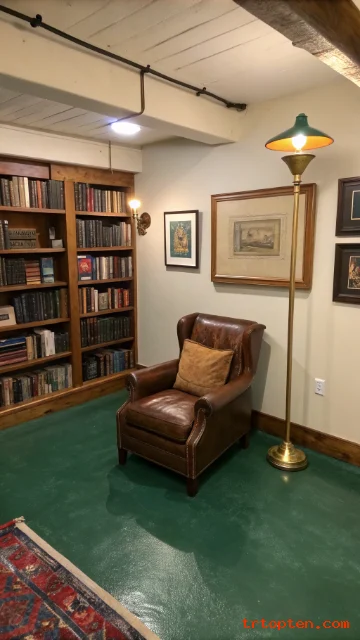
Deep green floor paint gives a basement a rich and moody look. It feels bold but still natural.
This color works well in reading rooms, home bars, hobby rooms, and vintage-style basements. It pairs with wood furniture, brass lights, cream walls, and leather seating.
Use deep green in a room with layered lighting. Lamps, sconces, and ceiling lights help the color feel warm instead of too dark.
Painted Concrete Floor With Marble Effect
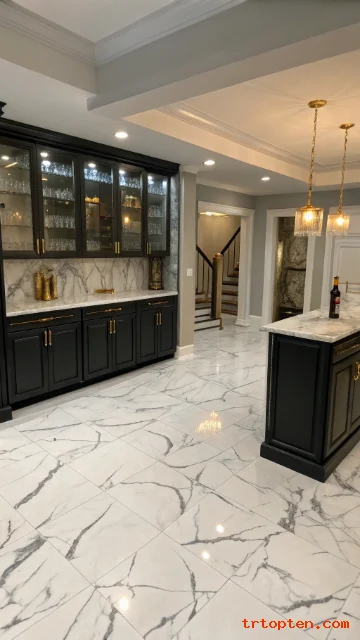
A painted marble effect can make a basement floor look elegant. Gray and white veining gives plain concrete a custom finish.
This idea works best in basement bars, hobby rooms, small bathrooms, or stylish laundry rooms. It can add a luxury look without real stone installation.
Keep the veining soft and natural. Too many sharp lines can make the painted effect look less realistic.
Clear-Coated Painted Concrete Floor
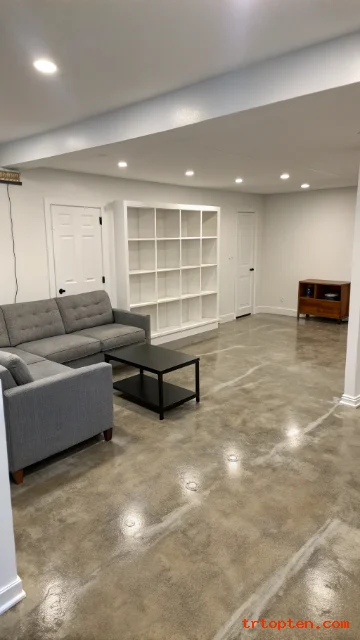
A clear-coated painted floor works well when you like the natural concrete look. You can use a tinted base paint or leave the color close to raw concrete.
This idea gives the basement a clean and low-maintenance surface. It suits minimalist rooms, storage spaces, workshops, and modern family areas.
Use a clear sealer made for concrete floors. It protects the painted surface from moisture, stains, and foot traffic.
What is the best paint for basement concrete floors?
The best paint is concrete floor paint, porch and floor paint, or epoxy floor coating. These products bond better to concrete and resist wear better than regular wall paint.
Do I need to prime a basement concrete floor before painting?
Most concrete floors need cleaning, etching, and primer before paint. Primer helps the paint stick and reduces peeling.
What color makes a basement floor look bigger?
White, light gray, pale greige, cream, and light beige can make a basement look bigger. These colors reflect more light and reduce the heavy look of concrete.
Can I paint a basement floor that gets damp?
You should fix moisture issues before painting a basement floor. Paint can peel or bubble if water rises through the concrete.
How do I prepare concrete before painting?
Sweep, scrub, remove stains, patch cracks, and let the floor dry fully. Many concrete paints also require etching or grinding for better adhesion.
How long does painted concrete basement flooring last?
A painted concrete floor can last several years with good prep and sealing. Heavy traffic, moisture, and poor surface prep can shorten its life.
Should I seal painted basement concrete floors?
A clear sealer is a smart choice for most painted basement floors. It protects the color, adds durability, and makes cleaning easier.
Are dark basement floor colors a good idea?
Dark colors can look stylish in basements with strong lighting and light walls. Charcoal, navy, black, and deep green work best when the room has enough brightness.
Can I use stencils on a painted concrete basement floor?
Yes, stencils can create tile, rug, border, and geometric effects. Use durable floor paint and seal the finished design.
What is the easiest basement floor paint idea for beginners?
A single solid color is the easiest choice for beginners. Soft gray, beige, greige, and cream are simple, forgiving, and easy to decorate around.
Conclusion
These basement concrete floor paint ideas can help you create a cleaner, brighter, and more useful lower level.
A good paint color can change the mood of the room, while a strong coating can protect the concrete from dust, stains, and daily use.