
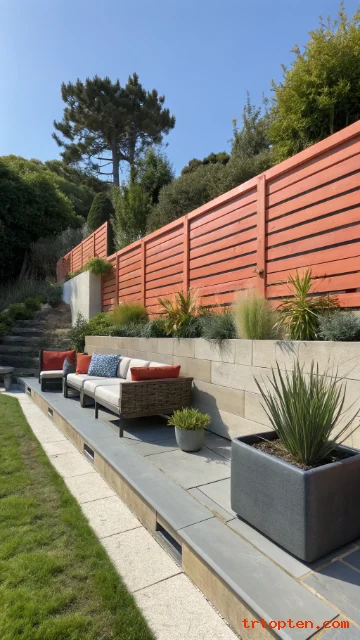
A sloped yard often feels like a landscaping challenge, but retaining wall and fence ideas can turn that obstacle into your property’s best feature.
These structures hold back soil, prevent erosion, and create usable flat spaces for gardens, patios, or play areas.
Mix and Match Materials for Visual Drama
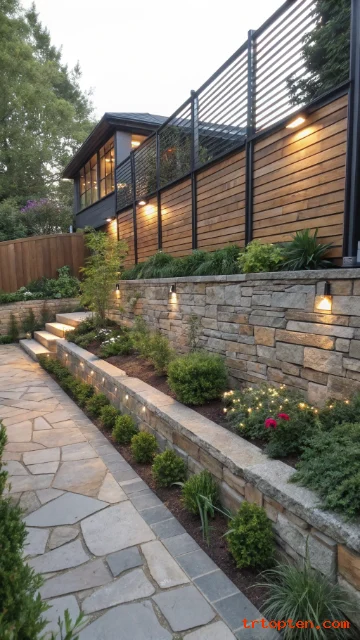
Combining different materials in one retaining wall fence creates a space that feels custom and collected. Try pairing natural stone wall bases with sleek metal fence panels above for an industrial-rustic vibe. Wood slats over concrete block walls add warmth and soften the hardness of the masonry. This eclectic approach lets you tie together different architectural elements from your home and garden.
The key to successful mixing is choosing materials that share a common color palette or texture. For example, a gray stone wall pairs beautifully with dark metal fencing, while warm cedar looks stunning over buff-colored concrete blocks. You can also introduce a third material like brick or pebbles in the wall’s face for added depth. Don’t be afraid to experiment—the contrast is what makes this style work.
Think about how the materials will age together over time. Stone and metal both develop natural patinas that add character, while wood may need periodic staining or sealing. Choose materials that you’ll enjoy watching weather and mature. This approach works especially well for properties that blend modern and traditional styles.
Build a Functional Seating Wall with Fence Above
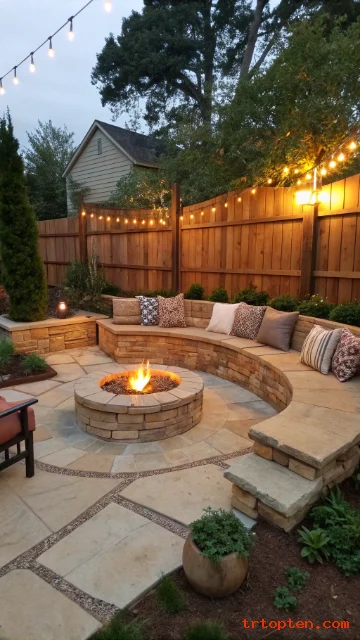
A retaining wall that doubles as seating solves two problems at once. Build the wall at bench height—about 18 inches—and cap it with smooth, comfortable stones or concrete. Then add a fence panel behind or above the seating area to create a cozy outdoor room. This design works perfectly around fire pits, outdoor kitchens, or garden gathering spaces.
The seating wall provides a natural place for guests to sit while the fence offers privacy and wind protection. Add cushions and throw pillows in weatherproof fabrics to make the space inviting. You can also incorporate built-in planters at the ends of the seating wall for flowers or herbs. This multifunctional approach maximizes every square foot of your sloped yard.
Consider the height of the fence in relation to the seating wall. A lower fence—around 4 feet—maintains views while still providing definition. Higher fences create more intimate, enclosed spaces perfect for dining or relaxing. String lights draped between fence posts add evening ambiance and make the seating area feel magical.
Top a Stone Wall with Wrought Iron Fencing
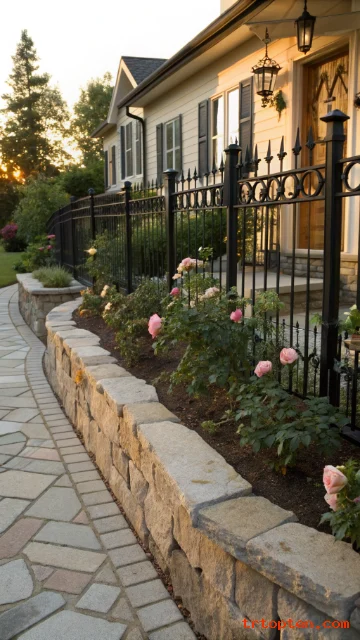
Natural stone retaining walls paired with wrought iron fencing create a timeless, elegant look. The rugged texture of the stone contrasts beautifully with the delicate, scrolling lines of ironwork. This combination feels both classic and contemporary, fitting seamlessly into formal gardens or more relaxed landscapes.
Wrought iron fencing allows light and air to pass through while still providing security and boundary definition. The open design means you won’t feel closed in, even with a taller fence. Choose iron with decorative finials or scrollwork to add visual interest at the top. Powder-coated finishes in black, bronze, or dark green resist rust and maintain their beauty for years.
This pairing works especially well for front yards where you want to showcase your home without blocking views. The stone wall anchors the property while the iron fence adds a touch of sophistication. Plant climbing roses or clematis at the base to soften the hard edges and add seasonal color.
Add Built-In Lighting for Nighttime Magic
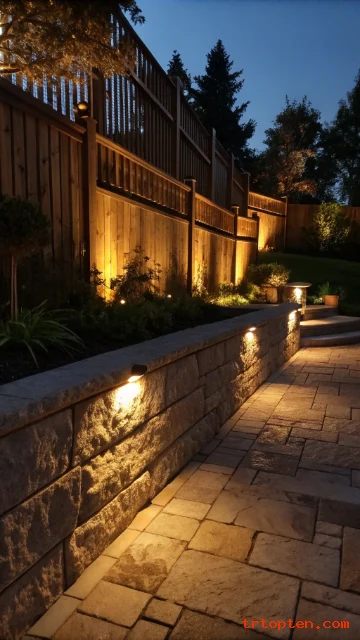
A retaining wall fence becomes a stunning feature after dark with the right lighting. Install low-voltage uplights at the base of the wall to highlight the texture of stone or brick. The dramatic shadows created by uplighting add depth and visual interest to your landscape. This technique transforms a simple wall into a work of art.
Linear LED strips tucked under the top cap of the wall create a continuous, modern glow. This “floating” effect is especially striking with smooth concrete or contemporary walls. Recessed lights embedded directly into the wall face provide subtle illumination along walkways and steps. These fixtures improve safety while adding a sophisticated touch.
Solar-powered lights offer an easy, energy-efficient option for do-it-yourselfers. Place them along the top of the wall or at intervals between fence posts. Consider the color temperature of your lighting—warm white creates a cozy atmosphere while cool white feels more modern. Plan your lighting during the design phase so you can run wiring or position solar panels properly.
Install a Lattice Fence for Privacy with a View
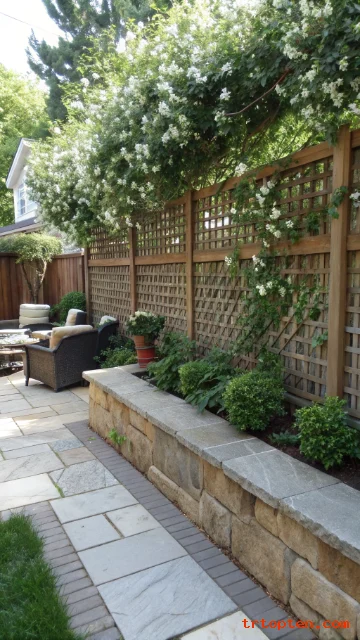
A lattice fence panel atop a retaining wall offers the perfect balance of privacy and openness. The crisscross pattern allows light and air to filter through while still providing a visual screen. This design keeps your yard feeling airy and connected to the surrounding landscape. It’s an excellent choice for properties where you want some seclusion without feeling boxed in.
Climbing plants like star jasmine, clematis, or ivy will quickly cover the lattice, creating a living wall of greenery. The plants add color, texture, and fragrance while enhancing privacy even further. Choose evergreen climbers for year-round coverage or mix in flowering varieties for seasonal interest. The combination of stone wall, wooden lattice, and climbing plants feels organic and lush.
Lattice comes in various materials including wood, vinyl, and metal. Wood offers a natural look that weathers beautifully, while vinyl requires less maintenance. Metal lattice provides a more contemporary feel with clean lines. Consider the height carefully—taller lattice provides more privacy but may require additional structural support.
Make a Bold Color Statement with Painted Fencing
A brightly colored fence atop a neutral retaining wall adds instant personality to your yard. Choose a bold hue like navy blue, sunny yellow, or deep red to create a striking focal point. The color draws the eye upward and makes the fence feel like an intentional design element rather than an afterthought. This approach works especially well with modern or eclectic home styles.
Paint or stain the fence in a color that complements your home’s exterior and landscaping. A vibrant fence can tie together different elements of your garden, from flower colors to outdoor furniture. Consider using the same color on your front door or window trim for a cohesive look. Weatherproof paints and stains ensure your bold choice stays vibrant through sun and rain.
For a more subtle take, choose a muted or earthy tone that still provides contrast with the wall below. Sage green, warm terracotta, or soft blue can add color without overwhelming the space. Test paint samples on a small section of fence to see how the color looks in different lighting conditions. Remember that dark colors absorb heat and may require more maintenance in sunny climates.
Create a Living Wall with Vertical Gardens
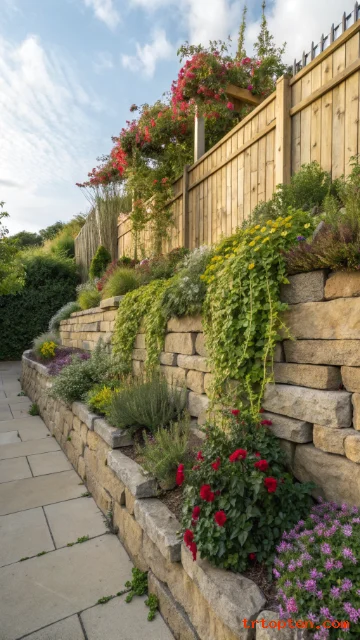
Turn your retaining wall into a lush vertical garden by incorporating planting pockets or trellises. Native plants, succulents, and trailing vines thrive in these spaces, softening the hardscape with greenery. The plants also help cool the wall surface and support local pollinators like bees and butterflies. This sustainable approach transforms a functional structure into an ecological asset.
Install planting pockets within the wall itself or attach planter boxes to the fence above. Choose plants suited to your climate and the wall’s sun exposure—succulents for hot, sunny spots and ferns for shadier areas. Herbs and small vegetables can also thrive in vertical gardens, providing fresh ingredients just steps from your kitchen. The combination of textures and colors creates a dynamic, ever-changing display.
Irrigation is essential for living walls, especially in hot or dry climates. Drip irrigation systems deliver water directly to plant roots with minimal waste. Consider a self-watering system if you travel frequently or want to minimize maintenance. The visual impact of a green wall is immediate and dramatic—it turns an ordinary retaining wall into a garden feature.
Use Gabion Baskets for Industrial-Chic Style
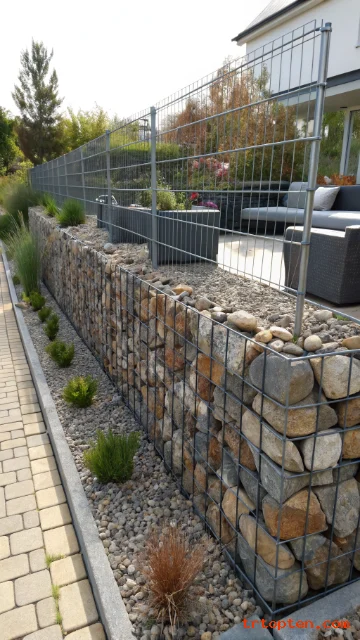
Gabion walls—wire baskets filled with stones—offer a rugged, industrial look that’s both functional and stylish. The wire cages allow water to drain freely, eliminating the need for complex drainage systems. This makes gabions an excellent choice for slopes with poor drainage or heavy rainfall. The stone fill can be sourced locally, reducing transportation costs and environmental impact.
Choose stones that complement your home and landscape—river rock, granite, or even recycled concrete all work well. Mix different stone sizes and colors for a more organic, textured appearance. The wire baskets can be stacked to create walls of varying heights, and they integrate beautifully with wooden or metal fences above. Gabions also provide habitat for small creatures and plants.
Gabion walls are surprisingly affordable, especially if you source stones locally or use recycled materials. They require minimal foundation work compared to concrete walls, making them a great DIY option. The rustic, natural look fits perfectly in country gardens, modern landscapes, and everything in between.
Build Tiered Walls for Terraced Gardens
Multiple retaining walls built at different heights create terraced garden beds that maximize planting space on slopes. Each tier holds soil level, allowing you to plant flowers, shrubs, or vegetables on every level. The stepped design adds visual interest and makes the slope feel intentional and beautiful. This approach works especially well for large, steep yards.
Connect the tiers with steps or pathways to make the garden accessible and inviting. Stone or concrete steps between levels create a natural flow through the space. Each tier can have its own planting theme—perennials on one level, herbs on another, and ornamental grasses on a third. The variety keeps the garden interesting throughout the seasons.
Tiered walls also improve drainage by directing water down the slope in controlled ways. This reduces erosion and keeps your plants healthy. Consider the height of each tier carefully—lower walls are easier to build and maintain, while taller walls require more engineering. The overall effect is a stunning, layered landscape that feels like a formal garden.
Combine Concrete Blocks with Wooden Fence Panels
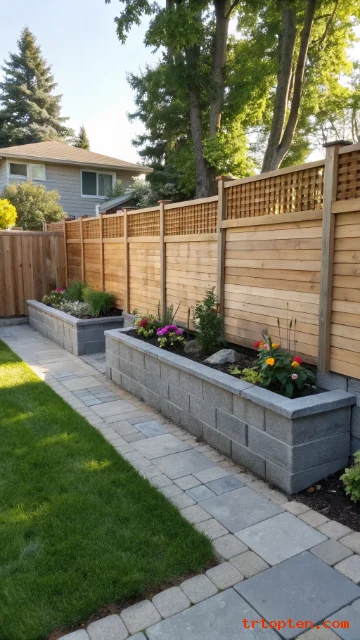
Concrete block retaining walls offer durability and strength, while wooden fence panels add warmth and natural beauty. The combination feels grounded and inviting, perfect for family-friendly backyards. Concrete blocks come in various colors and textures, from smooth gray to textured stone-look finishes. Choose a finish that complements the wood tone you select.
The wooden fence can sit directly on top of the concrete wall or slightly behind it. Mounting the fence on top creates a seamless look where the wall acts as the fence’s foundation. This approach saves space in narrow yards and reduces the amount of fencing material needed. Pressure-treated wood, cedar, or redwood all resist rot and insects.
Consider adding a cap to the concrete wall where it meets the wood fence. A stone or concrete cap creates a clean transition between the two materials. It also protects the top of the wall from water damage. This combination works in both traditional and modern settings, depending on the finishes you choose.
Install Horizontal Slats for Modern Minimalism
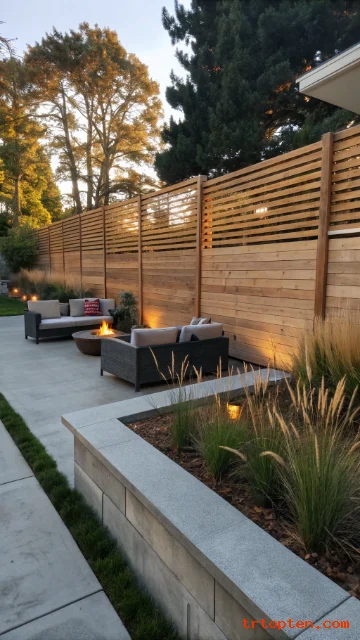
Horizontal slat fences create clean, contemporary lines that feel both stylish and calming. The horizontal orientation draws the eye across the property, making the space feel wider. This design works beautifully atop retaining walls, where the wall’s mass contrasts with the fence’s lightness. Choose wood, composite, or metal slats based on your style and budget.
Space the slats with small gaps to allow light and airflow while maintaining privacy. The gaps also create interesting shadow patterns that change throughout the day. Wider gaps provide more openness, while tighter gaps offer greater seclusion. You can even alternate slat widths or directions for a more dynamic look.
Horizontal slat fences require precise installation to keep the lines straight and level. Consider hiring a professional if you’re not confident in your carpentry skills. The clean, uncluttered appearance of horizontal slats pairs perfectly with modern architecture and minimalist gardens.
Add a Hedge on Top for Natural Privacy
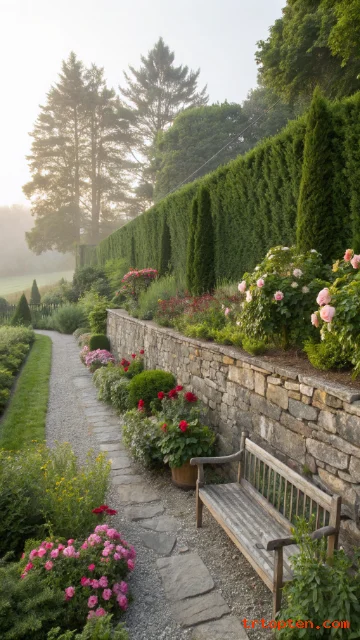
Instead of a traditional fence, plant a tall hedge on top of your retaining wall. The hedge provides natural privacy while adding greenery and wildlife habitat to your yard. Choose fast-growing evergreens like arborvitae, leyland cypress, or bamboo for quick coverage. The soft, organic texture of the hedge contrasts beautifully with the hard wall below.
Hedges require more maintenance than fences—regular pruning and watering keep them looking their best. However, the payoff is a living, breathing boundary that changes with the seasons. Flowering hedges like lilac or hydrangea add seasonal color and fragrance. The root systems also help stabilize the soil behind the wall.
Consider the mature height and spread of your chosen hedge plants before planting. Plant them far enough from the wall’s edge to allow for root growth. A hedge on top of a retaining wall creates a layered, cottage-garden feel that’s both charming and practical.
Build a Fence with Integrated Planters
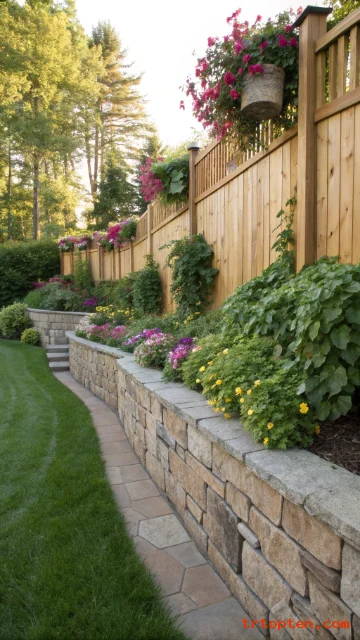
Incorporate planter boxes directly into your fence design for a built-in garden feature. The planters can sit on top of the retaining wall or attach to the fence panels themselves. Fill them with trailing plants like ivy or petunias that cascade down the wall. This approach adds color and life to what might otherwise be a plain structure.
Planters also allow you to grow herbs, vegetables, or flowers in spaces where ground planting isn’t possible. The elevated position keeps plants away from pests and makes harvesting easier. Consider a drip irrigation system to keep your planters watered with minimal effort. The combination of wood, stone, and greenery feels cohesive and intentional.
Choose planter materials that match or complement your fence and wall. Cedar, metal, or composite planters all work well. Ensure the planters have proper drainage to prevent water damage to the fence. This idea works especially well for small yards where every square foot counts.
Use Reclaimed Materials for Rustic Charm
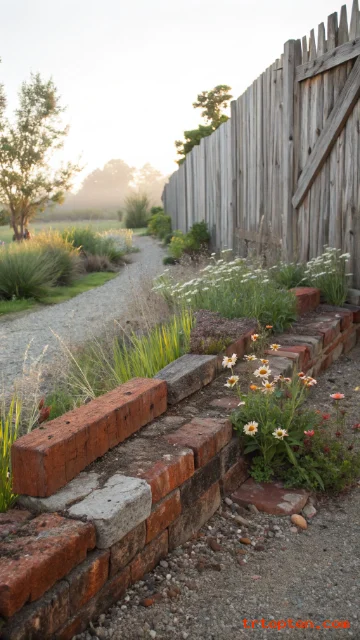
Build your retaining wall and fence from reclaimed or recycled materials for a sustainable, one-of-a-kind look. Old bricks, broken concrete, and salvaged wood all add character and history to your landscape. The imperfections and variations in reclaimed materials create a warm, rustic aesthetic that new materials can’t replicate. This approach is also budget-friendly and environmentally conscious.
Salvaged brick or stone walls look especially charming in traditional or cottage-style gardens. Reclaimed wood fences bring warmth and texture to modern or rustic spaces. Gabion baskets filled with recycled concrete or broken bricks offer an industrial-chic option. The key is to source materials that are structurally sound and safe for your project.
Check local listings, demolition sites, and salvage yards for affordable reclaimed materials. You might find beautiful old bricks, weathered barn wood, or unique stones for a fraction of the cost of new materials. The process of sourcing and working with reclaimed materials adds to the story of your landscape.
Add Decorative Pillars for Architectural Interest
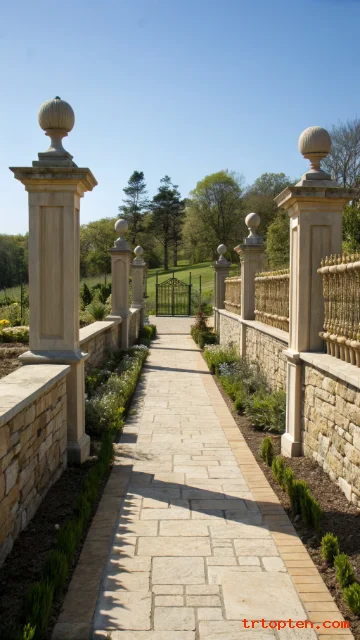
Incorporate decorative pillars or columns into your retaining wall and fence design. The pillars break up long stretches of wall and fence, adding visual rhythm and structure. They can also serve as mounting points for gates, lights, or planters. This approach creates a more formal, polished look that elevates the entire property.
Pillars can be built from the same material as the wall or from a contrasting material for added interest. Cap them with stone, metal, or wood for a finished appearance. Consider adding lighting fixtures or decorative urns on top of the pillars for extra flair. The pillars also provide structural support for taller fence sections.
Space pillars evenly along the wall for a balanced, symmetrical look. Alternatively, place them at corners, entrances, or transitions for functional emphasis. The added cost of pillars is offset by the increased visual appeal and perceived value of your landscape.
Incorporate Steps into the Wall Design
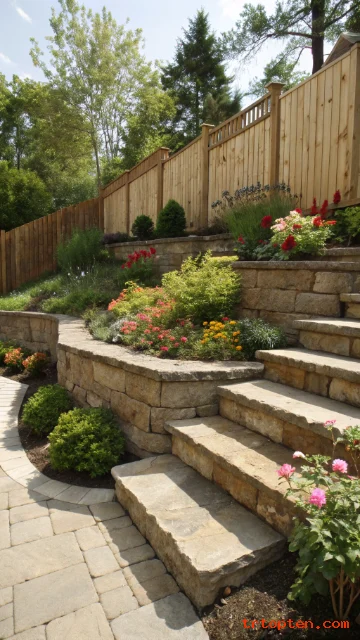
Integrate steps directly into your retaining wall to create a seamless transition between different yard levels. The steps make the space more accessible and invite exploration. They can be built from the same material as the wall or from a contrasting material for visual interest. This approach turns a functional necessity into a design feature.
Wide, shallow steps feel more inviting and are easier to navigate than steep, narrow ones. Consider adding lighting to each step for safety and drama after dark. Landscaping along the sides of the steps softens the hard edges and adds color. The steps can lead to a patio, garden, or lawn area, connecting different parts of your yard.
The number and height of steps depend on the slope of your yard and the wall’s height. Consult a professional if you’re unsure about the engineering requirements. Well-designed steps make a sloped yard feel like a intentional, multi-level outdoor living space.
Choose a Minimalist Uniform Look
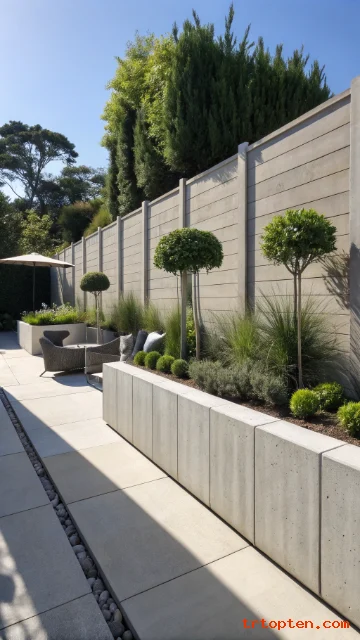
Sometimes less is more—a simple, uniform retaining wall and fence creates a clean, uncluttered look. Choose a single material and color for both the wall and fence to achieve this streamlined aesthetic. Concrete, wood, or metal in neutral tones all work well for minimalist designs. The simplicity allows the landscape and architecture to take center stage.
A uniform look feels modern, sophisticated, and easy to maintain. It also makes small spaces feel larger by reducing visual clutter. Choose materials with subtle texture variations to add depth without breaking the minimalist feel. The key is restraint—avoid unnecessary ornamentation or contrasting elements.
This approach works especially well for contemporary homes and urban gardens. It also provides a neutral backdrop for colorful plants and outdoor furniture. A minimalist wall and fence can be updated easily with accessories like lighting or planters when you want a change.
Attach Fence Posts to the Wall Side
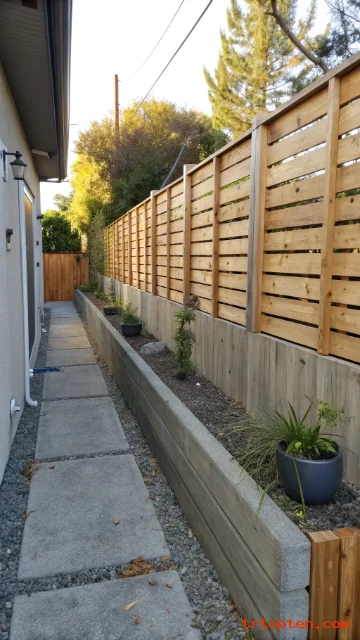
Instead of placing fence posts on top of the retaining wall, attach them to the side. This approach saves space and creates a unique look where the fence appears to grow out of the wall. The posts can be bolted directly into the wall or set in concrete footings alongside it. This method works especially well for narrow side yards where space is limited.
The side-mounted posts allow the fence to sit flush with the wall’s face, creating a clean, streamlined appearance. You can also set the posts slightly behind the wall to create a layered effect. The choice depends on your aesthetic preferences and the structural requirements of your site. Consider the wall’s thickness and stability when planning post placement.
This approach requires careful planning to ensure the posts are properly anchored. Consult a professional to determine the best attachment method for your wall type. The result is a cohesive, space-saving design that feels integrated and intentional.
Create an Outdoor Room with a Privacy Screen
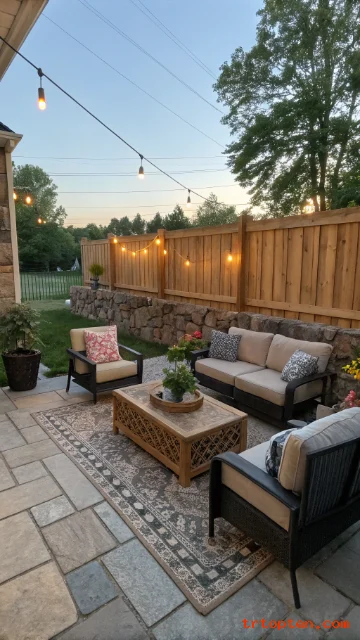
Use your retaining wall and fence to define an outdoor room—a distinct space for dining, lounging, or entertaining. The wall provides the structural backbone while the fence adds privacy and enclosure. This approach makes your yard feel like an extension of your home. Add outdoor furniture, a rug, and lighting to complete the room.
The privacy screen can be a solid fence, a lattice panel, or even a living hedge. Choose a height that provides adequate privacy without making the space feel cramped. Consider the view from the room—what do you want to see, and what do you want to hide? The screen should frame the best views while blocking unwanted sights.
Outdoor rooms add usable square footage to your property and increase its value. They also provide a designated space for relaxing and entertaining that feels separate from the rest of the yard. This idea works for any size yard—even small spaces can benefit from a defined outdoor room.
Combine Stone and Iron for Industrial Appeal
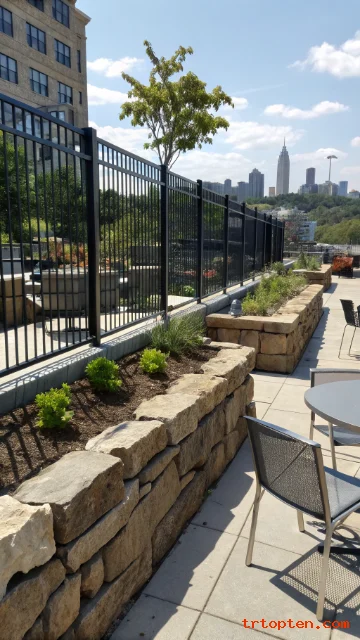
Pair natural stone retaining walls with industrial-style iron fencing for a rugged, urban look. The organic texture of the stone contrasts with the clean lines of the iron. This combination feels modern, masculine, and incredibly stylish. It works especially well for contemporary homes and urban gardens.
Choose iron fencing with simple, geometric designs rather than ornate scrollwork for a more industrial feel. Dark finishes like black or charcoal complement the stone’s natural tones. Add industrial-style lighting like metal sconces or string lights to complete the look. The overall effect is bold and unapologetically modern.
This pairing requires minimal maintenance—stone and iron both weather beautifully with little intervention. The iron may need occasional rust-proofing, but powder-coated finishes resist corrosion. The result is a low-maintenance, high-impact design that will look great for decades.
Install a Gate for Access and Security
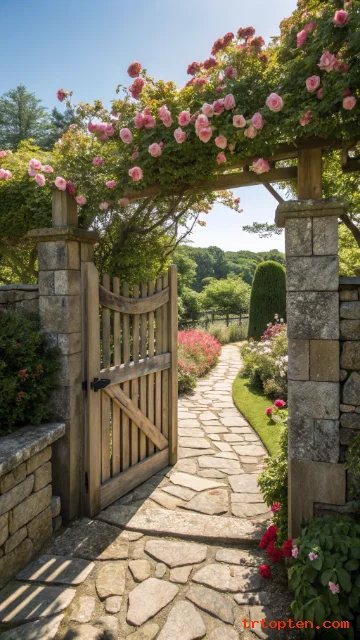
Incorporate a gate into your retaining wall fence for controlled access to your property. The gate can be a simple walk-through or a wider drive-through for vehicles. It adds both security and convenience while breaking up long stretches of fence. Choose a gate design that complements your fence and wall materials.
Wooden gates offer warmth and a traditional feel, while metal gates provide durability and a modern look. Consider adding a latch or lock for security, especially if the gate provides access to a pool or backyard. The gate posts should be sturdy and properly anchored to support the gate’s weight.
A gate also creates a welcoming entrance to your yard. Frame the gate with pillars or plantings to make it feel intentional and inviting. The gate can be the focal point of your retaining wall fence, drawing the eye and creating a sense of arrival.
Use Timber Sleepers for Natural Warmth
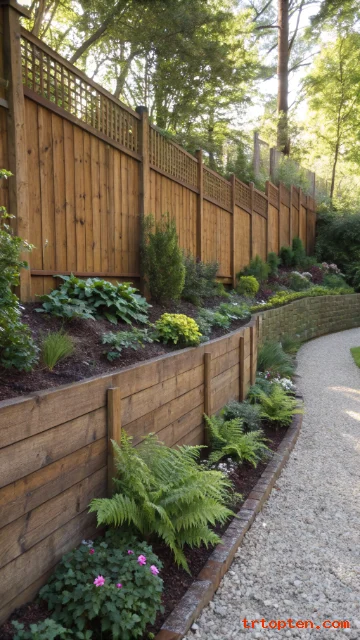
Timber sleepers—large, rectangular wood beams—create warm, natural-looking retaining walls. They stack easily and can be cut to fit any slope or curve. Sleepers work well with simple fence designs for a cohesive, rustic look. The wood’s natural grain and color add warmth to any landscape.
Choose treated timber sleepers for durability and resistance to rot and insects. Hardwood sleepers like oak or jarrah offer exceptional longevity. The sleepers can be stained or painted to match your fence and home. Regular sealing helps maintain their appearance and extends their life.
Timber sleeper walls are relatively affordable and easy to install, making them a popular DIY choice. They work well for walls up to about 3 feet tall—taller walls may require additional engineering. The natural, organic look of timber sleepers fits beautifully in country gardens and woodland settings.
Add Curves for a Softer, Natural Feel
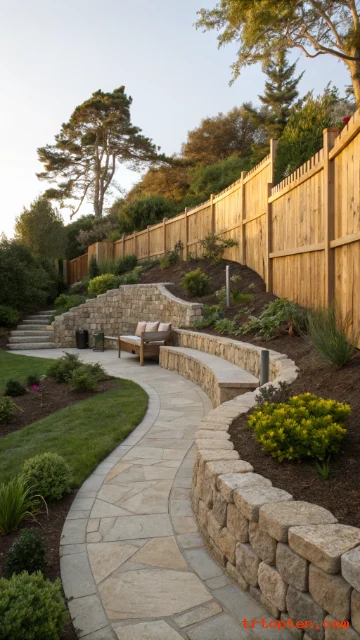
Curved retaining walls feel more organic and natural than straight lines. The gentle curves follow the landscape’s contours and create a sense of flow. Curved walls also allow for more creative planting and seating arrangements. They soften the hard edges of a fence and make the space feel more inviting.
Building curved walls requires more skill and precision than straight walls. Flexible materials like gabion baskets or timber sleepers work well for curves. Stone and concrete blocks can also be curved with careful planning and cutting. The extra effort is worth it for the unique, beautiful result.
Curved walls can create intimate garden nooks, frame a seating area, or guide the eye through the landscape. They also improve drainage by directing water around the curve. A curved retaining wall with a matching curved fence creates a stunning, cohesive design.
Light Up the Night with Integrated Fixtures
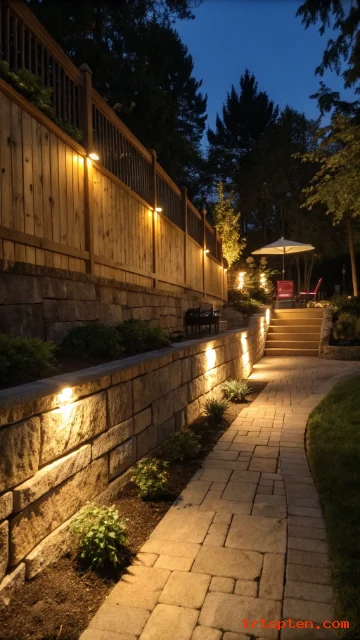
Built-in lighting transforms your retaining wall fence into a nighttime showpiece. Install fixtures directly into the wall or fence for a seamless, integrated look. The lighting highlights the textures and materials while providing safety and ambiance. This approach makes your yard usable and beautiful after dark.
Consider a combination of lighting types for maximum effect. Uplights at the base highlight the wall’s texture. Step lights improve safety on stairs and pathways. Strip lights along the top create a modern, floating effect. The layered lighting adds depth and drama to your landscape.
Plan your lighting during the design phase to hide wiring and position fixtures properly. Solar-powered options offer easy installation and energy savings. Professional installation ensures safe, code-compliant wiring. The result is a stunning outdoor space that you can enjoy any time of day.
Blend Wall and Fence with Matching Materials
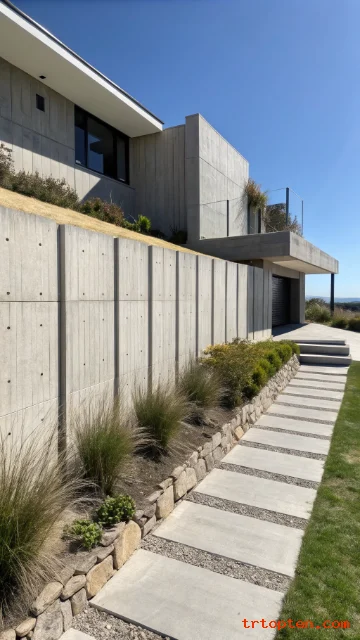
For the ultimate cohesive look, build both your retaining wall and fence from the same material. A concrete wall with a concrete fence, or a stone wall with a stone fence, creates a seamless, unified appearance. The matching materials make the structure feel like a single, intentional design element. This approach works beautifully for modern and traditional homes alike.
The consistent material creates a strong visual anchor for your landscape. It also simplifies maintenance—you only need to care for one material type. Consider adding subtle variations in texture or color to prevent the look from feeling too monotonous. The uniformity can be broken up with plantings, lighting, or decorative elements.
This idea works best when the wall and fence are designed together from the start. The height, thickness, and proportions should be carefully coordinated. The result is a polished, professional-looking boundary that adds significant value to your property.
What is the best material for a retaining wall with a fence on top?
Concrete blocks and natural stone are the most popular choices for the wall because they offer excellent strength and durability. For the fence, wood, metal, and vinyl each have their advantages depending on your budget and style preferences. The best combination depends on your soil conditions, climate, and aesthetic goals.
How tall can a retaining wall with a fence be?
Most local building codes limit retaining walls to 3 or 4 feet without a permit. Adding a fence on top increases the total height, which may require additional permits and engineering. Always check your local regulations before starting your project.
Do I need a permit for a retaining wall and fence combination?
Yes, in most areas you will need a permit, especially if the total height exceeds local limits. The combination of a retaining wall and fence is often treated as a single structure for permitting purposes. Contact your local building department early in the planning process.
How do I ensure proper drainage behind my retaining wall?
Proper drainage is essential for any retaining wall. Install a perforated drain pipe behind the wall and backfill with gravel to direct water away. Without good drainage, water pressure can build up and cause the wall to fail.
Can I build a retaining wall and fence myself?
Smaller walls (under 3 feet) can be DIY projects for experienced homeowners. Taller walls require professional engineering and installation to ensure safety and stability. Always consult a professional if you’re unsure about your site’s requirements.
How much does a retaining wall with a fence cost?
Costs vary widely based on materials, height, length, and labor. Budget-friendly options like timber sleepers start around $12-$15 per square foot. Stone and concrete options cost more but offer greater durability.
What plants work best near retaining walls?
Choose plants with shallow, non-invasive root systems that won’t damage the wall’s structure. Ornamental grasses, succulents, and small shrubs are excellent choices. Keep large trees at least 15 feet from the wall to prevent root damage.
How long does a retaining wall and fence last?
With proper construction and maintenance, a well-built retaining wall can last 50 years or more. The fence’s lifespan depends on the material—wood lasts 10-20 years, while metal and vinyl can last much longer. Regular maintenance extends the life of both structures.
Conclusion
These 25 retaining wall and fence ideas show that a sloped yard is not a limitation but an opportunity for creative landscaping.
From rustic timber sleepers to sleek concrete and iron combinations, there’s a design for every style and budget.