
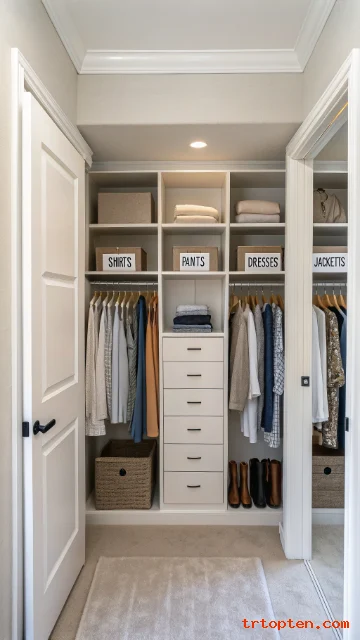
A small closet can still feel calm, useful, and easy to manage. These 26 small bedroom closet organization ideas will help you use every shelf, rod, door, corner, and drawer with purpose.
The goal is simple. You want a closet that stores more, looks better, and makes getting dressed easier each day.
Add a Second Hanging Rod
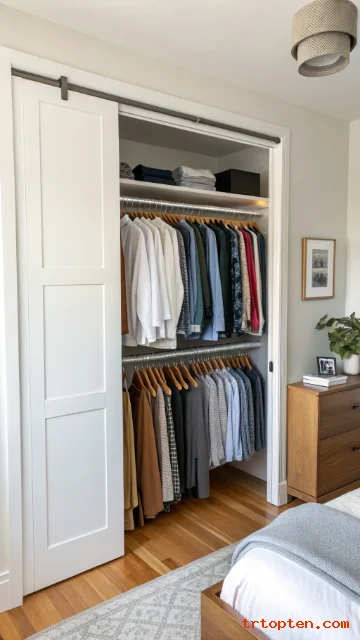
A second hanging rod doubles your hanging space without adding a new closet. You can place one rod higher for shirts and jackets, then place the lower rod underneath for pants, skirts, or kids’ clothes.
This idea works best when your closet has unused vertical space. Many small bedroom closets waste the lower half because one long rod leaves empty space below short clothes.
Use matching hangers to keep the closet clean and balanced. Slim velvet hangers save even more room and stop clothes from sliding onto the floor.
Use Slim Matching Hangers
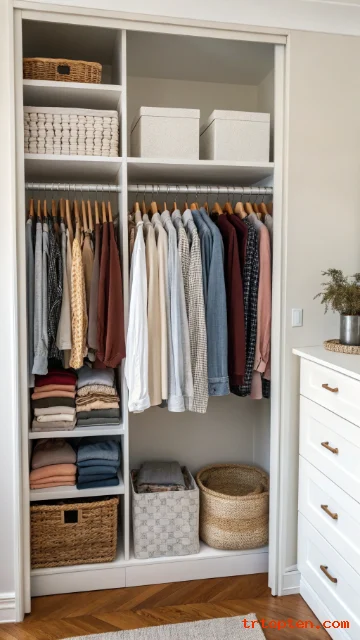
Slim matching hangers create more space because they take up less width than bulky plastic or wooden hangers. They also make the closet look cleaner because every item sits at the same height.
A small bedroom closet can feel messy when every hanger has a different shape and color. Matching hangers reduce visual noise and help your clothes become easier to scan.
Choose velvet, metal, or thin plastic hangers based on your clothing type. Velvet hangers work well for slippery tops, while metal hangers create a very thin profile.
Sort Clothes by Category
Sorting clothes by category makes your closet easier to use every morning. Place shirts with shirts, pants with pants, dresses with dresses, and jackets with jackets.
This system helps you see what you own before you buy more. It also prevents small spaces from becoming stuffed with hidden duplicate items.
Keep your most-used categories at eye level or arm height. Store special occasion pieces toward the side or back of the closet.
Arrange Clothes by Color
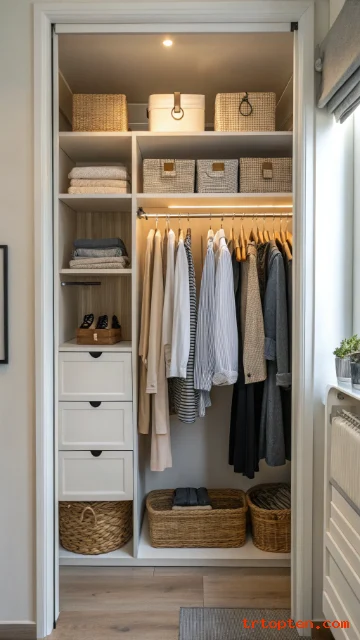
Color sorting makes a small closet look calm and polished. It also helps you find clothes quickly because your eyes know where each color lives.
Start with whites, creams, tans, browns, grays, blacks, then brighter colors. You can also place patterned items after the main color that appears most in the print.
This method works well with open closets because it turns clothing into part of the room design. It makes even a tight closet feel more intentional.
Install Shelf Dividers
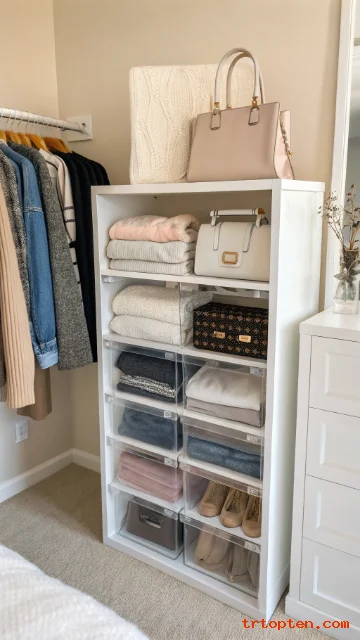
Shelf dividers stop folded clothes from tipping into messy piles. They work well for sweaters, jeans, handbags, towels, and extra bedding.
A small bedroom closet needs clear boundaries because every inch matters. Dividers create zones on one shelf so several categories can share the same surface.
Choose clear acrylic dividers for a light look or wire dividers for a budget-friendly setup. Make sure each divider grips the shelf firmly so stacks stay upright.
Use Labeled Storage Bins
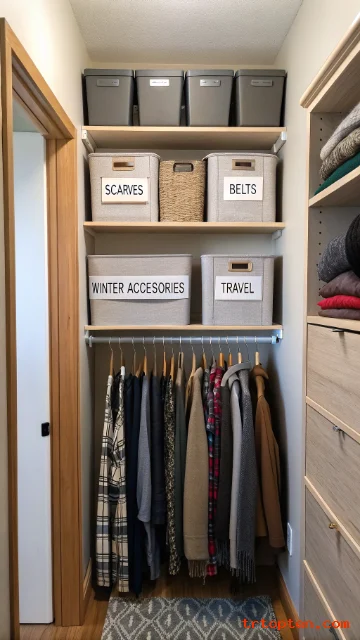
Labeled storage bins help you keep small items grouped and easy to find. They work well for scarves, belts, workout gear, seasonal clothes, and travel items.
Labels save time because you do not need to open every bin to find one thing. Clear labels also help every person in the home return items to the right place.
Use matching bins to create a clean look on high shelves. Choose clear bins when you want to see the contents, or fabric bins when you want a softer style.
Add Over-the-Door Storage
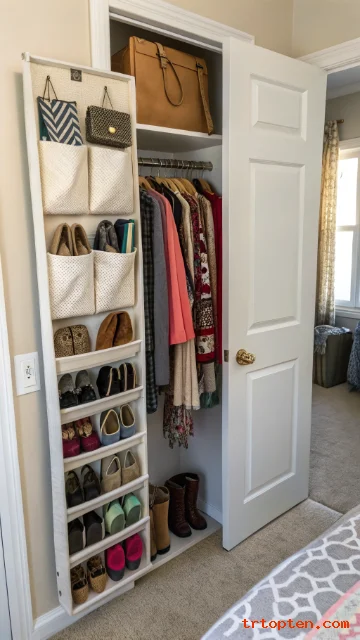
The back of the closet door can hold items that often clutter shelves. Use an over-the-door organizer for shoes, accessories, hats, hair tools, or folded basics.
This idea adds storage without drilling holes or changing the closet structure. It works well for renters and small bedrooms with limited wall space.
Choose pocket organizers for small items and rack-style organizers for shoes or bags. Keep the heaviest items near the bottom so the door opens smoothly.
Use Clear Shoe Boxes
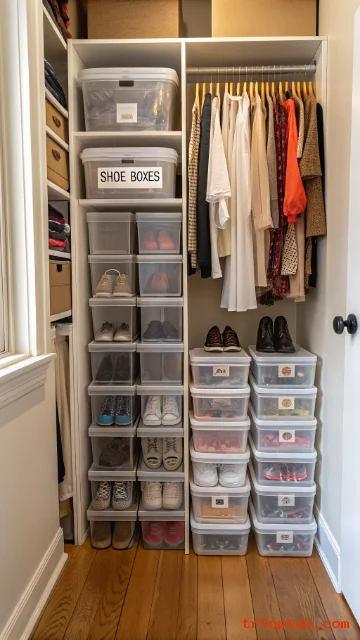
Clear shoe boxes protect shoes and keep them visible. They help you stack footwear neatly instead of letting pairs pile up on the closet floor.
A small bedroom closet often loses space at the bottom because shoes spread out. Clear boxes turn that floor area into a clean vertical storage zone.
Place everyday shoes at the easiest height and special shoes higher or lower. Add small labels to the front if the boxes are not fully transparent.
Add a Small Dresser Inside the Closet
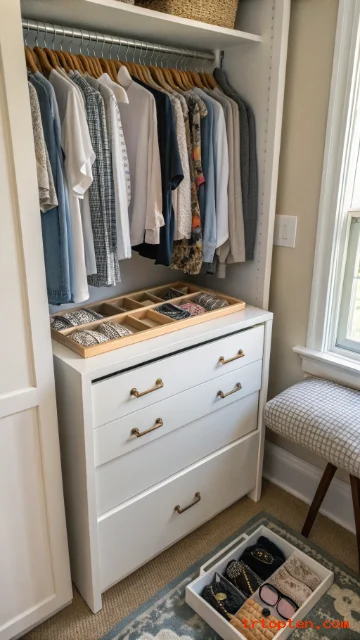
A small dresser can turn unused closet floor space into drawer storage. It gives you a place for socks, underwear, pajamas, workout clothes, and folded tees.
This setup works best when the closet has enough depth for drawers to open. Measure the space before buying so the dresser fits without blocking hanging clothes.
Use the dresser top as a small display or drop zone. Add a tray for jewelry, perfume, or daily accessories to keep the surface tidy.
Use Drawer Organizers for Small Items
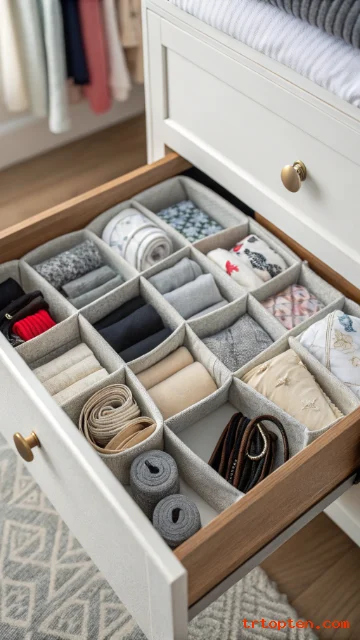
Drawer organizers keep tiny items from becoming tangled or lost. They work well for socks, underwear, ties, belts, jewelry, and hair accessories.
Small closets need hidden storage that stays easy to maintain. Drawer dividers create small sections that help every item keep a clear home.
Use adjustable dividers if your drawer sizes are unusual. Fabric boxes also work well because you can move them around as your needs change.
Hang Bags on Hooks
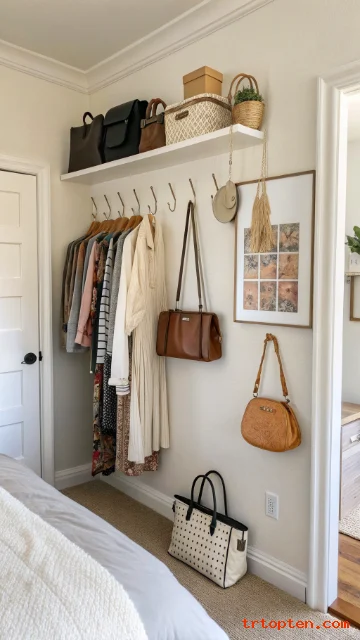
Hooks keep bags visible and prevent them from losing shape. You can install hooks on a side wall, closet door, or empty vertical panel.
This method works better than stacking bags on a shelf because each bag stays easy to grab. It also keeps straps from tangling with clothes or hangers.
Use sturdy hooks for heavy totes and smaller hooks for crossbody bags. Leave a little space between each bag so the closet still feels open.
Use the Top Shelf for Seasonal Storage
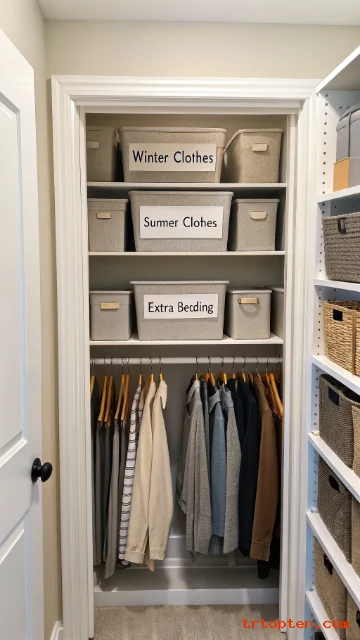
The top shelf is perfect for items you do not use every day. Store seasonal sweaters, holiday outfits, extra blankets, or travel bags in labeled bins.
This keeps daily clothing within easy reach and moves rare-use items out of the way. It also helps the closet feel less crowded at eye level.
Use lightweight bins on high shelves so you can lift them safely. Place the heaviest items lower in the closet to avoid accidents.
Add Stackable Storage Drawers
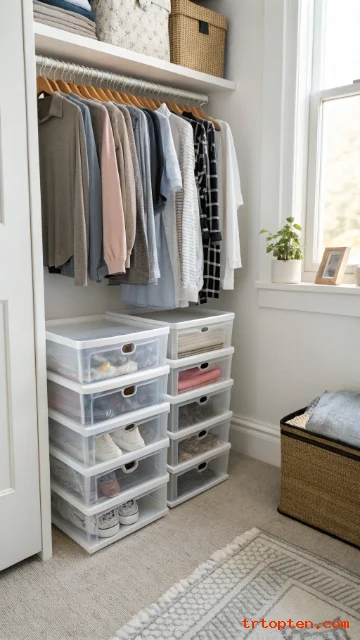
Stackable drawers create flexible storage in the lower part of a small closet. They work well for folded clothes, accessories, shoes, and seasonal pieces.
This idea helps you use floor space without making a permanent change. You can move the drawers later if your closet needs change.
Choose clear drawers when you want quick visibility. Choose solid drawers when you want the closet to look softer and less busy.
Use Hanging Shelves
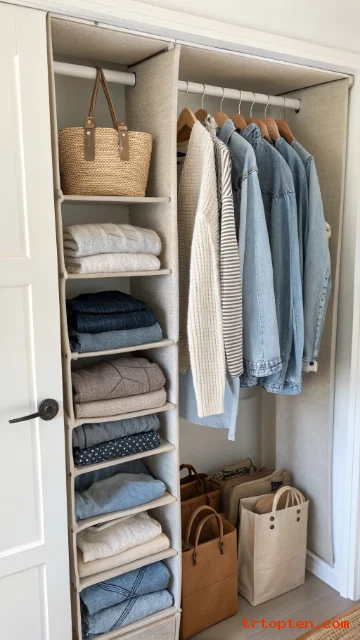
Hanging shelves add instant storage from the closet rod. They work well for sweaters, jeans, handbags, shoes, and folded basics.
This option helps renters because it does not need screws or tools. It also gives structure to closets that have only one rod and one shelf.
Do not overload hanging shelves with heavy items. Use them for light folded pieces so the rod stays strong and the shelves keep their shape.
Place Shoes Heel-to-Toe
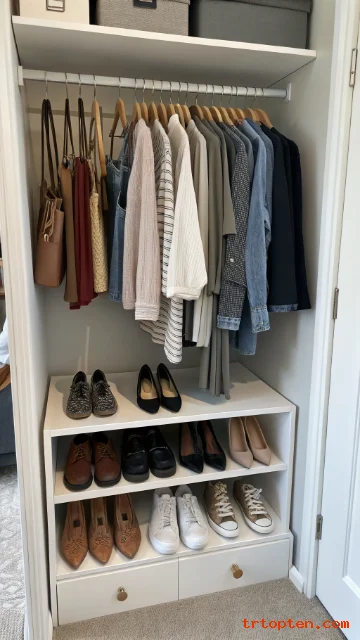
The heel-to-toe shoe method saves space on shelves and closet floors. Place one shoe facing forward and the other shoe facing backward in each pair.
This arrangement reduces the width each pair needs. It also helps you see both the front style and heel height at the same time.
Use this method on flat shelves, shoe racks, and closet floors. It works especially well for heels, flats, loafers, and sneakers.
Add a Pull-Out Basket
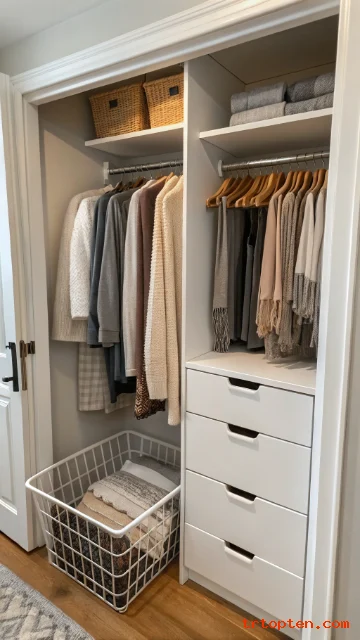
A pull-out basket gives you easy access to items stored low in the closet. It works well for scarves, gym clothes, pajamas, slippers, or laundry items.
Small closets often have deep corners that become hard to reach. A sliding basket brings those items forward so nothing gets forgotten in the back.
Choose wire baskets for airflow or fabric baskets for a softer look. Make sure the basket slides smoothly before you fill it with clothes.
Use Tension Rods for Accessories
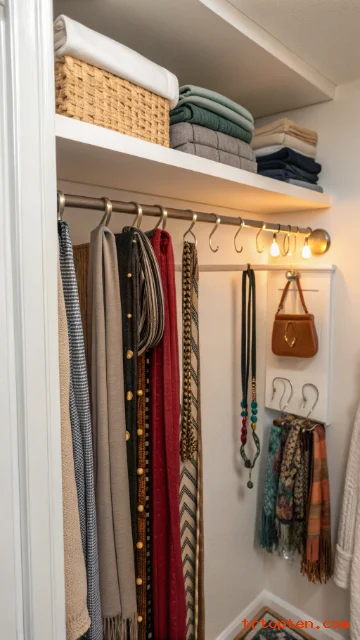
Tension rods can create extra hanging space for scarves, belts, hats, or jewelry. You can place them between closet walls, inside cubbies, or under shelves.
This idea is low-cost and easy to remove. It works well when you need storage but do not want to drill into the closet.
Use small S-hooks on the rod to hang accessories neatly. Keep similar items together so the closet stays simple to use.
Store Bulky Items in Vacuum Bags
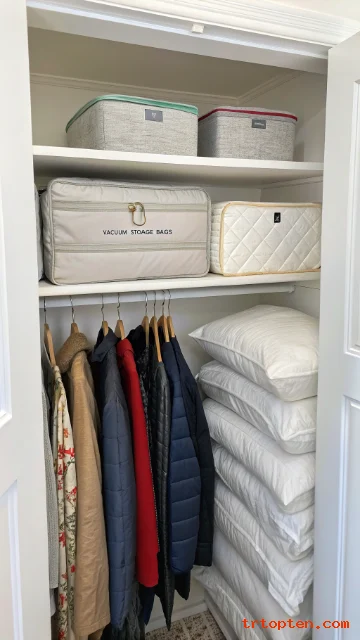
Vacuum bags shrink bulky items and free up shelf space fast. They work well for comforters, coats, heavy sweaters, and off-season clothing.
A small bedroom closet can feel full because bulky fabric traps air. Vacuum bags remove that extra volume and help you stack items flat.
Do not use vacuum bags for delicate items that need to breathe. Store the sealed bags on the top shelf, under the bed, or in a storage bench.
Use Shelf Risers
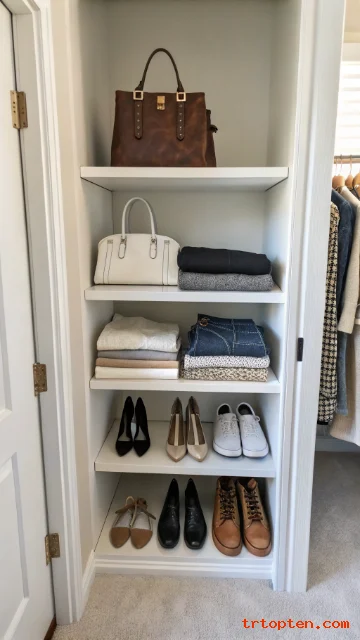
Shelf risers create a second level on one shelf. They work well for shoes, folded clothes, handbags, storage boxes, and small accessories.
This idea helps when shelves have too much empty height above items. A riser turns that wasted air space into useful storage.
Choose sturdy risers that fit the shelf depth. Use matching risers to keep the closet looking clean instead of crowded.
Add Labels to Closet Zones
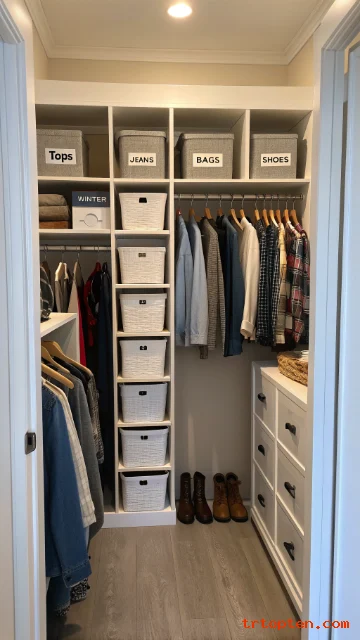
Labels make every closet zone clear and easy to maintain. They help you remember where things belong after laundry day.
This idea is useful in shared bedrooms, kids’ rooms, and busy households. Labels reduce clutter because each category has a visible home.
Use simple words like tops, jeans, bags, shoes, and winter. Keep the label style consistent so the closet looks neat and not too busy.
Use Corner Space with Small Shelves
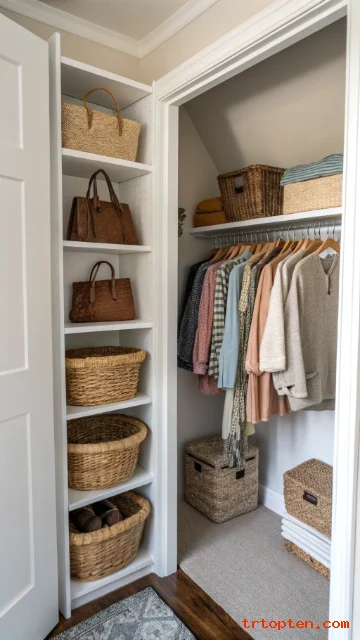
Closet corners often go unused because they are awkward to reach. Small corner shelves can hold shoes, bags, folded sweaters, or storage baskets.
This idea helps you turn dead space into practical storage. It works best for items that do not need daily access.
Keep corner shelves shallow so they do not block the main closet area. Use matching baskets to make the corner look planned and tidy.
Keep a Donation Bin in the Closet
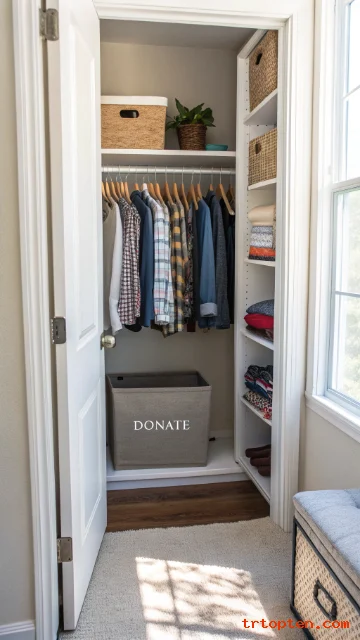
A small donation bin helps you remove clothes as soon as you stop wearing them. Place the bin on the floor, under a shelf, or beside a dresser.
This habit keeps your closet from filling up again after you organize it. When an item no longer fits or feels useful, you can place it in the bin right away.
Use a small basket or fabric cube so the bin does not take over the closet. Empty it once a month to keep the system moving.
Store Daily Outfits Together
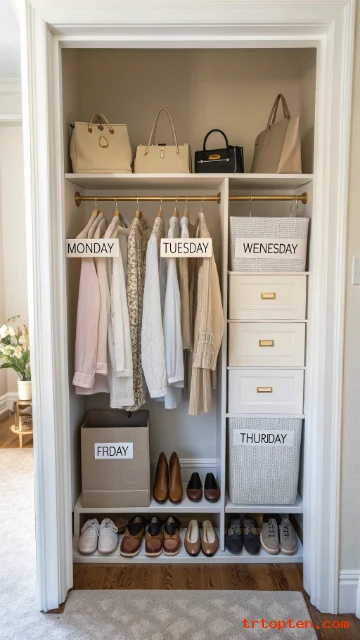
A small outfit zone can make mornings easier. Use hooks, a hanging shelf, or a small section of the rod to plan outfits for the week.
This idea saves time because your clothes, shoes, and accessories are ready before the day starts. It also reduces closet mess because you stop pulling out many items at once.
Keep this zone small so it does not crowd your closet. Three to five outfits are enough for most people.
Use a Closet Light
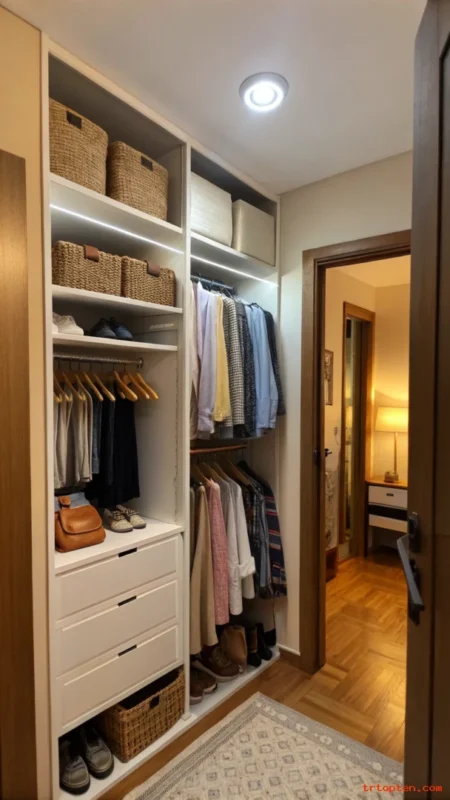
A closet light helps you see every item clearly. Small closets often feel messy because dark corners hide clothes, shoes, and accessories.
Battery-powered lights work well when the closet has no wiring. Motion-sensor lights are useful because they turn on when you open the door.
Place the light near the top front of the closet for the best coverage. Choose warm white light for a cozy feel or bright white light for clear visibility.
Rotate Clothes by Season
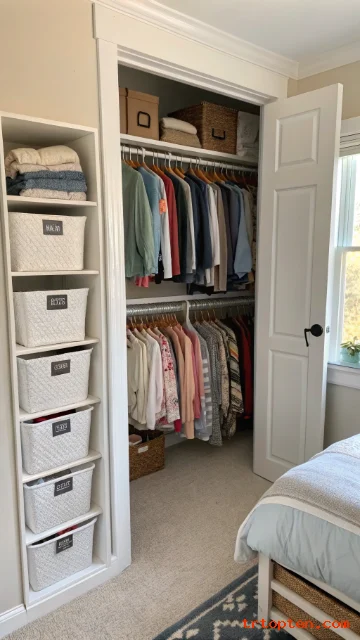
Seasonal rotation keeps your small closet focused on what you wear now. Store out-of-season clothes in bins, vacuum bags, or under-bed storage.
This method makes your closet easier to use because it holds fewer items. It also helps you notice damaged, unused, or duplicate clothes during each swap.
Set a reminder twice a year to rotate your closet. Keep a small transition section for light layers during changing weather.
Leave Breathing Room Between Items
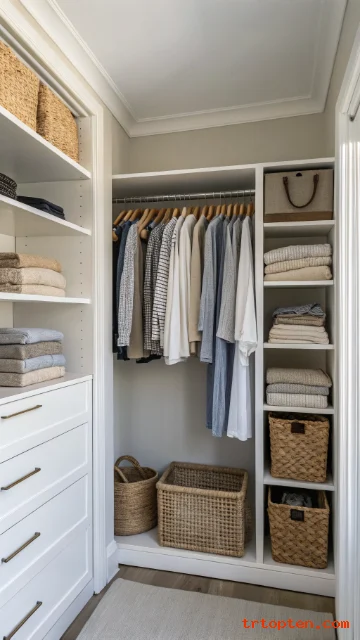
A small closet should not be packed from wall to wall. Breathing room makes clothes easier to see, remove, and return.
Crowded closets create wrinkles and make even organized systems fail. A little open space helps the closet feel larger and more peaceful.
Aim to leave a few inches of open rod space if possible. Keep only the items you wear, love, or truly need.
What Is the Best Way to Organize a Small Bedroom Closet?
The best way to organize a small bedroom closet is to use vertical space, clear categories, and simple storage tools. Start with decluttering, then add slim hangers, bins, shelf dividers, and door storage.
Keep daily items at eye level and place seasonal items higher or lower. This setup saves time and keeps the closet easy to maintain.
How Do I Make a Small Closet Hold More Clothes?
You can make a small closet hold more clothes by adding a second hanging rod, using slim hangers, and storing folded items in bins or drawers. You can also use the door, top shelf, and floor space for extra storage.
Do not fill every inch with random items. A closet holds more when each zone has a clear job.
How Do I Organize a Small Closet on a Budget?
Use low-cost tools like tension rods, fabric bins, shelf dividers, and over-the-door organizers. You can also repurpose baskets, small boxes, and drawer dividers you already own.
Start with decluttering before buying anything. Removing unused items often creates more space than new storage products.
What Should I Store on the Top Shelf of a Small Closet?
Store seasonal clothes, extra bedding, travel bags, and rarely used items on the top shelf. Use labeled bins so you can find things without pulling everything down.
Keep heavy items off the highest shelf when possible. Lightweight storage makes the closet safer and easier to use.
Are Slim Hangers Worth It for a Small Closet?
Slim hangers are worth it because they save rod space and create a cleaner look. They also help clothes hang evenly, which makes the closet easier to scan.
Velvet slim hangers work well for tops, dresses, and lightweight jackets. Strong metal or plastic slim hangers work better for heavier items.
How Do I Organize Shoes in a Small Bedroom Closet?
Organize shoes with clear boxes, stackable racks, shelf risers, or heel-to-toe placement. Keep everyday shoes easy to reach and move special occasion shoes higher or lower.
Avoid tossing shoes in a pile on the floor. A clear shoe system keeps pairs together and protects them from damage.
How Often Should I Declutter My Small Bedroom Closet?
Declutter your small bedroom closet at least twice a year. A seasonal closet rotation is a good time to remove items that no longer fit, feel good, or match your daily life.
You can also keep a small donation bin in the closet. This makes decluttering easier because you can remove items one at a time.
What Items Should Not Stay in a Small Bedroom Closet?
Avoid storing random papers, broken accessories, unused gifts, and clothes you never wear in a small bedroom closet. These items take space away from things you use often.
Move non-clothing items to a better storage spot when possible. A small closet works best when it serves a clear purpose.
How Can I Make a Small Closet Look Pretty?
Use matching hangers, matching bins, simple labels, and a calm color order. These small changes make the closet feel cleaner even before you add more storage.
Good lighting also improves the look of a small closet. A bright closet feels larger, fresher, and easier to use.
Conclusion
The best small bedroom closet organization ideas help you use space with purpose. A second rod, slim hangers, labeled bins, door storage, drawer organizers, and seasonal rotation can turn a cramped closet into a calm storage zone.
Start with one idea that solves your biggest problem first. When each item has a clear place, your small bedroom closet becomes easier to clean, easier to use, and much more enjoyable every day.